

A Brief History On The Making of Juno (2007)
How a first-time screenwriter and an up-and-coming film director made an enduring millennial classic film about teenage pregnancy.

“I don’t even know if I would have written a movie like Juno if I had known that the world was going to spiral into this hellish alternate reality that we now seem to be stuck in,” says Diablo Cody. “I think I probably would have just told a different story in general.”
It’s not hard to see why. When the film about a teenage pregnancy came out in 2007, Roe v. Wade was still in effect so abortion was legal in America, Fox Searchlight Pictures was still a decade away from being swallowed up by Disney, and it was right before the Great Recession. Even when it was released, the pro-choice writer was horrified that the anti-abortion movement was co-opting her film1.
Then again, when Cody wrote Juno, she never imagined that anyone would actually want to make it.
Juno was Cody’s first foray into screenwriting. And as many first-time writers tend to do, she drew from her own life2. While the Juno MacGuff character was based on Cody herself3, the plot about a quirky young teenager who accidentally gets pregnant, and decides to give up the baby for adoption was inspired by something that happened to a friend from her high school4. Mostly, though, Cody was interested in exploring the relationship between Juno and the adoptive parents, Mark and Vanessa Loring, played by Jason Bateman and Jennifer Garner respectively in the film.
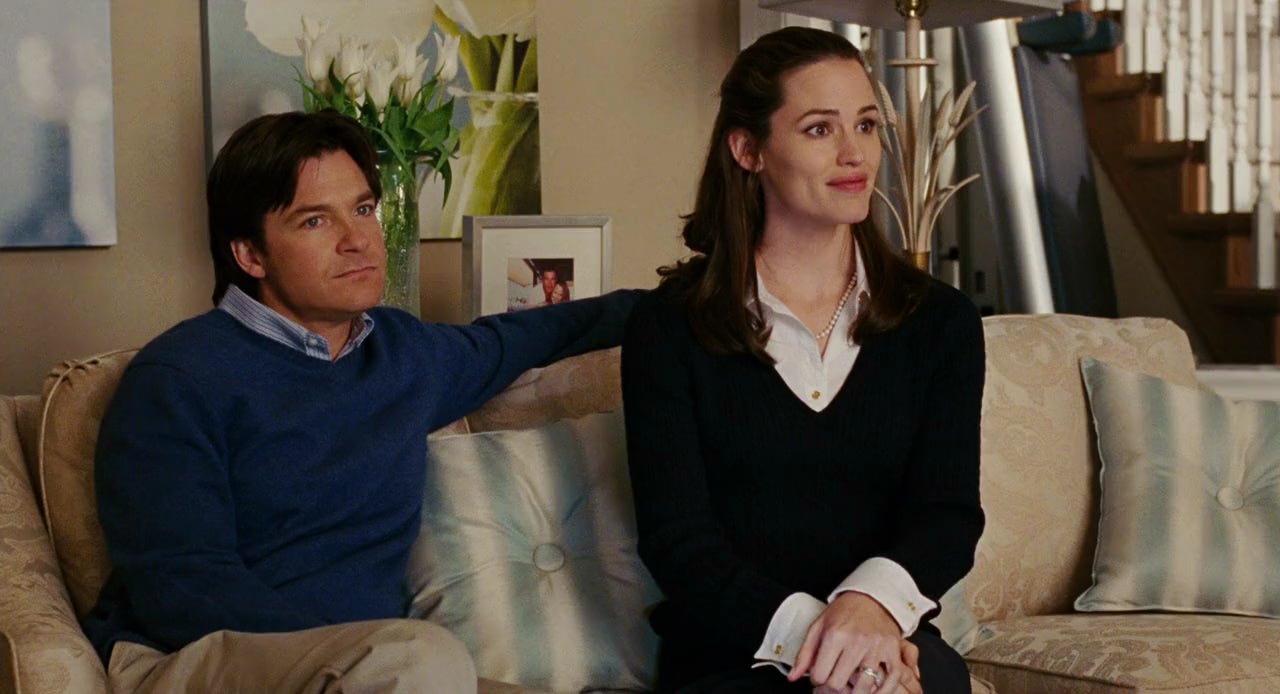
“I thought that seemed like a fascinating dynamic that I hadn’t seen represented onscreen before,” says Cody. All her choices thus led to figuring out how to get Juno into this couple’s living room. “Because I wanted to write that scene. And so everything that I did leading up to that point was in service of that story.
“I wasn’t really thinking about anything else,” she adds. “And to be honest, I thought I was writing a sample; I was trying to get my foot in the door in Hollywood. It didn’t occur to me that the script was going to be produced; I wrote most of it while I was temping in Eden Prairie, Minnesota, during my lunch hour.”
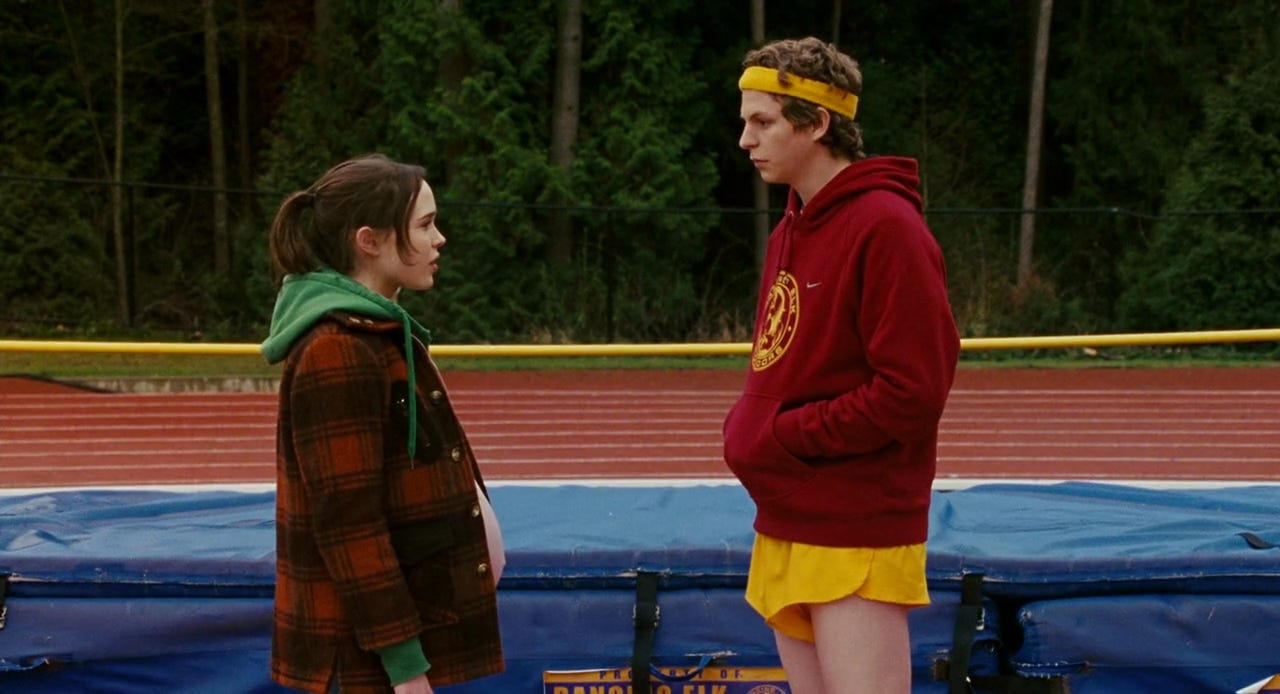
Born Brook Busey in Chicago, Diablo Cody (her pen name) grew up far away from Hollywood. She lived in a suburban, middle-class home, attended Catholic school, and got a job as a typist upon graduating. Around 2001, she launched a small blog called ‘The Red Secretary’5 that pretended to be the diary of a secretary in Belarus. “It was this proto-Borat character,” recalls Cody. “I would write about my ancient computer, this flat with no hot water. All I wanted for X-Mas was an American Frisbee.” Only her family read it.
Her next web endeavor was a site called ‘Girls, Cars and Surfing,’ devoted to the worship of the Beach Boys. It was on the site that she met her first husband Jonny Hunt; she moved to Minneapolis, married him. In 2003, Cody launched yet another blog, this time called ‘The Pussy Ranch’. On a whim, she took a job in a strip club; and she wrote about her experiences stripping, lap-dancing, and performing in a peep-show booth. This time, people read her work.
“Clearly I’m catching people’s attention with sex. Who knew?” Cody says sardonically. “I kept stripping and blogging. It was kind of stunt blogging.”
That was how Mason Novick, a Hollywood manager at the time, discovered her. He loved ‘The Pussy Ranch’— Cody’s writing, even then, was honest, quirky, sharp, sarcastic. He reached out, became her manager, and suggested that she write a comedic memoir. Landing her a book deal, Cody had her first book published at the age of 27. ‘Candy Girl: A Year in the Life of an Unlikely Stripper,’ even landed her an interview with David Letterman, where she described her work as “anthropology… a naked Margaret Mead.”6
With the book done, it was time to think about what to do next. Novick thought Cody had a good voice for screenwriting, so he told her to write a screenplay that he could use as a sample to get her screenwriting gigs. Cody accepted, except there was one issue: she’d never written a screenplay in her life.
Still, in the same spirit that spurred her to work in a strip club that led to ‘Candy Girl,‘, Cody accepted the assignment. She stopped at a bookstore, and bought some scripts to learn what a Hollywood screenplay looked like and what she needed to know about formatting.7 Her then-husband convinced her to use their last $200 to buy Final Draft8 and so, Cody started writing. For her first attempt, she decided to write the type of people she’d like to see on the big screen, reflecting “the complexities, strengths and smarts she wasn’t witnessing in women’s roles” that she wasn’t seeing in the theaters.
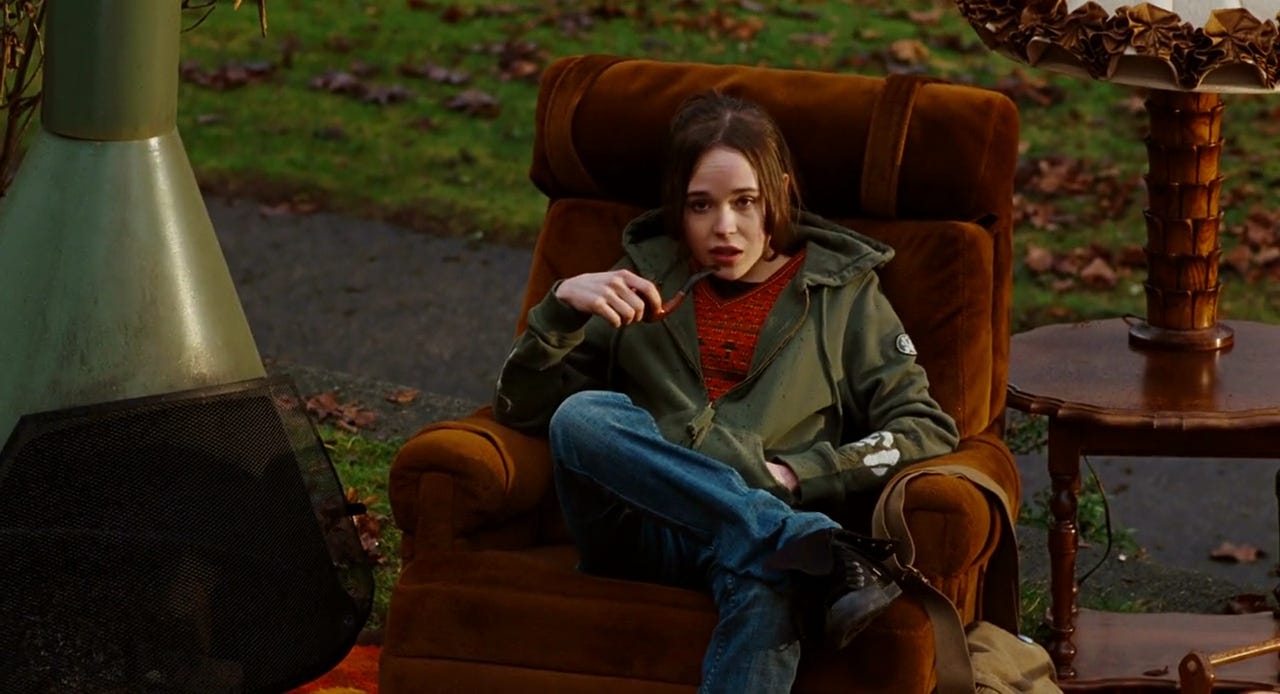
“The fact is, when I wrote Juno—and I think this is part of its charm and appeal—I didn’t know how to write a movie,” admits Cody. “And I also had no idea it was going to get made! It was really just a hypothetical in every way. So I thought to myself, ‘Well, writing for me has never felt like work, I’ve always considered writing to be play.’ So I thought, ‘I’m going to enjoy myself as much as I can. I was just having fun, and you can hear I was having fun.’
“And in a way, I was having too much fun, if that makes any sense,” she continues. “I needed to be pulled back a little. When I watch it now, the dialogue seems very self-indulgent and undisciplined. But,” adds Cody, “that’s one of the things people like about the film, so I can’t argue.”
Did she outline? At first, she didn’t. But halfway through, Cody realized it’d be easier if she had a structure to help guide her, so she did a beat sheet. A month later, Cody sent Novick the script for Juno. And bless Novick, because just as he saw the potential of a book in his client, he must have sensed that the script sample Cody had sent was too good to not be made, because one of the first people he sent the script to was his friend, Jason Reitman.
At the time, Reitman— the eldest child of director Ivan Reitman (Ghostbusters, Meatballs)— was preparing to release his directorial debut, Thank You For Smoking, and working on a spec script for his follow-up film (which became Up In The Air) when he got the Juno script. Reitman recalls:
“I opened the script, I started reading it and I was still standing up. I was in the kitchen when I started reading it. I feel like you get that call fairly often: ‘This script is amazing. You have to read it,’ then you read it and you go, ‘Oh yeah.’ Sometimes, you get the scripts that are on secret spy paper that's uncopyable and you have to sign contracts to read the screenplays. There are all sorts of stuff that happens that's supposed to inspire excitement, but nothing’s quite as exciting as a fresh voice, and that’s what I saw on Page One and I was just like, it was instantaneous. I was like ‘Oh my god, this girl can write.’ Then it just becomes a question of, ‘Well she can write, but is there a story here?’ then about halfway through, by the time we got to the ultrasound scene, I was pretty confident that if I didn’t direct this movie I would regret it for the rest of my life.”
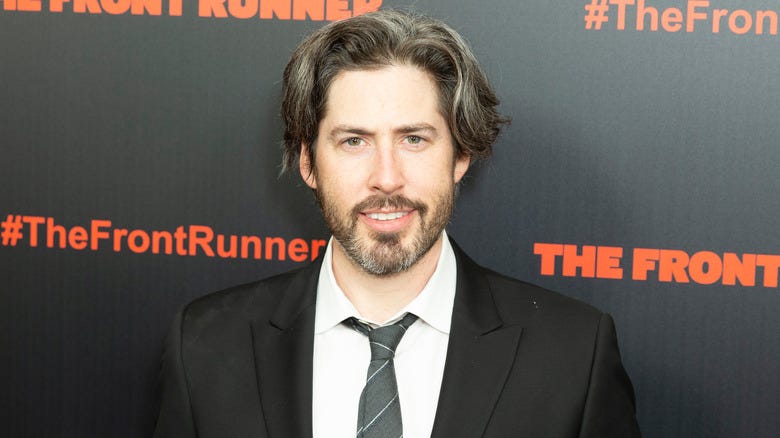
But despite being the son of the man who made Ghostbusters, Reitman still had to fight to be the director since he didn’t have any credits yet to buy the script— at the time, Thank You For Smoking hadn’t yet released. Even afterwards, it was still an uphill battle due to Hollywood’s squeamishness about teenage pregnancies. For the cast, Reitman opted out of the traditional audition process. He had a few actors in mind— J.K. Simmons, who appeared in Thank You For Smoking, and Elliot Page, whom he’d seen in Hard Candy. Reitman recounts:
“So right off the top, I took [Elliot] Page, Michael Cera, J.K. Simmons and Olivia Thirlby and I went over to a stage at Panavision and we shot something like 45 pages of the movie in one day, shooting scenes on 35mm with a black background. Then I edited the whole thing together and I presented it to Fox and said, ‘This is how I want to start the cast — these four actors.’ It was really nice because instead of watching an audition, which doesn’t really say much, they were watching scenes that if you watch them, there was no way that you could think that these people were wrong for the film. So that became the initial cast and we went from there.”
Reitman explains the reasons behind this unusual tactic:
“I needed to see how Juno and her father were going to interact and how she and her best friend would interact and how her and the guy who got her pregnant would interact. So seeing them do the scenes was really important.”
Everyone who read the script expressed interest in being a part of the project; Jennifer Garner, arguably the biggest profile star in the film, took a salary cut due to the film’s small budget, but she didn’t mind. “Some things you do purely for the heart,” she says.
However, there was still plenty of reluctance especially where the finances were concerned; ultimately, John Malkovich’s company Mr. Mudd stepped in, along with Mandate Pictures to finance the film.
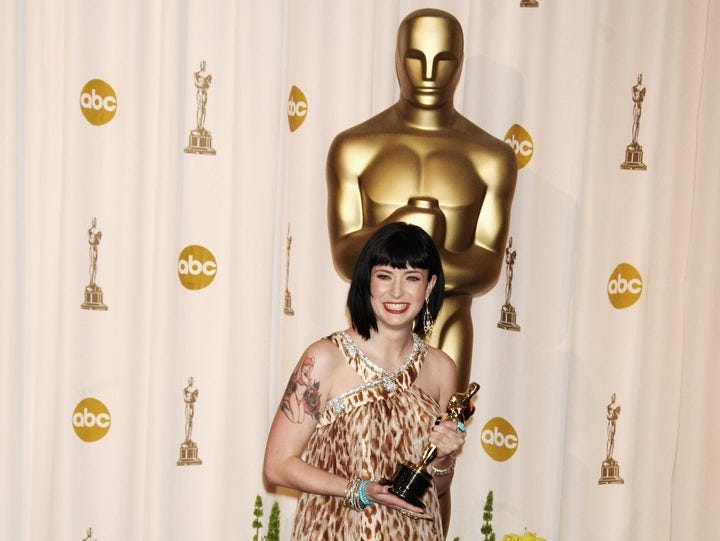
Juno had the last laugh. It went on to win a slew of awards, namely for Cody’s screenplay— Cody would win the Academy Award, BAFTA and Writers Guild of America Awards for best original screenplay; while the film earned four Oscar nominations including Best Picture, Director, and Actress for then-20-year-old Page. But possibly the biggest shocker is that Juno earned $232 million off an estimated $7.5 million budget, making it the highest-grossing film in the crop of Oscar Best Picture nominees that year9, and— at this time of writing— the highest-grossing film in Reitman’s career. That’s right: Juno made more money than Reitman’s 2021 Ghostbusters: Afterlife ($204.3 million), the legacy-quel to his father’s most famous film.
Even now, Juno’s financial success is nothing short of astonishing. Its total box-office gross is more than the highest-grossing films from A2410 and Neon11; and is the fourth-highest grossing film in the Searchlight Pictures (formerly Fox Searchlight) library12. That a lot of people paid money to go watch a quirky indie movie in the cinema blows my mind. Yes, this was right before the Great Depression threw the world into chaos, but Juno’s success today deserves to be lauded given that it was only meant to exist as a spec script: today especially, it’s unlikely that any studio would even touch it with a six-foot pole given how polarized the world is today.
Which only makes Juno’s existence an even bigger blessing. Does Cody have any regrets, though? Perhaps one. In a post-Roe v. Wade America, Cody wishes she’d made her film more explicit about her values. “In a way I feel like I had a responsibility to maybe be more explicitly pro-choice, and I wasn’t,” says Cody. “I think I took the right to choose for granted at the time.”
Thanks for reading! If you liked this essay, you can sign up here for more issues. If you’d like to support Three Left Feet Media, share this newsletter with a fellow film lover you think would appreciate it.
Long live the movies!
D.L. Holmes
When officials from her Catholic high school sent Cody a letter to thank her for writing a pro-life movie, her response was priceless: “I was like, ‘I fucking hate all of you.’”
For instance, Juno’s hamburger-shaped phone was a detail taken from Cody’s life, who also grew up with a hamburger-shaped phone.
According to Cody: “My friends and I were like Juno and her friend. We talked about sex all the time.”
I assume she is referring to the getting accidentally pregnant part, and not everything that happens with the adoptive parents. And like in the film, that same friend experienced mistreatment at the hands of an ultrasound technician.
In those primitive pre-WordPress/Blogger/Substack days, Cody learned to code her own site, taking three buses at night to attend a class that taught HTML. Respect!
When Cody called her parents to break the news about getting published, she had to tell them what it was about. She thinks her parents would have preferred if she’d told them she had being doing hard drugs: “My mother would have rather I wrote a distaff ‘Million Little Pieces’ than a stripper memoir, because I was raised in a Catholic household and sex is the ultimate taboo. If I don’t cross my legs in a certain way when I’m seated in a dress, [my mom] gets a little nervous.” Cody would lift this moment for the memorable scene in which Juno has to tell her parents about the pregnancy.
Cody bought scripts of American Beauty and Ghost World— “Interestingly enough, the producers of Ghost World wound up producing Juno,” she says.
Though the marriage didn’t last, here’s a moment of appreciation for partners of screenwriters who believed in them enough to get them the Final Draft screenwriting software. The other two publicly known instances of partners/spouses doing that are Zinzi Coogler for Ryan Coogler (who won his first Oscar for Best Original Screenplay last Sunday!) and Nicole Muirbrook for Taylor Sheridan.
No Country For Old Men: $171.6 million off a $25 million budget;
Atonement: $131 million off a $30 million budget;
There Will Be Blood: $76 million off a $25 million budget;
Michael Clayton: $93 million off a $21.5 million budget.
Marty Supreme: $162.2 million
Longlegs: $74.3 million
The top three are: (1) Slumdog Millionaire ($383.8 million); (2) Black Swan ($331.2 million); (3) The Full Monty ($261.2 million). There really was a time when mature films for grown-ups actually made money in theaters— or even got made.