

Aliens: How James Cameron Made A Great Sequel Entirely His Own
Instead of another horror sci-fi, James Cameron turns the Alien sequel into a war movie in space to memorable results.

“Chance favors the prepared mind”. That’s Louis Pasteur. And from those chances are great destinies born.
As Aliens celebrates its 40th anniversary (it was released on July 18th 1986), it’s worth noting that James Cameron’s career would look very different without Aliens. The Terminator helped him get a foot into Hollywood’s door, but the sequel to Ridley Scott’s Alien catapulted him all the way to the top— and he’s never looked back since.
But there’s a really unusual thing about this story that rarely happens to filmmakers.
What happens most often in the cases of directors who break out is that they make the film that gets them attention, then they leverage that success to get their next film which is sometimes a studio film. It is a linear process— one thing after another.
Not for James Cameron.
The Aliens project came his way before he directed Terminator. And the studio basically said that if Terminator did well, he could direct Aliens.
In other words, if his first film succeeded, Cameron had his next film already lined up.
Well, it was a little more complicated than that, but that was what happened, more or less.
How it came about was just as fascinating as how Cameron went about it.
In the spring of 1983, the then-unknown James Cameron was gearing up to begin principal photography on The Terminator when Arnold Schwarzenegger was suddenly pulled away. It wasn’t his fault: Conan the Barbarian had been a hit and now producer Dino de Laurentiis1 applied an option in the contract to make a sequel. That meant Schwarzenegger would be away for nine months. Cameron didn’t want to recast, but he was also in a strange limbo— not enough time to shoot another movie, yet enough time to write on assignment.
So he sent out his Terminator script as a writing sample, and it got him quite a few meetings, including a fateful one with Brandywine Productions.
Brandywine Productions had secured the remake rights to Spartacus (1960). Walter Hill and David Giler—two of the company’s three founders (the other was Gordon Carroll)— wanted to do a space version of the Roman slave drama. Cameron went in to pitch an epic take but to his disappointment, Giler and Hill only wanted a literal swords-and-sandals epic like Spartacus, just set on a different planet. The meeting was seemingly a bust, and Cameron was on his way out when Giler mentioned another project that they’d been trying to make: a sequel to Ridley Scott’s Alien.
Cameron loved Alien. He had no idea that Brandywine Productions owned the rights to the film. And he badly wanted this project. But not wanting to seem desperate, he played it cool. The producers shared a half-page description of the idea they had for a follow-up: A colony gets wiped out and the Marines are sent in. That was about all they had come up with; the document literally ended with the words “And then some bullshit happens.”
Cameron suggested he might be able to do something with this. He’d write a treatment and send them, that would be the best.
And then he raced home and furiously got to work.
It’s important to remember: at the time, Cameron was just another young filmmaker with big ambitions. Did he think that the studio would hand him the reins to the film? Maybe. Cameron seemed to have a lot of his confidence in his abilities2. But right now, he was a young filmmaker with big ambitions who happened to have an idea for an Alien sequel.
15 Lessons I Learned From Studying The Making Of The Terminator

In April, I wrote a two-part essay about the making of The Terminator, and I thought I’d collect the lessons worth studying from it into this one place. Because I found that Terminator has a lot of good stuff to teach first-time filmmakers for both in front of and behind the camera.
This is why you don’t discard all your unused ideas. You never know when it might come in useful.
Eighteen months prior, James Cameron had written a spec script called ‘Mother’. He’d initially titled it ‘E.T.’ until he heard that Steven Spielberg was already making a film under the same name. It took place on a surface station on Venus; the mother creature was a genetically-engineered human-alien hybrid designed to live in an environment fatal to humans. The script eventually climaxed in a battle between the mother alien and the male lead who wore an exoskeletal loader called a power suit. Cameron simply swapped the male lead with Sigourney Weaver’s character Ripley, and added the story of ‘Mother’ to Giler and Hill’s Marine pitch3.
A week later, Cameron turned in a 42-page outline that had all the bones of what ended up in the finished film. Hill and Giler loved it so much that they hired Cameron immediately to start on a script.
Just one teeny tiny problem. That very same day, Cameron landed another plum writing assignment: a sequel to Rambo. Two simultaneous writing assignments would’ve been tough enough, but Cameron also using the time to rewrite and polish The Terminator, especially with production ready to start in a few months. However, Cameron must have realized that opportunities don’t come like this all the time, because he called up Giler to ask for his advice.
“Well, don’t be stupid,” Giler replied. “Take both jobs.”4
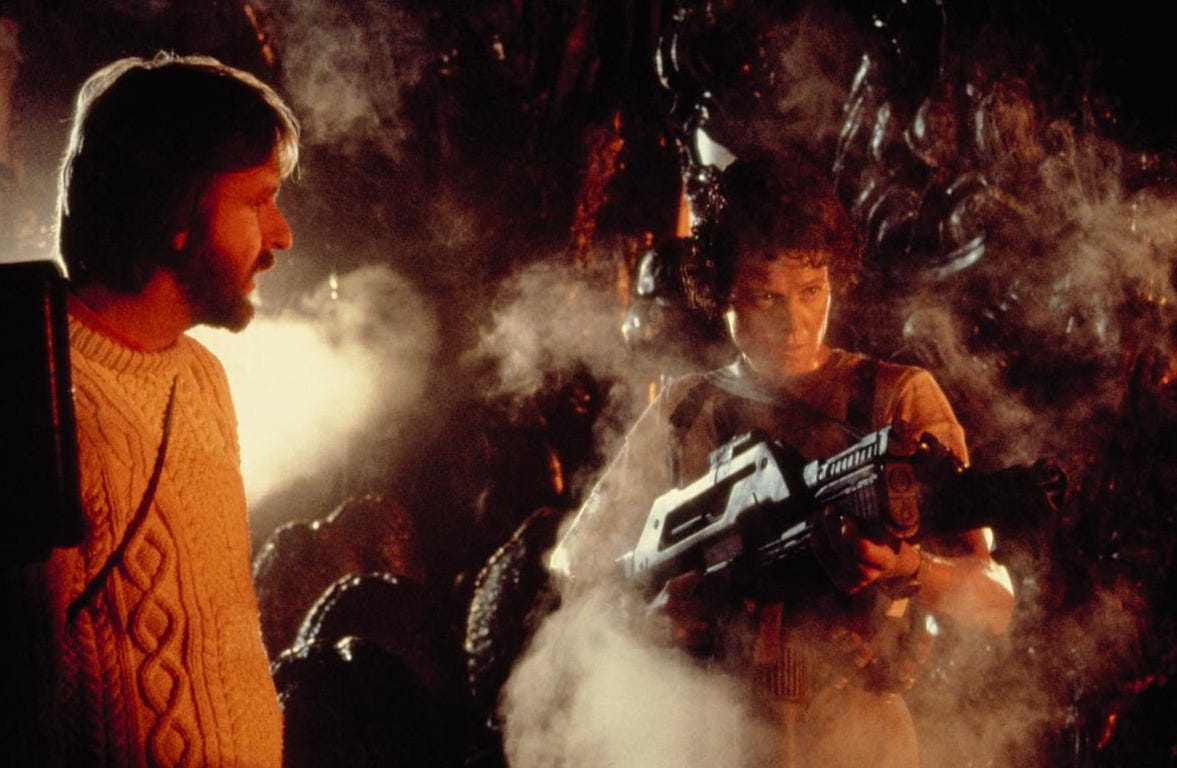
What follows has to be one of the most ambitious if insane feats of creative writing I’ve ever heard about: During a three-month period in 1983, James Cameron wrote three feature scripts:
The Terminator rewrite;
Rambo sequel;
Alien sequel.
It was a challenge of Herculean proportions that, in hindsight, feels very much in keeping with James Cameron’s entire approach to life and creativity: Do the impossible.
To solve the problem, Cameron approached it with a scientific and engineering rigor: He decided that each script would be 120 pages; that meant he had to write a total of 360 pages. He divided the total number of waking hours he had during that three-month stretch by the total page count to calculate how many pages he’d have to write per hour.
“And I just wrote that many pages per hour,” says Cameron.
But he went one step further to help him. Since these were three distinct films, each with their own identity and universes, Cameron decided that each project should have its own space for keeping all the relevant materials to the story in that area. So he went and got a desk for each script. Already owning one desk, he placed the two additional desks in the bedroom and the living room. He explains:
“That way when I moved from one desk to the other, all the notes and papers and everything were right where they were supposed to be.”
Does that seem excessive?
On the contrary, it’s an effective psychological trick: By literally dedicating different spaces for each project, he’d be able to literally move between stories and work better than if he kept everything in one space and had to keep switching back and forth.
With his writing arrangements sorted, Cameron got to work. During the day, he’d attend to pre-production duties on The Terminator. When he got home in the evenings, he’d start working on the three scripts and write into the early hours of the morning. He wrote longhand on yellow legal pads, listening to music to help put him in the mood— the Apocalypse Now soundtrack for Rambo: First Blood Part II, and Gustav Holst’s ‘The Planets’ for Aliens (‘Mars, Bringer of War’ was a favorite)—and drank lots of coffee and eat plenty of junk food.
But despite it all, even Cameron couldn’t quite finish all three scripts by the end of three months. It was just impossible.
What happened is that he devoted his time to the Rambo sequel (he wrote four drafts)5 and The Terminator as filming was about to start soon; by contrast, he’d only finished ninety pages of Aliens by the end of those three months. After all, the man is only human, and I’m pretty sure working all day and all night for three months straight on three stories must have taken a lot out of him.
But while Brandywine Productions liked what Cameron had written, Twentieth Century Fox was a little more lukewarm6. Cameron recalls: “An executive told me he didn’t like the treatment because it was wall-to-wall horror and it needed more character development.” There was discussions about Fox selling the rights to producers Mario Kassar and Andrew Vanja (Rambo) but the deal wasn’t closed7.
Meanwhile, Cameron moved on to film Terminator now that Schwarzenegger was free again. It was now 1984.
But Cameron’s luck was really good. In July 1984, Lawrence Gordon took over as Fox’s head of production. Needing projects, he looked for possible sequels and came across the Aliens file. Recalled Gordon:
I couldn’t believe it hadn’t already been done. In this business there are those decisions you agonize and lose sleep over, but this was so obvious. It was a no-brainer.
Even better, Gordon had worked with Walter Hill before, having produced the Eddie Murphy-Nick Nolte buddy cop movie 48 Hrs.; he revived the project and it was Gordon who agreed to let Cameron write and direct the script after seeing an early cut of The Terminator; the deal would include Gale Anne Hurd as producer.
Gordon, who’d later be appointed as the Fox president before stepping down prematurely due to health concerns, said about his decision on picking Cameron:
Sometimes a director fits a movie like a glove. Everything about him spelled right guy, right guy, right guy.8
Of course, Fox could easily have gone back on its word— Hollywood always has another “right guy” just around the corner. However, producer Gale Anne Hurd said: “We chose to believe it.”
As Rebecca Keegan says in her Cameron biography The Futurist: The Life and Films of James Cameron:
Sometimes when you’re young in Hollywood, it pays to assume people actually are telling you the truth.
Julia Phillips, producer of The Sting and Taxi Driver, warned James Cameron about directing the sequel: People would attribute anything good in it to Ridley Scott’s film, and anything bad to Cameron.
“Yeah, but it’ll be cool,” Cameron said.
Later, he’d recall:
“I was such a geek fan. It may have been hubris, but I never really considered how it could have been career suicide.”
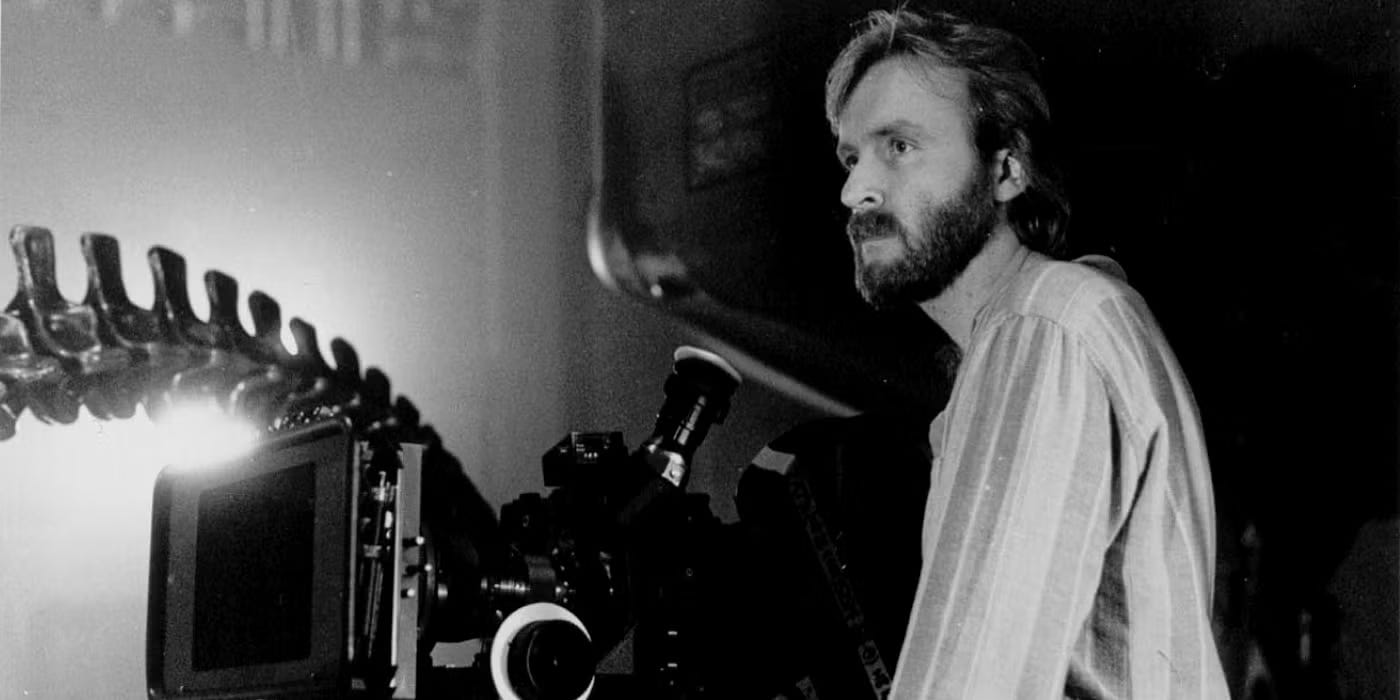
There’s a story, possibly apocryphal, that James Cameron came up with the title by holding up the back of a torn-off script page, writing ‘ALIEN’ in Magic Marker, then adding an S and drawing two vertical lines through it, turning it into a dollar sign. Regardless of origins, the sequel had a title.
Keep in mind, in the 1980s, sequels were still a rarity. And half a decade had lapsed since Ridley Scott’s film had opened. That’s a long time between movies; a 13-year-old kid in 1979 would have been 20 when Aliens came out. Mind, this is also before home video made it possible to watch films endlessly. But Giler and Hill believed that a war movie in space had solid box-office potential.
As for Cameron, packaging Aliens as a war movie came with upsides: He knew there was no way he could outdo Ridley Scott in creating the atmosphere of horror made Alien so good. What he did know was that he was good with action and combat; he could take what Scott had created and make it his own.
His research into the Vietnam War, especially for the Rambo sequel, also allowed him to layer the metaphors of that conflict into the story. He watched Apocalypse Now, and read Tim O’Brien’s ‘Going After Cacciato’ and Michael Herr’s ‘Dispatches’, and made connections between Aliens to the Vietnam conflict. “It was a definite parallel to Vietnam to tell the story of a technologically superior military force which is defeated by a determined, furtive, asymmetric enemy.”
A fan of war movies, Cameron envisioned Aliens modeled on World War II combat pictures like Sahara or The Dirty Dozen— where a squad of soldiers trapped behind enemy lines must pull together to face an overwhelming foe— as well as the 1960 John Wayne vehicle The Alamo, in which Wayne, as Davy Crockett, galvanizes his overmatched, ragtag troops against the advancing Mexican army. In Aliens, Sigourney Weaver’s character, Ripley, would be the John Wayne character in this movie, leading the charge.
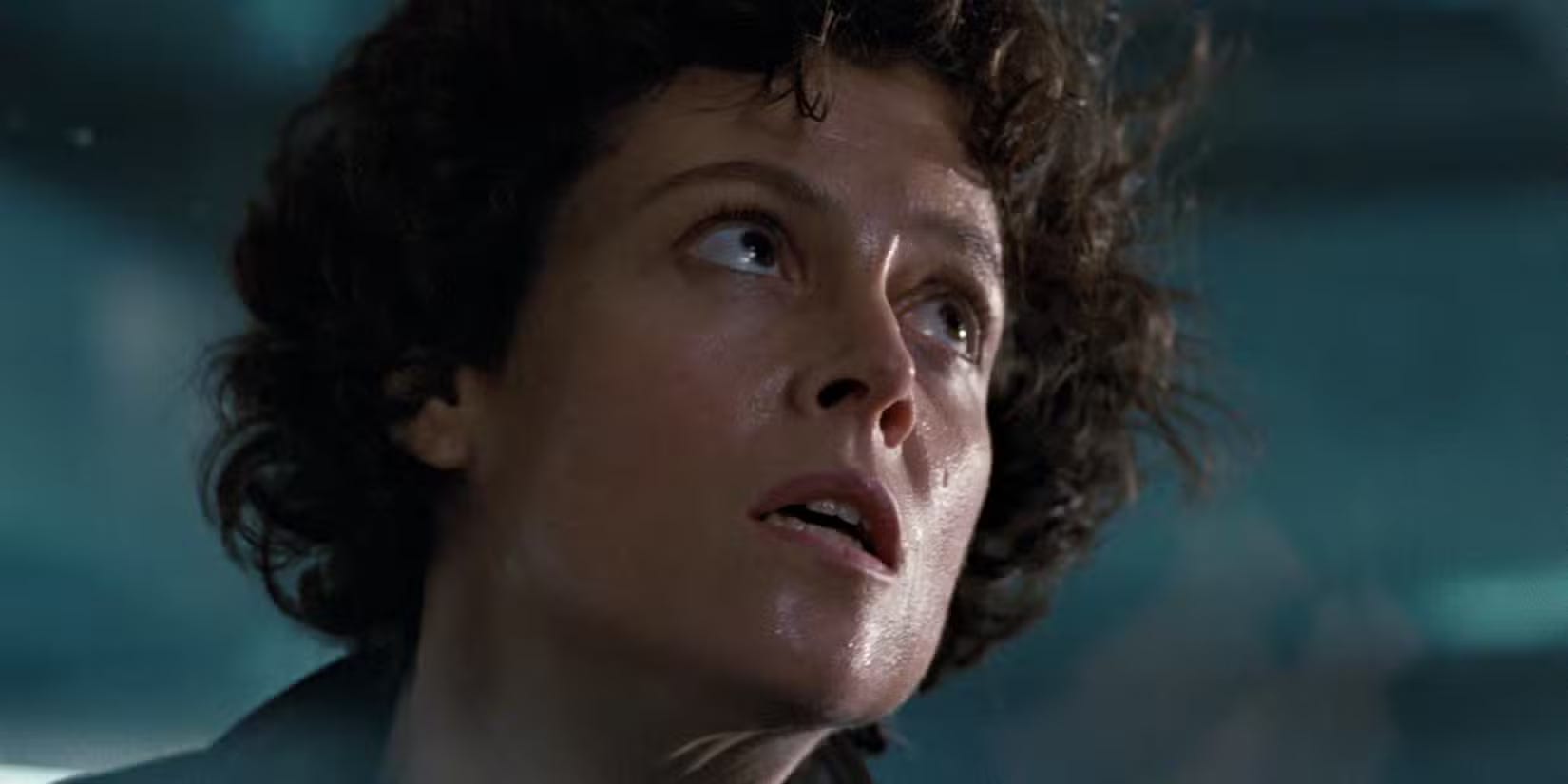
Bringing Ripley back seemed like a no-brainer— after all, she was the sole survivor in Alien and provided the connective tissue to Scott’s film. When Cameron was writing the script, he kept a picture of Weaver by his side; and if you watch closely, Ripley is there in nearly every scene. He fleshed out her backstory and character, giving her the first name of Ellen, and adding an element of tragedy where her daughter back on Earth had died while Ripley had drifted for fifty-seven years in hypersleep. The maternal subtext is carried throughout the film, especially when she takes on the protective role of LV-426’s lone survivor, the little girl Newt, as a surrogate daughter9. Despite not being a parent at the time, Cameron wrote a convincing parental love story, something that took him by surprise when he looked back on it decades later:
I’m surprised that I got it as right as I did, since it was not an emotion I’d ever felt. I had never even had my own dog.
So imagine Cameron’s surprise when he learnt that Weaver wasn’t under contract for a sequel; and, worst of all, had no interest in revisiting the world of Alien.
Cameron took a gamble— as he always has in life, it would seem!— and called Sigourney Weaver herself, who was in France at the time filming One Woman or Two with Gérard Depardieu, and told her:
Look, you don’t know me from Adam10, but I just wrote this script I’m calling Aliens. And now I’m in an embarrassing situation. I’ve been working on this film for some time, but now I’m being told you know nothing about it. So— can I send you the script?
Needless to say, Sigourney Weaver was intrigued by the script, but she still had to be persuaded it wasn’t a mere cash grab. She nearly walked when Fox refused to pay the higher fee she wanted; negotiations grew so lengthy that allegedly, Cameron and Hurd called Arnold Schwarzenegger’s agent to say that they were going to write Ripley out of the film— they knew the agent would pass this to Weaver’s agent who’d then inform Fox’s Head of Production.
True or not, Weaver ultimately signed on for the role that would turn her into a cinema icon and earn her an Oscar nomination for Best Actress.
But Cameron’s challenges were a long way from being over.
With the Avatar movies, Cameron has since shot entirely in New Zealand. Prior to that, he’d shot his films in America. But for Aliens, he’d shoot at Pinewood Studios in England… and it would be the first and only time that he’d make a movie over there.
Just as the Marines are put through hell in Aliens, Cameron found making the film in England a nightmare. Cameron, raised in the Roger Corman school of filmmaking tradition— worked hard and worked fast. He was not used to the way the British crew would— and the tea breaks that would bring production to a halt would be the bane of his existence.
The tensions weren’t one-sided: the British crew did not like Cameron. It didn’t help that they mistook him for an American— he is actually Canadian, and in 2025 was granted New Zealand citizenship— but they seemed to dislike the notion that he had not paid his dues and worked his way up the system. Nor did things get better when Cameron, a filmmaker who knew what he wanted and could probably do everyone’s job, had no regards for union rules— if he wanted to move a light, Cameron would do it himself instead of waiting to ask a crew member. Tensions were also high because the crew thought that Gale Anne Hurd was only producer because she was Cameron’s wife instead of an accomplished producer and creative collaborator— they didn’t seem to realize that Hurd was the ONLY person unafraid to stand up to Cameron and challenge him11. Not sexist at all.
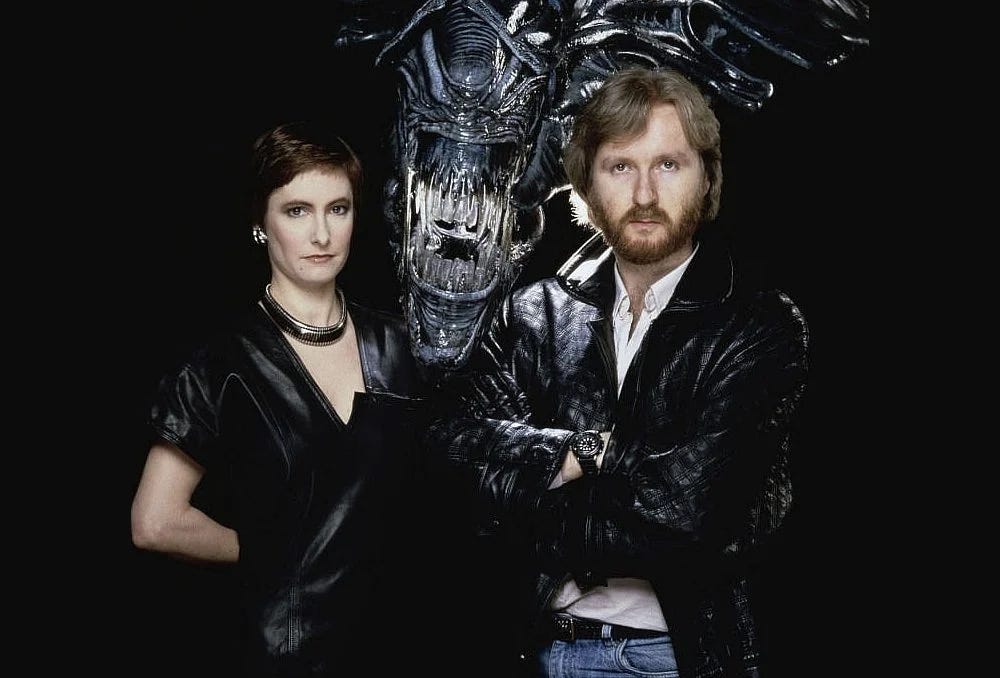
Cameron recalls:
Gale and I were shocked to be working with people who simply couldn’t care less about the film they were working on. The Pinewood crew were lazy, insolent and arrogant. There were a few bright lights amongst the younger art department people, but for the most part, we despised them and they despised us.
Things got so bad that Cameron fired the original Director of Photography, Dick Bush, because they kept clashing, and replaced him with Adrian Biddle. James Remar, who was cast as Corporal Hicks on Walter Hill’s recommendation, was also fired when he was arrested for drug possession; Michael Biehn replaced him. But things really came to a head after Cameron fired first assistant director Derek Cracknell. The first AD felt he was better qualified to direct the film and would undermine Cameron’s and Hurd’s authority. Hurd recalls:
Jim would ask him to set up a shot one way and Derek would say, ‘Oh no no no, I know what you want.’ Then he’d do it wrong and the whole set would have to be broken down.
All this caused Hurd and Cameron to fall behind schedule. When Cracknell was fired, the crew walked. Things were at a standstill.
It was dicey. Hurd and Cameron couldn’t bring in another crew immediately to replace them; Cameron wanted to move the production out of England, but Hurd convinced him otherwise. She says: “It was, to this day, the most difficult moment of my entire career.”
Instead, they summoned everyone on the set for a meeting, and Cameron addressed them with characteristic frankness:
Look, this is a really important movie to me. This is my first studio movie. We have an almost impossible shooting schedule and I need everyone’s help. I can’t do this on my own. But I also can’t have a situation where it seems like the crew is working to prove that the endeavor is gonna be a failure. If you have a problem with that, you’ve gotta step forward cause we’ve gotta replace you.
The meeting ran for a long time, as crew members aired their grievances about the long hours (and Cameron’s hostility towards the tea breaks). In the end, a tenuous compromise was reached: The AD staff agreed to be more supportive, and Cameron would be more sensitive to tea time.
But though managed to work together cordially enough to finish principal photography on time and on budget, relations remained cool between Cameron and the British crew. When he wrapped up at Pinewood, Cameron addressed them again:
This has been a long and difficult shoot, fraught by many problems. But the one thing that kept me going, through it all, was the certain knowledge that one day I would drive out the gate of Pinewood and never come back, and that you sorry bastards would still be here.12
Cameron would keep his word: He never shot any of his films in England again.
The filmmaker would also clash with composer James Horner, who was under the impression he had seven weeks to compose the score, only to ultimately get two weeks because the film was still being edited. Horner was booked to score The Name of the Rose afterwards, and he couldn’t get more time; nor could they cancel the scheduled scoring session with the London Symphony Orchestra without forfeiting the entire fee. Horner later recalled:
It was horrible. It was just too hard. I think Jim and Gale thought I was just being an asshole and I didn’t get it. I completely got it. I knew it wasn’t going to satisfy everything they wanted.
Just to imply how stressful it was: Horner wrote the final piece of the score overnight and recorded it with the orchestra on the last day of the scoring session. Additional music was used after he left, but despite the positive reception and Oscar nomination for Best Original Score, neither composer nor director were entirely happy with the results. Still, they admired each other’s drive and creativity enough to meet ten years later to work on Titanic and another decade later, on Avatar. The working relationship ended when Horner tragically passed away in 2015 after the Short Tucano turboprop aircraft he was piloting crashed in the Los Padres National Forest near Ventucopa, California. He was only 61 years old.
Aliens didn’t just boost Cameron’s career. It helped Fox chairman Barry Diller prove himself in the eyes of Fox’s new owner, Rupert Murdoch. It also gave the studio a much needed lifeline. Fox’s marketing head, Tom Sherak, would say:
Aliens helped save the studio. I don’t even think Cameron knew what the impact was on us. It’s one of those rare times when one movie can change almost everything.
Cameron’s positioning of Ripley as the main character continued his trademark of making films with women in leading roles or at least equals with the male star, which helped drum up box-office receipts not just for Aliens but all his subsequent films.
Meanwhile, Aliens threw James Cameron into mainstream success and into the studio system, where he’d eventually prove himself to be a director who could make crowd-pleasing films about the things that he was interested in. With Aliens, he proved he could deliver a sequel that was as good as its predecessor while being entirely its own thing. Plus, the film’s unexpected seven Oscar nominations (winning for Best Visual Effects and Sound Effects Editing) continued the trend of genre fare gaining respectability and acceptance with the mainstream. And most of all, Cameron got something that all directors cherish but few receive: final cut.
And boy, would he wield that privilege quite well in films to come.
Thanks for reading! If you liked this essay, you can sign up here for more issues. If you’d like to support Three Left Feet Media, share this newsletter with a fellow film lover you think would appreciate it.
Long live the movies!
D.L. Holmes
His daughter was the producer but it was his company making the film.
Which, based on how his career turned out, seemed to have a solid backing.
Cameron would also recycle the genetically-engineered human-alien hybrid creature in ‘Mother’ for a tiny film series called Avatar. Don’t discard your story ideas!
It was Giler who’d recommended Cameron for the Rambo job.
Although Cameron wrote the first draft, Stallone took over and ultimately wrote what ended up on the film. Cameron would only say this much later: “[Rambo II] was written at a point when I had no money and was waiting to start shooting T1. Basically I did it as a writing assignment to stay alive for six months. To be honest I did that project because I felt First Blood was a pretty good film. It walked a fine line - Rambo doesn't kill anybody, but he disassembles almost an entire National Guard unit with snares and slings, relying on cunning and ingenuity to outsmart them. The second film, the one I wrote, was by its nature a little more violent because Rambo was going into enemy territory, but I tried to walk the same line. He didn't go out of his way to slaughter people just because they were wearing the wrong uniform. A lot of moral distinctions I tried to build into the script got carved away during the shoot. I didn't want to attach myself to that film in a strong way because the end result didn't represent what I wrote. It taught me the danger of writing something over which I'd have no control once it was done, and I won't do that again.”
In fact, one of the reasons over Fox dragging its feet was because Brandywine Productions was locked in a lawsuit with the studio over accusations of unpaid profits: thanks to creative accounting, Fox claimed that Alien was actually a loss.
Fate would bring Mario Kassar, Andrew Vanja, and James Cameron together later for Terminator 2.
Oh, Fox couldn’t even possibly begin to imagine: Cameron would make Fox his home for the rest of his career, even after it was sold to Disney, and make them oodles of money between Aliens, Titanic, and the Avatar movies.
The Ripley backstory got cut in the theatrical release to meet a two-hour runtime, but was restored in home video releases.
And then they’d go on to make four films together— so far.
It was her idea to remove the parts about Ripley’s dead daughter for the theatrical release to meet Fox’s stipulations of a two-hour runtime, which Cameron balked at initially until he realized she was right.
People might call James Cameron an asshole but honestly, it’s fun to hear about when you aren’t on the receiving end of his temper.