


It’s 2026, and the dystopian future of Children of Men is increasingly turning into our present. The future in which the film takes place— the year 2027— is less than a year away, and while we’ve avoided a crisis of global infertility, Alfonso Cuarón’s taut and masterful thriller saw exactly in which direction the world was heading.
It tried to warn us.
We just thought it couldn’t happen.
Could a world without children really trigger societal collapse? In Children of Men, a fertility crisis— with people unable to conceive for twenty years— might sound far-fetched until you realize that birth rates around the world are falling. Not that it’s never been low before— take the birth rates immediately after World War 2 before the baby boom, as well as in the aftermath of the Black Plague. No, the trouble is that in this world, the crisis became a political issue.
The film’s plot is really a road movie: Former activist Theo Farron (Clive Owen) is reluctantly roped into helping his former lover Julian (Julianne Moore) procure a visa to get young refugee Kee (Clare-Hope Ashitey) out of England. But when Theo discovers that Kee is pregnant, the first woman in decades to be so, he is compelled to get the girl and her unborn child to a safe harbor.
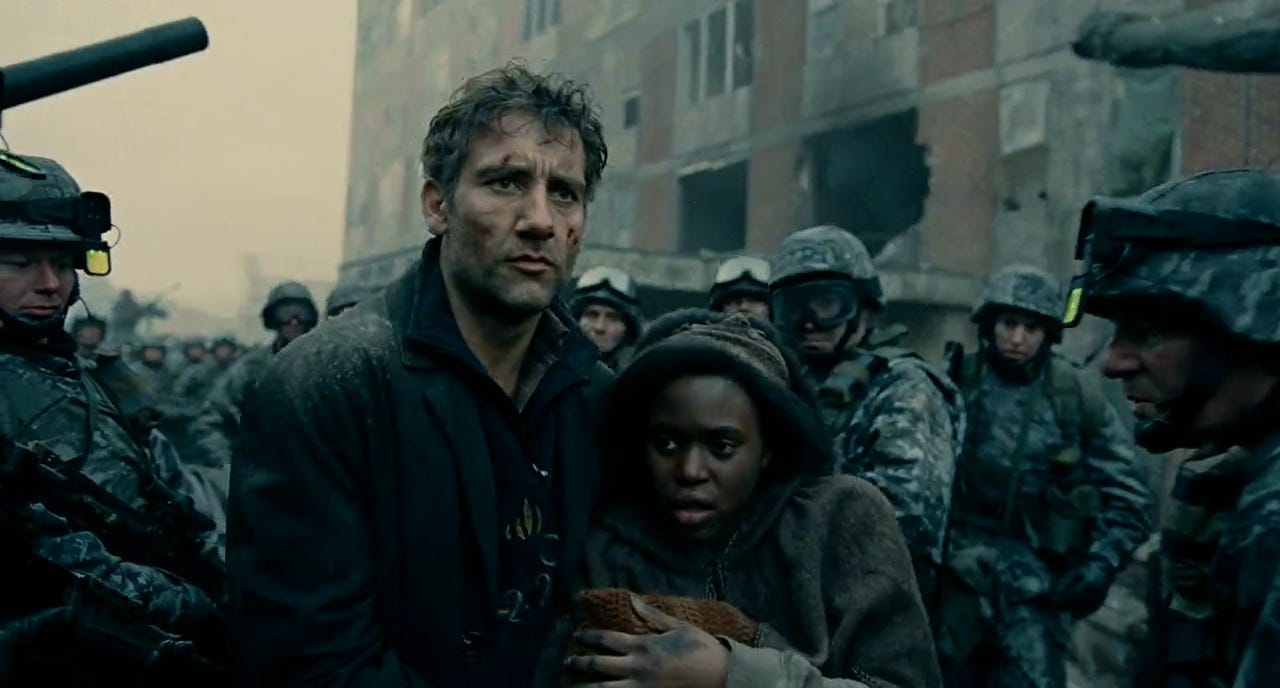
Alfonso Cuarón, who directed and co-wrote the film, doesn’t dwell on the details of what triggered global infertility or how Britain turned into an authoritarian regime. “There’s a kind of cinema I detest, which is a cinema that is about exposition and explanations,” explains Cuarón. “Cinema has become now a medium — well a lot of mainstream, and even indie sometimes — it’s become now what I call a medium for lazy readers. It’s illustrated stories. You can close your eyes and you can follow the movie. What’s the point of seeing the movie? Cinema is a hostage of narrative. And I’m very good at narrative as a hostage of cinema.”
No, he’s more interested in what happens after the fact; that’s the story. It’s up to us to fill in the blanks about how the world got there1. Viewing the fertility crisis as a “metaphor for the fading sense of hope”, Cuarón saw a promising story about now and the future.
Cuarón didn’t want to make it at first.
Children of Men is based on P.D. James’ 1992 novel ‘The Children of Men’, so it had been around for a while. Although Cuarón had tested the waters of Hollywood with A Little Princess and Great Expectations, it was the success of his 2001 Mexican film Y tu mamá también that really got Hollywood’s attention. Several pitches and scripts came his way, none that interested him. One that piqued him was about “a world wracked by infertility”; it intrigued him enough to discuss it with writing partner, Timothy J. Sexton. But there were two problems: Cuarón was turned off by the prospect of “a science-fiction thing about upper classes in a fascist country”, and that it felt too much like a B-movie. Meanwhile, Cuarón was still taking Y tu mamá también around the world, with a screening scheduled to be held at the Toronto Film Festival in Canada on September 11, 2011.
Then, 9/11 happened.
Air travel was suspended. Stranded with his stars, Gael García Bernal and Diego Luna, the director— like the rest of the world— was grappling with the enormity of what had happened. “I was talking with Gael, I remember, and thinking about what’s going to happen, trying to understand what was going to shape this new century,” recalls Cuarón. As America and the world reeled, suddenly he could see chaos looming. He called up Sexton. He knew how the mass infertility story could work.
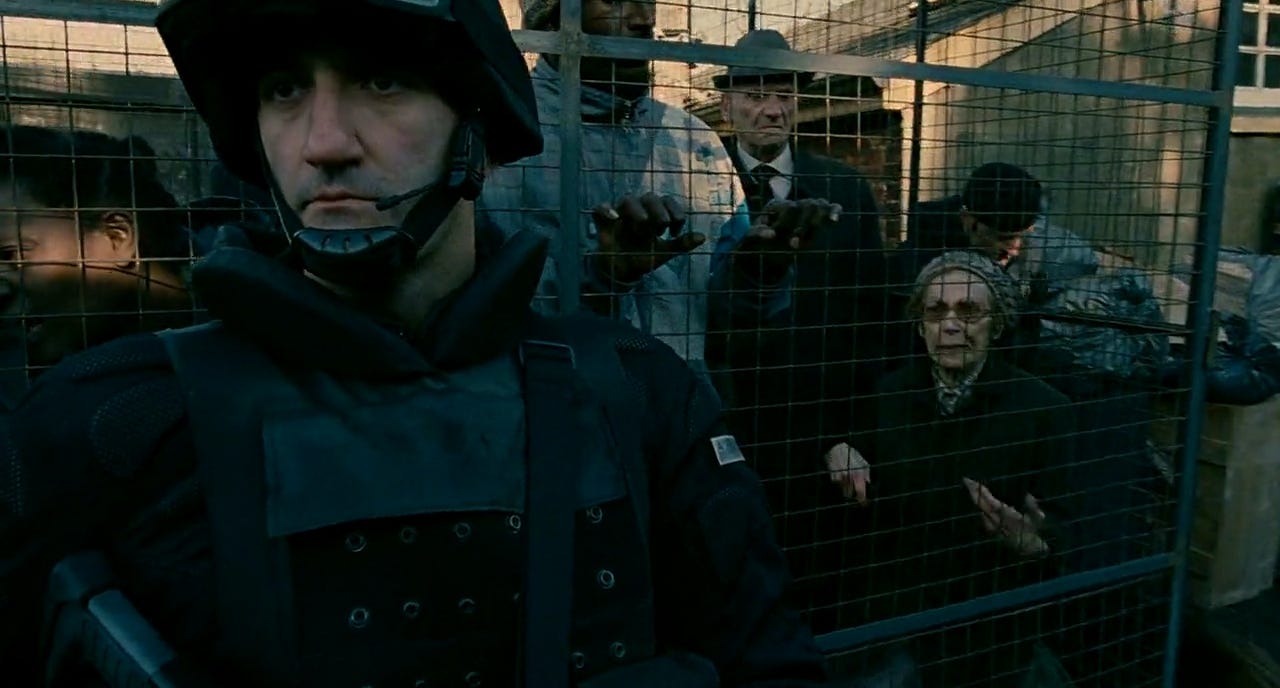
“Our point of departure was, we’re at an inflection point,” says Sexton. “The future isn’t some place ahead of us; we’re living in the future at this moment.”
Book purists demanding that film adaptations be faithful to their source material would be scandalized by Cuarón’s refusal to read the P.D. James novel. Perhaps more blasphemously, he and Sexton decided to throw out nearly everything except the character names, the British setting, and the concept of the first pregnancy in a world absent of children. Cuarón recalls:
“I was so scared to sidetracking and second guessing myself that I asked [Sexton], I said, ‘You know I’m not going to read it, because I want to be clear and this is the movie I want to do. ‘Why don’t you read it? And now you know the movie I want to do. Why don’t you then bring into the table the element that you think I’d want to be relevant to tell the story that I’m telling?’ And that’s what we did.”
Things that changed: For starters, Kee doesn’t exist in the book, it’s Juliane Moore’s character, Julian, who gets pregnant. “We just took a big departure there,” says Cuarón. “We did have to honor the part of the story of the immigration [addressed in the book], but we created the whole thing with the refugees. We took the book as a point of departure to look at the state of men now, and added things like the Homeland Security and the whole idea of what is happening outside in the world.”
After getting the greenlight from producers Eric Newman and Marc Abraham, and as soon as the travel ban was lifted, Cuarón and Sexton got to work. The pair traveled to New York City, still recovering from the attacks; from there, they stopped at Milan where Cuarón’s then-partner was living, and accidentally got a front-row seat to Italian progressives protesting anti-globalization2. Finally, they arrived in London and stopped to finish the first draft. “London in November and December is a pretty great place to imagine the end of the world,” says Sexton. “It’s relentlessly bleak. I’m fairly certain the sun didn’t shine while we were there.”3 Meanwhile, Cuarón read up on plenty of political theory, from philosophers like Slavoj Žižek and John Gray, to activist journalists like Naomi Klein, in order to get the verisimilitude correct. At last, they turned in their script to Newman and Abraham; the latter two’s company, Strike, had a deal with Universal Studios, and they presented it to the studio.
The studio response was… not encouraging.
“I mean, you’re talking about a very intense, obviously very artistic film that’s not going to be cheap and has a political angle to it,” says Abraham. “Not an easy thing to finesse under the best of circumstances.” A big concern was about the protagonist’s fate4. But Cuarón stuck to his guns. Universal hesitated. And in that limbo, Cuarón got an unexpected major offer from Warner Bros: they wanted him to direct Harry Potter and the Prisoner of Azkaban, the third installment in the Harry Potter franchise. When Universal continued dragging its heels, Cuarón accepted the Harry Potter gig5.
Newman despaired. “I remember thinking, That’s the end, nobody ever comes back from a franchise.”
On the contrary: Harry Potter and the Prisoner of Azkaban was the best thing that could have happened to Children of Men.
Working on Harry Potter meant Cuarón had to live in London for two years. Suddenly, he found himself inside the British social dynamic, witnessing it as a part of the collective system—which is different from being “a tourist”. “I can’t claim to understand the Brits, but at least I witnessed the class system, for instance, and other subtle things,” says Cuarón. It’d prove immeasurably valuable for strengthening the cultural authenticity in Children of Men. On top of which Azkaban provided a masterclass to making a film on a larger scale with visual effects6, which prepared him for the technical challenges required of Children of Men.
The project never left his mind. During post-production on Azkaban, he called up Newman: he wanted to make Children of Men his next picture.
This time around, negotiations played out a little different. Azkaban‘s success gave Cuarón a little more leverage with Universal, who suddenly became more open to working with him. More encouragingly, the project found a champion in the most important person at Universal: studio chair Stacey Snider. As Cuarón remembers it, she told him, “I don’t understand this film, I have no idea what you want to do, but go ahead and do it.”
The producers and studio hadn’t exactly been idle— and not for the better. Children of Men has five credited writers, including Sexton and Cuarón; the others are David Arata (Spy Game) and writing partners Mark Fergus and Hawk Ostby (Iron Man). But Cuarón diplomatically and cryptically states that the aforementioned three writers had nothing to do with his version of the script7. As far as he’s concerned, the true writers were him, Sexton, and the film’s star, actor Clive Owen.
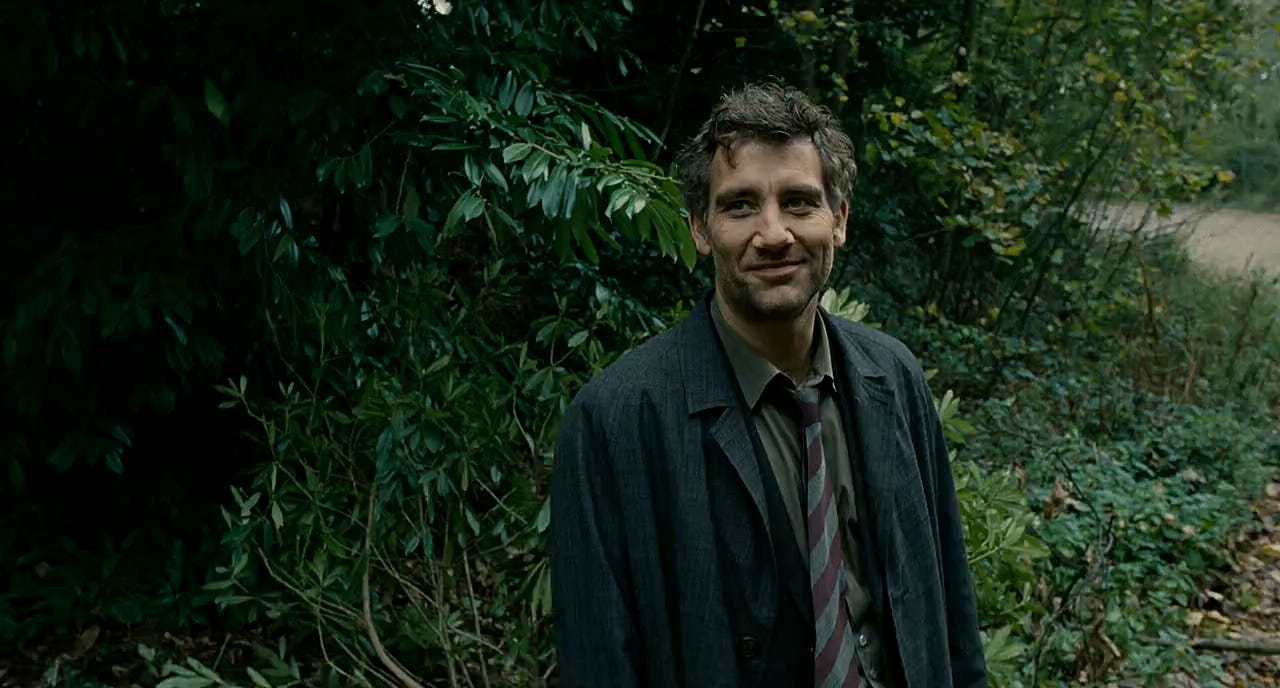
Clive Owen might not have a studio’s first-choice to lead a multi-million dollar film, especially when the other options included heavy-hitters such as Russell Crowe, George Clooney, and Matt Damon. But Owen was the one who got the project the best. Owen was getting a lot of buzz for his role in 2004’s Closer8; more importantly, he liked the script, though he admits that he couldn’t “see the character”.9 And Cuarón is effusive in his praise of his lead actor’s contributions:
“Clive Owen, now he was a writer. He got involved in this project with Tim and myself, we locked ourselves in a hotel room, and first we went over his character. And he had so much insight that we decided, Tim and myself, that Clive should be involved with the rest of the writing process, even if it was not about his character. I started to admire his instincts, and I asked him to be involved with the rest of the process.”
It was a troubled production from beginning to end.
Some of it was internal. Cuarón hints that people involved in the production hid budget numbers to “please the studio”.
Some of the producers point to Cuarón’s short temper over his perfectionist tendencies causing tension. “When he arrived on a set, if it wasn’t exactly as he wanted, he could just lay it out on somebody,” Abraham says. “He would say, ‘This is bullshit! This isn’t what we talked about!’ He didn’t say, ‘Oh, this isn’t exactly right. Can we do it a little better?’ It’s like, ‘This didn’t work. If you guys don’t get it right, I’m not shooting it.’”
Another producer, Iain Smith, saw it differently. “Alfonso has what I would call a performance temperament, meaning that he expects the best from everybody,” he says. “He wasn’t doing it to be egotistical. He was doing it because, like all good filmmakers, he was frightened of failing his subject. That was a good thing. It was a tempestuous experience.”
One such incident included the opening scene in which a terrorist bomb goes off on Fleet Street and nearly kills Theo. A few weeks before cameras rolled, real-life Islamist radicals detonated four bombs across London on July 7, 2005. Fifty-two people were killed, another eight hundred left wounded. It was with great reluctance that the government let them film the scene10, but they’d only get a day to shoot it. Cuarón, though, refused to shoot it because the cars hired looked new. For his dystopia, he needed them to be worn out and damaged.
So he climbs on the hood of one of the cars and starts jumping up down, smashing the hood. “He goes, ‘Eric, do we own these cars?’” Newman recalls. “I go, ‘Well, we own that one, that one, that one.’ And he just starts smashing them.” The producer told him that they could just use CGI to insert the damage. A new plan was made to paste orange stickers on the cars they’d tweak in post. But Cuarón intercepted the effects supervisor and proceeded to paste stickers on every car. “We probably had 30 cars, and he’s just sitting there and going, This one and this one and this one,” recalls Newman. “It was becoming a multi-million-dollar shot because of all of the animation. But Alfonso figured out a way to shoot it where all we had to do was digitally remove the tracking dots from the cars. He always made the camera work for him.”
Cuarón had also set technical challenges for himself and cinematographer and frequent collaborator, Emmanuel “Chivo” Lubezki. One such challenge was opting to use a lot of long unbroken shots, both in the quieter moments and also the action-driven ones. Cuarón wasn’t trying to show off: he had a legitimate artistic reason. “We don’t want to favor character over the environment, we want to keep a balance,” says Cuarón. “And that means that you don’t do close-ups, because then you are favoring the character over the environment. So you do only very loose shots, because then the character, ideally, blends with the environment and, hopefully, has a conflict. So you can have tension between background environment and your character.”
But while the finished results proved impressive and impactful, at the time of filming, the choice to use oners posed dangers. If the shot doesn’t work, you can’t cut in the editing room. That meant that they had to think carefully about the pacing of a shot beforehand, and it certainly meant avoiding montage for the sake of effect. Instead, Cuarón sought to “create a moment of truthfulness”, seeking something akin to cinéma vérité. Indeed, part of Children of Men’s visual power is its documentary-like nature, feeling less like science-fiction and more like unearthing a time capsule, but from the future. “What becomes important, then, is not the camera, but the moment,” says Cuarón. “If you are going through life and something happens, you don’t have the luxury of going, ‘Stop, stop, guys, and let me get a close-up!’”
The other danger of using unbroken shots is the risk of overindulgence or feeling flashy. Aware of this, Cuarón made sure to cut to a different shot or angle if the oner “was cutting away from that moment of truthfulness”. He cites the battle scene at the end as an example. “That shot kept on going,” says Cuaron. “And we said, no, we are losing the sense of the moment, and becoming more about ‘look, no hands,’ and so we decided to cut from that moment.
“It was about trying to achieve the balance of that, about trying to register that moment, making that moment the most important aspect of the whole thing,” he continues. “Not the shot.”
He’s referring to the film’s showstopper sequence: the battle in the Bexhill refugee camp. The antagonists, the Fishes, break into the camp; all hell breaks loose. Separated from Kee in the skirmish, Theo runs through the disintegrating camp with bullets and bombs flying around him to find the young girl and her baby. The whole thing plays out in an unbroken one-take shot lasting 379 seconds, requiring hundreds of moving parts and the kind of planning normally reserved for invading a country.
“I think we had 14 days to shoot the whole set piece, except by day 12, we hadn’t rolled cameras yet,” Cuarón recalls. It was only on the afternoon of the 13th day that they were ready to start shooting.
But the first take was abruptly stopped around the 90-second mark. It was, in Cuarón’s words, “just wrong.” The reset took five hours, meaning they lost the daylight and had to go home. That left them only one more day to get the scene.
The next day, they started— only for camera operator George Richmond to trip and drop the camera. Another five hours were needed to reset. With the clock running out and no more days on the schedule, they had only one more chance to get the take.
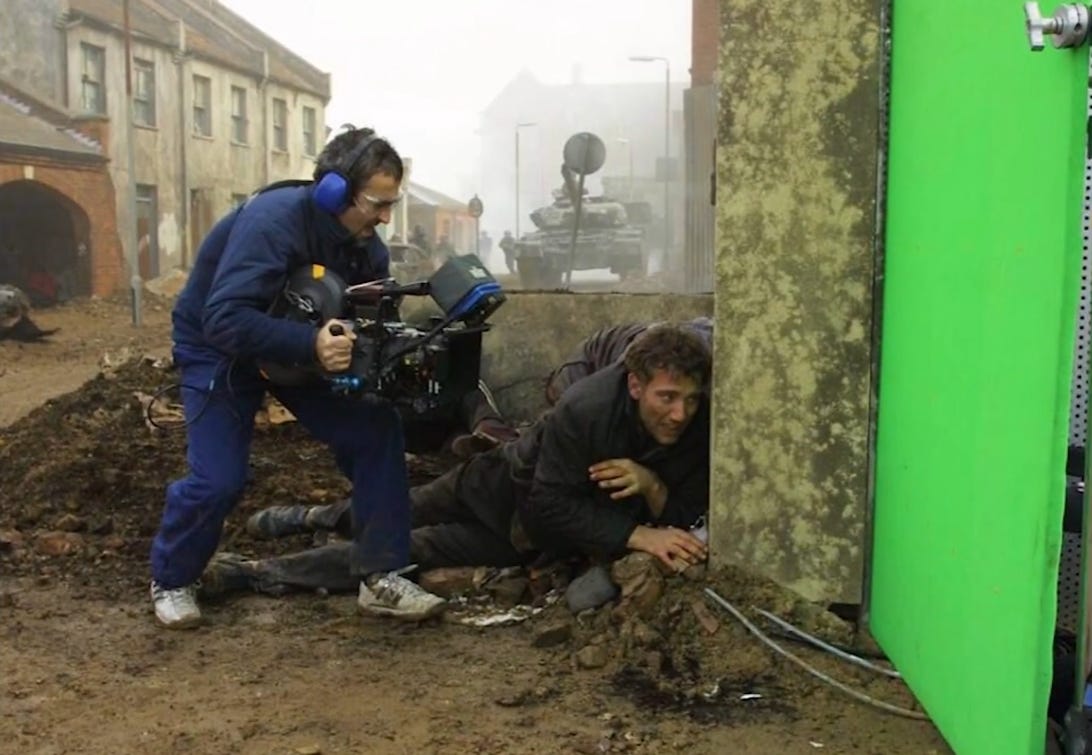
Cameras rolled. Cuarón watched on the monitor. So far, so good. They reached a hollowed-out bus through which Theo had to scamper amongst people hiding. Suddenly, to the director’s horror, a squib misfired and a squirt of fake blood hit the lens. It felt like the end of the world for Cuarón.
“I yell, ‘Cut!’ but an explosion happens at the same time, so nobody hears me,” he recalls. The scene went on. Defeated, Cuarón let it play out, certain the shot was ruined. There would be no more opportunities for another take. But when they finally cut, Cuarón recalls Chivo was “dancing like crazy” and says:
“And I was like, ‘No, it didn’t work! There’s blood!’ And Chivo turns to me and says, ‘You stupid! That was a miracle! The blood goes here, not with Julianne Moore!’ Yeah, that was supposed to go in the other scene, but it happened here.’”
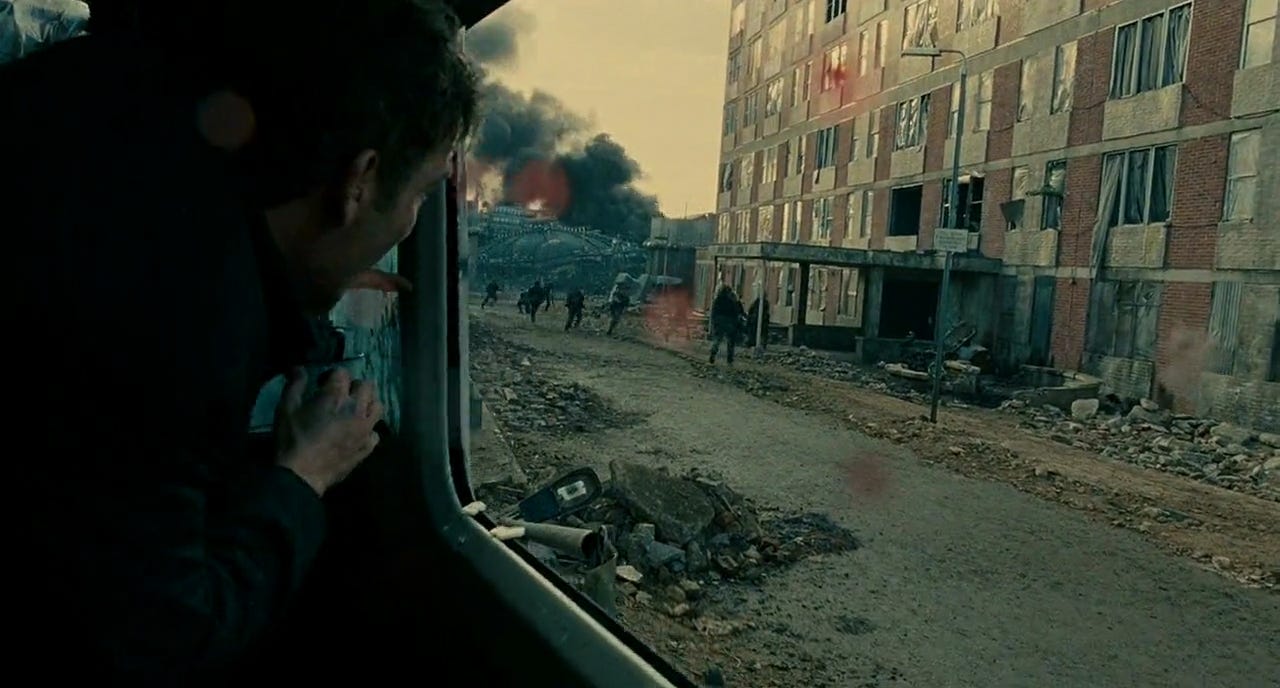
Lubezki was right. That misfire and splatter of blood doesn’t ruin the shot—on the contrary, it only heightens the intensity and horror of the scene, putting us right there in the middle of the action.
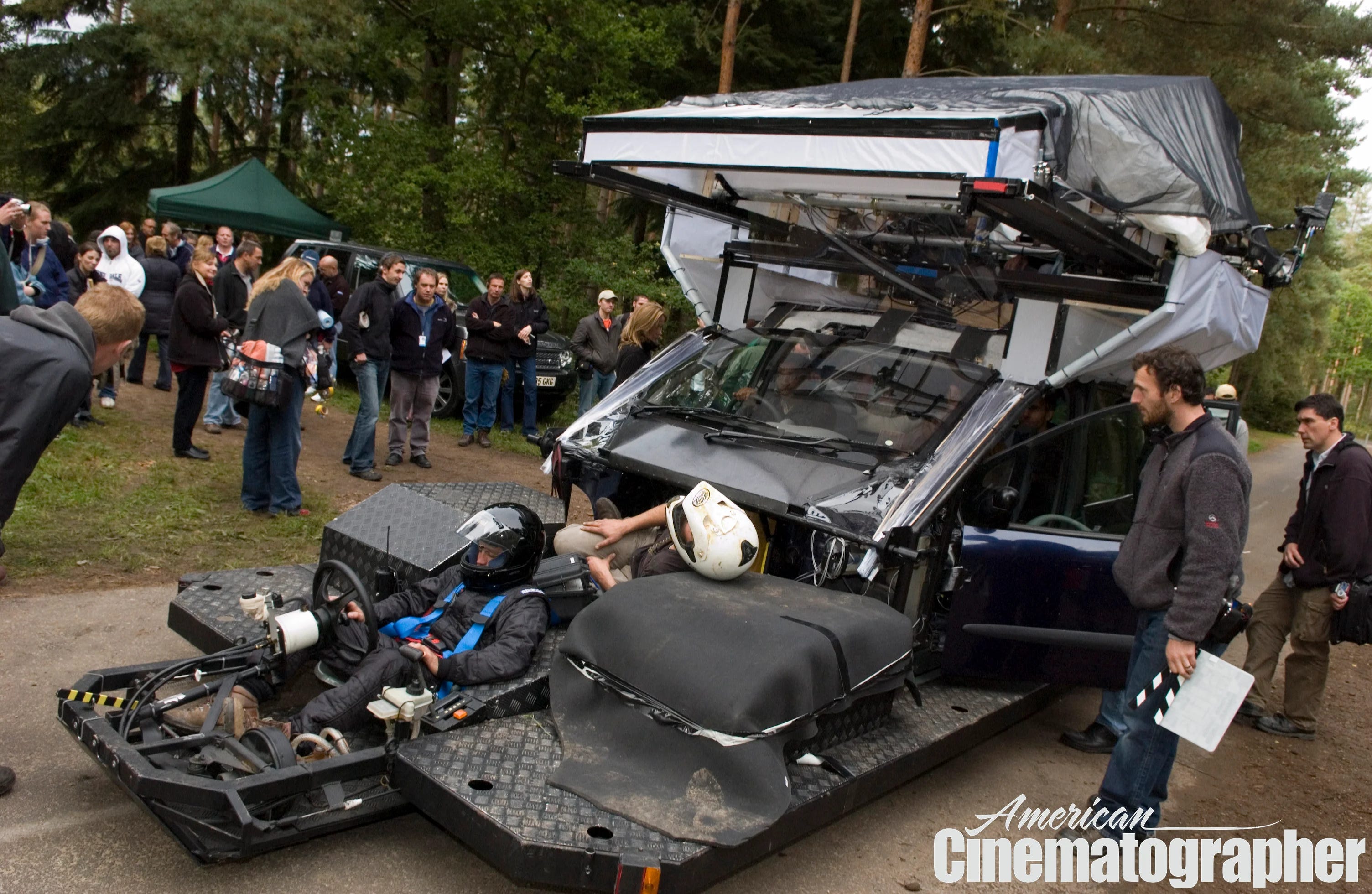
As for the Julianne Moore scene in question, Lubezki is referring to the car chase scene in which Julian is shot and killed11, the point of no return for Theo. As with all his choices, the intention of filming the car chase in a one-shot take was to keep the audience stuck in the car with the characters and experience the violence. Cuarón wanted to push back against the glamor of violence. “When you constantly cut out, back, forward, you’re presenting the cool ways for a car to crash, as opposed to the random way in which violence happens,” he says. “So it was in the [script] page, more or less. But then you get into the simple thing of how do you put it together?”
Lubezki, for one, was skeptical and in a meeting, he made it clear that, from a technical point of view, it was impossible. But Cuarón refused to budge, so he goaded his friend by suggesting they do it in green screen instead. Lubezki was incensed. “If this shot is green screen, I quit!” he threatened. Cuarón, though, wasn’t worried. He knew that issuing a challenge to Lubezki would result in getting what he wanted.
Sure enough, the next day he told the director, “Okay, I talked to my friend. We can do this.”
The friend was cinematographer and owner of Doggicam Systems Gary Thieltges, who had created a wireless camera dolly called PowerSlide that had the ability to rotate within the car and could be controlled by a stunt driver. The car was modified, making it possible to lift and lower the seats to get the actors out of the camera’s way, as well as the windshield that could tilt and allow the camera to move freely through it. The cast spent two days rehearsing the complicated choreography. The results are absolutely stunning.12
In keeping with the grounded reality of the future he wanted to depict, Cuarón gave his files to his art department and other production heads. Far from a high-tech future with fancy cars and gadgets like in Minority Report, the dystopia of Children of Men drew from real world imagery. Cuarón says: “[The references] was about Iraq, Somalia, Sri Lanka, Northern Ireland, the Balkans, Chernobyl.”13 He goes on, “Most of those things we tried to make references coming from the media, referencing that they had become a part of human consciousness, and that maybe we don’t fully remember, but when you see it you recognize something that rings true because you have seen it in reality -- even if you don’t really remember it consciously. And so the exercise was to transcend not only reality, but also to cross-reference within the film to the spiritual themes of the film.”
Here’s an example. In the scene where Theo and Kee leave the Russian apartments, he says, “The next shot you see is this woman wailing, holding the body of her son in her arms. This was a reference to a real photograph of a woman holding the body of her son in the Balkans, crying with the corpse of her son. It’s very obvious that when the photographer captured that photograph, he was referencing La Pieta, the Michelangelo sculpture of Mary holding the corpse of Jesus.


“So,” he continues, “We have a reference to something that really happened, in the Balkans, which is itself a reference to the Michelangelo sculpture. At the same time, we use the sculpture of David early on, which is also by Michelangelo, and we have of course the whole reference to the Nativity. And so everything was referencing and cross-referencing, as much as we could.
Snider, the chairperson who had supported Children of Men, left Universal Pictures in early 2006 before the film’s December release.
That was bad news: A change in the guard often means that the new bosses have little incentive to support films they didn’t greenlight. It didn’t help that Children of Men’s artistic ambitions stymied Universal on how to sell a dystopian and bleak science fiction film that looked nothing like other science fiction films, in which the film’s biggest star gets shot not even halfway through the story.
Dylan Clark, the film’s liaison with Universal, recalls, “Had Stacey been present for the release of it, she might have done a better job handling fears and anxiety in the marketing department than somebody coming in cold going, ‘Yeah, this one’s a toughie.’”
The results show in the marketing. Trailers were misleading and featured a lot of expository voice over from Owen about infertility. The posters were equally confusing: the least worst offender had an image of a golden fetus against a black backdrop; the worst one had a smirking Owen, with a clichéd tagline about how “He must protect our only hope.”


Unsurprisingly and sadly, the film under-performed at the box-office, despite the critical acclaim it built from its premiere at the 63rd Venice International Film Festival to later14. Perhaps Cuarón can take solace in Children of Men’s longevity, with many—including myself—discovering it years later on home media, and loving the film15. Slovenian philosopher and cultural critic Slavoj Žižek, whose work Cuarón studied for prep, is one of the film’s biggest fans: “A good portrait is more you than you are, yourself, and I think this is what the film does with our reality,” he says in a documentary featurette that accompanied the DVD release. “It simply makes reality more what it already is.”
There is perhaps less solace to be taken from the fact that even if we avoid a fertility crisis, we might not be so lucky avoiding a global political platform built on authoritarianism and fascism. The breakout of the Iran war, the escalating humanitarian crisis in the Israel-Palestine conflict, the increasingly tightening grip of fascism, the harrowing killings of two citizens by ICE agents in America, and, of course, more tellingly, the growing xenophobia against immigrants in every country. More and more, it feels as the world is swaying to the rule of cruelty and authority versus democracy.
It’s hard not to feel despair for the future. The filmmaker who painted this bleak vision believes, though, that the dark days will also bring transformation. Nothing, after all, lasts forever. Not really. “Look, I’m absolutely pessimistic about the present,” Cuarón says. “But I’m very optimistic about the future.”
Thanks for reading! If you liked this essay, you can sign up here for more issues. If you’d like to support Three Left Feet Media, share this newsletter with a fellow film lover you think would appreciate it.
Long live the movies!
D.L. Holmes
Here’s how I see it: Authoritarians like to preach about the virtues of making babies for the country— Hitler literally had a Lebensborn program that tried to increase the number of children born who met Nazi standards of ‘racially pure’; Mussolini’s National Organization for the Protection of Maternity and Infancy (ONMI) took control of 5700 different institutions that provided care for women and children to encourage women to have more children; Putin’s and Orban’s Russian and Hungarian governments respectively are trying to incentivize women to have more babies— control women and police their bodies by reducing them to the status of babymakers and nothing more; and make immigrants the scape goats of a country’s problems. So: If a population panics about its nation’s falling birth rate, and if men resent women for being more educated and earning more in the workplace, AND if a country bristles at the government for relaxing immigration laws to help fill in the workforce gaps— and if this is all happening during economic turmoil— authoritarians are likelier to be voted into power, and then countries become HUGELY pro-natal, anti-women, and anti-immigrant, which leads to, well, dystopian outcomes. For most people, anyway—in any dystopian/fascist regime, there are always people who benefit greatly. But that’s just a theory.
Recalls Sexton: “We were there and they were happening, so they became significant in our understanding of the world. One of the things we said was that if it wasn’t happening right now, it didn’t belong in the movie.”
Cue ‘Here Comes the Sun’ by The Beatles.
Spoiler: he dies.
Thanks to Guillermo del Toro! Cuarón planned to turn down the offer but del Toro, his friend and fellow filmmaker, called him an “arrogant bastard” and told him, “You are going right now to the fuckin’ bookshop and get the books and you’re going to read them and you call me right away.” So Cuarón did: “When he talks to you like that, well, you have to go to the bookshop. Cuarón read the first two books and was halfway through third when he called del Toro: “And I called him and said, ‘Well the material’s really great.’ He says, ‘Well, you see you fuckin’ ...’ I mean, it’s just untranslatable from the Spanish...”
Cuarón would reunite with Harry Potter producer David Heyman to make 2013’s blockbuster extravaganza Gravity.
According to Cuarón, the final credits boiled down to guild stipulations. “If you are a writer who chooses also to direct, your guild is going to punish you,” he says, “and deal with credits in a different way than if you were not directing. But anyway, that’s the way it is.” He went on to say, “I met with one writer who was trying to turn this into a generic action movie, and the other two I didn’t even meet, didn’t even know existed.” He adds, “Except for Tim Sexton and myself, for me, all these other writers, it’s just studio development work that I’m not even interested in discussing, because I don’t know what they did, and I couldn’t care less.”
Plus an Oscar nomination for Best Actor in a Supporting Role.
Having read read a script draft that is certainly dated before Owen’s contributions, I believe that the finished film’s nuance is due to the actor’s involvement. For instance, in an early scene when Theo meets his estranged wife Julian after a long time, the script has Theo reacting angrily. Owen didn’t think that worked, so he plays it muted instead—and the film is all the better for it.
They had to honor the existing agreement!
Spoiler!
Both sequences, however, are actually the combinations of several takes that the visual effects team had to put together in order to make it seem like one continuous shot.
Fun fact: A fan of infamously anonymous street artist Banksy, Cuarón tried to get him as another artistic collaborator (this was before Banksy became famous) and went as far as to track down Banksy’s manager and arrange a meeting at a coffee shop. Cuarón sat across from the manager, answering his questions; Banksy was nowhere to be seen. The meeting ended without a resolution. But later, a person nearby excitedly told Cuarón that a figure had silently walked in during the meeting and sat behind Cuarón, hidden from view, and left before the director noticed him. Cuarón suspects it was Banksy. Unfortunately, the street artist didn’t sign on for the film, but he did give permission through his manager to let them use one of his works: a stencil of two cops smooching, in the background of one of the shots.
Children of Men would go on to be nominated for three Academy Awards (Best Adapted Screenplay, Best Cinematography, and Best Film Editing); as well as three BAFTA Awards, winning Best Cinematography and Best Production Design; and for three Saturn Awards, winning Best Science Fiction Film.
Despite the changes to her book, P.D. James is a fan of the film.