


Riddle me this:
Name a British filmmaker who became Hollywood’s biggest and famous director, was known for creating spectacle in his films, worked with many of the same actors, was often criticized for his portrayal of female characters, and whose wife was his closest and most important collaborator.
If you said Christopher Nolan, you’d be right.
But I’m actually referring to Alfred Hitchcock.
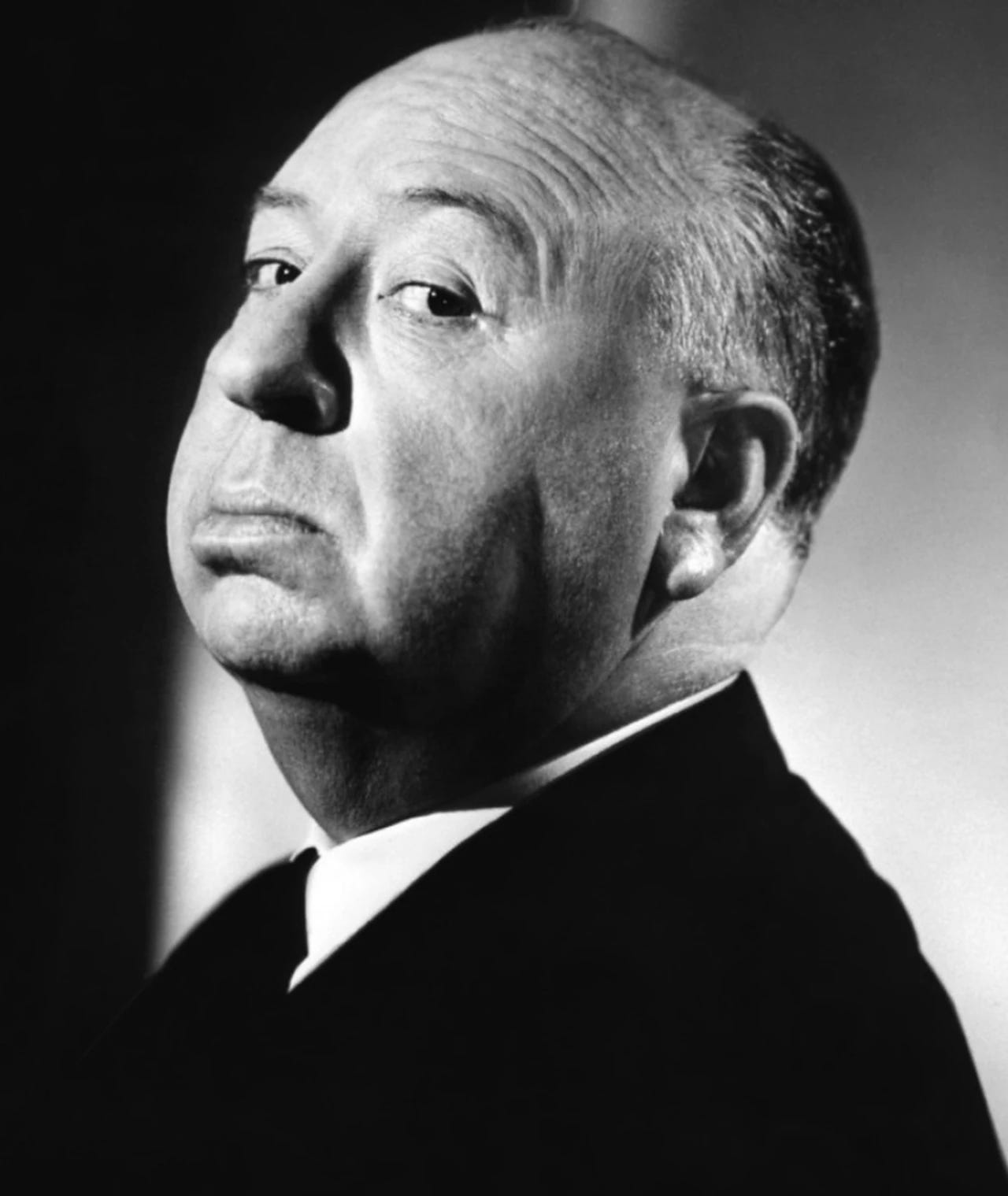
It’s uncanny: Just as Nolan reigns supreme today1, Hitchcock was also at the height of his game in 1959; and just as Hollywood is roiled by disruption and uncertainty today, the industry was equally in turmoil seventy years earlier thanks to the rise of television and interest in international cinema.
The parallels get stranger still.
In 1959, MGM released Alfred Hitchcock’s North by Northwest. It was the biggest film he’d ever made, shot entirely on VistaVision; it’s pretty damn great.
In 2026, Universal released Christopher Nolan’s The Odyssey. It’s the biggest film he’s made to date, the first to be shot entirely on IMAX cameras. I don’t know if it will pop up on lists of greatest films ever made like North by Northwest but I thought The Odyssey was a good time.
Picture, if you will: Across different eras, two well-known British filmmakers make the biggest films in their career.2 The question in both the past and present, is— was?— what next?
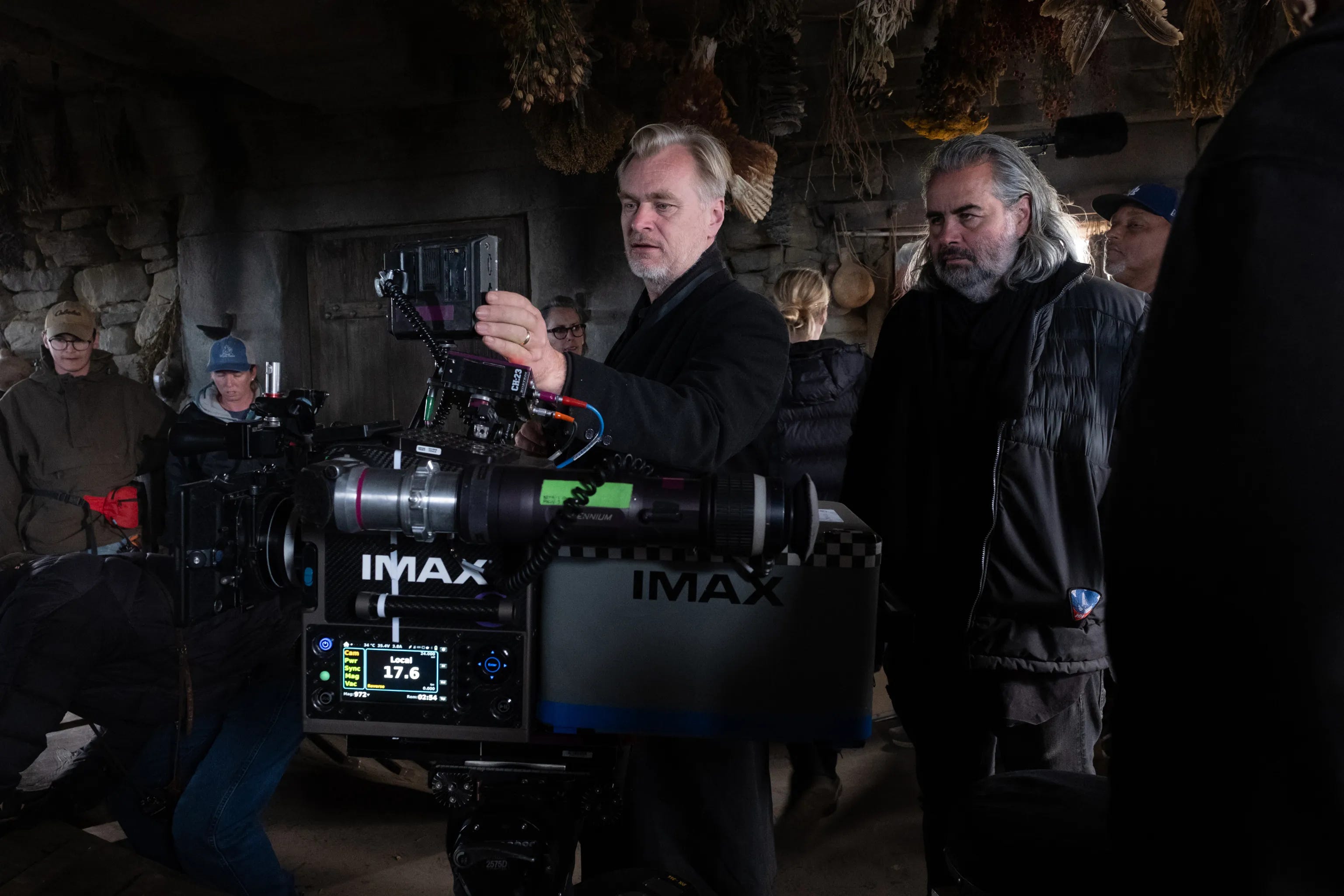
That’s the question put to Nolan. Although he’s taking at least a 3-year break, maybe more, he has mentioned that he’d love to make a horror film if he found the right project, telling Empire:
… Horror is most successful when the conceptual framework of whatever the story is is just so undeniable. I think there are very few really great horror movies… I’ve never clicked with a particular idea or concept that worked for me [but] I love the genre. Of all genres, it’s the most visceral. Where the direct response to the audience is the most important. That is to say, you’re trying to make people literally feel something in their bones about what’s going on on-screen.
Perhaps he should consider it seriously, because that is exactly what Alfred Hitchcock did.
But here’s the twist: He did it differently.
So let’s talk about Psycho.
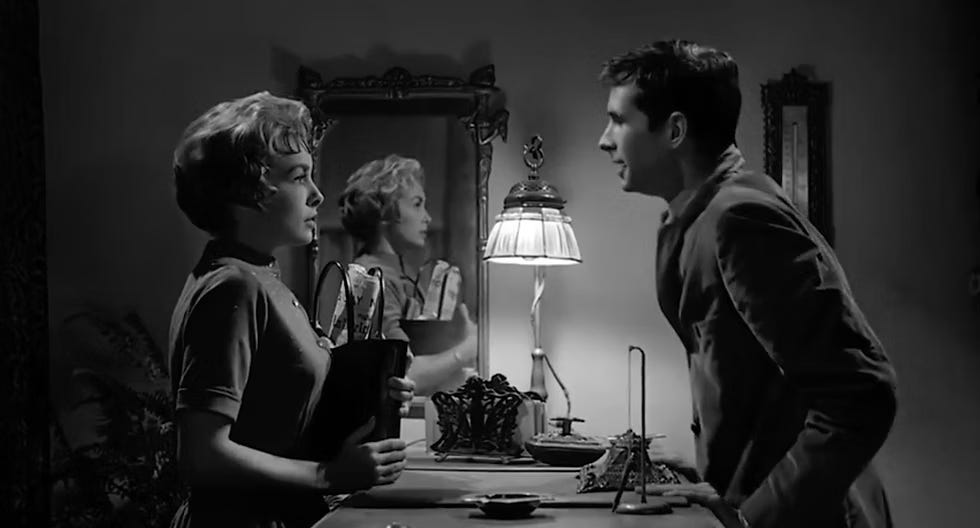
Despite the success of North by Northwest, Alfred Hitchcock feared becoming trapped by the very thing that made him successful. He even once lamented: “I’m in competition with myself.”
To be sure, Hitchcock’s name carried great power especially against studio interference. When MGM wanted him to cut 15 minutes out of North by Northwest to stick to a runtime under two hours, Hitchcock refused once his agent informed him that his contract gave him final cut.
But other filmmakers were encroaching his territory. The one that hit closest to home was losing the screenplay rights of Boileau-Narcejac’s suspense novel She Who Was No More to Henri-Georges Clouzot; the subsequent film, Les Diaboliques (1955), was hailed as a masterpiece and referred to as “the Gallic Hitchcock”3.
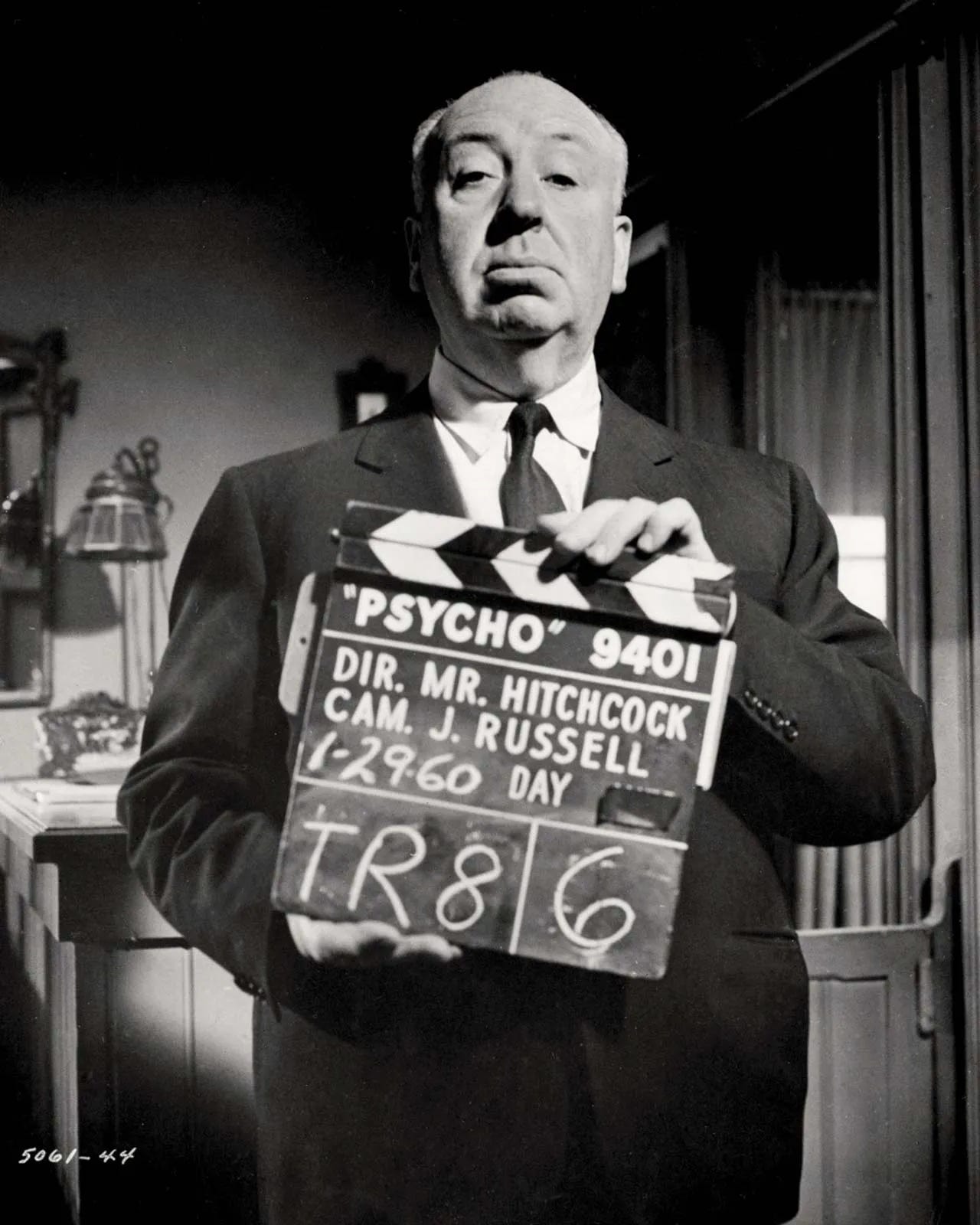
No doubt Hitchcock was envious and wanted to prove that he was not ready to cede his crown. But he didn’t want to do yet another film as he’d done before. He tasked his secretary, Pat Robertson, to find him the right project. Robertson waded through over 2400 pieces of material, of which he only passed about 30 that felt good enough.
One of them was Robert Bloch’s Psycho, a story about a seemingly-timid yet secretly murderess motel owner that was inspired by the Ed Gein murders.
Hitchcock read it over one weekend and knew that this was what he wanted to make next.
At the time, the director had a deal with Paramount; he had one more movie to deliver the studio to honor the agreement. And the film he pitched them was Psycho.
Paramount was not thrilled.
In fact, they threatened not to give him the usual big budget he was accustomed to.
Hitchcock welcomed the challenge and accepted. He recalled:
It was an experiment in that sense: Could I make a feature film under the same conditions as a television show?
At the time, Hitchcock was also working in television, lending his name to Alfred Hitchcock Presents. That meant he already had a crew to work with and whom he knew could work quickly. Hilton Green, the assistant director on Psycho, said:
[Hitchcock] wanted to prove to everyone that a low-budget film could still be a quality one. He was always looking for things that were a little different for him to do, and this was a challenge to him. He was coming off North by Northwest, which was one of the most expensive pictures he had made, and he wanted to make a low-budget, quality movie. He had to make it on a very short schedule, and he felt his television crew would be most apt to be able to handle that than the feature crew.
What Hitchcock and his production staff decided was that they’d plan it just as he would’ve done with any big-budget feature film, except shoot it quickly and inexpensively.
Paramount STILL didn’t want the film.
In the end, they only agreed to distribute it; Hitchcock would have to finance the film through his own company, Shamley Productions. Prepared for this, Hitchcock agreed: he’d also shoot it at Universal-International, and defer his director’s fee of $250,000 in exchange for 60% ownership of the negative.
Greedily, Paramount accepted. Joan Harrison, the head of Shamley, turned down his points on the film, warning Hitchcock that the director had gone too far this time.
Big mistake. Psycho was made for less than $1 million, shot in black-and-white— and it became Hitchcock’s most successful film. Paramount and even Harrison really bet badly on that one.
I think Christopher Nolan should do what Alfred Hitchcock did: Switch genres, but also, do it on a small scale.
I’ll tell you why (because of course I shall).
Nolan’s filmography is similar to that of Stanley Kubrick’s: he’s dabbled in different genres without committing to a particular one. He’s done noir/neo-noir (Following, Memento, Insomnia); psychological thriller (The Prestige which also has a dash of sci-fi thrown in for good measure); superhero movies (The Dark Knight trilogy); heist movie (Inception); sci-fi(ish) space film (Interstellar); World War II flick (Dunkirk); spy film (Tenet but with dollops of heady sci-fi); and a biopic (Oppenheimer).
And now with The Odyssey, he’s done an action fantasy (more action, less fantasy).
Here’s the conundrum, though: There’s no way to outdo The Odyssey. Not right away, at least.

If Nolan makes another film entirely on IMAX, there’ll be shrugs of “been there, done that”— and Nolan has always prided himself on a director who brings something technologically new with each new film.
At the same time, to make another gargantuan film also risks audiences and critics saying that he’s running out of tricks.
In fact, he’s at the same place that J. Robert Oppenheimer was: On top of the world… with people ready to turn on him.
Because if there’s one thing that people love more than putting someone on a pedestal, it’s tearing them down from it.
And I’m a little concerned because The Odyssey is the first time that the knives have been coming out a little more for Christopher Nolan than usual.
I don’t mean just the right-wing trolls— and Elon Musk— raging over the casting choices of Lupito Nyong’o as Helen of Troy (and Clytemnestra) or Elliot Page as Sinon; the biggest and maybe most unexpected attack came from classics scholar Emily Wilson, whose work Nolan directly referenced and praised. Wilson, on the other hand, went on what can only be described as a roaring rampage of criticism on Twitter, The Guardian, and most recently The Atlantic.4
Which was… unexpected, to put it mildly.
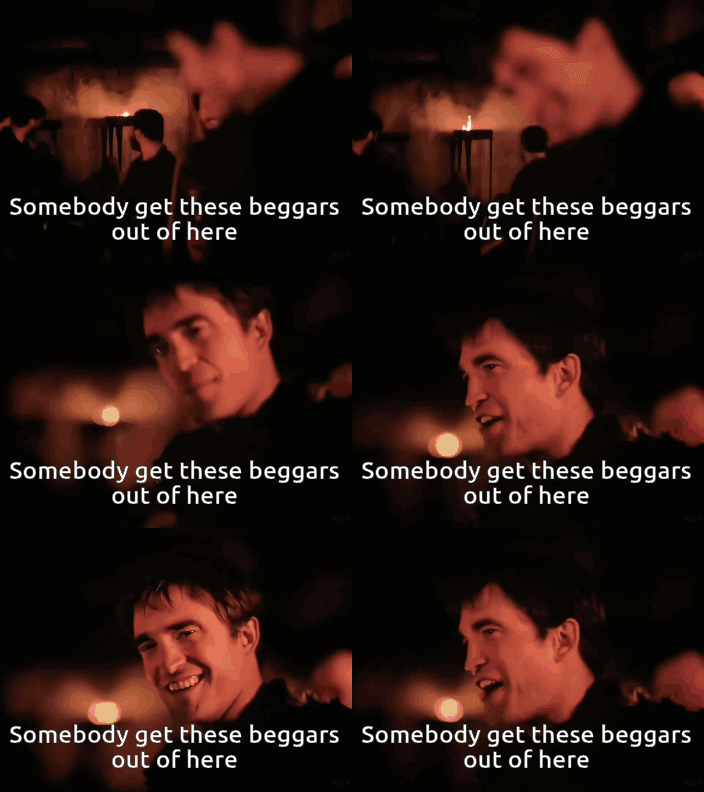
Nolan will be fine. The Odyssey is doing great. But any attempt to outdo The Odyssey is only an invitation for criticism that has less to do with the film and more to do with the man himself.
So in the face of such a problem, what’s a guy like Christopher Nolan to do?
The Japanese martial art of ju-jitsu teaches practitioners how to manipulate their attacker’s force against them instead of directly confronting them. In this instance, direct confrontation would be to make another big-budget film that he wrote by himself, using the same actors and pushing for more practical effects. Oh, and maybe the way he writes female characters.
Christopher Nolan should flip the script— figuratively— and go against expectations.
A small budget instead of a big budget.
A relatively unknown cast or actors he’s not worked with before.
A script written in collaboration with another writer.
A female-driven film, which would be a first.
And horror. Cause he’s sure not making a romantic comedy anytime soon.
Can you imagine the reaction if trades announce tomorrow that Christopher Nolan’s next film will be a horror film with a female lead and largely new cast, and made for a fraction of the budget he’s used to?
The marketing practically writes itself! And you can bet people will turn out in droves to see it, if only out of sheer curiosity.
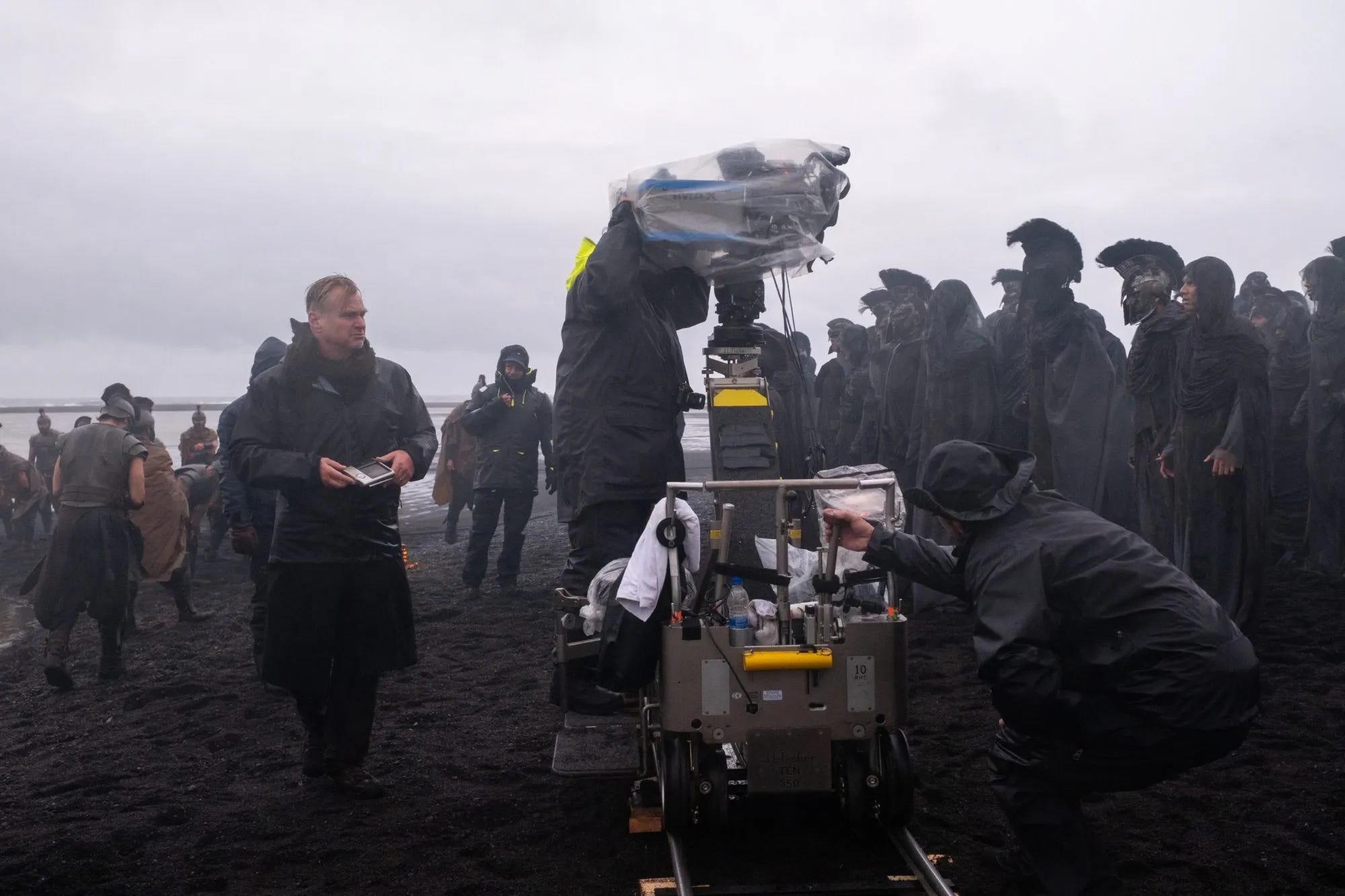
Famous artists have done creative resets all the time, to avoid becoming pigeonholed in categories and to stay fresh.
Music: The Beatles experimented with Rubber Soul and Revolver, but it was Sgt. Pepper’s Lonely Hearts Club Band that really broke ties with their early clean-cut image. David Bowie constantly reinvented himself for each album, from Ziggy Stardust to the Thin White Duke.
Books: Roald Dahl wrote children’s books alongside very dark stories for adults. Anne Rice wrote vampire fiction and erotic novels. Stephen King wrote horror, but he’s also written non-horror fare such as Rita Hayworth and the Shawshank Redemption, The Body, and his mystery novels featuring Holly Gibson.
Film: Steven Spielberg made Raiders of the Lost Ark on a small budget to prove that he was capable of making movies that came in on time and on budget; then a decade later, stepped completely out of his comfort zone with Schindler’s List. Early in his career, Ridley Scott pivoted from his usual sci-fi/action-driven fare to make 1992’s Thelma & Louise, which really stands out in his filmography. George Miller, the man who gave the world the rock’n’roll violence with Mad Max was also behind the sweet kid-friendly Babe (and directed the sequel Babe: Pig in the City) and Happy Feet.
Come to think of it, a Christopher Nolan’s children movie— his version of Hugo— would also make headlines…
A lot of famous artists have reached inflection points before, where the very thing that made them successful could turn against them. For nearly two decades, the public has been accustomed to a Christopher Nolan film that delivered big spectacle on a big budget and with practical effects. But having really gone all out with The Odyssey, another big-budget spectacle runs the risk of predictability.
The only way to stave that off, as Hitchcock understood it, is to do things differently.
A small budget.
A different genre.
A female lead that pushes back against criticisms about his portrayal of female characters.
Another writer— fresh blood always helps.
Whatever Nolan lines up next, I’m sure it’ll bring in audiences. After all, this is the man who started with noir, moved into superhero territory, then hopped from genre to genre depending on his interests.
But Nolan working with a different set of tools doing something unexpected in an altogether different way?
It worked for Hitchcock with Psycho.
So imagine what it could do for Nolan.
Thanks for reading! If you liked this essay, you can sign up here for more issues. If you’d like to support Three Left Feet Media, share this newsletter with a fellow film lover you think would appreciate it.
Long live the movies!
D.L. Holmes
The Odyssey has easily cleared the $1-billion mark at the box office in less than a month, and is officially Nolan’s most successful film to date- yeah, even better than The Dark Knight and The Dark Knight Rises. I wouldn’t be surprised if Universal extends its theatrical run if it continues to have legs.
The big difference, of course, is that Nolan seems to treat his female stars respectfully. Hitchcock, on the other hand, was a creep.
Hitchcock would ultimately adapted Boileau-Narcejac’s other novel D’entre les morts (The Living and the Dead) as Vertigo.
Honestly, though, if I was Universal, I’d send Wilson flowers— her attacks surely drove up sales for both the film and possibly Wilson’s own translation of The Odyssey.