

Continuity Errors Cannot Dim The Ending of Charlie Chaplin's City Lights (1931)
The final scene of City Lights is iconic. It's also got continuity errors. Here's why it doesn't matter.

One of the best final scenes in cinema history is in Charlie Chaplin’s City Lights (1931)1. It’s such a powerful and emotional moment that it’s easy to miss that the scene accidentally breaks the rule of continuity in the editing2. And yet, even when you see it, the scene retains its power.
How can a scene work when it doesn’t follow the rules of editing?
Let’s start with the City Lights scene itself. The entire plot is about Chaplin’s Tramp falling in love with a blind flower girl who tries to collect money, with the help of a rich drunkard, to help medically restore her eyesight. The Tramp succeeds in getting the money to the blind girl but is arrested and unjustly accused of stealing the wealthy drunk’s money. Sometime after he’s released, the Tramp encounters the blind girl again— except, she has her eyesight, and used the money to open a small flower shop. She smiles at him, but she doesn’t recognize him, because she has been under the impression that her benefactor was a millionaire.
Anyway, the girl takes pity on the smitten Tramp, gives him a flower, and then tries to give him some money. When he hesitates, she takes his hand and puts the coin in it.
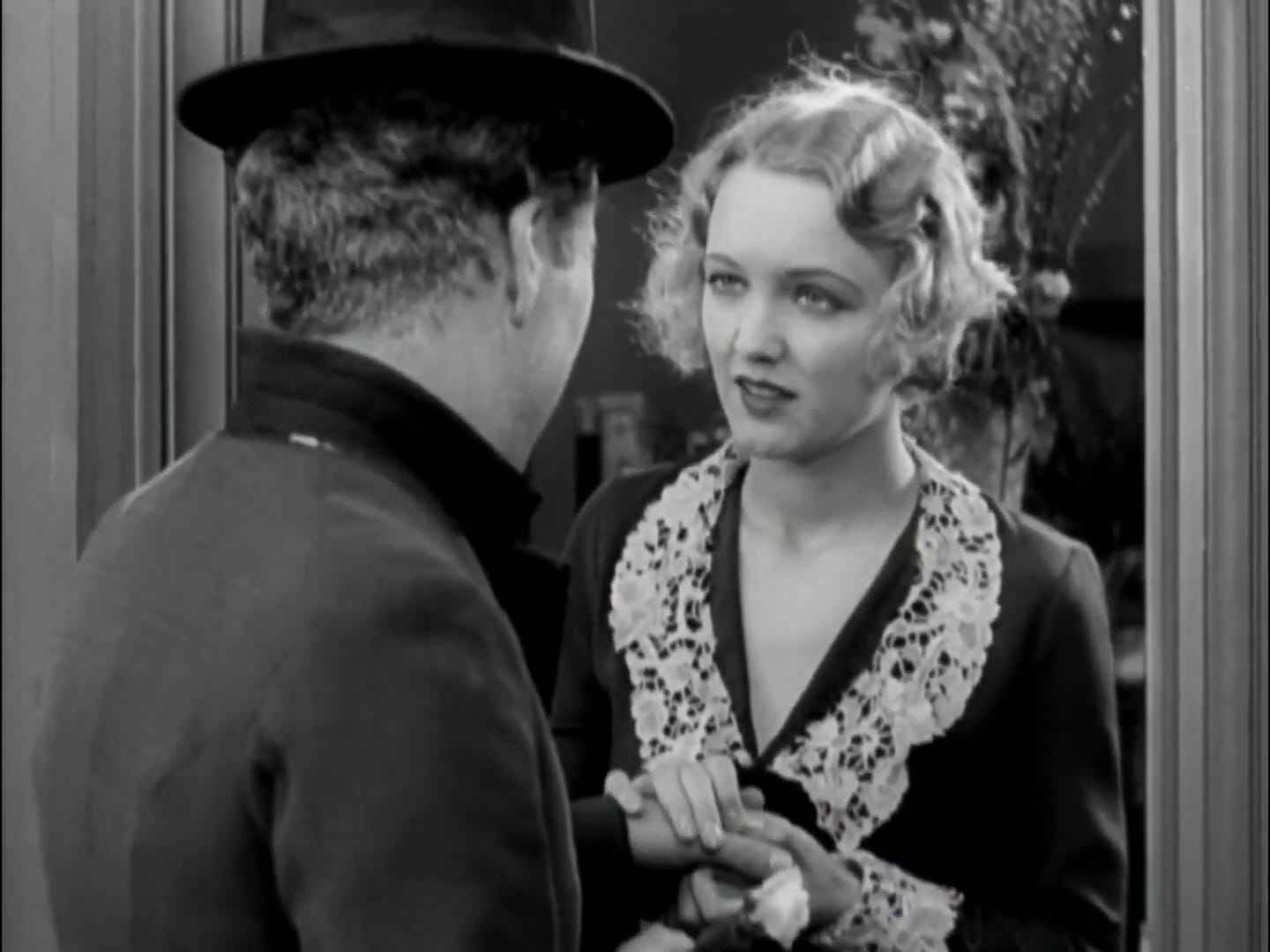
And she stops. She recognizes the touch.
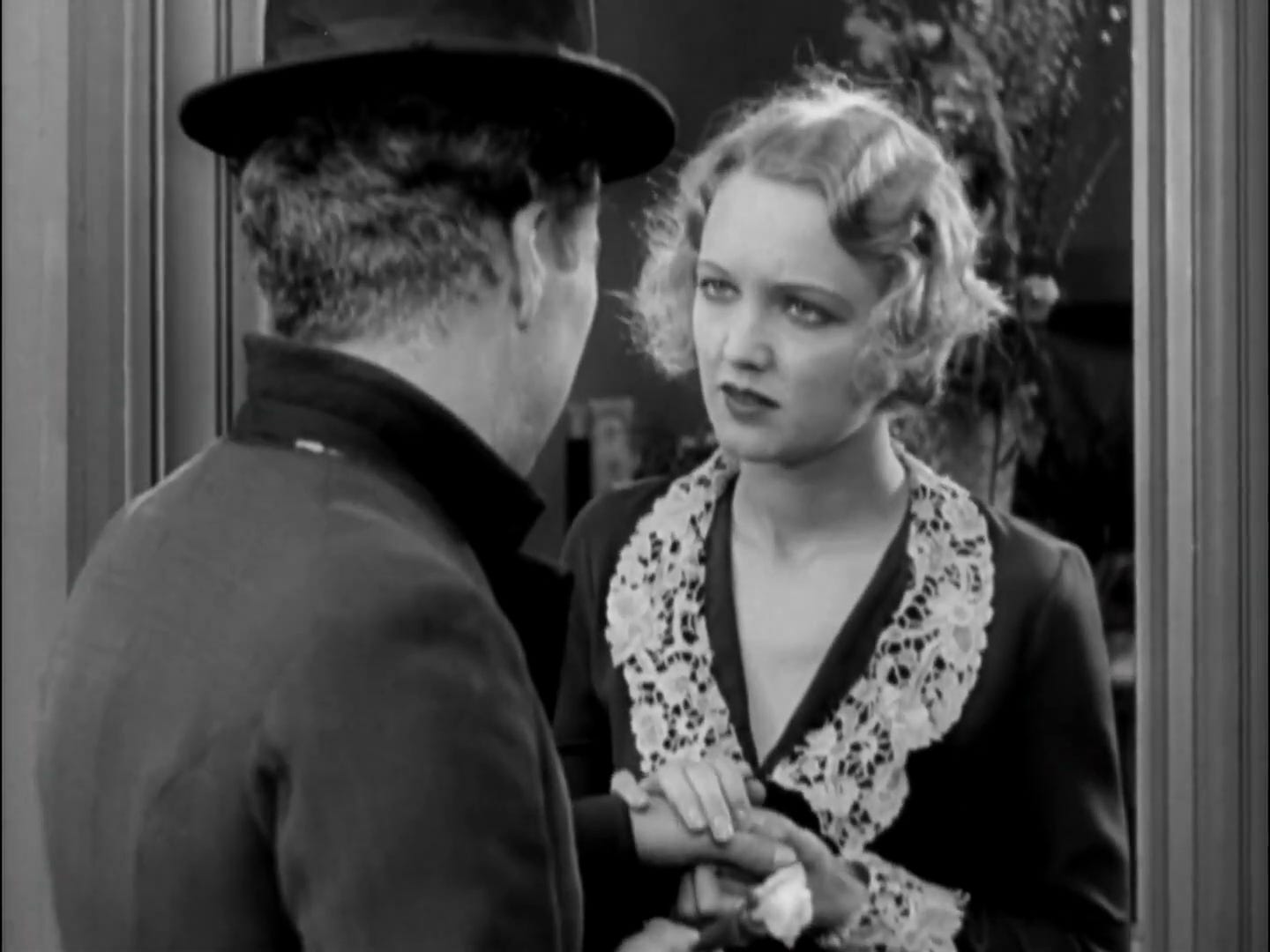
The Tramp waits, anxious. She touches his coat, his face, to confirm that her senses aren’t betraying her.
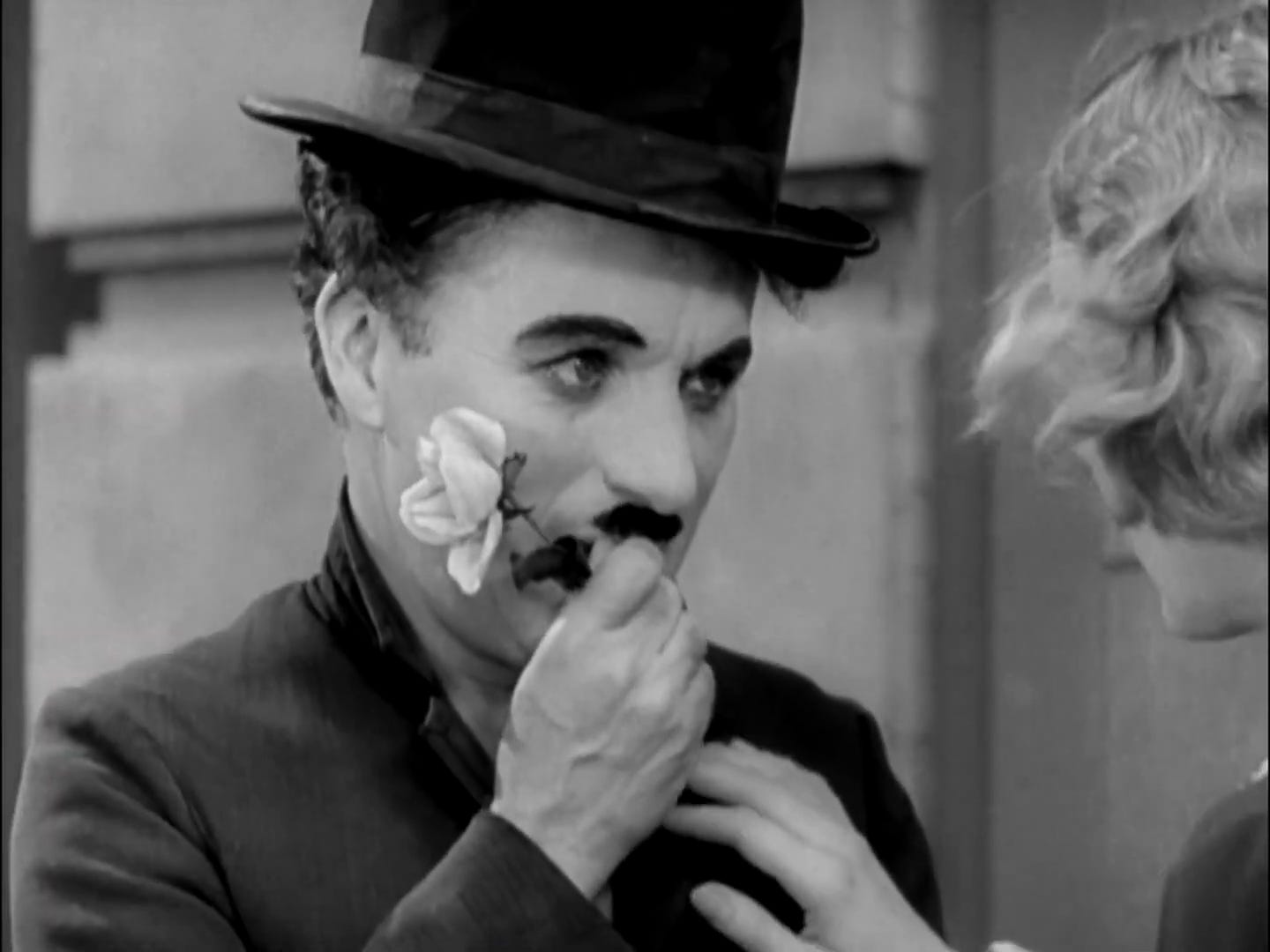
They aren’t. And for a moment, the girl is shocked that her benefactor— who helped her out in her hour of need (when he gave her the money before his arrest, part of it was used to pay overdue rent before the girl and her grandmother were evicted)— is the bum standing before her.
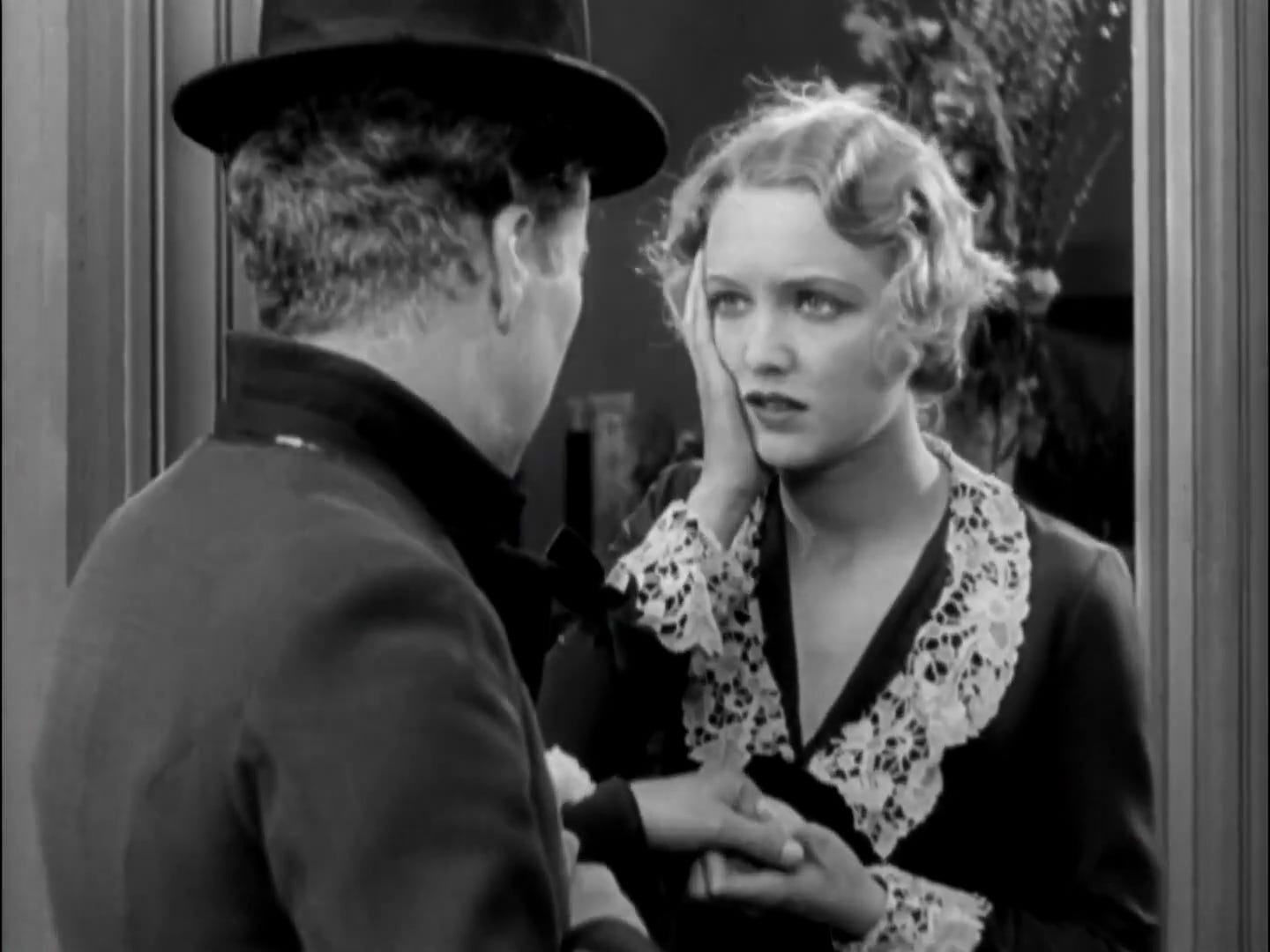
Their intertitles dialogue is brief.
“You?” she asks.
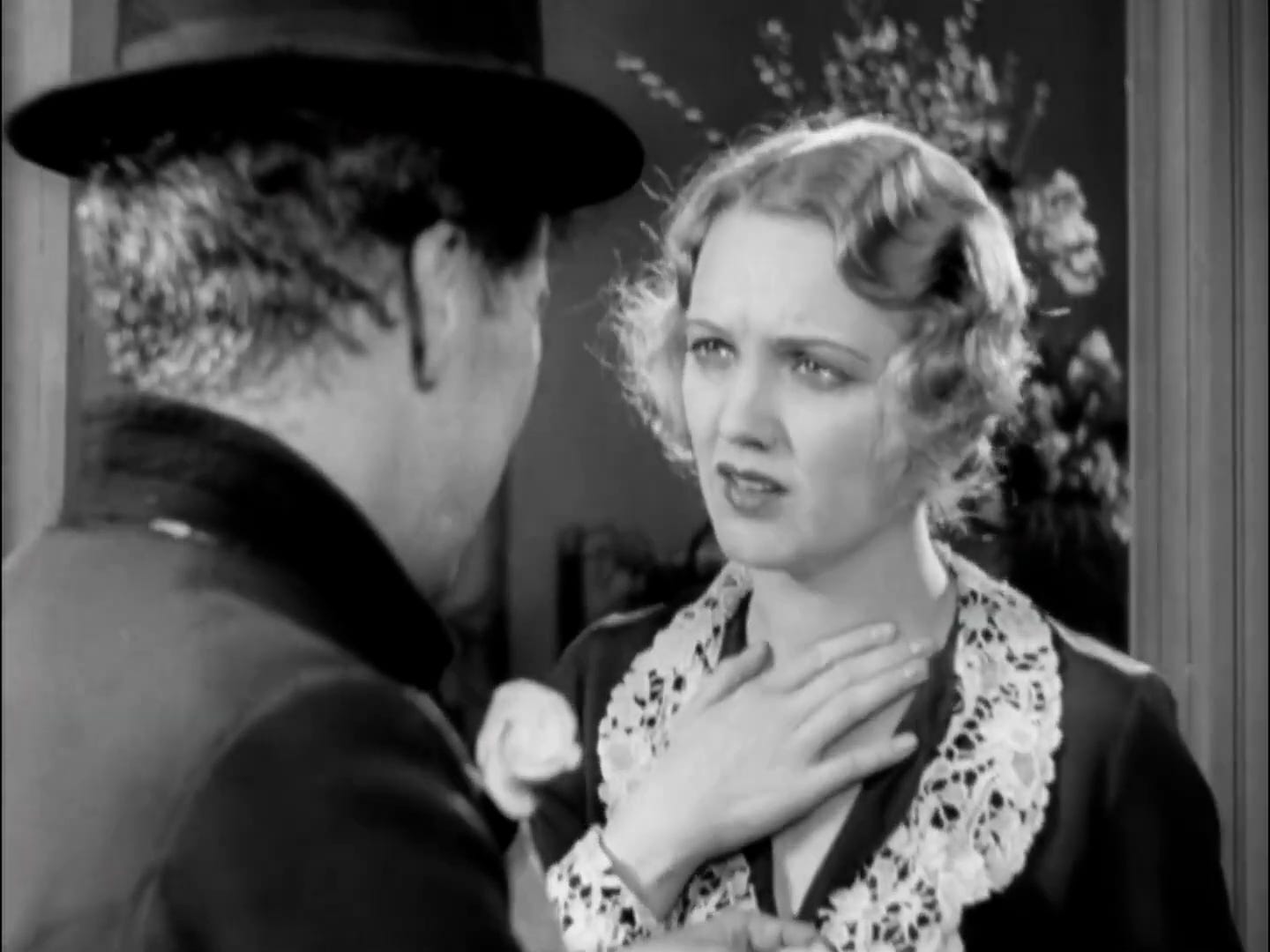
He nods, tries to smile. “You can see now?”
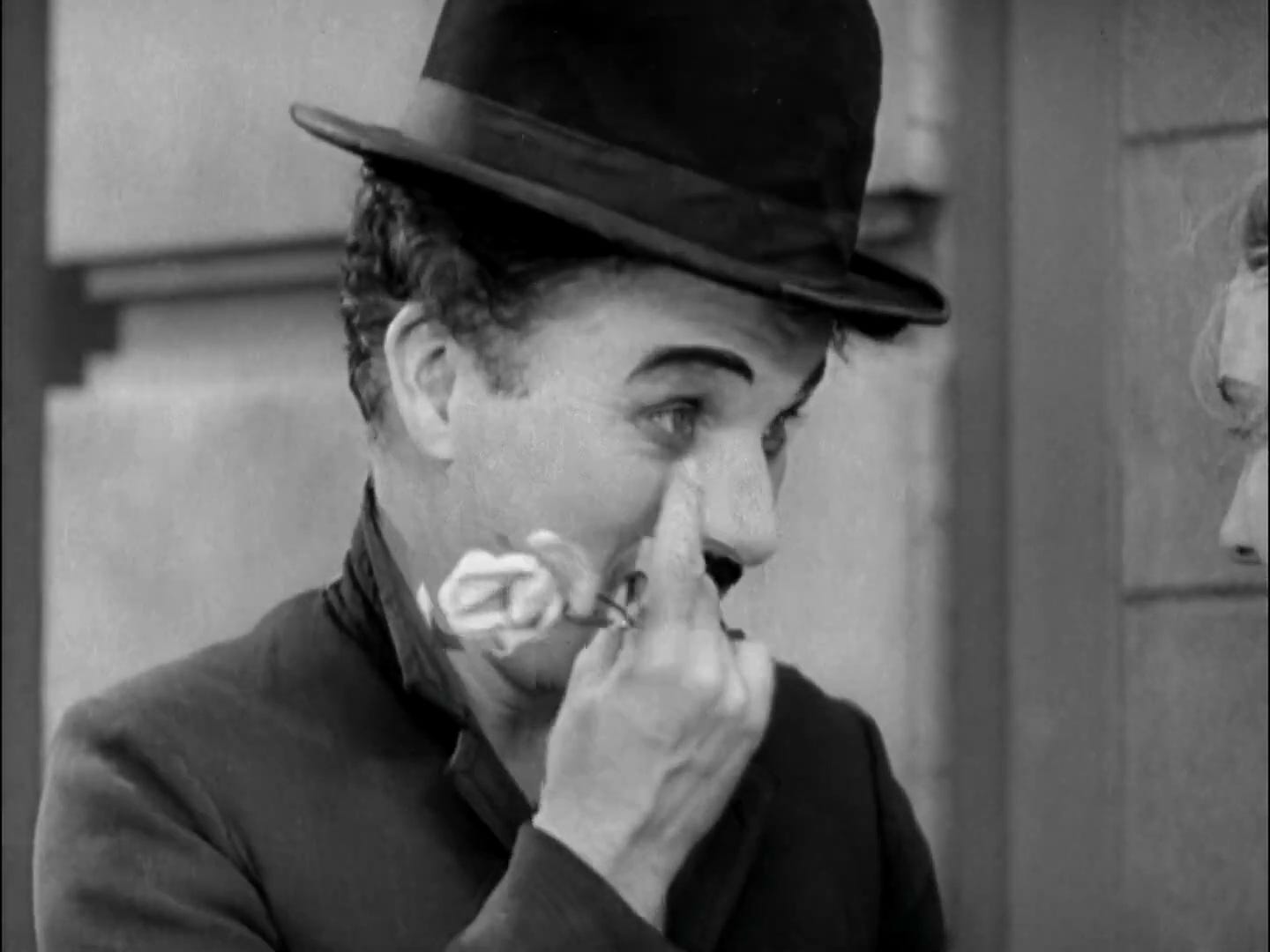
“Yes,” she says. “I can see now.”
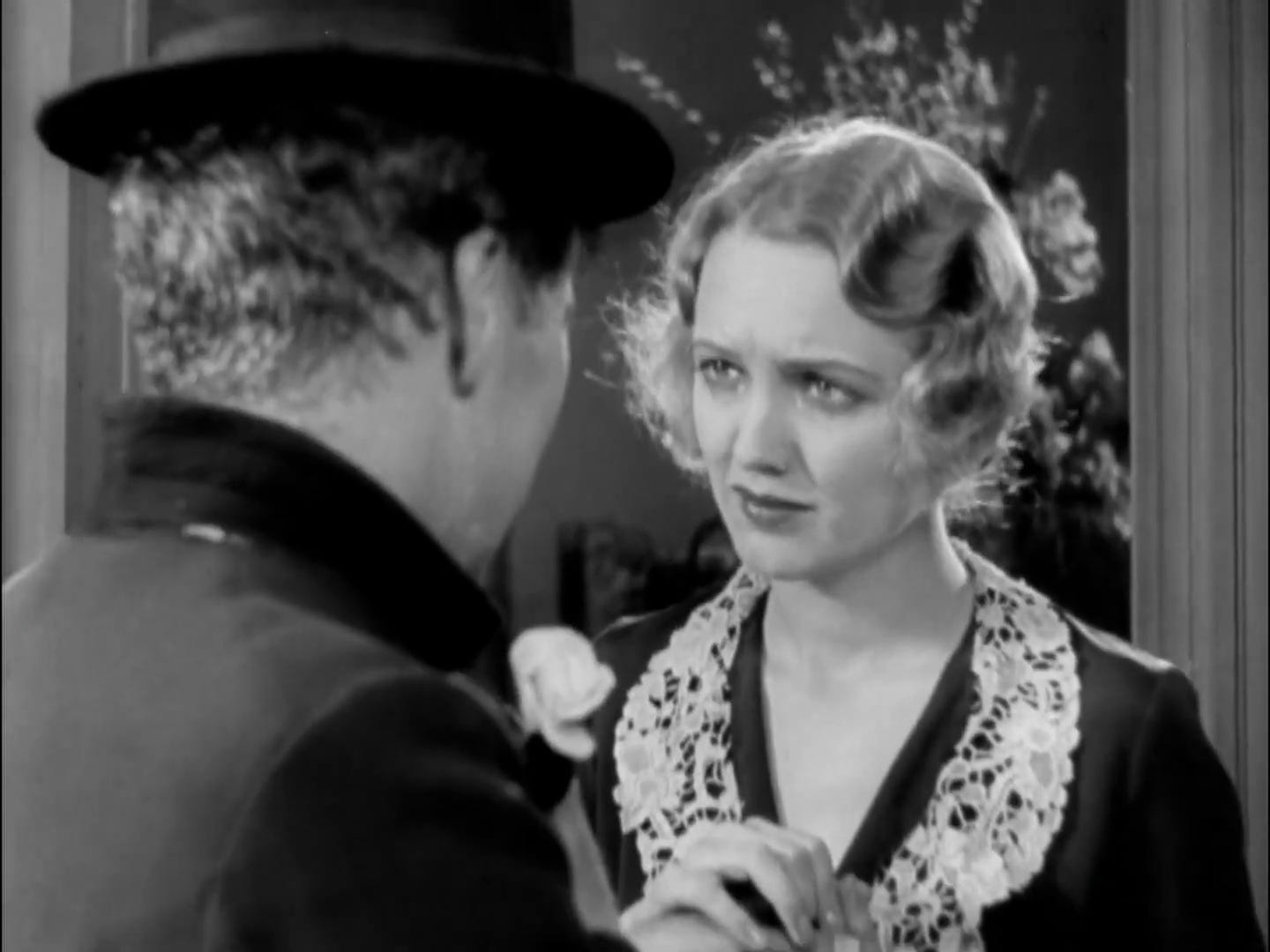
And she presses his hand to her chest. She sees him, and she accepts him.
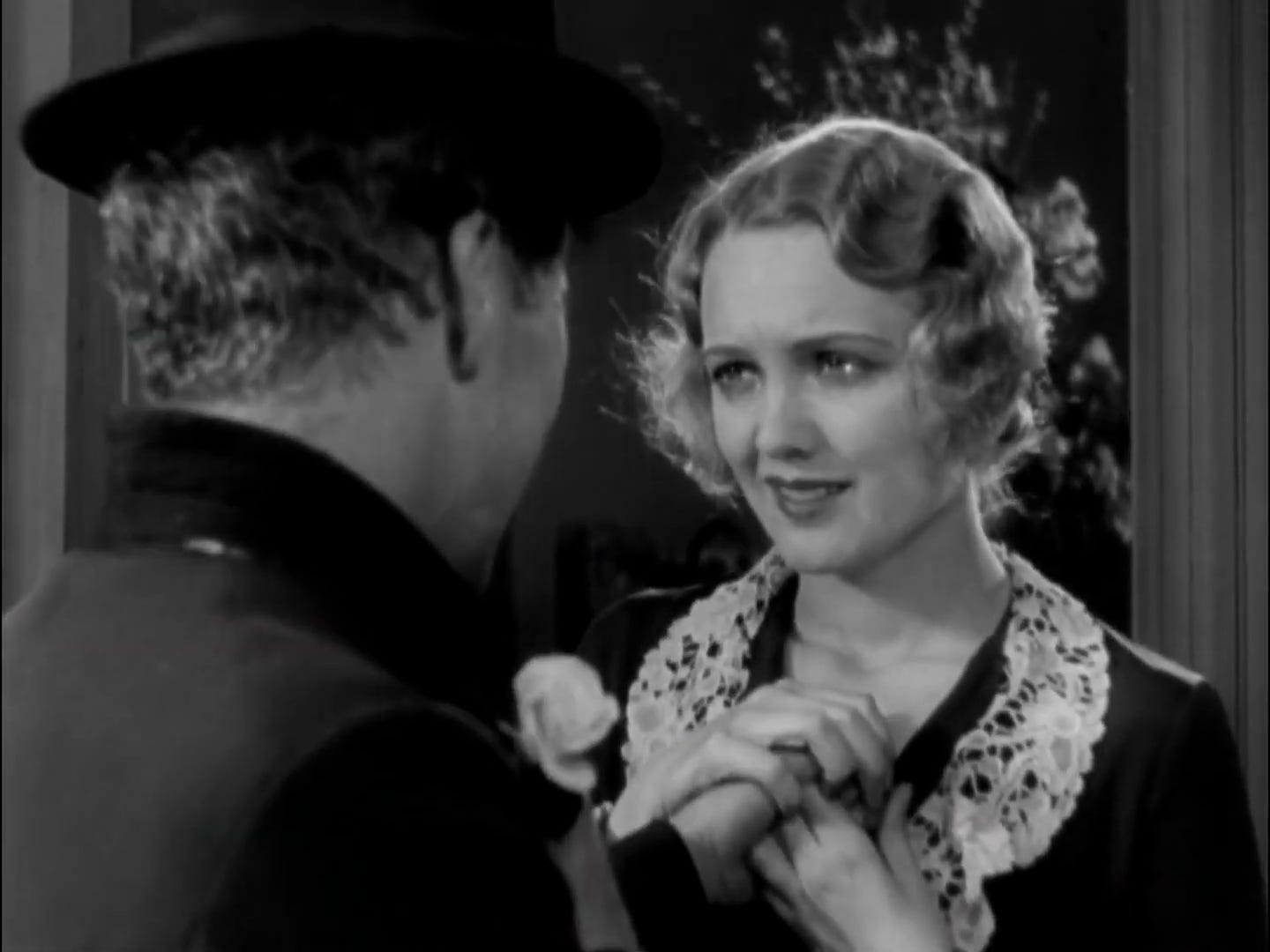
And the Tramp? His face splits into the biggest smile we’ve ever seen, before the image fades to black.
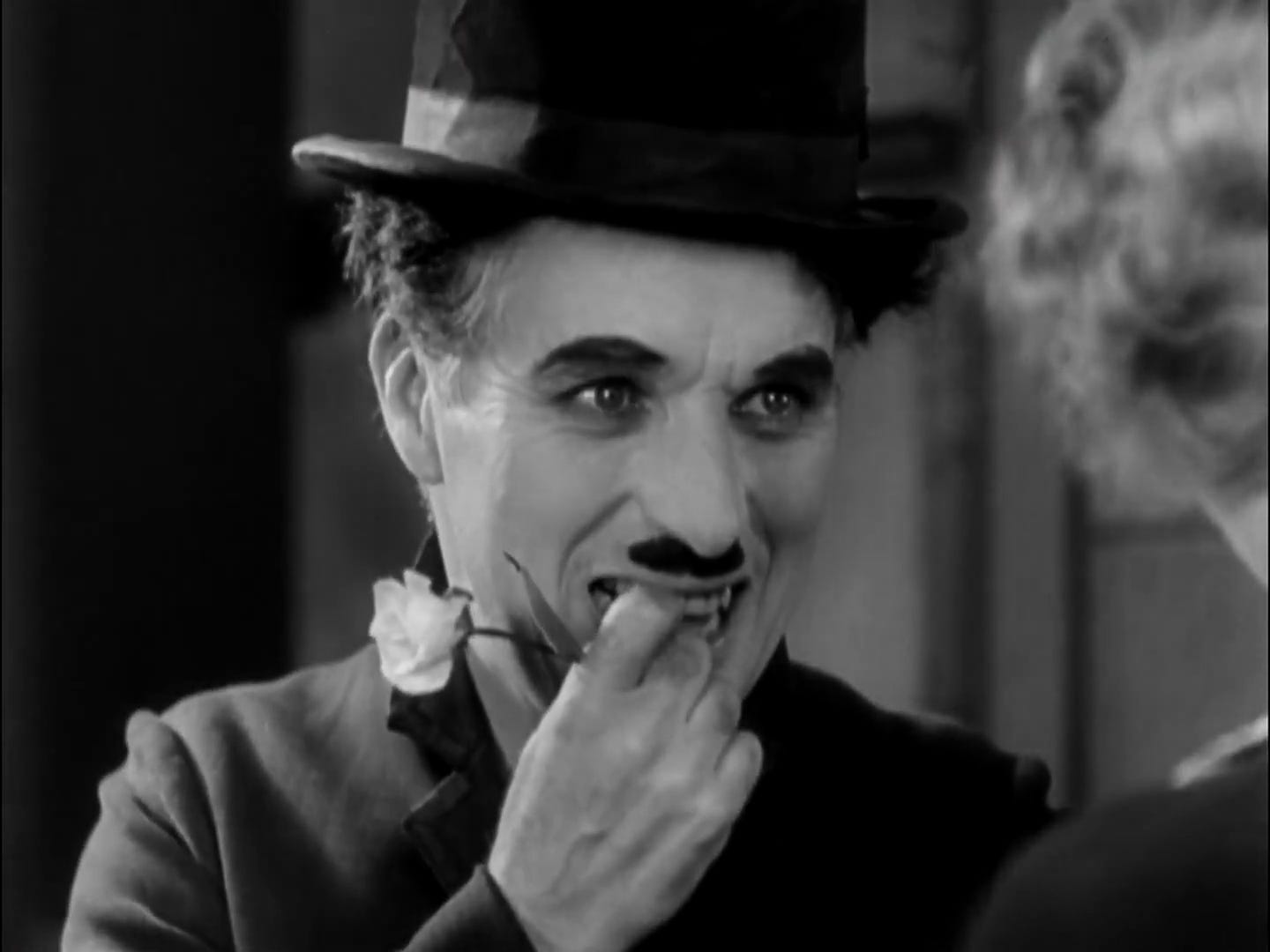
And when it does, your heart is just a puddle.
Now, looking at the screenshots above, can you see the continuity error?
The scene consists of three shots: one is an over-the-shoulder angle from Chaplin’s side, the other is an angled close-up of Chaplin’s face, and last one is an over-the-shoulder angle from the girl’s side.
Whenever the camera is on Virginia Cherille (the blind girl), Chaplin is holding the flower to his chest.
But when the camera is on Chaplin, he is nervously chewing his right-hand thumb with the rose pressed to his mouth.


See it now?
Now I’m certain that Chaplin didn’t do this deliberately when he was in the editing room. What he and his editor Willard Nico3 must have done is selected the best takes shot, which happened to be the ones where it didn’t exactly match. Some might nitpick and grouch about it. But that’s missing the point about editing: continuity isn’t always the most important part about editing.
Once you see it, it’s impossible not to see the continuity error. And a lot of editors and viewers might nitpick this moment because the continuity does not line up. It’s true that the shots don’t line up in that sense. But I’m here to tell you that if an editor or viewer is dismissing the scene on such grounds, they’re missing the point.
In his book, In The Blink of an Eye, acclaimed award-winning editor (and sound designer) Walter Murch (Apocalypse Now, The English Patient) outlines six rules that he uses when deciding how to cut between shots, calling it The Rule of Six, ranked by their order of importance:
Emotion (51%)
Story (23%)
Rhythm (10%)
Eye trace (7%)
2D plane of screen (5%)
3D space (4%)
Notice that continuity isn’t even mentioned here— not really. I mean, ideally, you want continuity to be maintained or you’ll confuse or lose the audience. Murch believes that an editor should first and always make a cut that leads to the greatest emotional result, even if the shots don’t necessarily match.
Which is exactly what City Lights did. The takes used in that final scene showcase the strongest performances from Chaplin and Cherille. Besides, even if the placement of Chaplin’s hands don’t match, the continuity error is quite minor enough to miss.
One person who isn’t bothered about continuity errors is Thelma Schoonmaker. The award-winning editor, who has edited nearly all of Martin Scorsese’s movies4, prioritizes the actors’ performances above everything.
“If you look at the great classic films that influenced Marty so much, there are continuity errors all over the place,” she says. “But who cares?”
Schoonmaker continues, “It’s ridiculous. People can now stop and say, ‘Oh, wait, there’s an error here!’ Who cares?”
Take, for instance, a scene early in Goodfellas (1990). Sonny (Tony Darrow) is trying to convince mob boss Paulie (Paul Sorvino) to invest in his restaurant to stop Tommy (Joe Pesci) from racking up huge unpaid bills. The scene cuts between Darrow and Sorvino, and in some takes Sorvino has a cigar in his mouth, and in others the cigar is in his hand.


And then again here:


Continuity error? Yep. Does it take away from the power of the scene? Not one fucking bit.
In another scene from 2013’s The Wolf Of Wall Street, FBI agent Patrick Denham (Kyle Chandler) is on Jordan Belfort’s sprawling yacht, and positioned on the left-hand side of the screen. Seconds later, he and Belfort have swapped places.


Does continuity matter? Yes. Even Schoonmaker concedes that continuity mattered when they were editing The Age of Innocence (1993). “It does matter in a movie like Age of Innocence. There, it's very important.” But in a film with a lot of improvisation, such as in Wolf of Wall Street, they threw out the rule book. “We don't worry about continuity because when we're doing so many improvs, it's better to get the laugh,” she says. “It’s better to get the great lines, even if they’re in the wrong part of the room.” (emphasis mine)
I think the habit of nitpicking over editing continuity emerged due to home media allowing viewers to pause a movie to see whether shots match, not to mention internet culture with YouTube channels like CinemaSins turning the habit of pointing out continuity errors into a punching bag.
It’s a damn shame if viewers are made to believe that continuity errors in a film are a crime against humanity. They’re not because City Lights is the best proof of it. Cause even if you know about the continuity error, and you watch it again, that scene still knocks the wind out of you.
Thanks for reading! If you liked this essay, you can sign up here for more issues. If you’d like to support Three Left Feet Media, share this newsletter with a fellow film lover you think would appreciate it.
Long live the movies!
D.L. Holmes
I’m not the only person who thinks so— in 1949, Life magazine critic James Agee wrote that it was the "greatest single piece of acting ever committed to celluloid”; Life magazine editor Richard Meryman called it one of the greatest moments in film history; and film critic Roger Ebert wrote that the last scene is “justly famous as one of the great emotional moments in the movies.”
I mentioned the continuity error at a film club where we were discussing City Lights as the movie selected for that month. None of them noticed it, despite being quite eagle-eyed when it comes to noticing details, because they were all too caught up in the emotion of the scene.
Chaplin was a co-editor.
Schoonmaker edited Scorsese’s first film Who’s That Knocking On My Door (1967), but wouldn’t work with him again until Raging Bull (1980). The rest is history.