


I’m starting a series curating some shots I like from films during a particular time. They are not meant to be the “best films ever” or “best shots ever” or “best shots from the best films ever”. Instead, they are a series of images that struck me when I first watched the films, and have not left my brain.
As already covered in Film Shots From The 1960s and an earlier list of shots arranged in alphabetical order, there are two rules to decide on which films I’m selecting, and thus, the shots:
One film from each year;
The same director could not be featured twice.
The 1970s were a great decade for film, needless to say. What films from this era do you like best? And what shots do you love from them? Please share your answers in the comments!
(NOTE: There will be spoilers below, so proceed with caution!)
Le Cercle Rouge — Jean-Pierre Melville, 1970
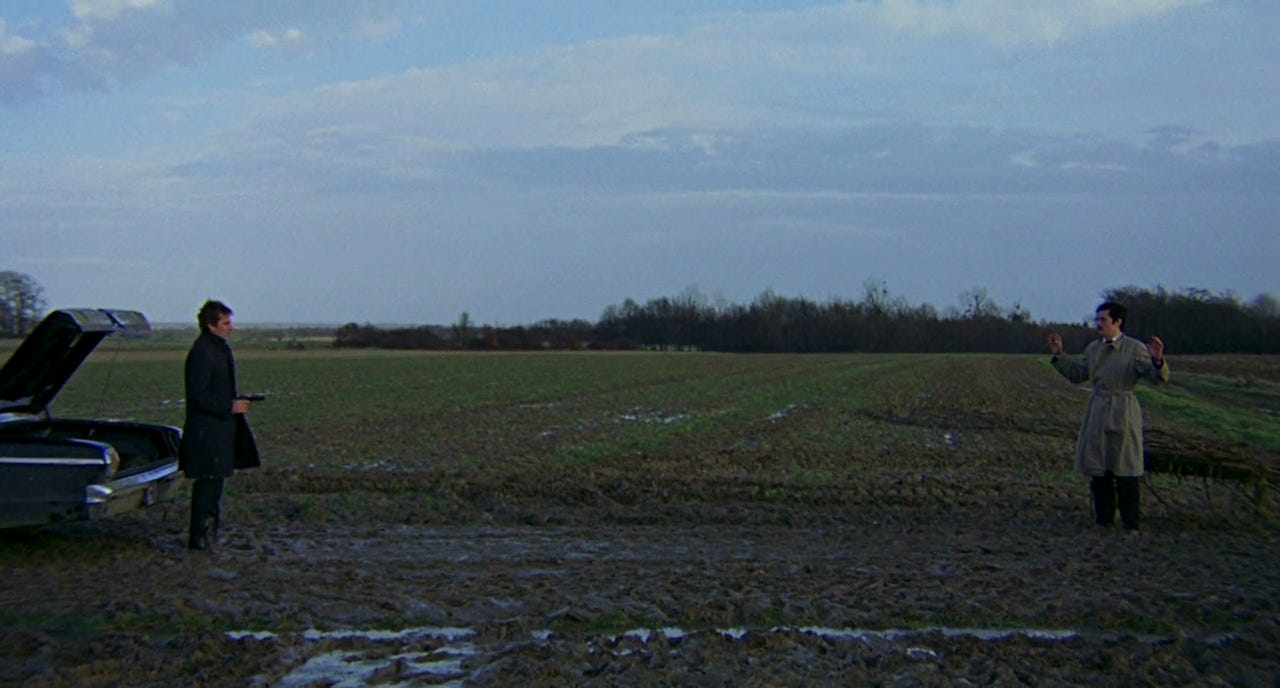
Alain Delon is so calm under pressure that even when he’s got a gun pointed at him, he still doesn’t bat an eyelid.
The Last Picture Show — Peter Bogdonavich, 1971
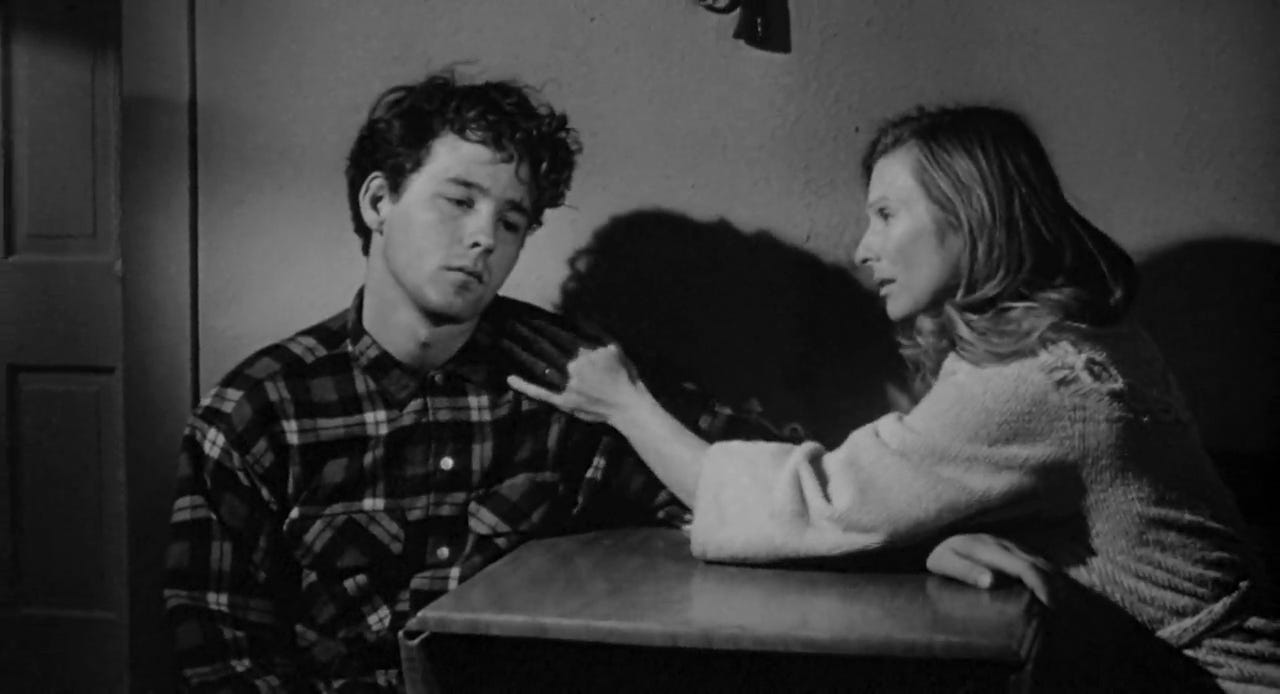
This is the penultimate shot before the film ends, and it’s such a melancholy image, of Sonny (Timothy Bottoms) and Ruth (Cloris Leachman) both lonely and trying to reconnect with each other.
Aguirre, the Wrath of God — Werner Herzog, 1972
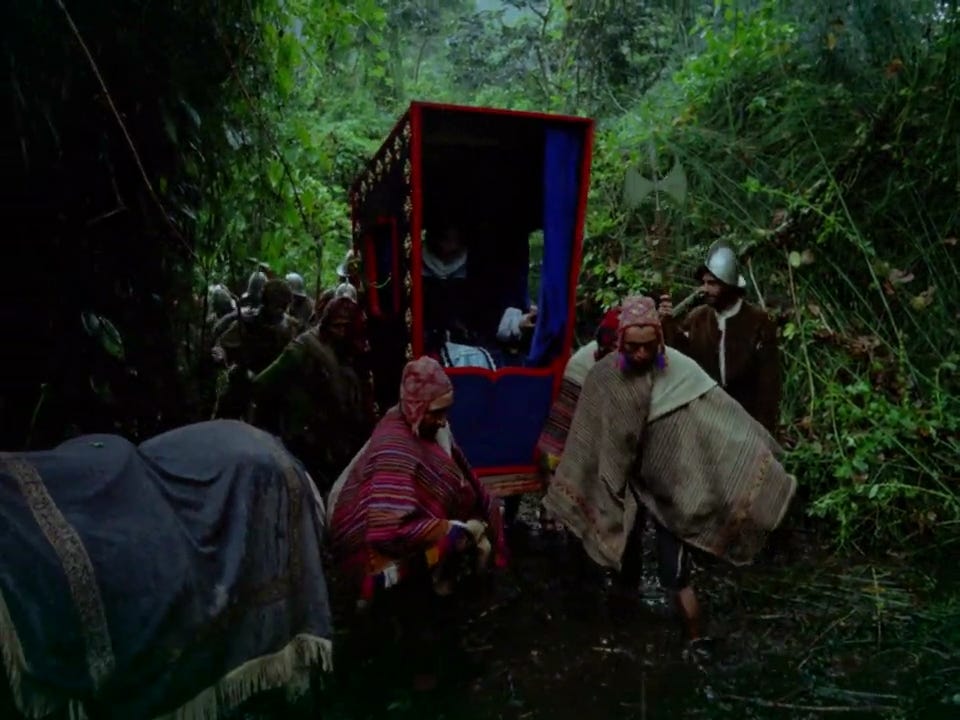
From the start, you can tell that this search for the mythical El Dorado is doomed to fail, and no image conveys the utter futility of this expedition than this image in which native slaves are forced to carry a sedan carriage/litter through the Amazon rainforest.
Amarcord — Federico Fellini, 1973
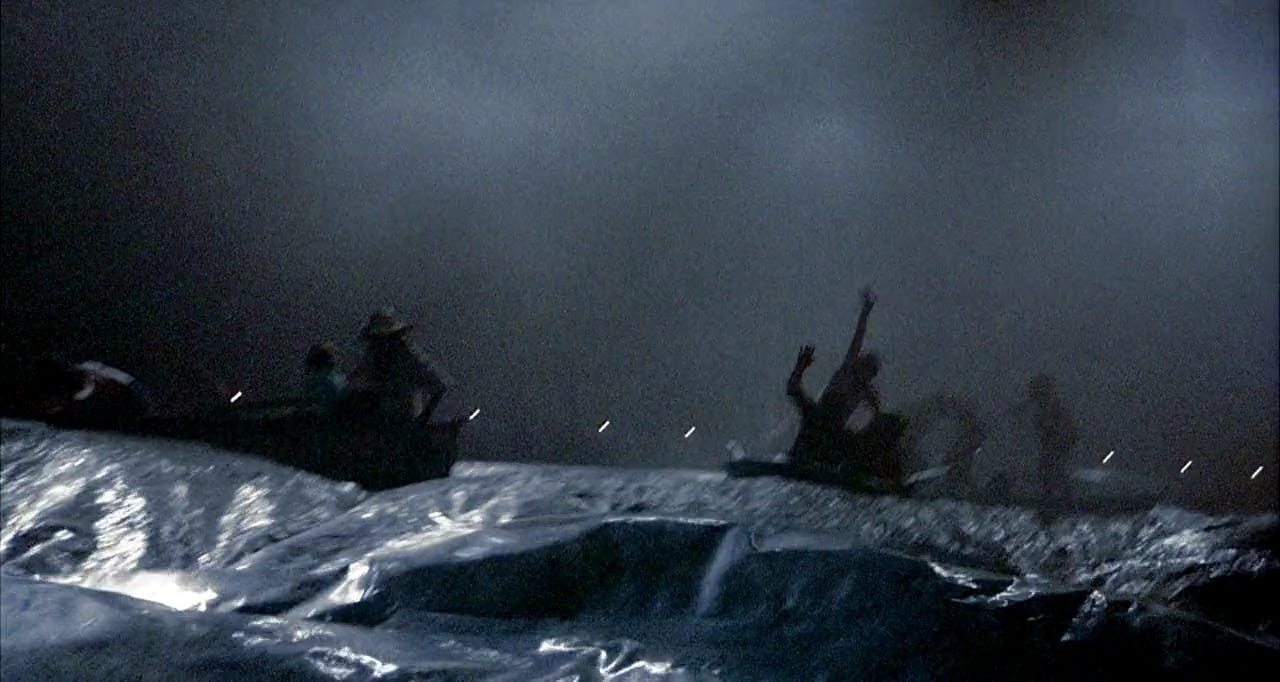
The first time I saw this shot, I was curious as to why Fellini created an image of artificial waves. For context, the citizens of the Italian town have gone in small boats to see the SS Rex, Italy’s finest technological creation under Mussolini, and are waving to ocean liner as it passes by. But why the artificial waves? In his review, Roger Ebert provided the clue that helped me to understand the shot- and the film- better: “There is a poetic and melancholy side, too… when the great liner Rex passes offshore and the townspeople all row out in their boats to watch it pass (it is as artificial as the “waves” the boats ride on, suggesting how much the national image depends on illusion).” That’s a hell of a way to convey a theme.
Scenes from a Marriage — Ingmar Bergman, 1974
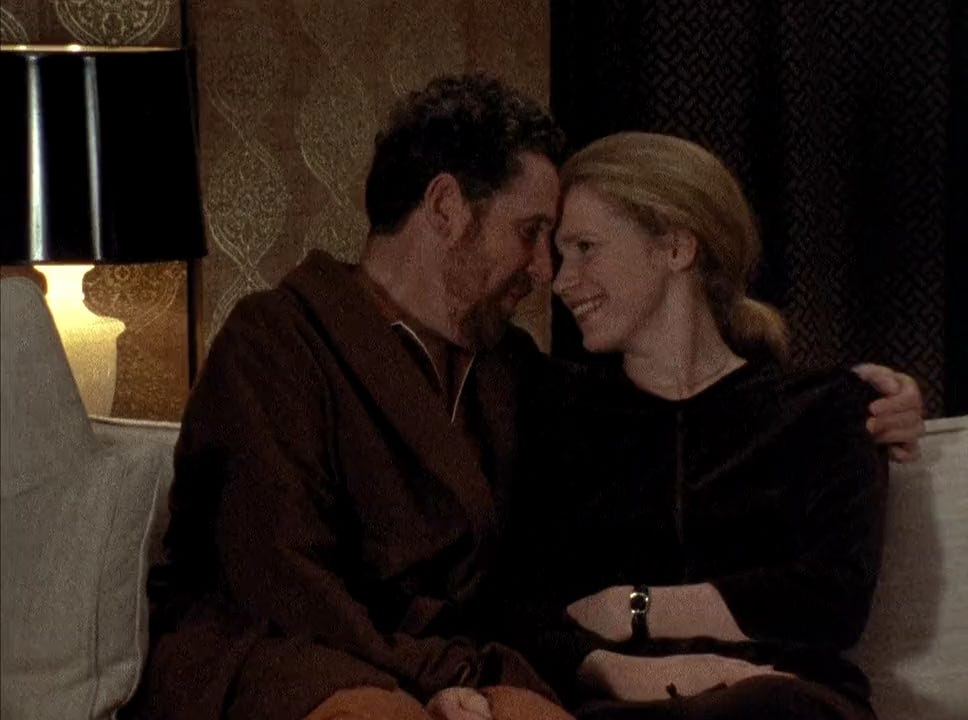
I’m a sadist who thinks every couple should watch Scenes From a Marriage at least once— because there is a high chance that Ingmar Bergman’s movie (condensed from a TV series) will shatter the relationship. Allegedly, it was responsible for a rise in divorce rates across Europe. But this image in particular haunts me, because right now, despite having fought moments earlier, the couple is momentarily united. Little does Marianne (Liv Ullmann) know that her husband Johan (Erland Josephson) will eventually confess to an affair and ask for a separation. The marriage will crumble… and yet their love will not.
Barry Lyndon — Stanley Kubrick, 1975
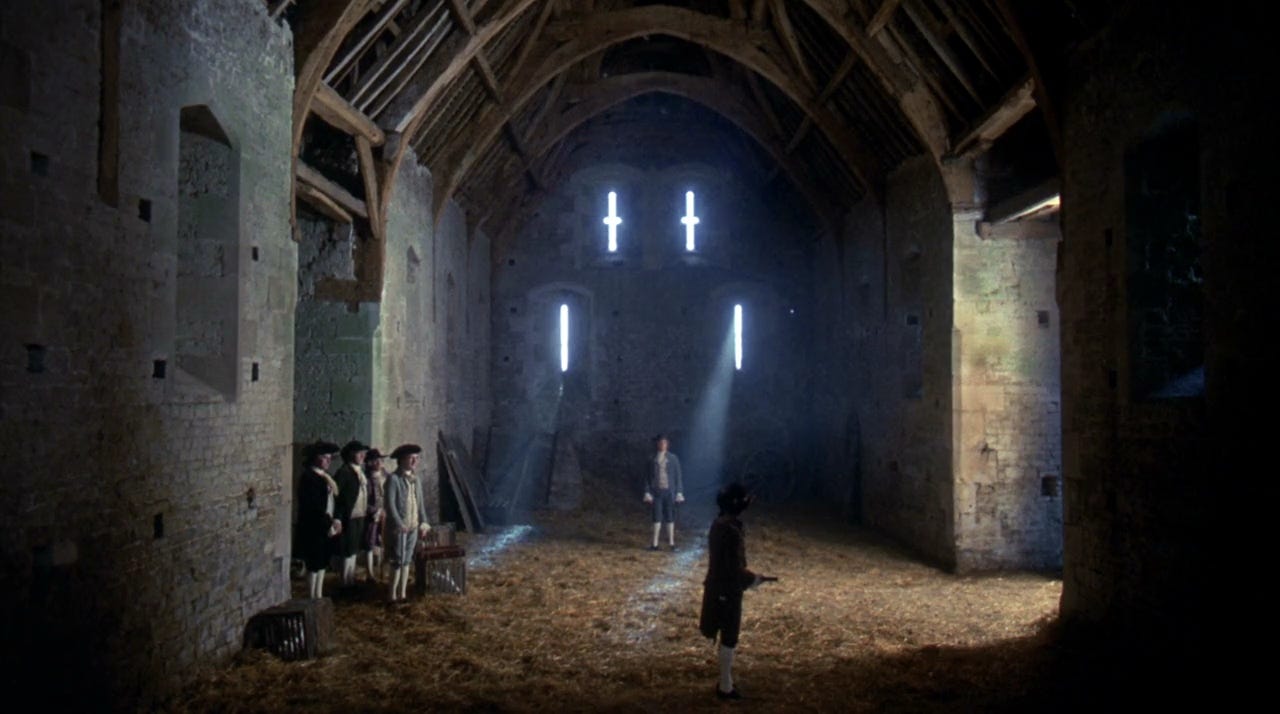
Stanley Kubrick composed the shots in Barry Lyndon in a painterly fashion— indeed, this image could be a painting in the way the elements are composed and the way it is lit. Even without context, your attention is immediately drawn to what’s happening. Two men standing across from each other? Okay, a duel, which explains the seconds standing to a side and watching. It’s in a barn, judging by the hay on the floor. The two apertures at the top resemble a cross, lending an almost religious feel to the proceedings. Indeed, Barry Lyndon (Ryan O’Neal) is almost Christ-like in this duel where he has zero interest in shooting his stepson, and is fated to pay for it. Yes, it’s a beautiful shot, but it is doing a LOT of heavy-lifting instead of just being pretty.
Taxi Driver — Martin Scorsese, 1976
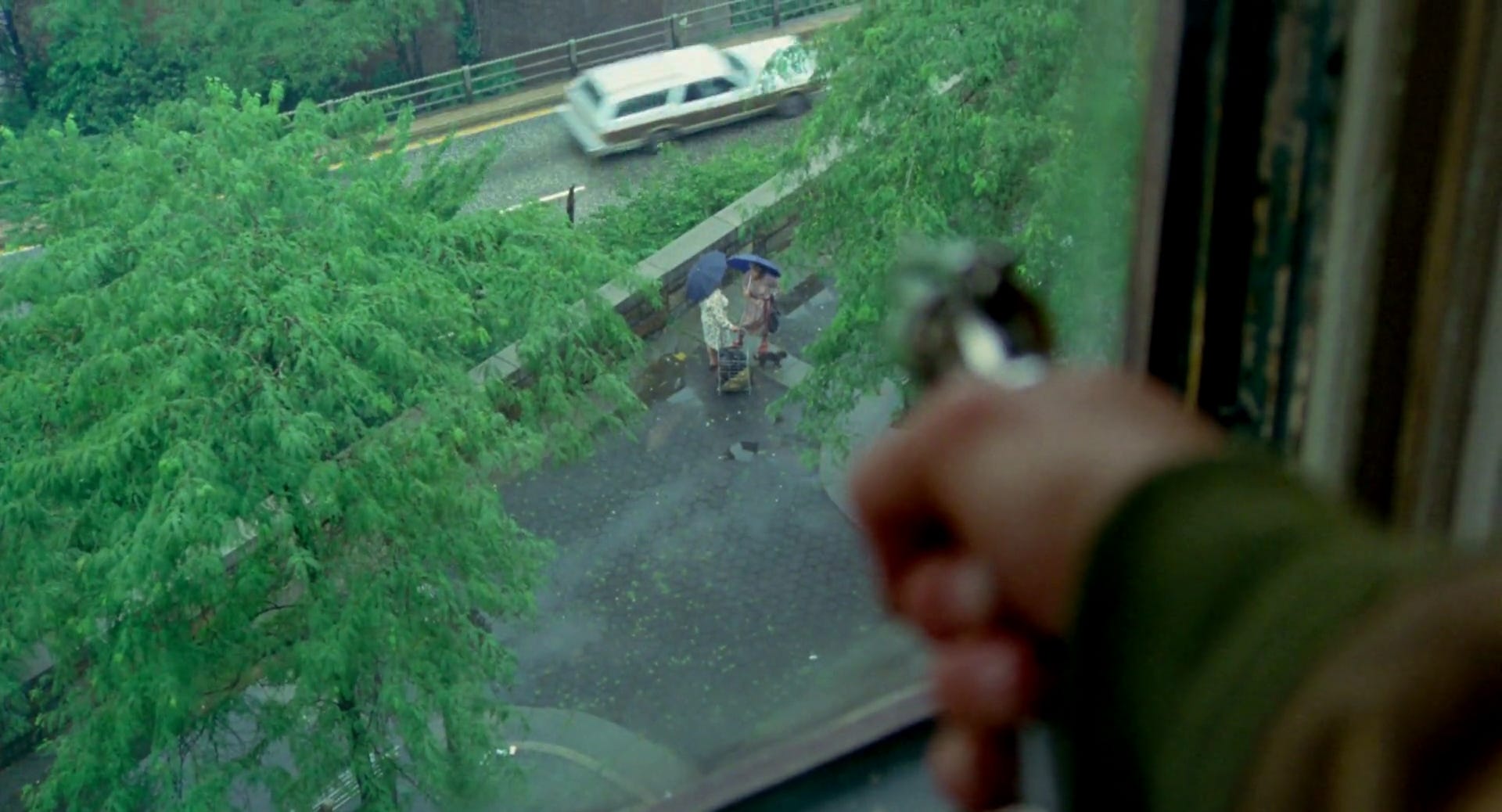
You could honestly pick out any image from Taxi Driver and it’d be great. But the POV shot of Travis Bickle aiming a gun down at two unsuspecting pedestrians feels queasy especially today with a ramp-up of gun violence. Bickle is getting a gun to carry out his “crusade” but this image shows that his aims will get innocent victims killed.
Star Wars: Episode IV - A New Hope — George Lucas, 1977
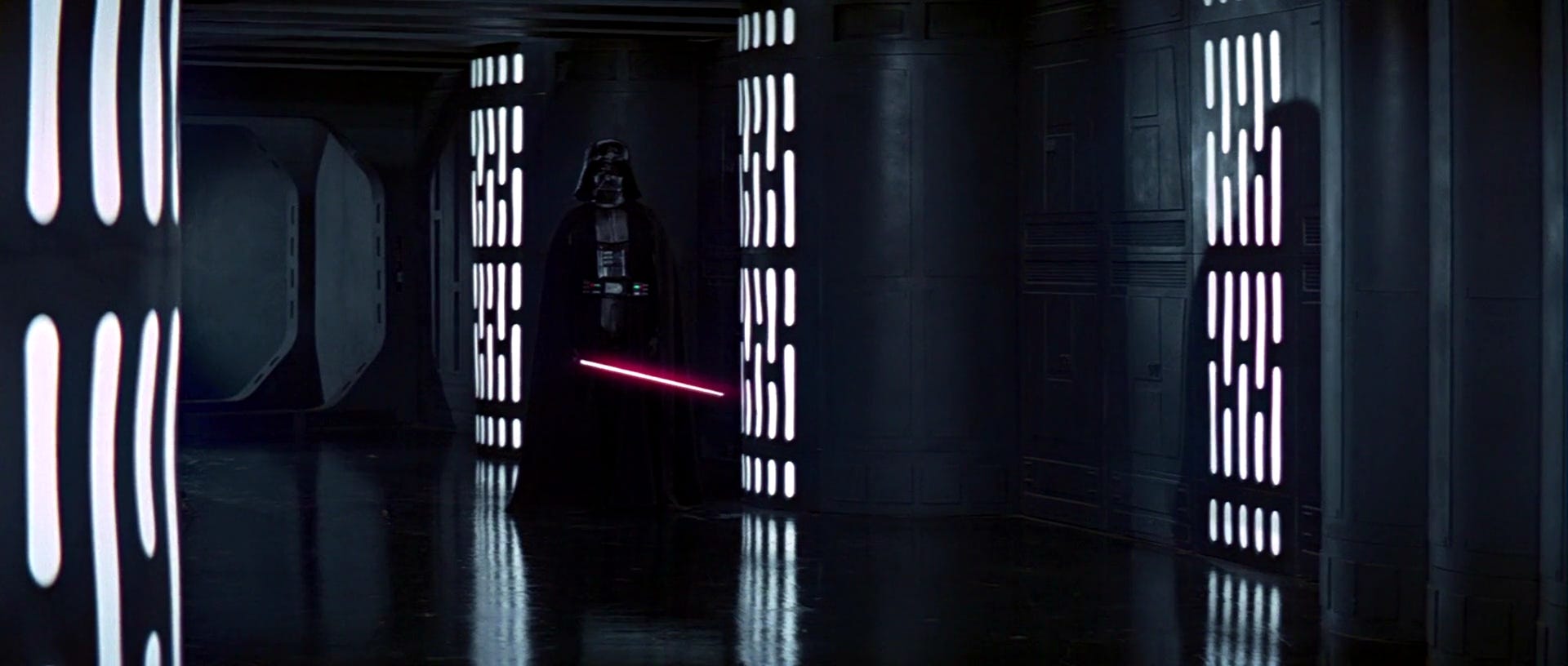
Darth Vader is just standing at the end of the corridor, waiting for his former master (and friend) Obi-Wan Kenobi. Unhurried, no rush. Which only adds to his menacing aura.
Days of Heaven — Terrence Malick, 1978
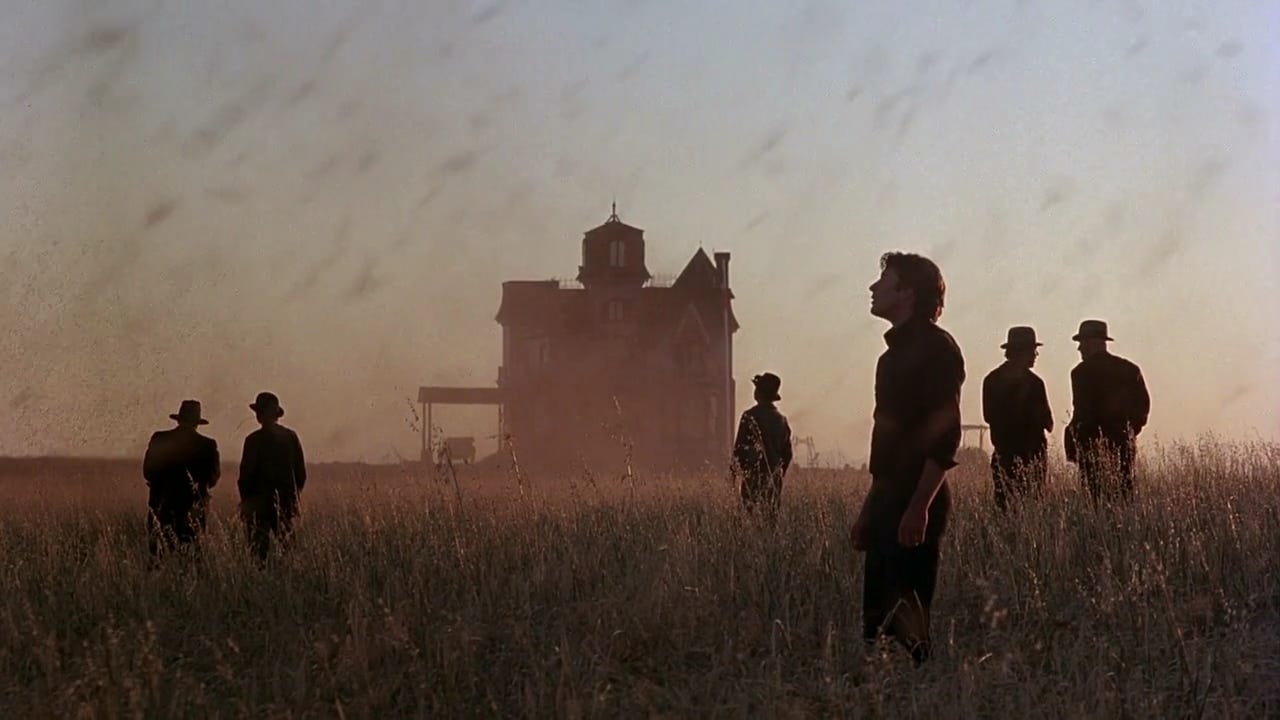
Here’s a shot containing both beauty and destruction, as a locust swarm rises out of the farm crops with almost biblical atmosphere. And the men, well, all they can do is simply watch what they’re up against for the moment. Man vs. nature.
Alien — Ridley Scott, 1979
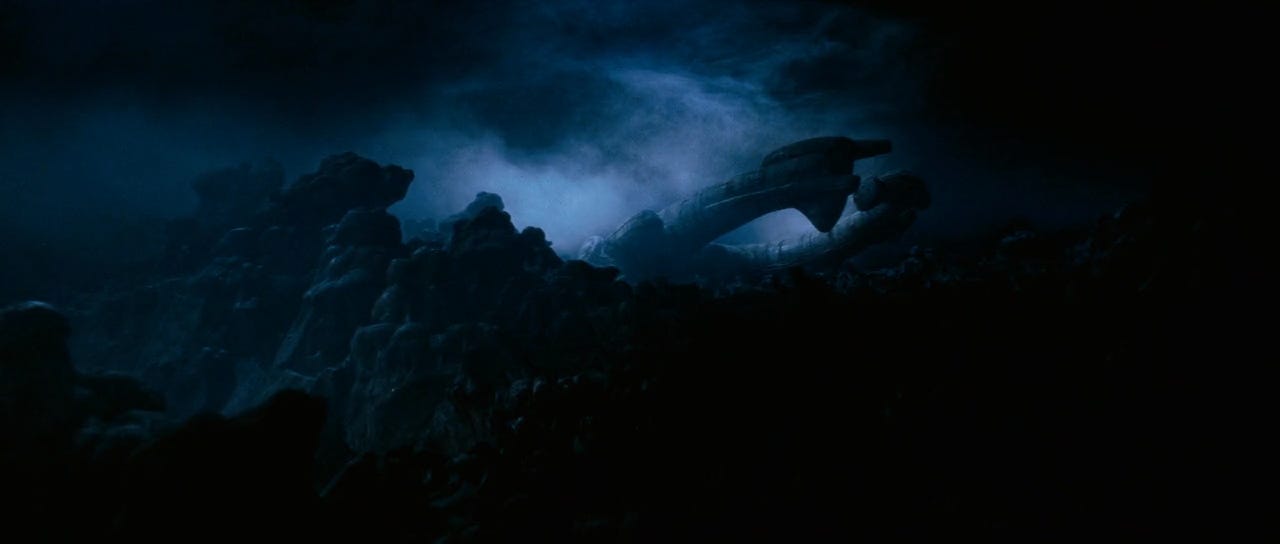
Any other film would’ve tried to uncover the origin of the alien ship— the prequels were certainly leading up to it. But in Alien, the ship’s origins are a mystery. It’s like a house that travelers randomly pass. It just sits there, ominously, the first sign that this film is going into horror territory as the image evokes the dread of an Edgar Allan Poe or Lovecraftian story.
Thanks for reading! If you liked this essay, you can sign up here for more issues. If you’d like to support Three Left Feet Media, share this newsletter with a fellow film lover you think would appreciate it.
Long live the movies!
D.L. Holmes
Again, forgive the quibbles. The 1970s are not a “year,” they are a “decade.” It is not The Last Picture, it is The Last Picture Show.
Enjoying the images and work!