

How Benecio Del Toro Helped Reshape One Battle After Another Into A Better Film
Paul Thomas Anderson, who wrote the Sensei role for Benecio Del Toro, initially had a wildly alternate journey mapped out for the character. The actor had a better idea.

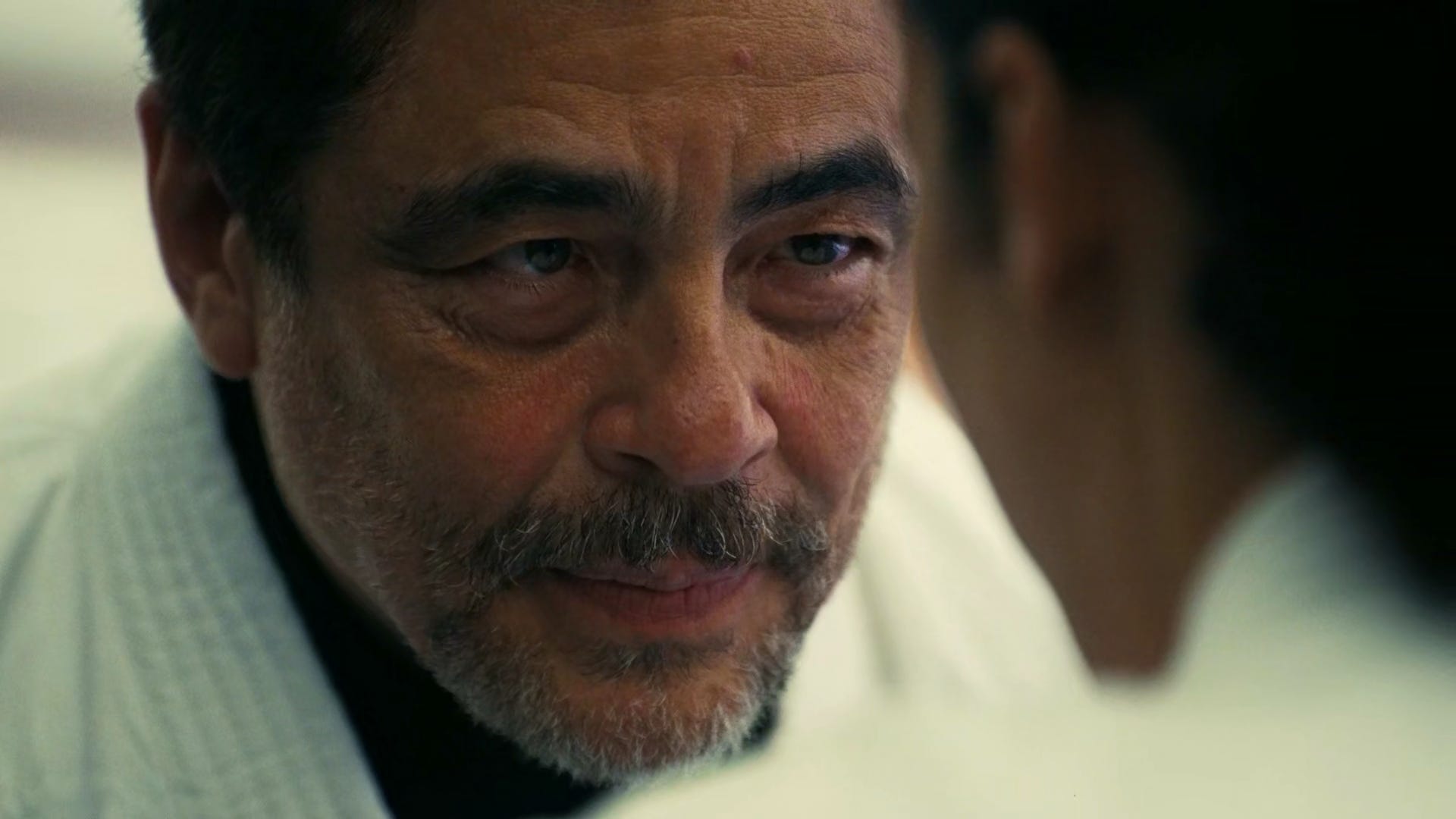
‘One Battle After Another’ has been picking up one award after another on the awards circuit and has a good chance of going the distance at the 98th Academy Awards on March 15th. But if it wasn’t for Benecio Del Toro, things could have turned out wildly differently.
In Paul Thomas Anderson’s tenth feature film about ex-revolutionary Bob (Leonardo DiCaprio) and his daughter Willa (Chase Infiniti) being hounded by the former’s enemy Colonel Steven J. Lockjaw (Sean Penn), Del Toro plays Sergio St. Carlos, affectionately called ‘Sensei’ as he is a Karate sensei. When Bob needs help tracking down Willa— off on her own journey with revolutionary Deandra (Regina Hall1)— the first person he turns for help is Sensei.
Unlike the paranoid and increasingly harried Bob, Sensei is chill. Even in the face of escalating danger, he remains unshaken. When Bob tells him that he and Willa are being hunted down, Sensei’s calmly responds, “That’s heavy metal, bro.”
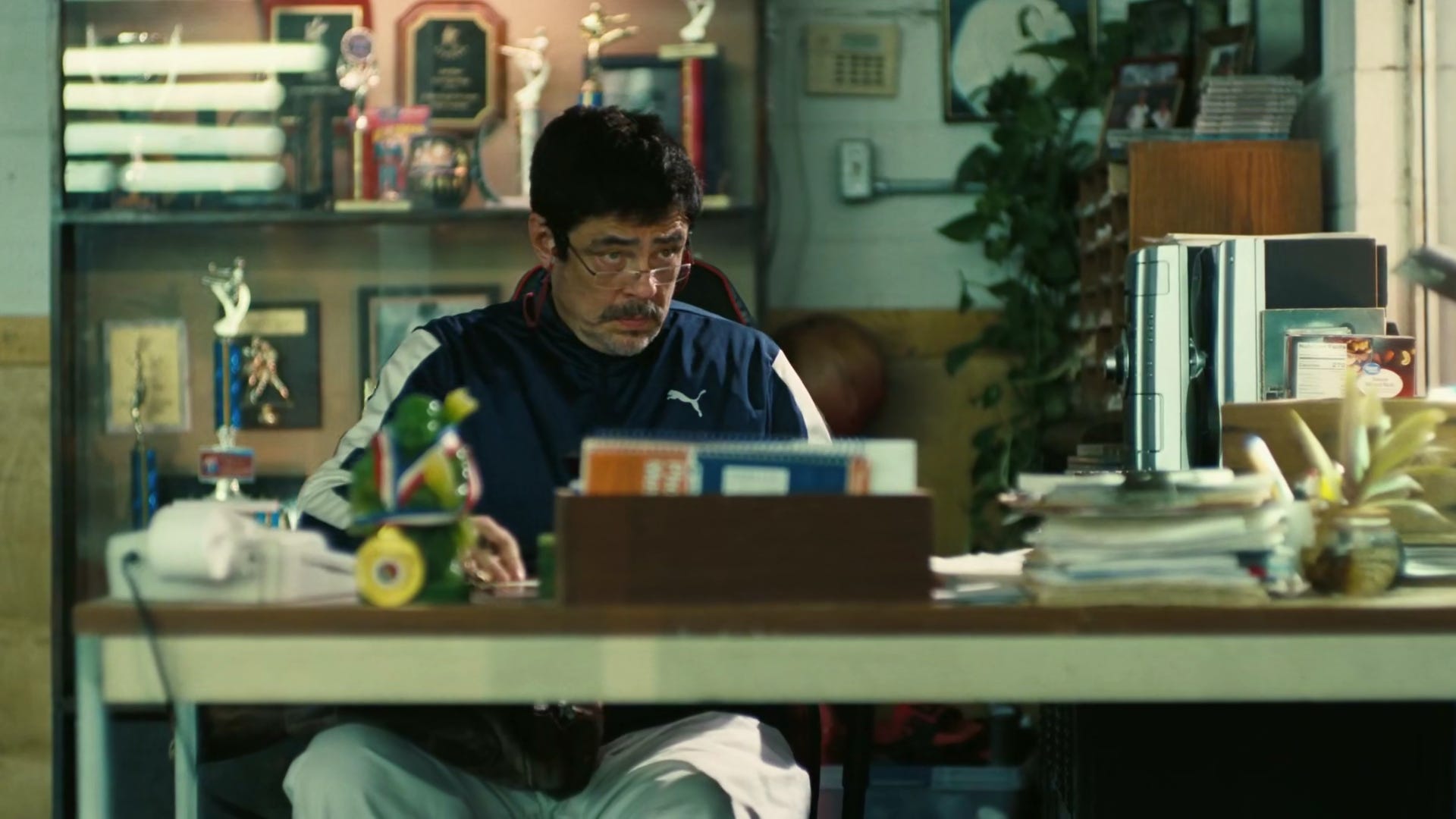
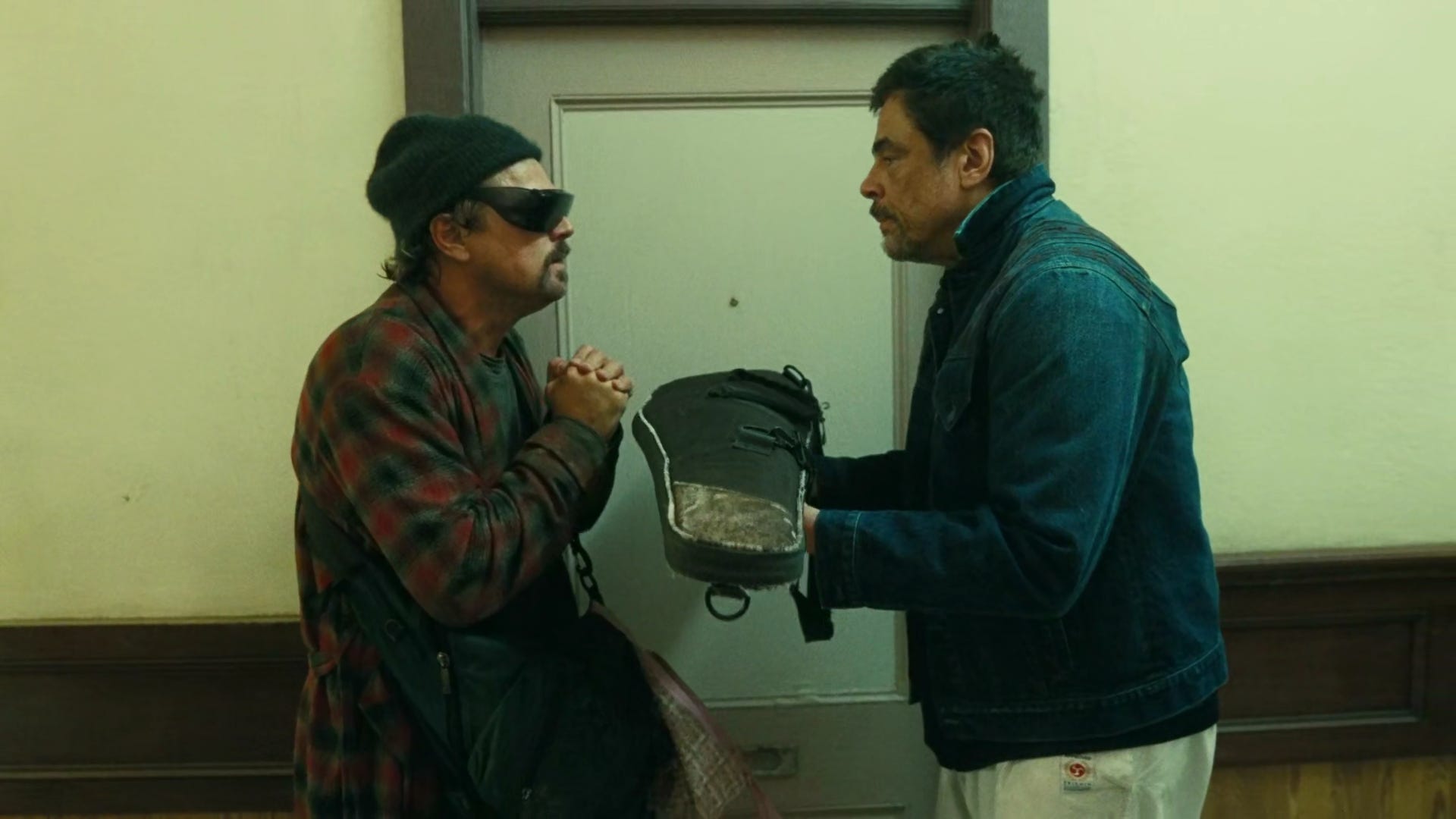
As Lockjaw lays siege to the fictional border town of Baktan Cross, under the guise of an immigration raid, in order to find Willa, Sensei takes Bob to a place of safety so that the latter can get in touch with his former associates, the French 75, to get the coordinates of the rendezvous point where Willa is being taken for safety. But while Bob is only thinks about Willa—after all, she is his daughter— and himself, Sensei is simultaneously helping evacuate several undocumented immigrants via a hidden tunnel before Lockjaw’s forces find them.
In fact, by bringing Bob into his home, Sensei has actually put a bigger target on himself and the people for whom he is a leader. It’s a high stake, high pressure situation, but through it all, Sensei stays focused. Instead of giving into the anxiety, he is unruffled2. When Bob apologizes for causing so much trouble, Sensei merely tells him, “We’ve been laid siege for hundreds of years. You did nothing wrong. Don’t get selfish.”
“Life, man,” Bob says. “Life!”
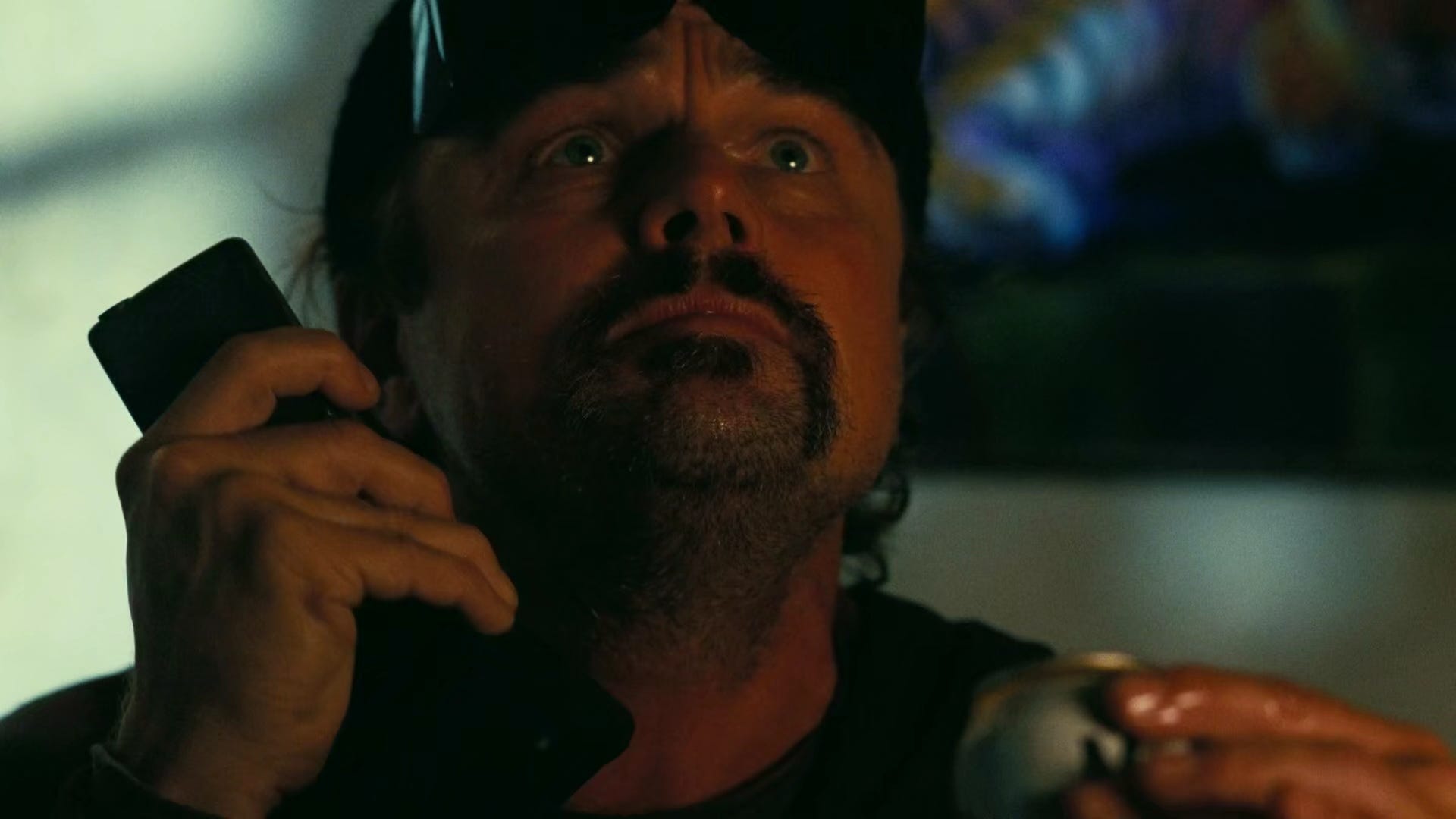
In early drafts, Sensei was supposed to help Bob to cover up a double murder that occurred inside his dojo3, which would set off a complicated chain reaction of cover-ups and escape. But as he read the script, Del Toro balked. Not because of the violence, but because to him, it made no sense.
“What’s my relationship with Leo until that point in the film?” he recalls scribbling in the script margins. “I teach his daughter. I shake his hand. He writes me a check. I deposit the check. That’s it.”
Logically, the character’s actions felt false. “If I kill somebody in my dojo,” Del Toro reasons, “that’s another movie entirely.”
Del Toro is right. Killing anyone in the dojo created a literal mess to clean up, and risked turning the film into a logistics thriller about evidence disposal. It didn’t appeal to Del Toro, but most of all, he felt that these options only reduced the potential of ‘One Battle After Another’.
His instincts were right. For in these early versions, Anderson was frustrated with a sequence in Bakton Cross, a made-up town in the real El Paso, which was supposed to culminate in a raid. Except, the director says, it was “constantly changing and never found its target.”
Del Toro approached Anderson with a different idea: What if instead of triggering the violence, Sensei was the head of an ambitious migrant smuggling operation?
To contemplate the actor’s suggestion meant a lot of rewrites and changes. Instead of rejecting it, however, Anderson jumped at it. “It was a very good idea that led to significantly more dramatic possibilities with his character and the overall shape of the film,” Anderson says.
The pivot of Sensei from plot accelerant to a “‘Latino Harriet Tubman situation’” opened up the story in several ways. Instead of being an instigator, Sensei now became a protector. Instead of a kill site, the dojo became a place of refuge. To top it off, I imagine that it significantly eliminated overly complicated plot threads; in the finished film, Sensei’s story becomes simpler, involving him bringing Bob to safety, helping him get across town, and then when Bob gets arrested, springing him out of jail and driving him to the rendezvous point. With plot machinations out of the way, scenes allowed the characters to flourish.
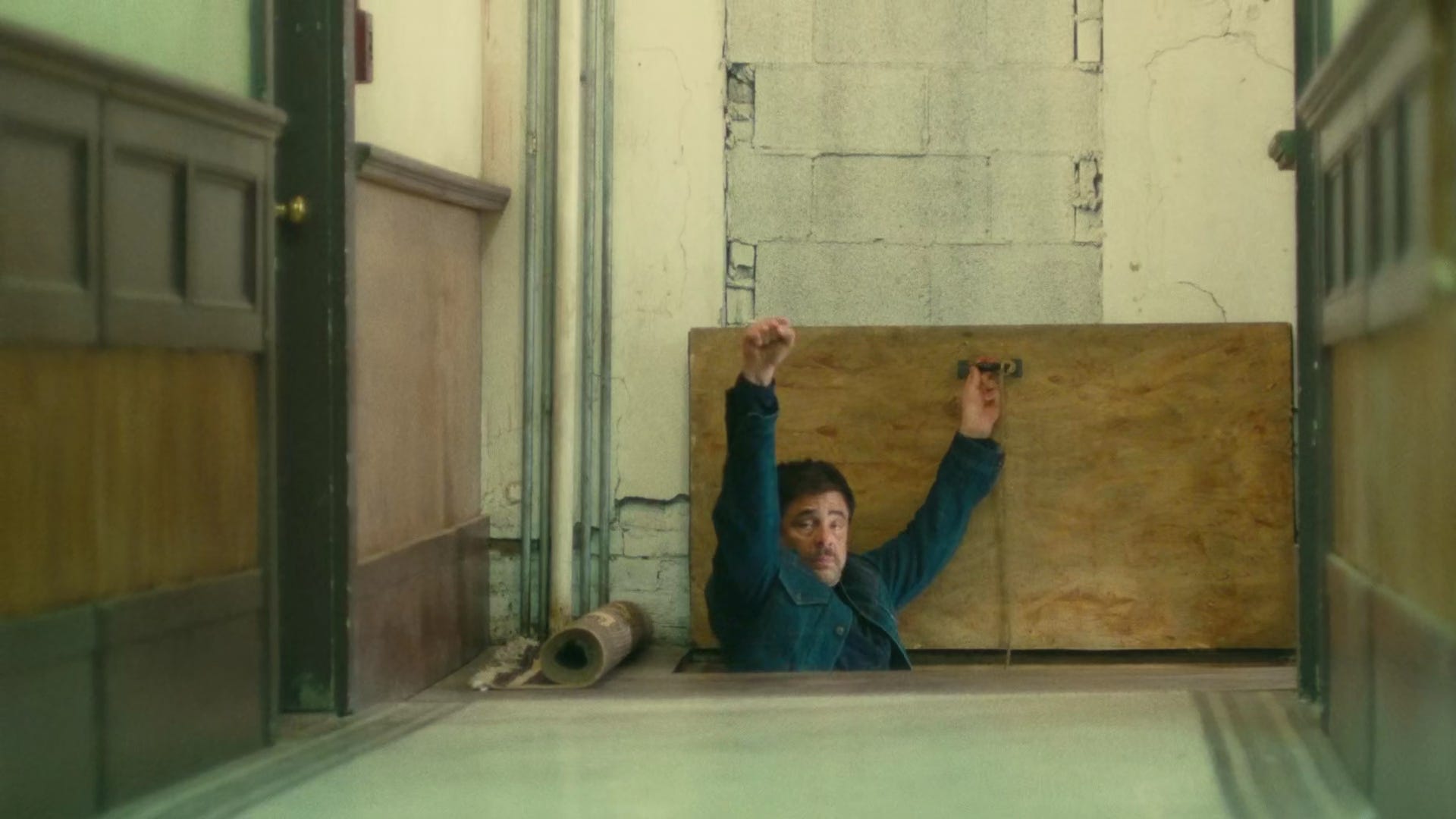
The Sensei character also took on grander thematic relevance, becoming the film’s moral compass in a subtle way. “Sensei represents the helper,“ says Del Toro. “That human side of all of us. Innocent until proven guilty. You see someone in need, and you help.”
For Del Toro, pushing for such changes was just another working day. Whenever he gets a script, he makes it a habit to always read while making notes or scrawling down his thoughts with a felt-tipped pen. His approach to acting is similar to that of ‘an interpreter’: “If you don’t understand the writer,” he says, “you cannot do it.”
Understanding the writer is only the start; once he understands the story, Del Toro has questions. Lots of questions. What happens next? Why is he angry? Why? How? When? This back-and-forth between an actor and writer/director might be frustrating for some but in the case of ‘One Battle After Another,’ it was a collaboration that yielded immensely better results. Indeed, it made for an entirely better movie.
‘One Battle After Another‘ nearly did not have Del Toro.
As is the case with actors in demand, it was a matter of conflicting schedules: he was working on ‘The Phoenician Scheme‘ for Wes Anderson4 around the time the other Anderson (PTA) planned to film ‘One Battle After Another’. Instead of recasting, PTA did something he’d never done before: he delayed production for three months until Del Toro became available.
“The question I had at the time was, ‘How can we not wait for Benicio?’,” says Anderson. “There simply wasn’t any world where I made the film without him.”
It worked. Del Toro got to work with both Andersons5, but the experience was like jumping between two moving trains. After he finished shooting ‘The Phoenician Scheme,’ he attended his daughter’s sixth-grade graduation, then began shooting ‘One Battle After Another’. Total time between projects? Ten days.
“I had ten days to unpack and pack,” recalls the actor. “Unpack my character in [‘The Phoenician Scheme‘] and then get dressed like Sensei and just… go. You don’t have time to adjust. If you want to jump on a carousel, you generally want time to run and catch up and then jump in. There was none of that.”
Needless to say, it paid off. Among the accolades and nominations showered on ‘One Battle After Another’ is an Oscar nomination for Del Toro in the Best Supporting Actor category (alongside Sean Penn). It’s his first nomination since 2004’s ‘21 Grams’6, after winning Best Supporting Actor in 2001’s ‘Traffic’). Del Toro is surprised by the reception.
“I’m in the movie for a limited amount of time,” he says. “I came in to get Leo from point A to point D.”
“It’s an honor,” he adds. “It’s huge. But it’s very surprising. There’s something about it that makes me want to not believe it. And I’m trying to enjoy this wave.”
Thanks for reading! If you liked this essay, you can sign up here for more issues. If you’d like to support Three Left Feet Media, share this newsletter with a fellow film lover you think would appreciate it.
Long live the movies!
D.L. Holmes
Paul Thomas Anderson wrote the character specifically for Regina Hall. The two happen to be neighbors, and when he wandered over during her backyard renovation, she thought he wanted landscaping advice. Hall, a fan since Boogie Nights, had been trying to work with the director for years. Her agent kept saying she was “not going to have a general with Paul Thomas Anderson — ever.” But there, in the garden, Anderson told he was going to send her a script. Hall admits: “I’m not going to lie, he could have said we’re doing an adult film in Chatsworth, and I would have been like, ‘Sure.’”
Whereas Bob flails—figuratively and sometimes literally— throughout the movie. Honestly, even though Leonardo DiCaprio is the lead, his entire arc consists of him bumbling throughout the story while his daughter has to escape from Lockjaw, the bounty hunter Avanti, and the Christmas Adventurers Club killer Tim Smith. It’s one of DiCaprio’s most hilarious performances.
*Record-scratching sound* Say what?!
I like to call this conundrum, A Tale of Two Andersons.
Which is always, personally, better than one Anderson.
Which also starred Sean Penn.