

How Black Panther Finally Got Made Into A Movie: Part 1
Part 1 of this two-part essay looks at Black Panther's long journey from comic books to the screen, and the internal politics at Marvel Studios that delayed it.

This is the first installment of a two-part essay on the making of Black Panther.
A lot of people, and I include myself in this list, did not know anything about Black Panther. I’d seen him in a few comic book team-up events, but for the most part, I was ignorant. Plus, I was more of a DC guy anyway— Spider-Man was probably the only superhero I liked from the Marvel stable.
That’s why Ryan Coogler’s Black Panther blew me away when it came out in 2018. It was fun, exciting, emotional, and unlike anything from Marvel Studios at that point. The critical and commercial reception backed this up, including the first-ever Best Picture Oscar nomination for a superhero film, and over $1 billion at the box-office.
So naturally, my love of the film and my curiosity about how it was made prompted me to research into the making of Black Panther. It ended up as a much longer essay than I intended when I discovered details about previous attempts to make a Black Panther movie, and why it took such a long time to bring the character to the screen. So much so that I needed to split up the essay into two parts.
Let’s start, then, as most stories do.
In the beginning, there was the Black Panther…
The Origins of Black Panther
Before he got his own series, before he was an integral part of the Avengers, Black Panther was an anti-hero who first appeared in the pages of Fantastic Four #52 in July 1961.
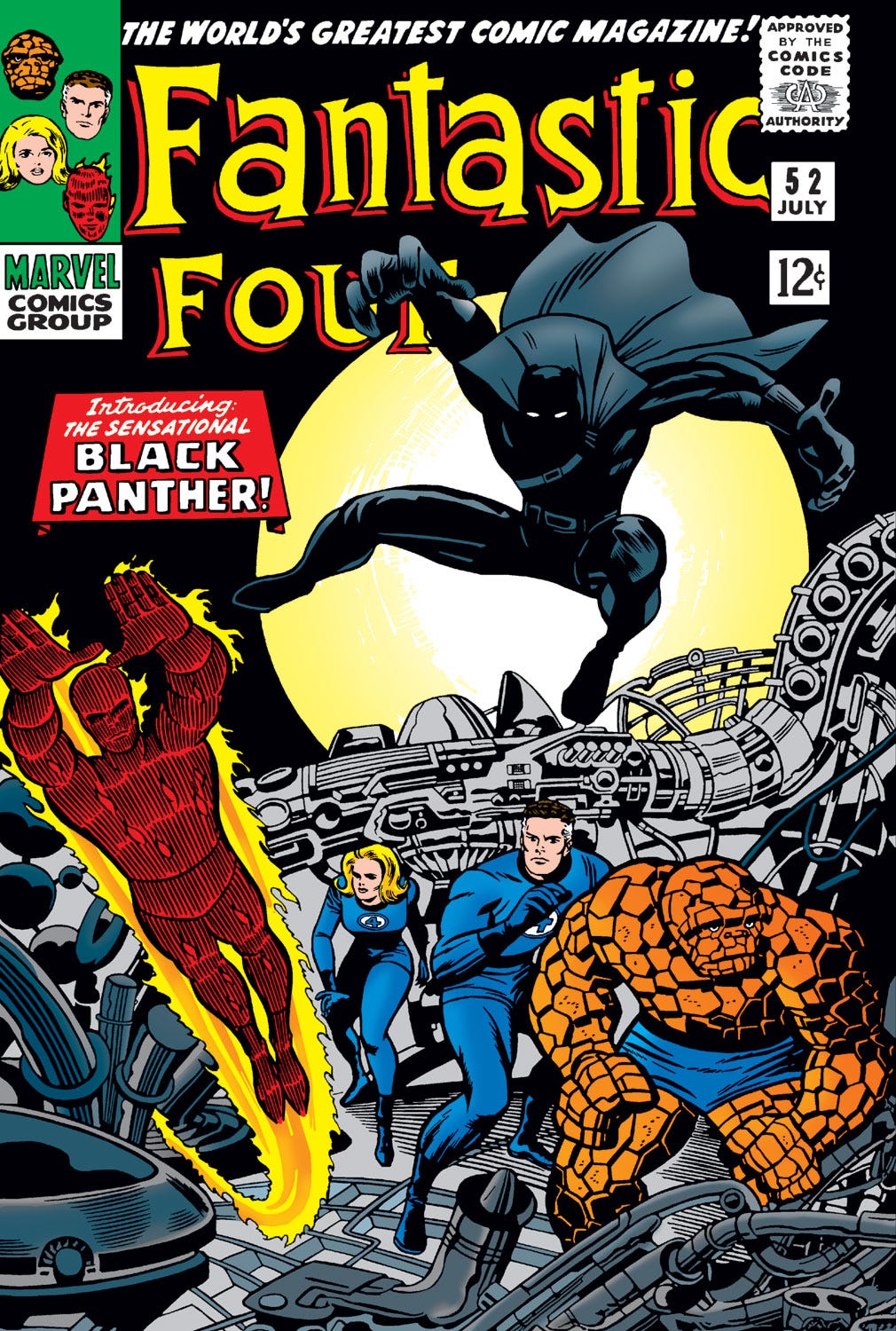
Created by Stan Lee and Jack Kirby1, Black Panther was the alter-ego of Prince T’Challa, descended from a long line of ‘Black Panthers’, leaders of the fictional Wakanda who wear the mask to protect their homeland. Over time, his agendas shifted and he became the first Black superhero in mainstream American comics. But despite his popularity, commercial sales weren’t great, and it wasn’t until the 1998 launch of the Marvel Knights line that Black Panther finally got his time to shine.
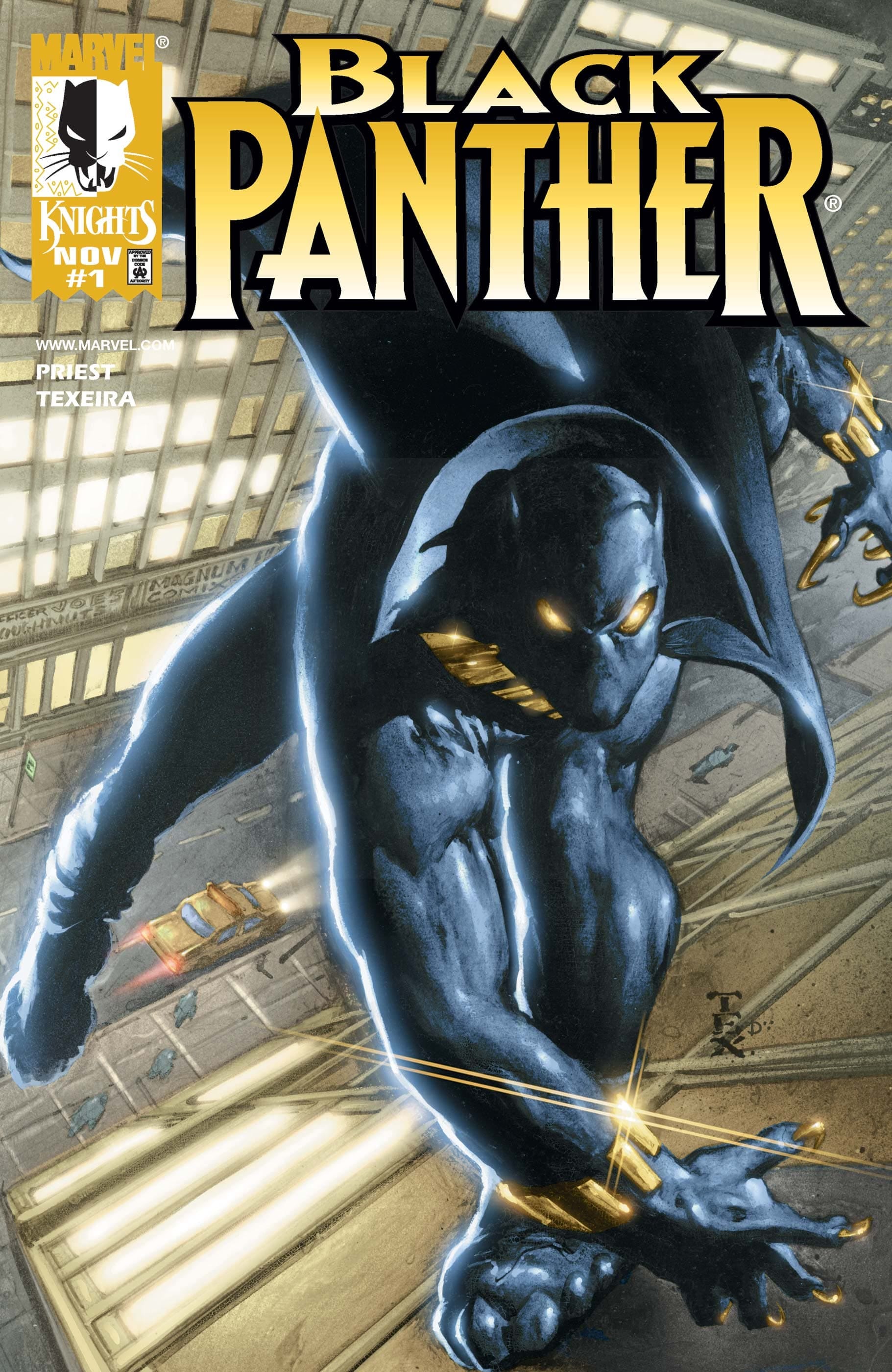
Writer Christopher Priest and artist Mark Texeira reinvented the character, envisioning him more as a monarch of a technologically advanced nation who also happens to be a superhero; Priest imagined T’Challa as a cross between president Nelson Mandela and Frank Miller’s Batman. Priest also introduced the character Everett K. Ross as a bridge between the African culture of the Black Panther mythos and Marvel’s predominantly white readership. Other influences included writer Chris Claremont’s work on the X-Men comics, as well as The West Wing.
Priest and Texeira’s take on the superhero took off, and these elements would become canon in Black Panther comic book lore. When writer Ta-Nehisi Coates took over the Black Panther title in the 2010s, he cited Priest as having had “the classic run on Black Panther, period, and that’s gonna be true for a long time”. Some of these would wind up in the 2018 movie, such as the Dora Milaje being the Panther’s female bodyguards versus their original characterization as beautiful teenage girls with the potential to become the Panther’s wives. But before Ryan Coogler got his chance to make the movie— in fact, even before Priest and Texeira’ Marvel Knights relaunch— someone was already extremely keen to make a Black Panther movie in the 1990s. That someone was Wesley Snipes.
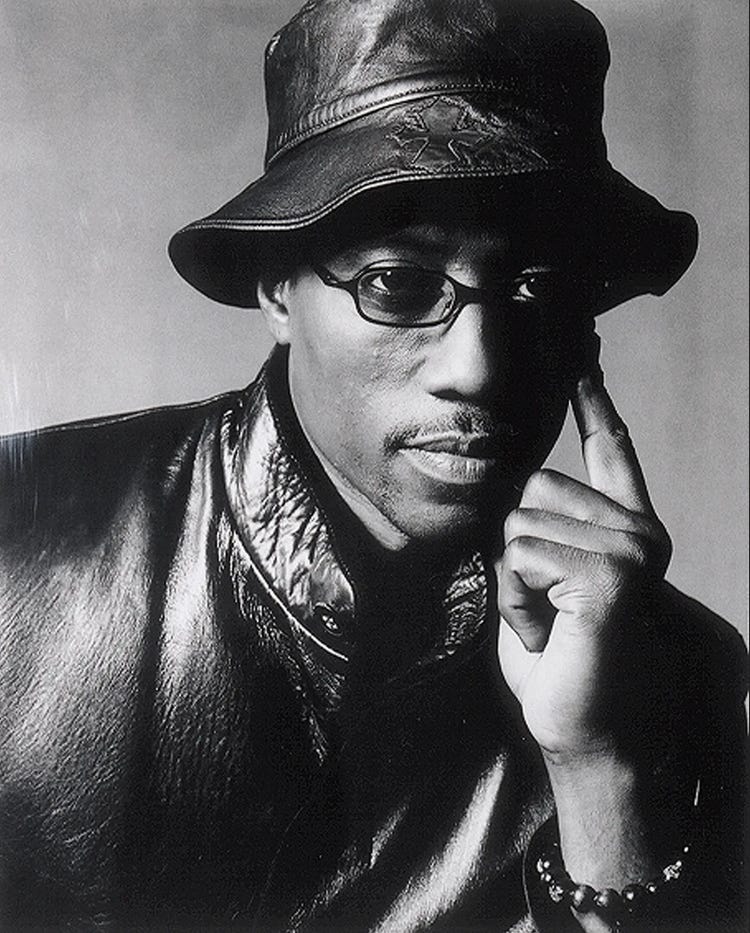
How Wesley Snipes Tried— And Failed— To Make A Black Panther Movie
“I think Black Panther spoke to me because he was noble, and he was the antithesis of the stereotypes presented and portrayed about Africans, African history and the great kingdoms of Africa. It had cultural significance, social significance. It was something that the black community and the white community hadn’t seen before.” - Wesley Snipes
In the 1990s, actor Wesley Snipes was in demand. He’d had a string of hits including New Jack City, White Men Can’t Jump, Passenger 57, Demolition Man, and Rising Sun. When Marvel approached him and his then-manager, Doug Robertson, Snipes was hooked by the prospect of playing Black Panther. Here was a chance, Snipes thought, to buck cinematic portrayals of Africa as a depressing, desolate land; here was a chance to show its lush history and beauty.
Snipes explains:
“Many people don’t know that there were fantastic, glorious periods of African empires and African royalty — Mansa Musa [emperor of the West African Mali Empire] and some of the wealthiest men in the world compared to the wealth of today. That was always very, very attractive. And I loved the idea of the advanced technology. I thought that was very forward thinking.”
But, as is always the case, there were troubles.
Although Columbia Pictures was locked in as the film’s studio2, finding a writer and director was a struggle. For one, Snipes had to make it absolutely clear that his Black Panther movie was about the Marvel comic book superhero, not the 1960s civil rights revolutionaries. In an interview, Snipes recalls a memorable meeting with John Singleton, who’d made the successful Boyz n the Hood at 23, which took an unexpected direction:
“I laid on him my vision of the film being closer to what you see now: the whole world of Africa being a hidden, highly technically advanced society, cloaked by a force field, Vibranium. John was like, ‘Nah! Hah! Hah! See, he’s got the spirit of the Black Panther, but he is trying to get his son to join the [civil rights activist] organization. And he and his son have a problem, and they have some strife because he is trying to be politically correct and his son wants to be a knucklehead.’
Laughing, Snipes continues,
“I am loosely paraphrasing our conversation. But ultimately, John wanted to take the character and put him in the civil rights movement. And I’m like, ‘Dude! Where’s the toys?! They are highly technically advanced, and it will be fantastic to see Africa in this light opposed to how Africa is typically portrayed.’ I wanted to see the glory and the beautiful Africa. The jewel Africa.”
Ultimately, the project stalled, despite Snipes’ enthusiasm and efforts. Snipes says,
“We were so far ahead of the game in the thinking, the technology wasn’t there to do what they had already created in the comic book.”
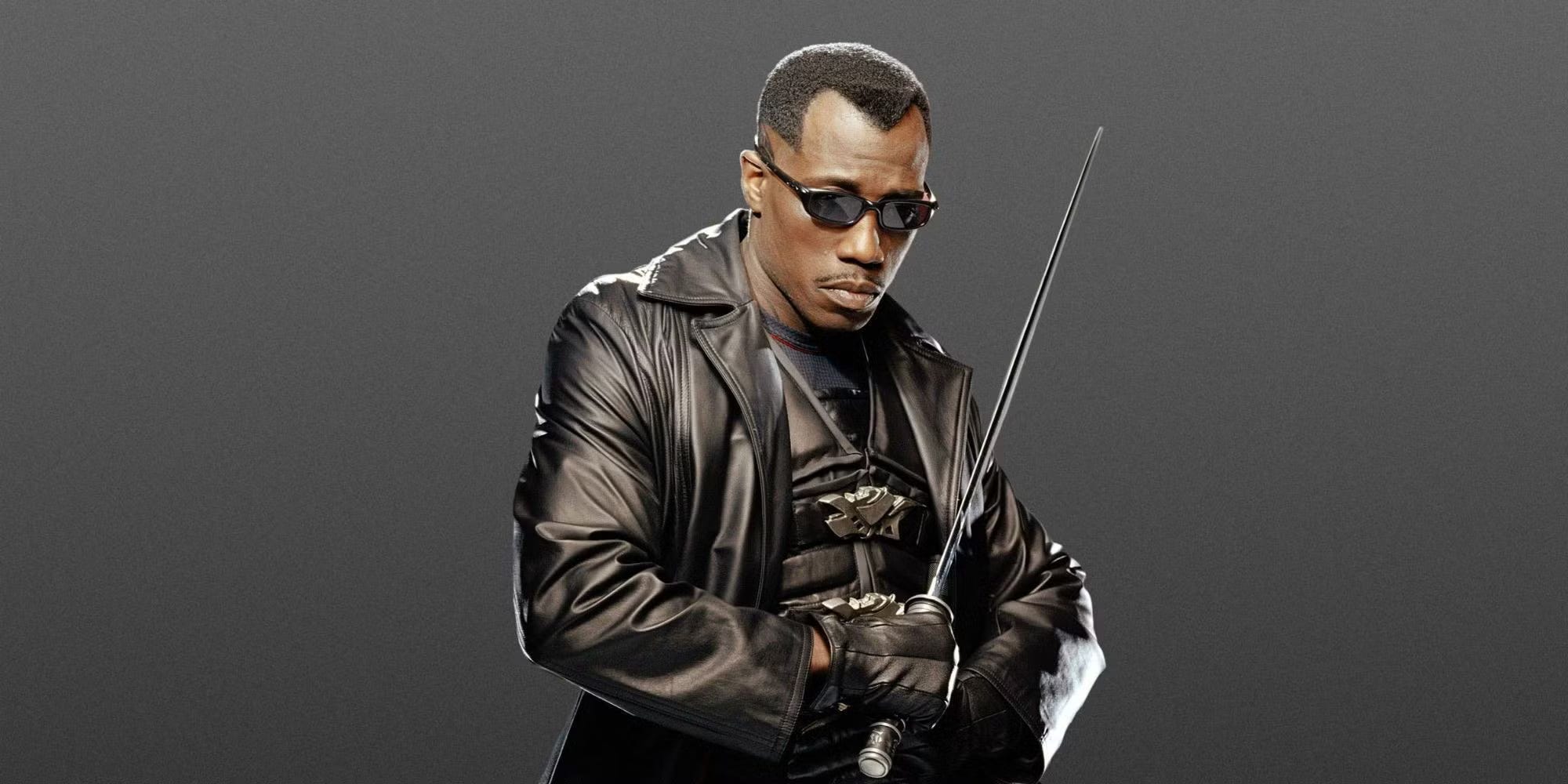
But though he missed his chance to play Black Panther, Snipes would still get his opportunity to redefine superhero films when he became attached to play a different Marvel superhero: Blade.
The Origins of Marvel Studios (Or What Filmmakers Can Learn To Build Their Own Production Company)

Once upon a time— well, about twenty years ago, give or take— Marvel Studios was a scrappy little underdog production company.
The Rise of Marvel Studios
In the year 2000, Marvel struck a deal with Artisan Entertainment to make at least 15 Marvel superhero franchises consisting of live-action features, TV series, direct-to-video films and internet projects. Among these characters included Captain America, Thor, and Black Panther. At the time, this iteration of Black Panther— described as “a black Indiana Jones-style character”— still had Wesley Snipes attached to produce and star. But for every dream in Hollywood that comes true, many more die in the process.
Three years after announcing the joint venture, Lionsgate bought Artisan Entertainment. In 2005, Marvel reacquired the rights to its characters, including Black Panther; the comic book company had decided to strike out on its own into the movie business under its own production arm, Marvel Studios. Under the guidance of Marvel chairman and CEO Avi Arad, and Marvel Studios president and chief operating officer David Maisel, the company put into motion a plan to develop 10 new film projects, one of which included Black Panther.
By 2007, producer and soon-to-be Marvel Studios president Kevin Feige said that Black Panther was very much a part of their plans:
“It’s hard to talk too far in the future, but Captain America and Thor and Black Panther and the Avengers are all on our development slate right now.”3
The success of 2008’s Iron Man boosted the confidence of Marvel Studios. Scribes selected through the now-defunct Marvel Writers Program had to pitch ways to launch Marvel’s lesser-known properties like Doctor Strange, Nighthawk, and yes, Black Panther. Christopher Yost (who co-wrote the scripts for Thor: The Dark World and Thor: Ragnarok) recalls having to pitch a Black Panther movie for his interview into the Writers Program. Feige stressed the importance of Marvel’s movie superheroes lineup not feeling “like a completely white, European cast.”
Progress was promising, yet frustratingly slow, but in 2011, there was a glimmer of hope when documentary filmmaker Mark Bailey was hired to pen a script for a Black Panther movie.
The reasons for the delay are myriad. At the time, especially pre-Avengers, Marvel Studios was still untested as being able to deliver consistent blockbuster hits. It was also reliant on a $500 million credit line from Merrill Lynch to fund its project slate. Iron Man was a hit, true, but could the company deliver similar success stories without the likes of Robert Downey, Jr.?
But perhaps the biggest obstacle to getting Black Panther made was Marvel Enterprises CEO Ike Perlmutter and the Marvel Creative Committee in New York4. Before when he was just a producer, and after he succeeded Maisel as the president of Marvel Studios, Feige was constantly butting heads with his boss and the Marvel parent company— and one of the issues was about diversity.
For instance, Perlmutter wanted all the team members in 2012’s The Avengers to all be men— it was writer-director Joss Whedon who insisted that the team include at least one woman, ideally Black Widow, and Feige backed him up5. The Marvel CEO, whose business was toys, cherry-picked data from budget sheets to claim that “female action figures didn’t sell, that female-led comic books underperformed compared to top-line male heroes, and that previous movies based on female superheroes had failed at the box office.” Another member of the Marvel team in New York even told Disney’s then-CEO Bob Iger that “female superheroes never drive big box office.”
And, of course, the big one for them: Black superheroes didn’t sell to international audiences. Hollywood has long maintained that films with black leads or predominantly black casts struggle at the global box office; consequently, the number of black-led film projects produced were limited, with fewer roles available for black actors, and it became a vicious self-fulfilling prophecy.
For Feige, this was more than a hindrance: Black Panther was a priority project for him, and as his track record of successes grew, so did his clashes with Perlmutter and the Creative Committee. He mentioned the challenges he faced to Iger one day; Iger, who made it a point not to interfere with the companies that Disney had bought (Pixar, Marvel, and Lucasfilm), made a rare move to call up Perlmutter and tell him to stop obstructing Feige’s efforts to diversity their film slate. Iger recounts in his memoir The Ride of a Lifetime:
“I’ve been in the business long enough to have heard every old argument in the book, and I’ve learned that old arguments are just that: old, and out of step with where the world is and where it should be.”
Perlmutter ceded to Iger’s requests. Not that he had much choice: Iger was his boss, and the only person who actually outranked him.
In October 2014, an audience of fans, journalists, and some of the Marvel directors gathered at the El Capitan Theatre. Feige took the stage and, after touting their successes and box-office records, laid out the plan for the next five years: eight movies, including Doctor Strange and Captain Marvel. “We have planted a lot of flags,” he said6. But he’d saved his best card for last, as recounted in MCU: The Reign of Marvel Studios:
“[Feige] brought Robert Downey Jr. and Chris Evans onstage to introduce the actor he saw as the future of the MCU. “Black Panther himself,” Downey drawled, “ladies and gentlemen, Mr. Chadwick Boseman.” As Boseman strolled onstage, the crowd erupted, and Downey pumped his fist.
Ten years earlier, Black Panther had been one of the ten characters put up as collateral to secure a line of credit from Merrill Lynch; now, Feige was finally able to announce a Black Panther feature film, the Black-led superhero movie that he had long fought for, with a release date of November 3, 20177. It was time to introduce the rest of the world to Black Panther and Wakanda.
But before his solo film, the character would be making his debut in a star-studded affair Marvel affair: Captain America: Civil War.
Here ends Part 1 of this essay.
How Black Panther Finally Got Made Into A Movie: Part 2

This is the second installment of a two-part essay on the making of Black Panther. Read Part 1 here.
Thanks for reading! If you liked this essay, you can sign up here for more issues. If you’d like to support Three Left Feet Media, share this newsletter with a fellow film lover you think would appreciate it.
Long live the movies!
D.L. Holmes
Each claimed to have come up with the character, but the unifying theme is that both realized that there were no Black superheroes in their comics, and a large portion of their readership was Black.
This was the time when Marvel Comics had licensed the film rights to their characters to other studios. It was a bleak time for the comic book company.
It would ultimately take 10 years to get there, but I’m getting ahead of myself.
The Marvel Creative Committee was a group of individuals—partially consisting of Marvel Comics alum such as writer Brian Michael Bendis, former editor-in-chief Joe Quesada, publisher Dan Buckley, and president of Marvel Entertainment Alan Fine (and Perlmutter’s right-hand man)— who’d give notes on the film productions through the development process.
Hulk actor Mark Ruffalo recalls that at one point, Feige told him, “Listen, I might not be here tomorrow. Ike does not believe that anyone will go to a female-starring superhero movie. So if I am still here tomorrow, you will know that I won the battle.” Feige remained, and so did Black Widow.
With the exception of one film—The Inhumans — all the projects came to fruition.
It would ultimately be released on February 16, 2018.