


Let’s be honest: Captain America wasn’t always exactly a cool Marvel superhero.
He was, at best, a second-tier character, compared to Spider-Man, Daredevil, The X-Men, Hulk, and The Fantastic Four. Characters, coincidentally, whose film rights had been sold to other film studios before Marvel Studios really came into its own in the late 2000s. The A-team stable was empty; Marvel would have to make do with the B-list players.
Even with 2011’s Captain America: The First Avenger, reception was positive if not exactly enthusiastic. Chris Evans brought charm to the role1, and the film— a throwback to 1940s World War II period pieces like Raiders of the Lost Ark2— did modestly well at the box office. A year later, Evans led the first superhero team-up in The Avengers, this time as a man out of time and without a war to fight. Fans warmed up to the character; particularly how Evans brought an earnest honesty and heroic attitude that felt inspiring3.
But post-Avengers, interest was higher for a third Iron Man film than sequels for the other characters.
Then, in 2014, Marvel Studios released Captain America: The Winter Soldier. And almost overnight, Steve Rogers became— there’s no other word for it— cool.
“I think we’re ready to take down S.H.I.E.L.D.”
Kevin Feige, the producer and president of Marvel Studios, made these remarks to writers Stephen McFeely and Christopher Markus sometime in 2011, and the timing could not have been better. The writing partners, who penned The First Avenger, had been hired to write the Captain America sequel, but the two were stumped. They had some guideposts— it was going to be set in the 21st century instead of the 1940s; the Bucky Barnes character played by Sebastian Stan would be the Winter Soldier, a brainwashed assassin kept in cryogenic freeze over decades by the Soviets; and it would pay tribute to 1970s thrillers in which the protagonist was pursued by mysterious forces— but they’d hit a wall. That’s when Feige told them what he had in mind for the fictional spy organization S.H.I.E.L.D.
“Honestly, at that point we were struggling to figure out what the big third act was,” says McFeely. With permission to destroy the spy organization introduced back in 2008’s Iron Man, the sequel began to take shape. But even they didn’t seem to realize how big this shake-up would be for Earth’s Mightiest Do-Gooder.
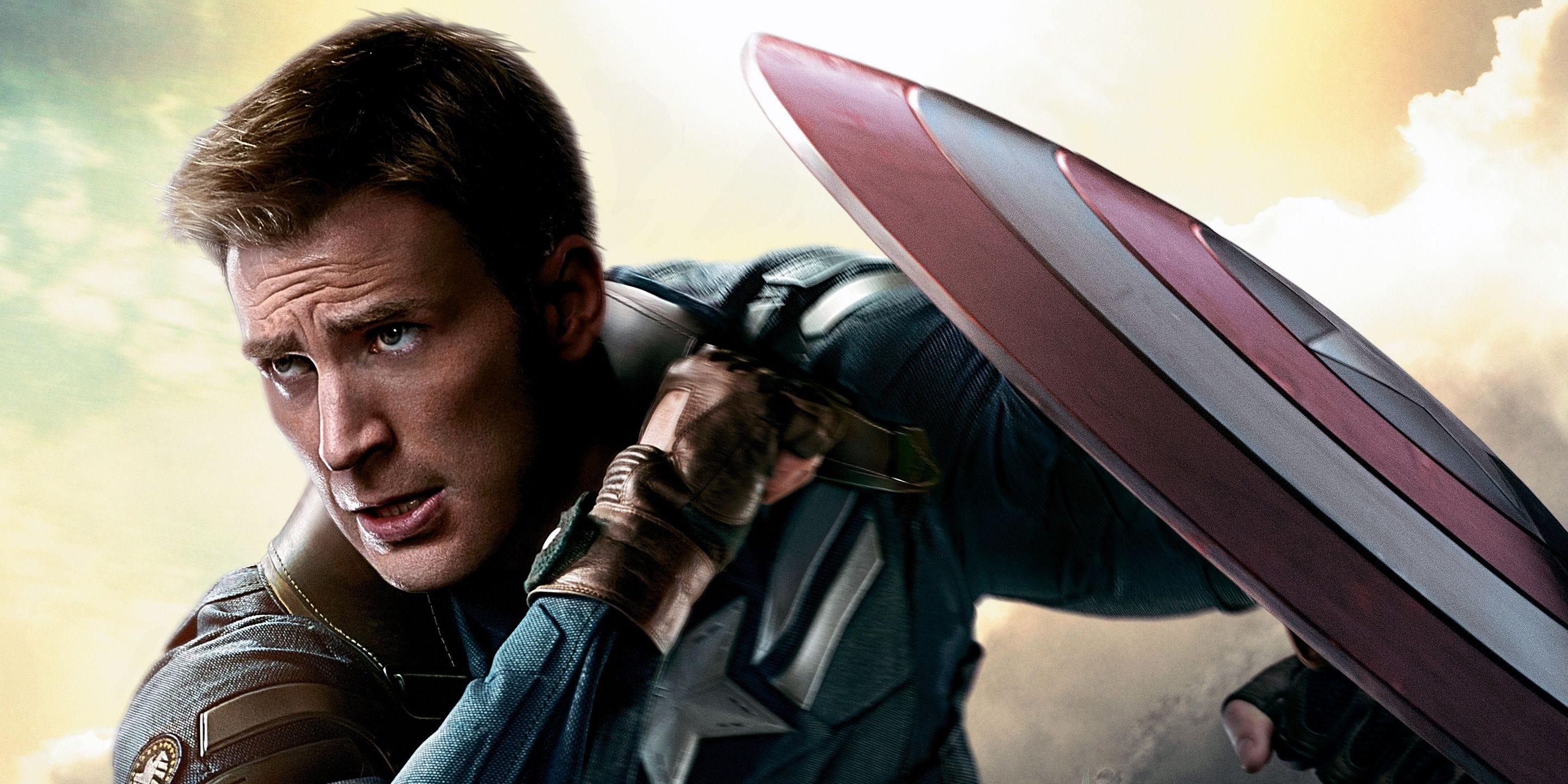
Captain America made his debut on 20 December 1940 in the pages of Timely Comics’ Captain America Comics #14. Created by Joe Simon and Jack Kirby, the cover became instantly iconic for famously depicting the super soldier punching Adolf Hitler in the jaw5.


Captain America bore a resemblance to his rival Superman over at Detective Comics, Inc.— both wore costumes coded in the colors of the American flag, both stood for values of truth, justice, and basic decency, and above all, seemed incorruptible. But while Superman’s popularity held, Captain America never seemed to quite capture the public’s imagination like the Kryptonian Boy Scout. As Marvel executive John Turitzin put it bluntly in MCU: The Reign of Marvel Studios:
… no studio was interested in any of the characters in question… the comic-book version of Captain America was ‘this funny-looking red-white-and-blue character, dressed, basically, in a cut-up flag with little white wings on his head, carrying a shield, and just weird.’ [Turitzin] added, ‘There’s a reason why those characters had not been turned into movies or TV shows.’.6
To acquaint themselves with the Winter Soldier, Markus and McFeely reread the 2005-2006 ‘Winter Soldier’ comic storyline by writer Ed Brubaker and artist Steve Epting— in which sidekick Bucky Barnes was reintroduced to the Winter Soldier. That’s the advantage of having decades of stories to draw from: as a writer, you don’t have to always reinvent the wheel. For the Dark Knight trilogy, Christopher Nolan drew from the Batman comics7. Markus and McFeely pitched multiple ideas to Feige; he instructed them to focus on a movie operating as a political thriller “saturated with conspiracy and corruption”.
Marvel Studios was still in the nascent phase of gobbling up genres and packaging them as superhero stories; this was one of the earliest. As research, Markus and McFeely turned to films from the 1970s, an era marked by a slew of political thrillers. “‘Three Days of the Condor,’ recalls McFeely, “that was one that we went ‘oh wow.’ So there’s a lot of seepage from that movie… then we watched other ones from that period, like The Parallax View and things like that.”
“‘Marathon Man’,” Markus chimes in.
“Marathon Man is great,” McFeely agrees, “and it’s not like we stole particular things from them, but there’s that sense of an onion getting pealed away.’
“And the great thing about conspiracies is it’s usually not like sixteen people versus a conspiracy,” adds Markus. “It’s one guy who becomes increasingly isolated and all of those movies do a great job of taking away the safety net until you’ve got one man who then has to decide whether he’s going to run in the opposite direction or will take them down.”
“Structurally with good conspiracy movies everything is fine and then you’re on defense for half the movie, like ‘Oh my god,’ then once you figure it out, you go ‘All right, now I go on offense’,” says McFeely, “and that lent itself really well to our purposes.”8
Of course, this being a Marvel film, it couldn’t go the whole nine yards. A 1970s thriller often ended on an ambiguous note with little changing. Marvel could not afford to do that— Captain America had to fight the grand conspiracy and win, damn it! With S.H.I.E.L.D being revealed to be infiltrated by HYDRA agents, the enemies Rogers fought in 2011, led by Red Skull9. In early drafts, Nick Fury, Black Widow, and Hawkeye— the three biggest names affiliated with S.H.I.E.L.D.— would join the fight; but when Hawkeye actor Jeremy Renner couldn’t be scheduled10, his scenes were reassigned to Black Widow. This proved a boon— instead of a trio, the film got the clashing duo of Captain America’s ‘old-fashioned’ view of the world versus Black Widow’s more modern and ambiguous morality.
Still, Captain America needed a friend. And since Barnes was on the enemy’s side, then-executive producer and Vice President of Production and Development Nate Moore11 advocated for Captain America’s team partner in the comics and one of his favorite Black superheroes growing up: the Falcon.
“We have to introduce the Falcon, because as a kid, that was a character I remember loving,” he told Markus McFeely.
The writers were skeptical. The winged character looked a little ridiculous to them. “The guy with the wings?” they asked Moore. “Do people like the Falcon?”
He replied emphatically: “People love the Falcon.”
Meanwhile, Feige needed a new director.
Though pleased with what director Joe Johnston delivered in The First Avenger, he wanted a director who’d be “more available”12. His shortlist of candidates included: George Nolfi, the writer-director of The Adjustment Bureau; F. Gary Gray, a music-video director who had made the transition to features such as Friday, The Negotiator, and The Italian Job; and the brothers Joe and Anthony Russo.
At the time, the Russo brothers were best known for their work in television than features. Not that they hadn’t tried with the latter. When graduate students at Case Western Reserve University, they made an independent comedy, Pieces, that was accepted in the 1997 Slamdance Festival, but never released. However, it got the attention of director Steven Soderbergh, who later produced (along with actor George Clooney) their next movie, the 2002 heist film Welcome to Collinwood. It flopped at the box office.
“We were really up-our-own-ass artistic filmmakers when we got into the business,” Anthony Russo remembers with a laugh. “Only Steven Soderbergh would have responded to our first film—thank God he did. Frankly, he taught us how to make commercial movies.”13
But the brothers found their calling in television, winning an Emmy for directing the 2003 pilot of Arrested Development, the clever and riotously funny single-camera sitcom about the self-centered Bluth family. They also served as executive producers and directed another thirteen episodes. The Russos also directed the Community pilot14, another single-camera sitcom about a study group at a community college. They’d go on to direct thirty-four more episodes here and also serve as executive producers for a while. These sitcoms proved a useful training ground for their Marvel career phase: it taught them how to work on projects with large casts, and they had a knack for making the actors never feel neglected.
“We understand ensemble storytelling, we understand multiple brands, we’re ambitious, we like the cutting edge,” says Anthony. “We’re also— this is a dirty term, so I don’t use it anymore— populists.”15
Between the two brothers, Anthony tended to speak more off the cuff, while Joe was more measured. But together on a set, it was clear that they were a team. Even without speaking to each other, when one of them gave instructions to cast or crew, they’d already agreed on what the day’s shooting needed. Thus, achieving harmony.
It was Community that put the Russos on the Marvel Studios radar. Although Dan Harmon created the show16, it was the Russos who encouraged him to “use his sitcom as a vehicle for parodies of other film and TV genres.” Community wasn’t the first sitcom to do this— that honor should go to British sitcom Spaced, created by Simon Pegg and Jessica Hynes (credited Jessica Stevenson), and directed by Edgar Wright— but it did take the show to new heights.
The first one was the twenty-third episode of the first season, ‘Modern Warfare,’ a 2010 action-movie parody set during a college paintball competition. That episode was directed by Justin Lin17. Lin was supposed to return for the two-part season 2 finale, but when he was unable to make it, the Russos stepped in to direct ‘A Fistful of Paintballs’— a Western spoof— and the action-franchise pastice ‘For a Few Paintballs More’. Those episodes caught Feige’s attention; he set up a meeting with the brothers.
The three got along immediately. The timing, too, was fortuitous: having made the paintball episodes, the brothers felt ready to make an actual action movie. Feige thought so, too. Still, it wouldn’t be a straightforward decision. The Russos recall how they pitched themselves as the best team for the Winter Soldier gig:
“ANTHONY — [Our agent called to say] ‘Marvel has a list of 10 directors that they want to talk to about the next Captain America movie, and you guys are on it.’ That was unbelievable to us. They just were meeting with people who were doing interesting things. They didn’t even let us read the script until after the first meeting. Over those two months, the movie kind of took over our lives. We fell in love with it, and we were doing storyboards. We were rewriting scenes just to show them tonally what we would do. We created an animatic, to give them an idea of tone and texture, and we finally won.
JOE: We were running Community at the time, which was no small gig. That was a very complicated show. A lot of personalities — messy personalities — involved in that show. Every episode was a big creative swing. It was a really intense period for us. I remember sleeping in the trailer on the lot of Community quite a bit just to keep up with the edits and prep for Captain America.
ANTHONY: But before we went in for that last meeting on Marvel, my wife reminds me that I said to her, “Look, if we don’t get this movie, I have to rethink my entire career. I don’t understand any of that if this doesn’t happen.” It just felt like the movie was ours.
JOE: We were very happy in television. We had a lot of creative control. We didn’t have a lot of headaches. We could push around studio executives and heads of studios, and get things done the way we wanted to get them done. So if we’re going to go back to film, it’s got to be something valuable and something we’re really excited about.”
Their passion and enthusiasm, plus their rapport with Feige, won them the job. In June 2012, Marvel Studios made an announcement: Anthony and Joe Russo would direct Captain America: The Winter Soldier. If you didn’t know their names now, they promised that you will.
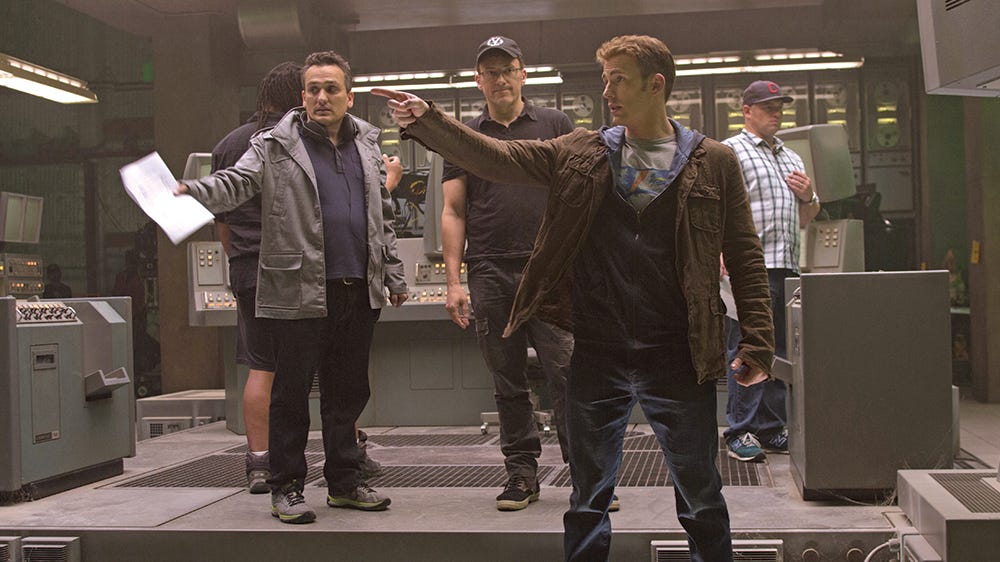
After boarding the film, the first thing the Russos did was to meet Ed Brubaker.
Like most people, Joe Russo always found Captain America to be “too much of a Boy Scout”. But he loved what Brubaker did with the character. Joe says, “He completely deconstructed the mythology, and made him very relevant. And putting it in an espionage genre, he married it to a genre that could support the character and make the character more interesting. We were very fortunate to have that source material.”
At the same time, the two jumped into the development process that was already under way with writers Markus and McFeely, Marvel’s top creative producers (Feige, Louis D’Esposito, Nate Moore, and Victoria Alonso), and Marvel’s visual artists. An initial opening with a World War II flashback was scrapped; instead, it opened with Captain America saving hostages on a hijacked military boat and fighting Batroc the Leaper, now transformed from “from a Gallic punching bag into a credible threat”.
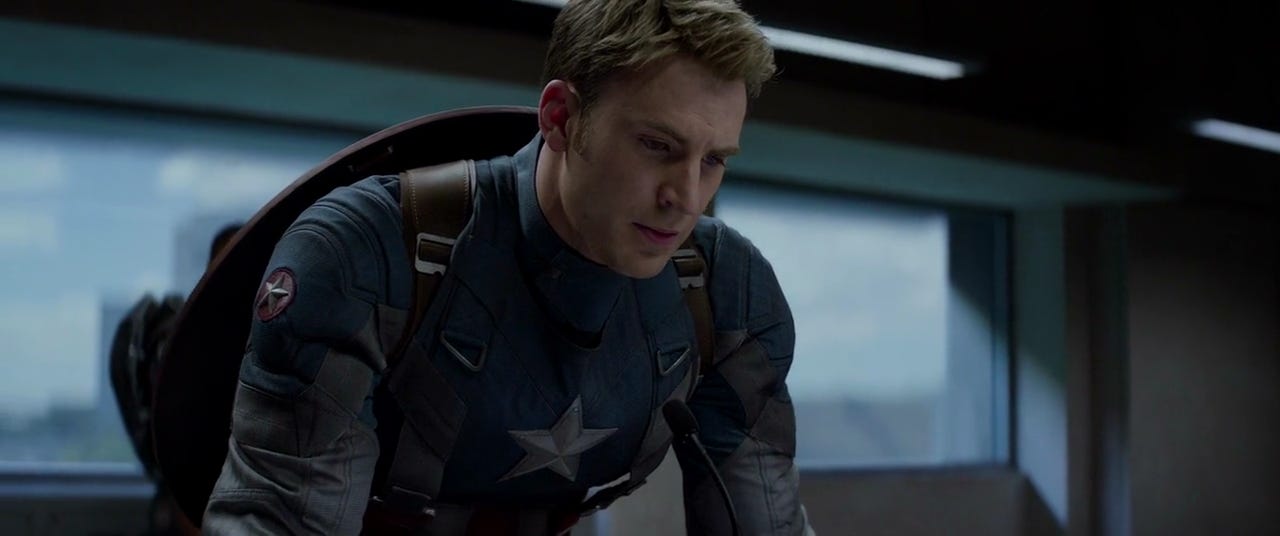
Another thing on the cards: crashing a S.H.I.E.L.D. Helicarrier; not the ones from The Avengers, but new vessels “designed by Tony Stark, manufactured by S.H.I.E.L.D., and hijacked by the quasi-Nazis of HYDRA, capable of making a targeted lethal strike anywhere on the planet.”18 It was the Russos’ idea to make government surveillance central to the plot19 when they learned that the Sea Launch Commander (a ship docked in Long Beach, California) was used to launch satellites into space. When whistleblower Edward Snowden leaked thousands of classified documents about the National Security Administration (NSA) surveillance programs in 2013, suddenly, The Winter Soldier’s themes started to feel timely.
From MCU: The Reign of Marvel Studios:
“It’s hard to make a political film that’s not topical,” Anthony Russo said. “That’s what makes a political thriller different from just a thriller. And that’s what adds to the characters’ paranoia and the audience’s experience of that paranoia. But we’re also very pop-culture-obsessed and we love topicality, so we kept pushing to [have] scenes that, fortunately or unfortunately, played out when Snowden outed the NSA. That stuff was already in the zeitgeist. We were all reading the articles that were coming out questioning drone strikes, pre-emptive strikes, civil liberties—Obama talking about who they would kill… We wanted to put all of that into the film because it would be a contrast to [Captain America]’s greatest-generation [way of thinking].”
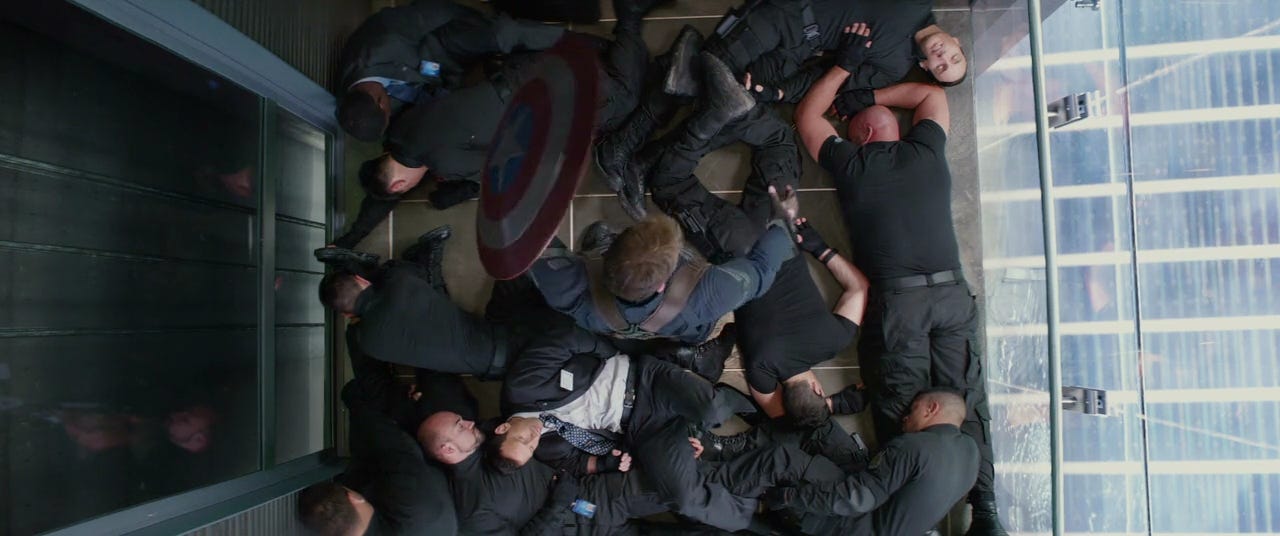
Apart from the big climax, two other moments of tension that the Russos zeroed in on were the elevator fight between Steve Rogers and an entire squad of HYDRA loyalists, and Nick Fury’s escape from the Winter Soldier20.
For the elevator fight, “the Russos and the Marvel visual staff developed an extensive collection of storyboards and montages, dictating the overall look and key shots.” James Young, the fight choreographer (and Sebastian Stan’s stunt double), studied the portfolio carefully and trained his team of stuntmen, filming it with a consumer-grade camera or a cellphone to show the brothers, who’d point out what they liked or what they wanted to modify in the next pass. Once the choreography was approved, Young and his team then taught the actors. Evans had to do most of the choreo himself; the confined quarters made it difficult to swap in a stunt double without it being obvious.
As for Nick Fury’s attempted assassination— and the Winter Soldier’s introduction proper— this was Marvel Studios’ chance to give the S.H.I.E.L.D. director an opportunity to, in the words of actor Samuel L. Jackson, move “Nick Fury into the badass zone”, as the director of S.H.I.E.L.D.— stuck behind a high-tech car— evaded assassins chasing him down the Washington D.C. streets21. The Russos drew on both classic cinema car chases (The French Connection) and modern entries (the Bourne series), as well as real-life car chases, and instructed Marvel’s concept artists and animatic editors to build out the sequence; make the audience really feel the pressure of seeing “Nick Fury stuck in an escalating situation for longer than expected.”
The Russos also wanted to use as a lot of physical settings and practical effects, possibly the rare occasion that put them at odds with Marvel Studios’ usual methods. Anthony Mackie praised their approach:
“The Russos, what they did that was so great was they wanted to stay with live action, which is a dying art form. If they can build it, they built it. If we could do it, they did it. They wanted to do as little CGI as possible. That’s why the movie looks so great.”22
As production progressed, the Russos picked their favorite bits from storyboards, concept art, and costume design, and incorporated them into their animatics. New tech and pre-viz allowed them to could see what worked, what didn’t, and retool as needed. Monty Granito, the pre-viz supervisor on The Winter Soldier, recalls rebuilding the animatics for the movie’s final showdown between Steve Rogers and Bucky Barnes while Falcon brings down multiple Helicarriers over Washington, DC:
“‘They would take one or two shots, and they would say, “Great, these are good, [these] one or two shots. Rebuild the entire sequence around these one or two shots.” And then I would build the whole sequence again, and they would say, “Great, these are great, [these] four shots. Rebuild the entire sequence around these four shots.”’”
Pre-viz has been savior and demon for filmmakers and studios. While it saves time, effort, and money, it also meant that Marvel Studios would keep tinkering with their movies until the last possible moment. Still, the Russos’ experience as executive producers on television shows helped them navigate Marvel’s method of filmmaking, which favors “strong managers, not auteurs.”23 Community creator Harmon, recognizes that the Russos diplomatic acumen allowed them to deal with studio heads and networks in a way that he found difficult24.
“You’ve got to be a bit of a politician as well as a creative in order to navigate these waters. Or a healthy way of looking at it is you have to not be a megalomaniac,” acknowledges Harmon. “Orson Welles is not going to work well at Marvel,” he observed. “[But the Russos] were collaborators always, first and foremost.”
Principal photography began on April 1, 2013— under the working title Freezer Burn—and lasted three months. The Russos’ hometown of Cleveland was chosen as a stand-in for Washington, D.C.; filming also took place in the real Washington, D.C., such as at the National Mall, Theodore Roosevelt Bridge, Willard Hotel, and Dupont Circle. Cinematographer Trent Opaloch (District 9, Elysium) helped the brothers capture the mood and feel of the 1970s thrillers by grounding the story and character in a real world. Opaloch says, “We talked about classic framing and naturalistic lighting. Another key to our look was the great work of our operators, Andrew Rollins and Ian Fox, who often shot handheld. But the basic idea was that we have this fantastic character running around in an outfit with a shield. What would it be like if he was an actual guy? It posed an interesting challenge.”25
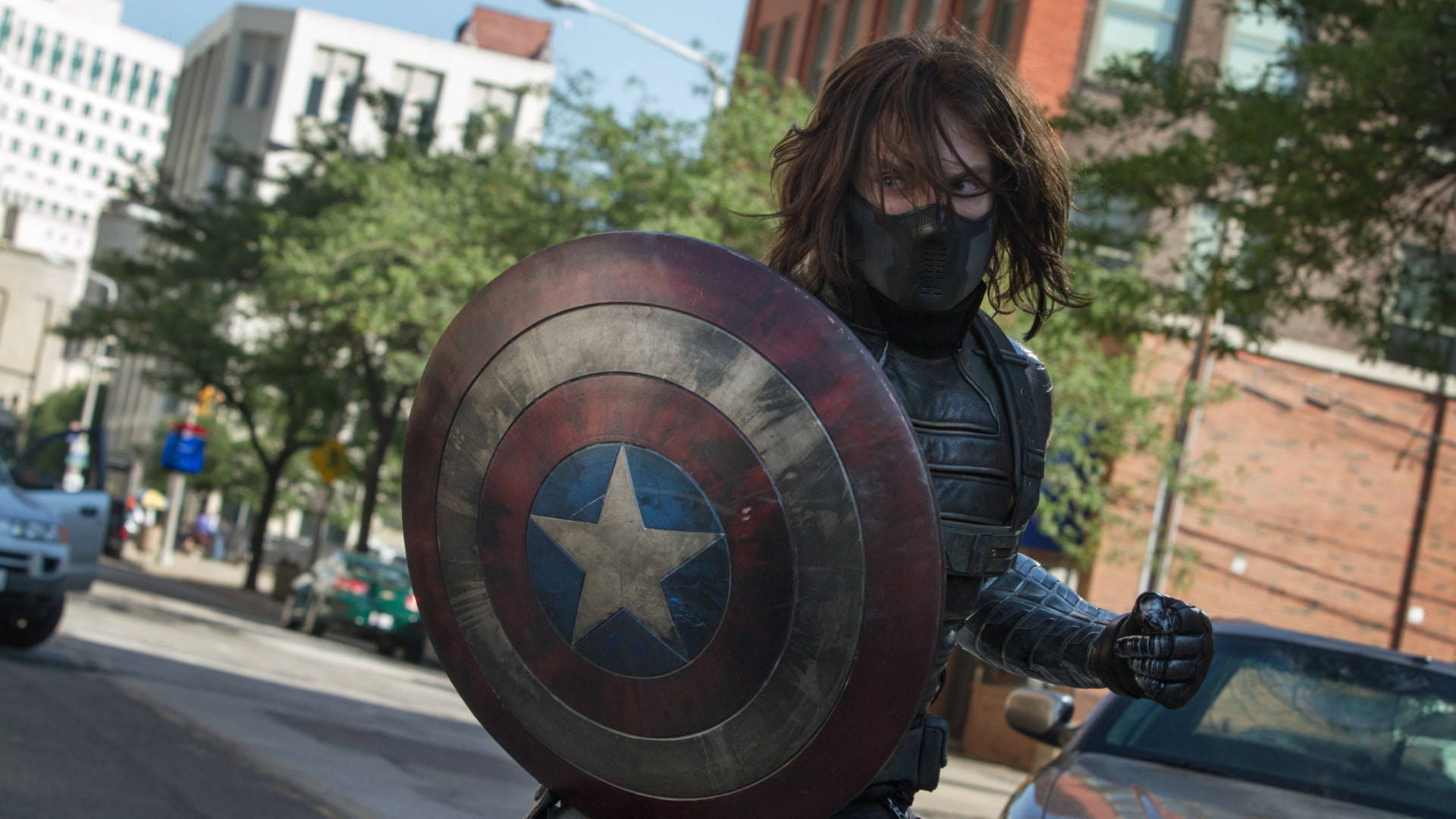
Other influences included Michael Mann’s Heat26, and Brian De Palma’s action scenes such as the vault heist in 1996’s Mission: Impossible27. Opting out of the modern action aesthetic of quick cuts and moving cameras, they chose to shoot scenes that felt longer, dangerous, and visceral. Filming ran smoothly, only reaffirming Feige’s belief that the Russos had been ready to make a big movie.
“Joe and Anthony, they were very clear and had very lofty ambitions, saying things like ‘We want to do the best car chase in any Marvel movie, and maybe the best car chase of all time.’ I said, ‘Well, that sounds good. Let’s try that.’ Feige smiled. “Damned if they didn’t pull it off.”
More than that, the producer was also pleased by the Russos’ readiness to connect to the greater Marvel Cinematic Universe, something that never sat well with Iron Man director Jon Favreau. But for someone like Joe Russo, the interconnections thrilled the “comic book geek” in him, such as the “mid-movie infodump that would be revisited in a later Russos-directed movie, Captain America: Civil War, where it is revealed that Bucky Barnes killed Tony Stark’s father.”28
During post-production, the Russos would edit the film on their trailer at the filming lot of Community because they were still working on the show. Since The Winter Soldier led directly to 2015’s Avengers: Age of Ultron, the brothers got to read Joss Whedon’s script for the Avengers sequel, and accordingly did additional photography to shoot scenes that would better reflect their choices leading to the next film.
Captain America: The Winter Soldier opened internationally on March 26 2014, while releasing in the United States on April 4 2014. By the end of its run, it had grossed $714,421,503 at the box office, nearly double of that of its predecessor. But more than that, it made Captain America look, well, badass. And just as Brubaker did for the comics, The Winter Soldier ignited interest in Captain America as a character. Critical reception was also positive— in fact, The Winter Soldier has a higher rating than Iron Man 3 on both Rotten Tomatoes and Metacritic respectively. As soon as the brothers finished The Winter Soldier, Feige signed them up to direct the third Captain America movie, along with Markus and McFeely once again to conclude the trilogy and wrap up the story of Steve Rogers and Bucky Barnes29.
The Russos’ relationship with Marvel Studios didn’t end with Captain America. Feige handpicked them to oversee the gargantuan productions of Avengers: Infinity War and Avengers: Endgame; and in July 2024, Marvel Studios announced that the Russo brothers would return to direct two more Avengers sequels, Avengers: Doomsday and Avengers: Secret Wars; allowing them to rescue the projects that ran into trouble owing to a change in plans over the villain Kang the Conqueror30.
Feige says, “We had started even before what had happened to the actor happened, we had started to realize that Kang wasn’t big enough, wasn’t Thanos, and that there was only one character that could be that, because he was that in the comics for decades and decades. Because of the Fox acquisition, we finally had it, and it was Dr. Doom. So we had started talking about Dr. Doom even before we officially pivoted from Kang. And in fact, I had started talking with Robert [Downey Jr.] about this audacious idea before Ant-Man 3 even came out. It was a long plan that we had, to take one of our greatest characters and utilize one of our greatest actors.”31
That makes the Russos the longest-serving directors at Marvel Studios; with the fifth and sixth Avengers movies, that’s a total of six films. James Gunn and Jon Watts made three films each with their respective Guardians of the Galaxy and Spider-Man trilogies; so did Peyton Reed with three Ant-Man movies; and once he makes Black Panther 3, so will have Ryan Coogler. Meanwhile, Jon Favreau, Taika Waititi, and Joss Whedon made two Iron Man, two Thor, and two Avengers movies respectively.
Put it another way: Marvel Studios (and Feige) and the Russo brothers have a long-standing and fruitful working relationship. In another way, they both need each other.
The Russos’ filmography both pre-Winter Soldier and post-Endgame have been received somewhat indifferently. New York Post’s Johnny Oleksinski was particularly scathing about their films after Endgame: “Since then, the brothers have been on a diabolical mission to deliver some of the worst and priciest movies of the past six years.”32 Perhaps more surprising was that their return to TV— the medium in which they thrived— via Amazon’s Citadel didn’t set the world on fire. “A big-budget, low-imagination thriller with plenty of explosions and no surprises,” The Economist called it. The spin-offs, Citadel: Diana and Citadel: Honey Bunny, were both cancelled after one season. Joe Russo is directing all the episodes of Citadel season 2, due May 6, 2026, so it’s possible that the show could find its footing on the second round33.
Marvel Studios, meanwhile, no longer has that Midas touch. Quite a number of films in Phase Four and especially Phase Five have made less impact at the box office. It seems that slapping the Marvel Studios logo no longer guarantees an automatic hit, even when the response is positive. They need a hit, and they’re hoping that the Russos will deliver it with Doomsday, which not only ropes in RDJ as Doctor Doom, but is bringing back Evans and roping in Fox’s X-Men for the ride. Can the Russos capture the kind of lightning-in-a-bottle magic that they did with The Winter Soldier? Or will it go the way of the last few films they made?34
The Origins of Marvel Studios (Or What Filmmakers Can Learn To Build Their Own Production Company)

Once upon a time— well, about twenty years ago, give or take— Marvel Studios was a scrappy little underdog production company.
Thanks for reading! If you liked this essay, you can sign up here for more issues. If you’d like to support Three Left Feet Media, share this newsletter with a fellow film lover you think would appreciate it.
Long live the movies!
D.L. Holmes
Plus good looks and abs. But plenty charm.
First Avenger director Joe Johnston actually won an Academy Award for Best Visual Effects (along with Richard Edlund, Kit West and Bruce Nicholson) for Raiders of the Lost Ark. He broke into Hollywood as a concept artist and worked as an effects specialist on the original Star Wars movies with George Lucas.
Evans’ portrayal felt like the best 21st century on-screen representation of Superman, whereas in 2013, DC Studios turned its own Boy Scout down a moodier path in Man of Steel, making Captain America, in some respects, closer in spirit to the Superman in comics.
Founded in 1939, Timely Comics later became Atlas Comics in 1951, before being rebranded to Marvel Comics in 1961.
It was a full year into World War II, but a year before the attack on Pearl Harbor drew America into the global conflict.
Begging your pardon, Mr. Turitzin, but Captain America actually has been adapted in the past for a 15-part serial from Republic Pictures in 1944, two CBS made-for-TV films in 1979, a low-budget 1990 film, plus a bunch of appearances in other animated Marvel properties like the 1980s Spider-Man and Spider-Man and His Amazing Friends. But you are correct about why the character has never exactly been popular for adaptations. At least Superman could fly and shoot laser beams out of his eyes.
Notably: Batman: Year One, Batman: The Long Halloween, No Man’s Land, The Dark Knight Returns, and The Man Who Falls.
They nicknamed their script “Three Days of Captain America.”
Red Skull wasn’t brought back because the character simply didn’t fit the tone of the sequel; though the supervillain would pop up in Avengers: Infinity War and Avengers: Endgame, though not played by Hugo Weaving.
Renner was filming American Hustle and Kill the Messenger at the time.
Moore left Marvel in 2025 to become a full-time producer.
During filming the first Captain America, Johnston had a secret hidden room built behind a group of set designers. The movie’s supervising art director Andy Nicholson recalls, “When Joe wanted to hide from everybody else and just draw, he could go in there for a day and no one would find him. The producers would come walking through and go ‘Where’s Joe?’ And we’re all trained to say, ‘Well, I haven’t seen him.’ He’d be sitting in an office drawing, because that’s how he liked to operate, and he’d come out with twenty pages of beautiful hand-drawn art.” Production designer Rick Heinrichs remembers, “Joe seemed happiest and most comfortable when he was in the art department and getting away from the budget concerns and all the difficult decision-making that had to happen.”
Around the same time, Soderbergh helped Christopher Nolan get a leg up into Hollywood. This Soderbergh guy, man!
If two people wish to be credited as director on a TV episode, the Directors Guild of America requires a special waiver. As a result, all the Community and Arrested Development episodes they directed— except the pilots— are credited to either Anthony or Joe Russo, though they worked in close collaboration.
In between, they made the 2006 studio feature You, Me, and Dupree. It got terrible reviews but it was a box office success.
He also co-created the more popular animated series Rick and Morty.
He of The Fast and Furious installments numbers 3-6 and 9.
From MCU: The Reign of Marvel Studios: “It had long been a truism in the Marvel Comics office that every new writer wanted to script an issue in which a S.H.I.E.L.D. Helicarrier crashed. There was something irresistible about giant weapons of war plummeting out of the sky.”
The idea of surveillance was also touched, albeit briefly, in 2008’s The Dark Knight when Batman hacks and turns every cellphone in Gotham into a surveillance device to find the Joker.
A decade-plus later, these two sequences are still stand outs.
The Russos, and McFeely and Markus, kept Jackson stuck in a car because they were working within a creative confine: the actor didn’t want to run. Jackson had made the same request of Joss Whedon for The Avengers, only to discover that he had a scene where he ran on to the deck of the Helicarrier with a rocket launcher. He confronted Whedon: “What’s this say here? It says I run!” Whedon assured him it was just the one time. “You only run once.” Jackson called Whedon a “motherfucker”. Which, to be honest, would’ve felt like a badge of honor.
Ironically, the Falcon in the film is actually a digitally rendered double of Mackie, since the wings and abilities of flight ended up being the most dependent on CGI, according to Industrial Light and Magic.
In fairness to Marvel, it hasn’t stopped directors like Ryan Coogler, James Gunn, and Taika Waititi from putting their fingerprints on the material.
NBC, the network distributing Community, fired Harmon from his own show for a season until fans and cast members fought to bring him back.
Opaloch chose to frame the action in a widescreen anamorphic format, captured by ARRI Alexa Plus cameras with a 4:3 sensor and Codex Onboard S Recorders. The lenses were Panavision Anamorphics, a mix of G, C and E series depending on the situation.
The Russos cite the bank robbing scene as “the most intense eight minutes of filmmaking [they’ve] seen in a movie theater.”
In which “very likable characters are put in impossible situations that the audience is put on the edge on how they’d escape.”
The infodump in question is when Rogers and Romanoff discover that Armin Zola has become a computer program and secretly helped HYDRA infiltrate S.H.I.E.L.D.
At least, that was the plan until Feige swung by Markus and McFeely’s Marvel Studios office and uttered two words: “Civil War”.
Not to mention the fact that the actor playing Kang, Jonathan Majors, was convicted of assault.
I don’t know, man, it sounds to me like one hell of an expensive way to course correct. But then again, even Phase One never really had a concrete plan for Thanos until Joss Whedon randomly dropped him in a post-credits scene for The Avengers.
Ouch.
Shows like Parks and Recreation, FRIENDS, and Blackadder also found their groove only in subsequent seasons; although all of these are sitcoms, so…
NO PRESSURE WHATSOEVER.