

How Giovanni Ribisi Helped One Battle After Another Shoot In VistaVision
When Paul Thomas Anderson and cinematographer Michael Bauman were looking for VistaVision equipment to film One Battle After Another, the actor had exactly what they needed.

You might know Giovanni Ribisi from the Avatar franchise as CEO baddie Parker Selfridge, or maybe combat medic Irwin Wade from Saving Private Ryan. If you’re a TV fan, you might remember him as the lead on the series Sneaky Pete, or as Phoebe’s half-brother, Frank Buffay, Jr. in the sitcom Friends.1
But did you also know that Giovanni Ribisi also loaned one of his cameras to Paul Thomas Anderson to shoot One Battle After Another?
Wait, what?
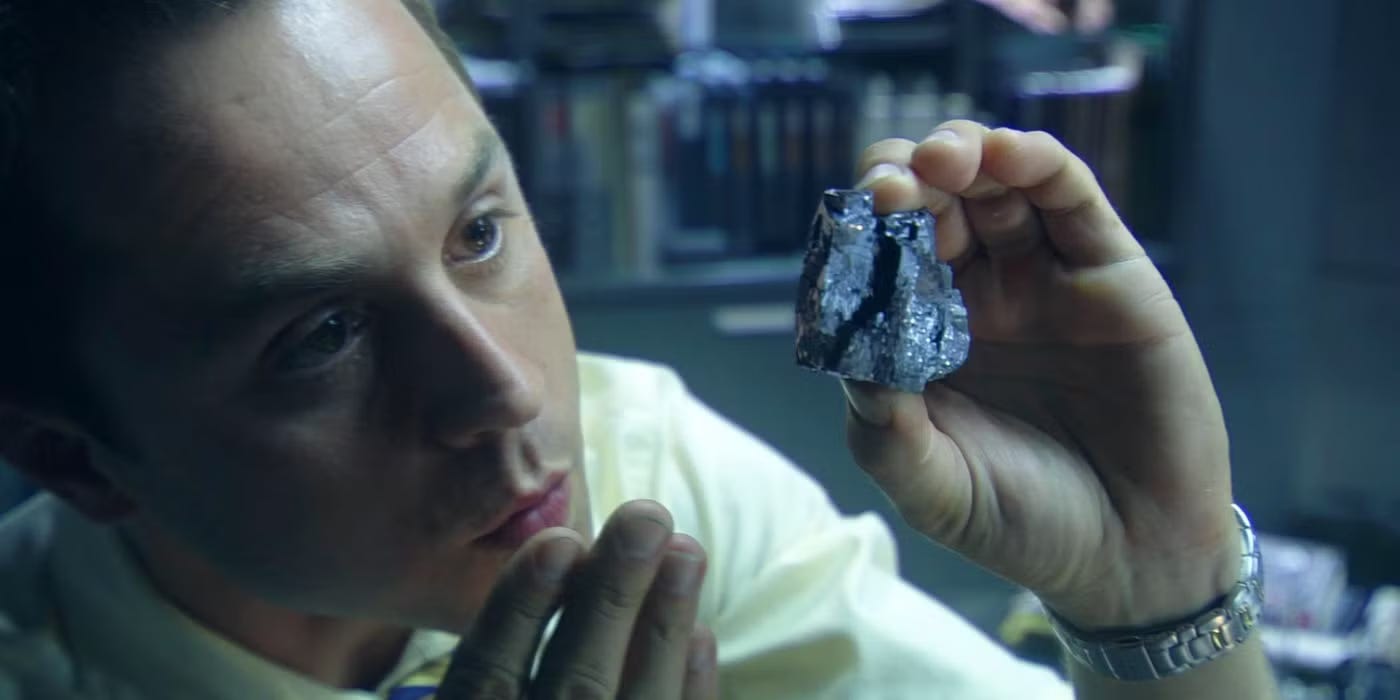
There have been plenty of actors who’ve stepped into the director’s chair (Clint Eastwood, Ben Affleck, Zoë Kravitz, Jordan Peele), but it’s rare for an actor to move into cinematography. But for Ribisi, picking up a camera was something he’d been working towards for a long time.
In an interview with Entertainment Weekly, Ribisi discloses that he’s been interested in cinematography for a long time. “I’ve been doing cinematography in the background, professionally, for the past 15 years or something like that,” he says. “But it wasn’t really something that I liked to talk about. I wanted to really cut my teeth and pay my dues.”2
That’s how in 2023, he earned his first director of photography (DP) credit on JT Mollner’s film, Strange Darling, a twisty colorful and blood-soaked thriller that blends giallo film aesthetics with a Quentin Tarantino-esque non-linear narrative. It’s superbly short, and proof that Ribisi isn’t playing.


Ribisi is also a camera enthusiast. Years ago, he came across a Beaumont VistaVision camera, a smaller and lighter version of the old traditional VistaVision cameras, in a shop in New York. “It was this amazing camera. And they were just kind of trying to get rid of it,” he recalls. Painstakingly, Ribisi assembled the camera into working condition with a viewfinder, a variety of lenses, and other parts. “This is like Frankenstein,” he says.3
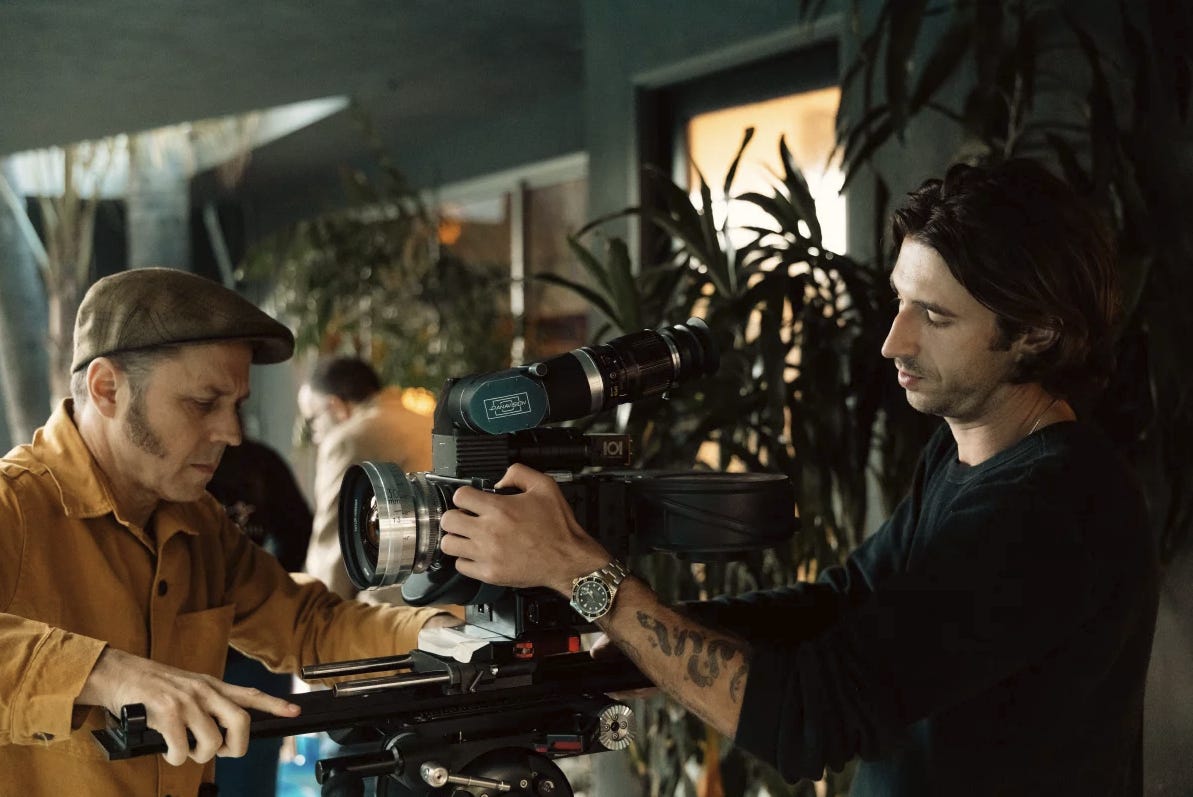
The trouble is that the cameras had gone out of fashion in the 1960s, so proper upkeep was difficult. Ribisi worries that formats like VistaVision could fade into obscurity without proper upkeep, noting, “The last 35mm camera that was built, the one people really use, was almost 25 years ago.”
Then along came Paul Thomas Anderson and his DP Michael Bauman. They wanted to shoot One Battle After Another in VistaVision4, but it was hard finding the equipment. They heard that Ribisi had a camera— would he let them try it out?
“He’s a collector of all sorts of stuff and he had this one that was in great condition,” Bauman says. “And I remember we brought it to a test at Panavision, and Paul was like, ‘I don’t know, this would be like taking your beautifully restored 1957 Chevy out and running it around through the mud.’ And Giovanni was like, ‘This is not a precious artifact, this is for making movies. So please take it and go make a great movie.’” In the end, RIbisi’s Beaument VistaVision camera would become the production’s A camera.5
Contrary to Ribisi’s fears, VistaVision seems to be making a comeback like a story straight out of the Hollywood playbook, and The Brutalist seems to have been the turning point. To tell the story they envisioned, director Brady Corbet and cinematographer Lol Crawley decided that the VistaVision format was ideal for its enhanced image clarity, finer grain structure, breathtaking depth of field, and wide aspect ratio, to capture the “grand architectural compositions” that accentuated “the film’s themes of resilience, artistry, and identity”. The film’s budget? $9.6 million. The Brutalist’s modest budget and box-office success— coupled with Crawley’s win for the Academy Award for Best Cinematography— proved that that a film could look as big and stunning as IMAX without requiring hundreds of millions to pay for it.


And other filmmakers paid attention. After using it for parts of 2023’s Poor Things, Yorgos Lanthimos and his DP Robbie Ryan shot Bugonia on VistaVision.6 Meanwhile, 2026 has three films made in VistaVision: Emerald Fennell’s “Wuthering Heights”; Greta Gerwig’s upcoming Narnia adaptation; and Alejandro G. Iñárritu’s upcoming Digger, made with his long-time DP Emmanuel Lubezki. The gradual increase in the format’s popularity might not surprise Ribisi— he believes that “the VistaVision image speaks for itself: multidimensional, inviting, immersive” and that it is “more than analog novelty, but a rich future for increasingly image-savvy audiences.”
Originally developed in the 1950s by Paramount Pictures with White Christmas (1954), VistaVision had “double the resolution of standard 35mm”.7 Television was becoming popular at the time and keeping audiences at home glued to their screens,8 so VistaVision was one tool used to try and put butts back in seats. A precursor to IMAX, VistaVision delivered high-resolution images with a wider field of view that conveyed a sense of epic majesty.


That’s why Cecil B. DeMille shot The Ten Commandments (1956) on VistaVision; as did John Ford with The Searchers (1956); and Alfred Hitchcock for Vertigo (1958) and North by Northwest (1959)9. But VistaVision was cumbersome, and expensive; between cost-cutting and the development of new widescreen formats, VistaVision disappeared. The last film shot and projected on VistaVision would be Marlon Brando’s sole directorial effort, 1961’s One-Eyed Jacks. While the format was used occasionally for visual effects since Star Wars (1977), for all intents and purposes, Hollywood had moved on. But between The Brutalist, One Battle After Another, and other filmmakers championing the format, what’s old might become new again.
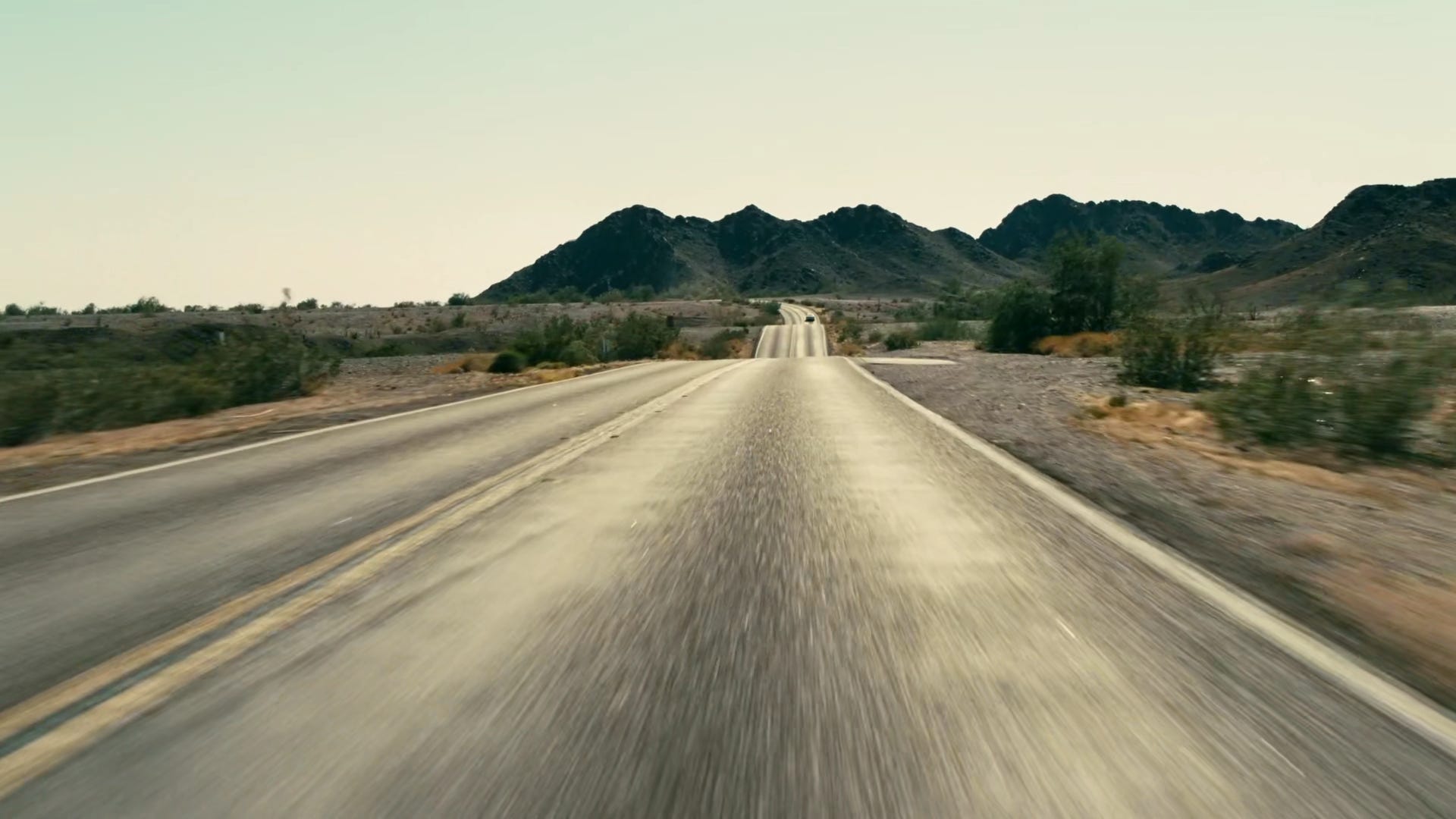
The choice to shoot One Battle After Another in VistaVision was intentional. Anderson believed it captured the “scope and energy” that he wanted for his scenes with epic landscapes; the car chase on the rolling hills absolutely benefited from “the larger negative area, higher resolution, sharper depth of field, and reduced grain”. Speaking of the rolling hills— Bauman used a “crazy 1200mm Canon lens” about three feet long to shoot the moment when a bloodied but alive Sean Penn walking up those rolling hills.10
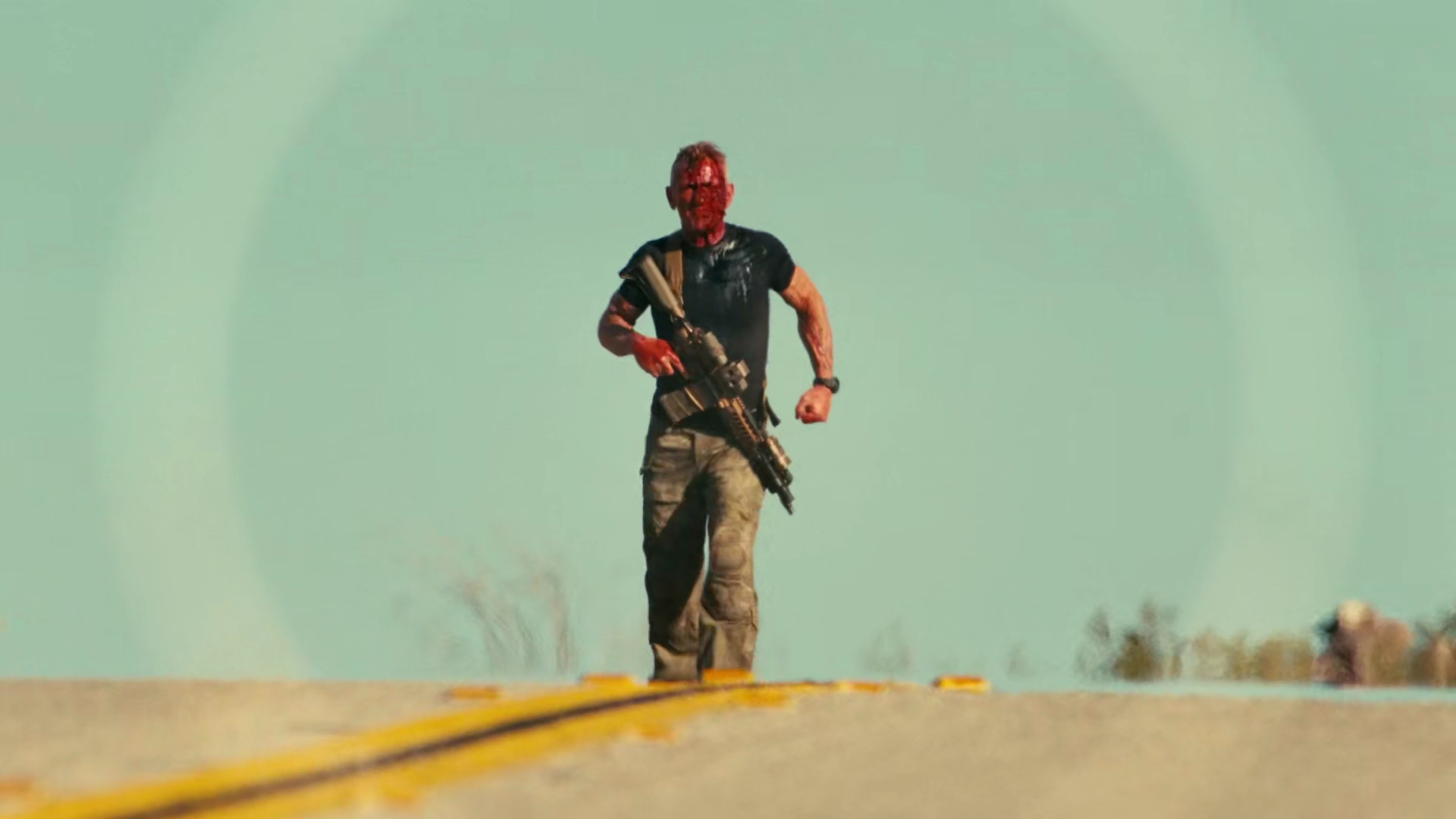
Still, VistaVision has its challenges, which was partly why it fell into obscurity. It’s awkward and noisy—like IMAX cameras— and it can only shoot for about five minutes because “a thousand-foot Vista mag takes film twice as fast”. In fact, even a full thousand feet of film is not ideal. “The Beaumont camera doesn’t like it if you have a full thousand feet,” says Bauman. “You really do better at 800 feet, which means you actually only have four minutes of shooting time [per mag]. The reloads also take a while on Vista; on Super 35, you can reload the camera in under 20 seconds.” That’s why Super 35 was used for longer dialogue scenes— because how annoying would it be to interrupt a great performance halfway because the camera ran out of film?
It’s also really bulky. That’s why VistaVision originally worked best for formally composed pictures. But Anderson clearly likes a challenge: he wanted to imbue One Battle After Another with a “more ’70s-style feel” even though it was set in… well, somewhere in our present or immediate near-future11; as a result, they would underexpose the film and leave it “longer in development to add grain and texture.”
Ribisi is aware of the limitations, but appreciates it. “It’s not something that you can just press a button and you just let it roll for two hours It fights back a little bit, maybe too much,” Ribisi says with a chuckle. “You kind of have to earn it, and I like that.”
So why the hassle? Well, for one, it looks great. But we’re also seeing a rise in a film’s format becoming part of its selling point. Christopher Nolan, for instance, is practically the IMAX ambassador at this point—his upcoming The Odyssey will be the first film shot entirely on 70mm IMAX film cameras. Ryan Coogler’s Sinners was also shot on 70mm, and there’s a great video of Coogler passionately breaking down the different aspect ratios and ways to watch Sinners that went viral before the film’s release. That’s something money just cannot buy.
I think it’s also the fact that we’re reliving the same problem that Hollywood was facing in the ‘50s, only this time against streaming. Lots of films on streamers like Netflix look flat and visually dull (and it’s not on a theater screen)— and streamers are threatening to make this aesthetic the default. It’s no longer about film vs. digital12, but all of film (the medium, not the format) versus the internet. When a movie is made in a format like VistaVision, you want to see it on the biggest screen possible.13 I watched One Battle After Another on IMAX; and it was GLORIOUS.
And if VistaVision is comparatively more affordable than IMAX— if The Brutalist could do it on a budget of less than $10 million, why not?— then more films shot in VistaVision could lure people back into theaters. Ribisi, for one, now thinks that VistaVision is here to stay— or at least to stick around a little longer. “I don’t think it’s just a flash in the pan,” he says. “I think a lot of people — especially with the phone calls I’m getting — are wanting to not just explore this but consider it their new sword in the battle for filmmaking.”
Thanks for reading! If you liked this essay, you can sign up here for more issues. If you’d like to support Three Left Feet Media, share this newsletter with a fellow film lover you think would appreciate it.
Long live the movies!
D.L. Holmes
To incorporate actress Lisa Kudrow’s pregnancy into the show, Phoebe would act as a surrogate mother for Frank Buffay, Jr.; the character never got tired of freaking people out by saying she was having “[her] brother’s babies.”
Suddenly, his role as a celebrity photographer in Lost in Translation doesn’t feel random anymore.
In Ribisi’s words, finding the necessary pieces “was like a back-alley drug deal, where I went in with a bag of cash and we traded.” The places people will go for their hobbies…
This was not Anderson’s first foray with VistaVision. He originally toyed with shooting his 2012 film The Master in that format but ultimately chose not to. However, he did experiment with it on the Thom Yorke short film Anima.
The One Battle After Another team added another two Beaumonts to the production, rented from Geo Film Group, also using two Panavision Millennium XLs for shooting on Super 35. In addition, they used “Arri 235s or 435s for things like crash cams because they are double pin registered and more reliable.”
Making it the second film in the Best Picture Oscar category this year to use VistaVision.
I’ll be honest: I don’t know much about cinematography, so any technical details I mention are taken directly from sources— I’m trusting that the people talking about such technical details know what they’re talking about.
Sounds an awful lot like what’s happening with phones nowadays!
Bauman recalls a pleasant surprise when editor Andy Jurgensen told them one day at dailies that he had a surprise for them: "Somebody from Warners had found an original negative roll of North by Northwest in VistaVision, which was framed for 1.85 even though [VistaVision] cameras shoot 1.5. It was a scene where they’re in front of Mount Rushmore that they shot on stage, and you could see the top of the backing and parts of the stage. It was cool and looked gorgeous.”
Fun fact: the One Battle After Another team would trade the 1200 lens with Sinners- “It was playing back and forth and then they’d have to modify it for our needs,“ says Bauman. “We also used it inside the mission where Willa finally meets Lockjaw for the first time. There’s a shot where he says, ‘Come closer,’ and then we cut to her. That was [shot] on the 1200.”)
The film is purposefully vague about its timeline. Vulture has a great piece trying to decipher when the events take place.
Adolpho Veloso, nominated alongside Bauman in the Oscar’s Best Cinematography category, shot the period Pacific Northwest drama Train Dreams with an Alexa 35, a highly sensitive digital camera that allowed him to shoot almost entirely with natural light, and it looks FUCKING AMAZING!
And don’t come at me with your arguments about your big TV— your big TV does not come in a 52 x 72 ft size, which is the size of an IMAX screen.
This was excellent! More articles this well researched and referenced please!