

Inception Origins: How And Why The Film Cemented Christopher Nolan's Reputation
Inception was Christopher Nolan's first swing with a big-budget original idea that confirmed the director was the rare deal: a commercial auteur.

With The Odyssey, Christopher Nolan will have made a total of 13 feature films in his career thus far. Out of which:
Five are original ideas (Following, Inception, Tenet);
The rest are adaptations, either directly (Oppenheimer, Memento) or indirectly (Interstellar, The Dark Knight trilogy).
But if you look through his filmography, there is a clear inflection point at which Nolan began to make more original films, and that was in 2010 with the dream-heist flick Inception.
And if not for Inception, Nolan’s career might have turned out very differently.
Inception arrived at a crucial junction at Nolan’s career1. The Dark Knight had grossed close to a billion dollars at the box office2 and had garnered a level of critical acclaim rarely afforded to superhero films. In fact, its snub for Best Picture at the Academy Awards is believed to be the reason that the Academy expanded the number of films that could be nominated for Best Picture. Warner Bros. was anxious to get another Batman film from Nolan, but the British filmmaker didn’t commit immediately. He knew that expectations would be high for a third film, and he wanted to be sure he could deliver.
At the very least, he wanted to make one more film before returning to the Batman world, just as he made The Prestige between Batman Begins and The Dark Knight. A sort of palette cleanser, if you will. And there was an idea that he’d been tinkering with for decades that, at last, he’d finally cracked and could finally get the budget needed to pull it off.
Enter Inception.
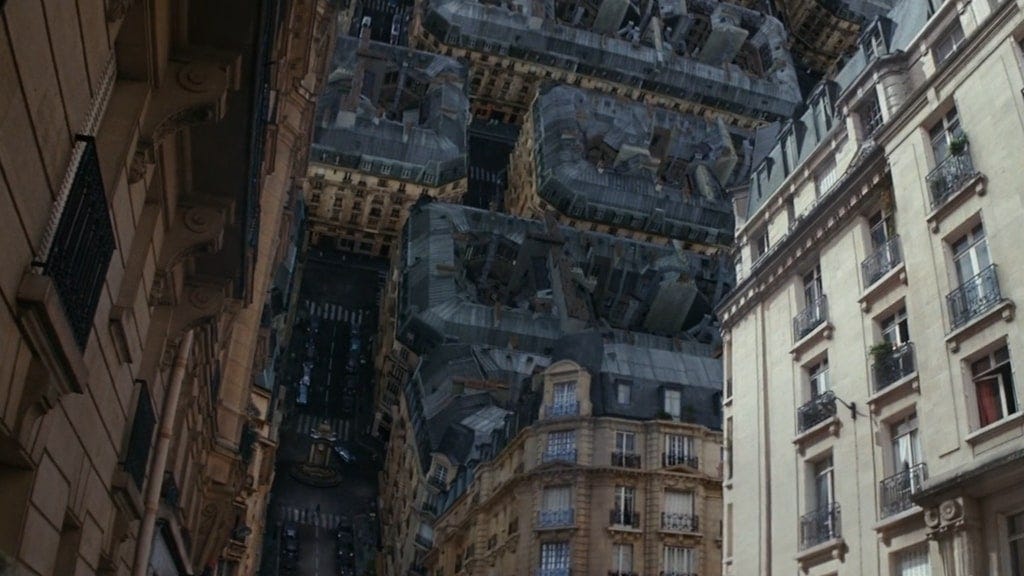
The idea of dream theft came to Nolan in the mid-1980s, when he was a teenager attending Haileybury public school. In its earliest form, however, Inception wasn’t a heist film but a horror film, inspired by Freddy’s Nightmares, a TV spin-off about Freddy Krueger from A Nightmare on Elm Street3. Although Nolan eventually moved away from the horror origins, Freddy’s Nightmares inspired the dream-within-a-dream and shared dreaming ideas.
In fact, a lot of Inception’s ideas came to Nolan during this period and later. For instance, Nolan got the idea of using music as a cue to wake up in a dream from his habit of falling asleep while listening to his Walkman player4. The idea of lucid dreams, where a person becomes aware that they are in a dream, came to Nolan when he was an undergraduate student at the University College, London; he’d stay out late drinking with friends, but then wake up in the morning to go downstairs to have breakfast— he’d paid for it with his tuition fees and so no reason to waste it— then go back to sleep til 1-2pm. This habit led to Nolan experiencing lucid dreams, and he’d even try to change the outcome of the dream.
I remember lucid dreams where I would see there was a book on the table and I would go and look at the book and I’d be able to read the words, and it might even make sense. - Christopher Nolan
He also became fascinated by the distortion of time in a dream, where a dream that only lasted a few seconds could feel so much longer. Around the same time, Nolan read two short stories by Jorge Luis Borges that had an important influence on Inception.
The first was “The Secret Miracle,” about a Czech playwright about to be executed by a firing squad who finds an executioner’s bullet has halted long enough to complete his unfinished tragedy.
The second was “The Circular Ruins,” about an old gray man washing up on the shore in the south of Persia. You might recognize this image— it’s similar to the one that inspired the first few shots in Inception.
As Nolan worked on it, that initial idea soon became more of a noir film— his early works were heavily influenced by noir (Following, Memento, and Insomnia). This version of Inception was closer to The Maltese Falcon than Ocean’s Eleven, a film filled filled with betrayals and double crosses. It’s not certain when exactly that Nolan got the idea to turn it into a heist movie, but it was in place when he pitched the idea initially to Warner Bros. in 2002, after the release of Insomnia. But Nolan was more interested in playing around with the genre than making a straightforward heist film. He says,
I’d been thinking more in horror-movie terms, and then suddenly it became more of an action film or a spy film, just to give it some grounding, right the way to the end.
There was just one problem: it just wasn’t working. Eighty pages into the script, Nolan stalled.
One of the biggest obstacles had to do with the emotional stakes. In early drafts, Cobb’s guilt was due to the betrayal of his business partner, similar to Sam Spade’s betrayal of Miles Archer in The Maltese Falcon. But no matter what Nolan tried, it wasn’t clicking; he just couldn’t finish it. At last, he shelved the script and turned his attention to other projects. And it stayed stuck for years, until The Dark Knight helped him resolve the dilemma.
Not the film exactly. See, The Dark Knight had a long shoot of 123 days, befitting its tentpole feature status. During this time, his producing partner and wife, Emma Thomas, became pregnant with their fourth child. Suddenly, Nolan became acutely aware of the time that his career kept him away from his family. And this impression stayed with him when the Nolan family— including the newly born fourth child—descended on the island of Anna Maria— on the west coast of Florida— for a month-long vacation after finishing the press tours for The Dark Knight.
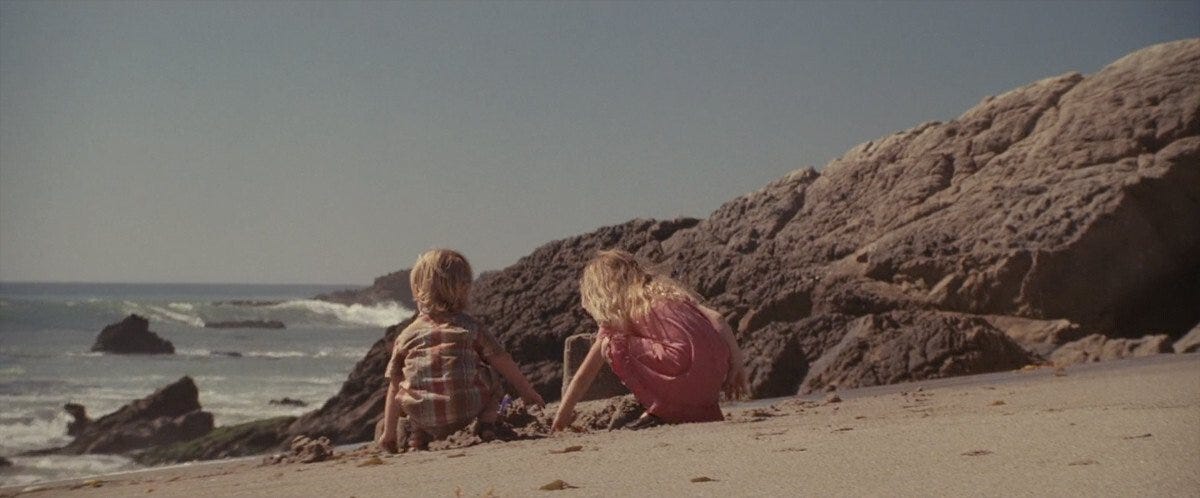
On the beach, Nolan watched his youngest sons building sand castles. This image remained seared into his mind, mixing with the thoughts about the time he had with his family. After they returned home, Nolan dug out his abandoned Inception script. Re-reading it, he was struck by two ideas:
What if instead of a dead business partner, Cobb felt guilty about his dead wife?
And what if Cobb’s circumstances forced him to stay away from his children?
That insight helped Inception to slowly come unstuck. Nolan wrote a new version of the story on spec— he always writes his films on spec— and pitched it to Warner Bros. The studio, surely keen to do anything to get him back to make a third Batman film eventually, bought the script in 2009 and gave Inception the greenlight with a budget of $160 million. For an original idea.
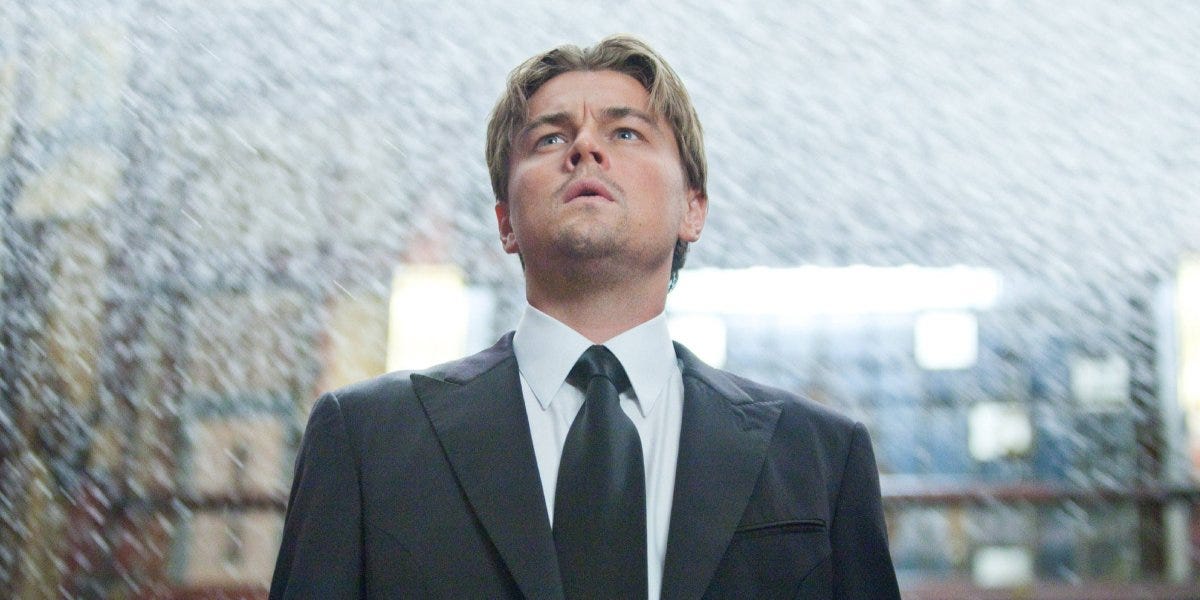
Nolan getting hundreds of millions to make a film from an original idea versus existing IP might seem commonplace today, but back in 2009, it was a massive gamble. At that time, Nolan’s biggest blockbusters were the Batman films; there was no guarantee that he could deliver the same Midas touch to stories outside Batman.
And the history of Hollywood is littered with cautionary tales of film directors whose careers were derailed by expensive flops despite making memorable and successful films early in their careers.
William Friedkin - Sorcerer
Frank Capra - It’s A Wonderful Life5
Peter Bogdanovich - They All Laughed6
Michael Cimino - Heaven’s Gate7
Charles Laughton - The Night of the Hunter8
Michael Powell - Peeping Tom9
Martin Brest - Gigli10
Wolfgang Petersen - Poseidon11
Rob Reiner - North12
… you get the picture, right?
Even filmmakers as esteemed as Martin Scorsese nearly had his career derailed. In the documentary Mr. Scorsese, the director describes the difficulty of finding backers for his projects, first after the flop of New York, New York (1977), and then again in the late 90s to early 2000s after the back-to-back commercial failures of Kundun and Bringing Out The Dead. Of course, both times, he’d make a vengeful return— first with Raging Bull in 1980, and then with the double whammy of Gangs of New York and The Aviator. In fact, Scorsese’s career in the 21st century has resulted in some of his best and most successful work partly due to teaming up with Leonardo DiCaprio— who was the secret ingredient for Inception‘s success, but I’m getting ahead of myself.
The point is that Inception would be the real test: If people turned out to watch it, it would be because it was a Nolan film; but if they didn’t, then the only reason they turned out for The Dark Knight was because it was Batman, and not because of the person in the director’s chair13.
To top it off, Inception would be Nolan’s first original film since his low-budget directorial debut, Following… which came out in 1998. Since then, all his films had been adaptations in some form of the other— Memento was adapted from the short story, ‘Memento Mori’, written by his brother Jonathan Nolan; Insomnia was an American remake of the 1997 Norwegian film of the same name; The Prestige was based on a book by Christopher Priest; and of course, Batman was a multi-billion dollar intellectual property.
It would also be the first time since Following that he would be writing solo14. Which only adds to the pressure. The closest Nolan had to a co-writer was his lead actor, Leonardo DiCaprio— I told you I’d circle back to him. It was DiCaprio who prodded the director to expand on the relationship between Cobb and Mal; who also prompted the idea to show that Cobb and Mal got the time he promised her, living out their days until old age. The actor encouraged Nolan to push Inception into a more character-based direction, which led to months of rewrites; but Nolan credits him for helping to make Inception different: “I think [DiCaprio] made it a more resonant film.”15
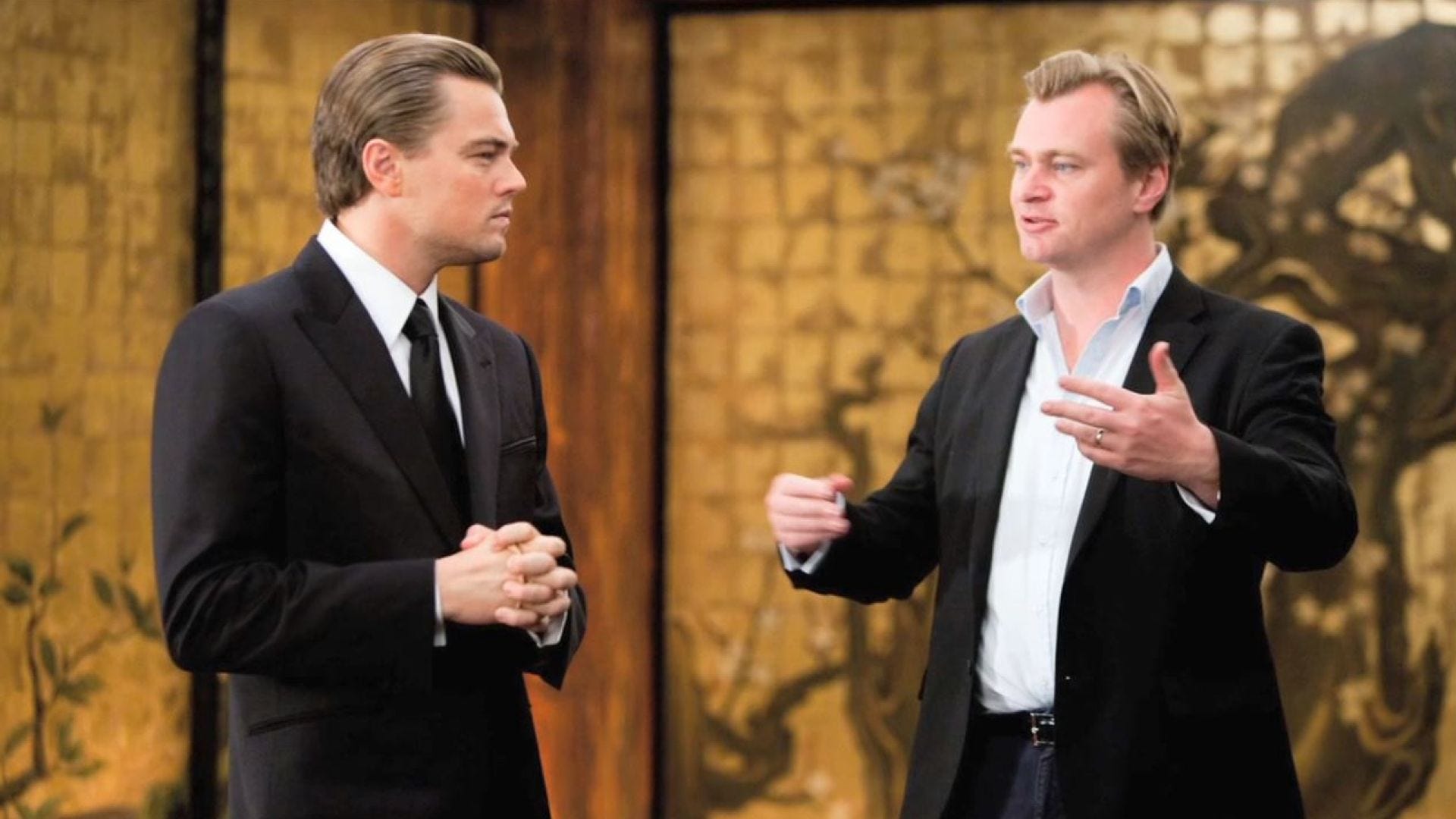
That’s because heist films aren’t emotional. And that worried Nolan when DiCaprio urged to make Inception a character-driven heist film, until first assistant director, Nilo Otero, suggested that Nolan watch Stanley Kubrick’s The Killing, the closest to an ‘emotional heist film’ ever made. Nolan was assured, at least a little16.
Inception is, even by Nolan’s admission, a “strange film”. It breaks a lot of rules and has to orient the viewer in a very disoriented world, which includes juggling five timelines at the same time.
The first timeline, in which the heist is planned, is a very James Bond-inspired flick in the vein of You Only Live Twice.
In the second timeline, the crew emerges in a rain-soaked Los Angeles which turns into a chase movie as Yusuf evades teams of men in a van.
The third timeline is in a luxurious hotel room, which has a Hitchcockian feel to the events.
The fourth timeline takes place on a snowy mountaintop fortress that pays homage to another Bond film, On Her Majesty’s Secret Service.
The fifth timeline, in Limbo, feels inspired by science fiction films like Dark City and The Matrix, two films that Nolan credits as an influence.
Which is why I’m still pissed that Inception wasn’t even nominated for the Best Editing Oscar, because it takes a lot of skill to have five different timelines working together without confusing the audience. At least let it have the honor of losing to that year’s winner, The Social Network.
When Inception opened on July 16, 2010, everyone was nervous. Although the cinematic landscape was not as inundated with sequels and reboots and remakes then, 2010 was the year that saw Toy Story 3 (a sequel) and Alice in Wonderland (a live-action remake) rake in over $1 billion at the box-office. Would audiences bite at an original movie like Inception?
They did. The film grossed over $839 million at the box-office, was the fourth highest-grossing film that year, and the highest-grossing live-action original film. The only other original box-office hits that year were animated (Tangled and Despicable Me). To cap it off, it also earned eight Oscar nominations, including for Best Picture and Best Original Screenplay for Nolan, eventually winning four (Best Cinematography, Sound Editing, Sound Mixing, and Visual Effects).
Audiences were happy. Nolan was happy (and probably relieved). And Warner Bros. was very happy, because Nolan had signed on to make a third Batman movie. Everybody won.
But above all, Inception proved that Nolan was his own brand: He could put butts in seats with films that were either original ideas or based on IP that didn’t exactly scream “commercial”, such as Interstellar, Dunkirk, and Oppenheimer17. The phrase “From Christopher Nolan” was a more powerful marketing tool than perhaps even the casting.
It meant that Nolan could ask studios— first Warner Bros., then Universal— to sign large checks to fund his big ideas. Few directors have that power, and few have been able to sustain such a streak over a long period of time18. But none of that would have been possible without Inception.
It also shows that sometimes, an idea needs its maker to reach a point in life to tell the best possible version of that story. By the time Nolan got to Inception, he’d learnt how to make large-scale films that didn’t stamp out his artistic voice.
But he also needed to start a family to discover the emotional core of being separated from his family to give Cobb the emotional stakes needed. Which attracted an A-list actor like Leonardo DiCaprio who gave the film the clout that reassured Warner Bros., and also gave Nolan the creative push to create a different kind of heist film entirely.
Time can be creativity’s best friend, allowing ideas to flourish and mature in unexpected ways than if it they had been prematurely released upon the world. Inception might have taken Nolan a lifetime to write, but it needed that lifetime to get the film where it could flourish best. The results speak for themselves.
Thanks for reading! If you liked this essay, you can sign up here for more issues. If you’d like to support Three Left Feet Media, share this newsletter with a fellow film lover you think would appreciate it.
Long live the movies!
D.L. Holmes
He doesn’t know it yet, but he’s about to become a household name recognized by even the most casual moviegoer. Money cannot buy that kind of branding.
It crossed the $1 billion mark with a re-release.
Will Christopher Nolan ever make a horror film? I’d be really curious to see what that looks like.
To anyone who grew up in the age of the iPod and MP3 players: the Walkman player used cassette tapes and, later, CDs, to play music instead of digital files. I’m not sure why I’m explaining this, but it seems that for a lot of younger people, the history of the world began in the 2000s.
Yeah, I don’t get it either.
Bogdanovich went bankrupt because he tried to self-distribute the film after Fox pulled the release. He would briefly make a comeback with his next film Mask, but it was the last time his film would be a commercial and critical success.
Literally bankrupted United Artists and caused it to be sold to MGM.
A classic now, it was a failure at the time and discouraged Laughton from attempting to direct another film ever again.
Britain would never let Powell make a film on British soil again.
This one is nuts: Gigli was Brest’s only box-office failure, but it was enough to stop him from making films ever again.
He wouldn’t make another film again until 2016! Incidentally, Warner Bros gave Petersen to direct Troy after he backed out of making a Batman/Superman film. Nolan was originally supposed to direct the Homer-inspired film; as a consolation prize, Warner Bros gave him Batman Begins. And now Nolan’s going to make The Odyssey, which is basically the follow-up to Troy. Time truly is a flat circle.
North ended Reiner’s incredible streak of films— This Is Spinal Tap, The Sure Thing, Stand By Me, The Princess Bride, When Harry Met Sally…, Misery, A Few Good Men. He briefly recovered with The American President but nothing after that except The Bucket List reached the same commercial heights of his early films.
This has been the unfortunate fate of the Russo brothers, who made billions of dollars between Captain America: The Winter Soldier, Captain America: Civil War, and two Avengers movies that made $2 billion each, only for their post-Marvel films (The Gray Man, Cherry, and The Electric State). Same goes for David Yates— whose films outside of Harry Potter have not been received well. In fact, even the Fantastic Beasts spin-offs— or at least the sequels— also flopped.
Insomnia is the only film on which he does not have a writing credit.
I think that any director who wants to make a big-budget risky film should get DiCaprio onboard— look at Inception, The Wolf of Wall Street, The Revenant, Killers of the Flower Moon, and One Battle After Another.
Really surprised he didn’t look at Steven Soderbergh’s Ocean’s Eleven remake, which is entirely about a guy trying to win back his estranged wife.
The only reason Tenet is not on that list is because it had the misfortune to be released in 2020. It would be the only “flop” in Nolan’s career (so far), and even then it’s probably more due to external circumstances than the film’s merits.
Even Steven Spielberg has struggled at the box office in the last decade— his last big films were Ready Player One and Indiana Jones and the Kingdom of the Crystal Skull. James Cameron’s post-Titanic output has been three Avatar movies over the last thirty years, and even Avatar: Fire and Ash made less money compared to its predecessors (though $1.49 billion is nothing to sneeze at).