


A recent article on The Hollywood Reporter ‘Snap, Crackle, K-Pop: How Korea Conquered Pop Culture — and Everything Else’, caught my attention— namely, the sub-heading, “The Fans Became the Strategy”, and the paragraph immediately after:
In America, the entertainment industry has always worked one way: Make the thing, then find the audience. K-pop inverted that model entirely. With BTS, the seven-member group trained under Korea’s hyper-structured idol system, the fans weren’t a byproduct — they were part of the product, actively shaping it through voting, streaming campaigns and social media mobilization that fed directly back into creative and commercial decisions.
I don’t mean to be dramatic, but that paragraph stopped me in my tracks. I went back and reread it carefully to make sure I had understood it correctly. Word by word, line by line.
… the fans weren’t a byproduct — they were part of the product, actively shaping it through voting, streaming campaigns and social media mobilization that fed directly back into creative and commercial decisions.” (emphasis mine)
The entire article is absolutely worth reading in its entirety— especially how Miky Lee, granddaughter of Samsung founder Lee Byung-chul and now the vice chairwoman of CJ Group, South Korea’s largest entertainment conglomerate, “committed $300 million for a 10.8 percent stake and Asian distribution rights“ in the founding of DreamWorks— but what shocked me was that the model being described, the one that turned K-pop band BTS into a musical act that rivals the scale of Beyoncé and Taylor Swift, sounds awfully similar to the direct-to-consumer model being used recently by filmmakers outside of the Hollywood system to get their films noticed.
Only— what feels new and radical has been the blueprint for Korea for over a decade. More importantly: it works. We’ve just only been catching up now.
First off: I don’t know much about K-culture.
I like a lot of the movies, but that might the extent of my knowledge. I’m being transparent because this isn’t a review or opinion of K-culture.
No, I’m more interested in how South Korea used the fan-engagement model to turn K-culture into a global juggernaut, why new and independent filmmakers should adopt the strategy, and how some filmmakers and companies have already done so to successful results.
James Shin, president of film and TV at HYBE America, the U.S. arm of the entertainment company behind K-pop sensations BTS, Seventeen and Le Sserafim — and a producer on an upcoming, still-untitled Paramount K-pop film — sees that discipline baked into the Korean production system itself. “These lightning-in-a-bottle moments keep happening,” he says. “Unlike Hollywood’s endless ‘development hell,’ Korean projects are built for completion, with room for last-minute creative shifts.”
… Shin notes that BTS, which fused hip-hop, R&B and EDM with distinctly Korean storytelling, created the template for K-culture’s rise by pioneering a fan-engagement model that extended Korea’s cultural footprint across music, fashion and social media. Fans became zealous cultural foot soldiers, streaming, voting and building global communities on Instagram, TikTok and Twitter. During BTS’ 2019 Love Yourself World Tour — at the time, the highest-grossing North American tour ever by an Asian act— U.S. stans flooded social media with coordinated campaigns, line-danced outside arenas and transformed hotel suites into pop-up shrines. (emphasis)
Now impressive, but you might argue that this applies more to bands than films. That’s true. If anything, K-drama and Korean films owe its success more to the distribution and scale of Netflix:
Over the course of the past decade, [Netflix] shifted from licensing third-party shows to producing local-language originals — and its simultaneous global releases gave hits like Squid Game and Demon Hunters, which has surpassed 540 million views, audiences far beyond Korea’s borders. A 2024 CivicScience survey found that 56 percent of Gen Z and younger millennials prefer to watch content in its original language — a generation saturated by algorithmically engineered sameness hungers for something that feels genuinely different, even if that means braving subtitles.
Okay, so bummer, right? Not quite. The article describes how Netflix used the fan-engagement model to turn KPop Demon Hunters into a global smash hit:
The BTS template now extends beyond music. Demon Hunters was launched more like an idol debut than a conventional animated film. (emphasis mine) Netflix staged sing-along screenings in more than 1,700 theaters throughout the U.S., Canada, the U.K., Australia and New Zealand, where audiences sang tracks like “Golden,” waved light sticks and arrived dressed as characters.”
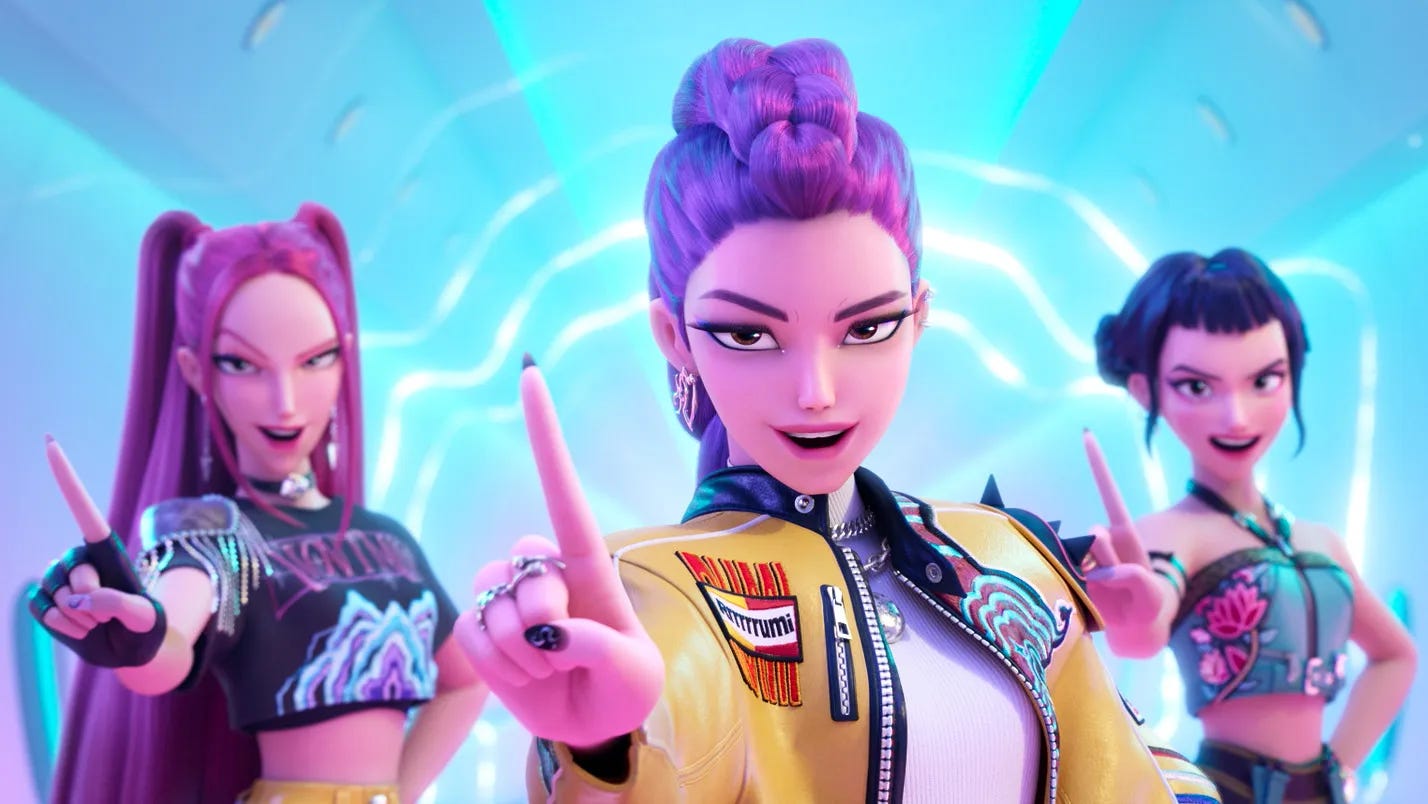
And hey, it worked! People are talking about Demon Hunters way more than Netflix’s other past film releases— I’ve seen a bigger digital footprint from the animated film than its previous animated films or any of the high-profile films by Martin Scorsese (The Irishman) or Rian Johnson (Glass Onion and Wake Up, Dead Man) or Guillermo Del Toro (Frankenstein). In fact, Demon Hunters forced Netflix to do something they’ve never done before: they briefly showed it TWICE in cinemas AFTER it debuted on the streaming platform on June 20, 20251, doing theatrical sing-along releases once from August 23–24, 2025 and then again from October 31–November 2, 20252.
But again, bummer because not everybody has the scale and resources that Netflix does. However, that hasn’t stopped three different kinds of English-language films in the last three years from using the same kind of fan-engagement model that South Korea did to achieve their own success.
The Fan-Engagement Model Drives Hundreds of Beavers To Over $1 Million At The Box Office

Hundreds of Beavers is a 2022 American independent comedy about a 19th century drunken applejack salesman who tries to win the hand of a merchant’s daughter while finding himself in conflict against beavers. It’s silent, filmed in black-and-white, and has no recognizable stars attached to the project.
Basically, everything that Hollywood loathes.
Made on a budget of $150,000, the film was released in theaters without formal distribution, and made nearly $1.5 million at the box office.
To which I respond: WHAT AND HOW?!
An Indiewire article describes how a theatrical booker who believed in the film and engaging with fans built word-of-mouth buzz:
“There was nobody coming in to save us,” producer Kurt Ravenwood said. “We knew that for this movie to to succeed, a black-and-white movie with no stars and no dialogue, it had to be a bit of an event.”
A few distributors showed interest but theatrical would have meant a week’s run in theaters before streaming. It was “checking a box,” said producer Matt Sbaljak.
“The whole theatrical run was not a means to an end,” he said. “It was the very essence of this film.”
So the Beavers team took the risk of holding onto its theatrical rights. Rather than play the room at CinemaCon, they teamed with veteran distributor Jessica Rosner, who loved the film, and devised the Great Lakes Roadshow, a 14-day tour across the Midwest with live Q&As and vaudeville moments.
The Great Lakes Road Show began January 26, 2024; it didn’t hit New York and LA until March. Anyone who’s a member of the “Beaverati” knows it’s not just a screening; it’s a live event with vaudeville comedy and a filmmaker Q&A. Sometimes, it’s interrupted by a beaver wrestling match in the audience.
That was the beginning of the long (and ongoing) journey for “Hundreds of Beavers.” The film finally crossed $1 million in Germany: On February 13, “Beavers” opened in 68 theaters across the country after the producers shopped the film to exhibitors at the “Filmkunstmesse Leipzig,” an arthouse convention for German theater owners.
Lighthouse Entertainment, which partnered with Ravenwood and other filmmakers on the release, worked with German partner 24 Bilder to secure screenings at venues such as the Delphi Lux and Rollberg in Berlin and the City venue in Munich.
Another article offers a glimpse at the kind of experience offered at these roadshows:
That confidence crystallized throughout the film’s regional festival run in 2023, when Cheslik and his co-writer/leading man Ryland Brickson Cole Tews began bringing props to screenings. That converted shows into one-of-a-kind experiences, with Tews wrestling beaver mascots live onstage. It was a natural fit for the old-school vaudeville houses Ravenwood identified as stops along the tour.
“As we toured, we refined these moments into a more polished experience, eventually codifying the best bits into the Great Lakes Roadshow,” said Ravenwood. “Theater owners often seek unique draws for under-advertised indie films, and the road show format delivered exactly that — a fun, interactive way to engage audiences.”
For those who insist that the theatrical experience is dead or that it has no real cultural power, look to Hundreds of Beavers. Had it gone to streaming straightaway, it’s possible we’d never be talking about it.
How Fans Voted For Angel Studios To Release Sound of Freedom (2023)

Okay, so 2023’s Sound of Freedom has a little controversy attached to it over its QAnon connections3, but I want to put that aside for a moment to point out how a different kind of fan-engagement model got the film into theaters.
The film was actually made back in 2018 and a deal struck with the Latin American subsidiary of 20th Century Fox to release it. But when Disney bought Fox, the film was shelved. Rather than let it languish, the filmmakers bought the rights from the studio and approached Angel Studios: would they buy it?
Angel Studios, Inc. (under the trade name Angel since 2025) is an American independent media company and film distribution studio based in Provo, Utah, and it uses a different and unique model to decide what gets made: it crowdfunds its film slate. The company has a body of approximately “thousands of Angel investors and members” dubbed ‘The Angel Guild’ who look at prospective pitches (“concept footage or fully completed films including movies, TV series, and documentaries”) and vote whether or not to back it. If a prospective pitch achieves the “minimum eligibility requirements”, a due diligence process is conducted to see if the project is worth distributing.
This model greenlit what became 2023’s His Only Son, which earned $12 million at the box office on a $250,000 budget4.
So when Angel presented Sound of Freedom— which was already completed, by the way— to the Guild, it voted yes within days. Angel scrambled to get it into theaters quickly, and the film opened on July 4, 2023, facing off against Indiana Jones and the Dial of Destiny and Mission: Impossible – Dead Reckoning; fierce competition. But the Angel Guild saw potential in Sound of Freedom, and they were right: the film would earn $251 million at the box office on a $14.5 million budget— of which $184 million was earned in America. As for Dial of Destiny and Dead Reckoning, their American box office earnings were $174,480,468 and $172,640,980 respectively.
According to a Wall Street Journal article, Angel continued using a fan-engagement strategy to build buzz:
Angel has promoted Sound of Freedom on social media and in billboard, radio and TV ads. Religious and conservative media groups especially have rallied to the movie, and right-wing influencers have trumpeted it as a cause on social media, including accounts sharing a video endorsement from Mel Gibson.
In its marketing, the studio encourages ticket buyers to “pay it forward” by contributing extra money, framing that as a way to raise awareness about child-trafficking. The studio says it uses that pot to offer free tickets to people, but declined to say how much money or ticket activity that effort has generated so far.
In a message that will play in theaters during the movie’s final credits, Caviezel urges viewers to scan a QR link to contribute, saying, “We don’t have big studio money to market this movie, but we have you.”
Regardless of political opinions5, Angel’s business model is an interesting type of fan-engagement model. By giving its subscribers and fans an opportunity to actively choose what movies and TV shows to make— and even invest in them and make money— Angel provides “first access to all of its shows and movies on streaming [and] gives members the chance to vote on what projects it greenlights.” It is, what co-founder and CEO Neal Harmon calls, “a movement”.
How A 38-Million Subscriber Base Pushed Iron Lung To Nearly $50 Million At The Box Office
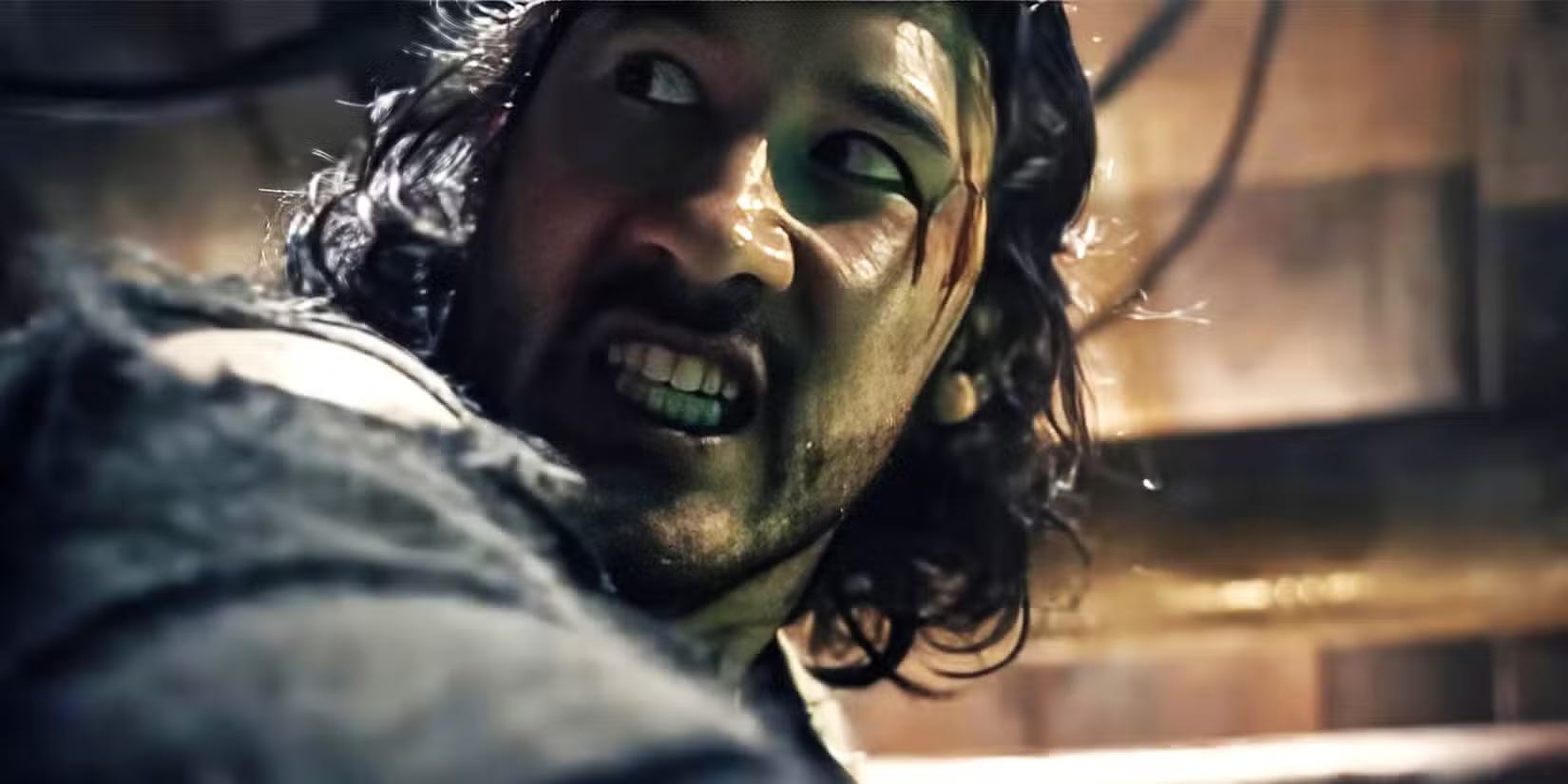
And then there’s 2026’s Iron Lung. A low-budget adaptation of an indie horror game, made by first-time filmmaker and YouTuber Mark “Markiplier” Fischbach, that opened in January on over 2,500 screens with showings sold out weeks in advance.
Self-distributed, no paid marketing campaign.
The film made approximately $49 million on a $3-4 million budget. All thanks to Markiplier’s fans.
Mark Fischbach, known online as Markiplier, is one of YouTube’s most popular creators, with about 38 million subscribers. He built the audience over a decade of making “gaming videos, comedy, and increasingly ambitious narrative projects”; he also “has a clothing brand, Cloak” and has “made large-scale interactive series for YouTube Originals”. A fan of David Szymansk’s indie game, he got the rights and started developing Iron Lung in late 2022. In 2023, he shot it over 35 days6. Markiplier did almost all the post-production and distribution himself, which explains the time between wrapping up and release.
He wanted a theatrical release, but the offers distributors made him weren’t satisfying. “I know that I’ve sold to them before,” says Markiplier. “I’ve gone on tour and I’ve sold out theaters, so I know that I can get people to show up. I was like, ‘Yeah, I can bet on myself for this one.’”
So Markiplier’s manager, Ben Curtis, turned to Centurion Film Service to handle the theater bookings. The company’s founder, Bill Herting, is a veteran of the exhibition business—for the last 30 years, he has operated his own service companies and was a buyer for majors such as Cineplex-Odeon and General Cinema. It took a while to convince Herting to help them. As Markiplier recounts:
I hope he doesn’t think I’m throwing shade on him about this, but when I first started talking to him he was like, “Yeah, we’ll start in three theaters and we’ll see how it goes from there.” And I was trying to be like, “This is not ego. I’m so sorry to say this, but I have an audience of millions. It would be insultingly low — not to me, to them — to be like three.”
As Herting spoke with theater owners, he realized Markiplier was right. Many knew who he was, or had employees who did.”
“That’s when Bill started really understanding where I was coming from,” Markiplier said. “I was like, ‘I really do have an audience and I’ve seen them in person. They exist, I swear.’”
Sure enough, they began to see the proof.
In a week, the theater count grew from 60 to 600. From there, it kept climbing.
“Trailer goes up Friday [December 5],” said Sam Herting, Bill’s son and partner in Centurion. “Friday night, [bookings] are really starting to roll in. Saturday, I’m just booking theaters all day until one or two in the morning. And then it kept up.”
Markiplier pinned the trailer at the top of his channel with a message: “The final trailer for the Iron Lung movie. Only in theaters January 30, 2026. Reserve your ticket now https://ironlung.com.” That points to a landing page built by Mark’s wife, Amy Fishbach, with an interactive map showing where the film would play. (Locations are marked by Mark’s screaming face.)
However, fans didn’t just check the map. They called theaters. And called and called. So much that theaters complained.
“One of the big circuits said, ‘Could you do me a favor? Could you tell [Mark’s] fans to stop calling the theaters? You got to turn those bots off,’” said Bill. “It wasn’t bots.”
When the numbers began to tally, it turned out that Markiplier’s popularity wasn’t just in America, but global:
“We figured this would be concentrated in the bigger cities,” Bill said. “Uh-uh… We’re getting calls from South America, France, Spain, Norway, Sweden. Germany.”
Added Sam, “It’s one thing to have a lot of followers. But loyalty of the followers is another thing. Mark’s fans are just so ride-or-die for him.”
Bill put it more bluntly. “The loyalty. The loyalty. The loyalty,” he said. “That’s the differentiator.”
Prior to that, Markiplier spent two years “mentioning the project, sharing progress, and letting anticipation build. Then he cut the first trailer: 10 million views. Second trailer: 10 million views.” By the time it was ready to release in theaters, fans were all in.
The rub, of course, is that most filmmakers don’t have 38 million subscribers and the experience of selling tickets directly to fans. But while that makes Markiplier an outlier, it doesn’t take away the fact that the Iron Lung story used the fan-engagement model and made the audience integral to the process, as well as making the process part of the story, building visibility long before the film’s release. Sometimes, people like to see how the sausage is made: it builds trust.7
The fan-engagement model isn’t just being used by indie films like Hundreds of Beavers or companies like Angel; better known film labels like A24 and Neon have been using this strategy to make themselves heard in a crowded landscape. What is revolutionary is that the exception in the American film industry is the norm over in South Korea— tried, tested, and refined. It offers hope that, even if the infrastructure is in shambles, filmmakers can use this strategy to get their works out there.
Think about how to involve your audience from Day 1
Having a 38 million audience base like Markiplier makes it easy to get them involved in the process from the beginning. But even if you have just 1000 followers or subscribers, get them involved. A small dedicated fanbase always beats a large casual fanbase, as The Creator Economy will attest.
If you are a small production company, take a page out of Angel’s playbook: decide what projects to back by getting your audience to directly vote on the most appealing ideas.
But what if you don’t have an audience at all? Don’t lose hope! It just means you’ll have to get more creative in your thinking. That’s what Hundreds of Beavers did.
Before you invest any money, try to identify the ideal fan for your film. What’s their age? Gender? Demography? What are their interests?
KPop Demon Hunters, for example, caters to K-pop fans.
Iron Lung caters to horror fans and indie horror fans, which may overlap with fans of indie horror games.
Sound of Freedom caters to fans with conservative and family-oriented values and fans who like action or thriller films.
Once you’ve identified your ideal fan, think of ways to reach them and get them involved before, during, and after making the film.
But what if you already made your film and only now you’re thinking about distribution? It’s still not too late to think about what type of fan would enjoy your film before you start marketing.8
Find people in the system who believe in your film
Films like Hundreds of Beavers, Iron Lung, and yes, KPop Demon Hunters, all needed people in the system who saw potential in these films and pushed to get them out there.
Find your Rosner, your Herting; at Angel, lots of people saw a film they liked in Sound of Freedom, and pushed Angel to distribute it. Everybody needs support.
Build a community, use the theater space for live events
Films need fans. Fans like to find each other, both digitally and in real life. The COVID-19 pandemic reminded us how important in-person interaction really was. Demon Hunters sing-along theatrical screenings turned the movie into an experience for fans9. Same with screenings of Hundreds of Beavers. The power of the theatrical space is to connect people. Find a way to use the theatrical space to connect people through the shared experience of your film.
Above all: make a good film
There are three film industries around the world currently making big-budgeted films10: Hollywood in America, Bollywood in India, and the Chinese film industry11. The Korean film industry isn’t there yet, and it certainly wasn’t at the beginning. Korean creatives understood this, and prioritized making their art good:
… Netflix could only work with the narratives Korean creators gave it. And what they gave it stood out partly, argues Daniel Armand Lee — better known as Tablo, the Korean Canadian leader of Epik High and a pioneer of Korean hip-hop — because they had no choice. Working without Hollywood’s franchise infrastructure or Marvel-scale production budgets, Korean artists couldn’t paper over a weak story with expensive spectacle. “We didn’t have the luxury of throwing money at a problem,” he says. What they had instead was craft — and they got very good at it.” (emphasis mine)
Non-South Koreans didn’t become fans of K-culture because it was K-culture; they became fans because the stuff in K-culture was good.
People will champion your film if you have worked hard to tell a story that captures their imagination, regardless of budget. By all means, spend on good equipment to make your film; but first, get your story right. If you do, then the fans will come.
The Hollywood Reporter article is proof that engaging the fans isn’t just for independent cinema— it helped South Korea turn K-culture into a billion-dollar global export.
So go shout it from the rooftops and sing it on the mountain: the fan-engagement model is the way.
Thanks for reading! If you liked this essay, you can sign up here for more issues. If you’d like to support Three Left Feet Media, share this newsletter with a fellow film lover you think would appreciate it.
Long live the movies!
D.L. Holmes
Netflix did its obligatory limited theatrical release from June 20-26, 2025, to qualify for the Oscars. Hey Academy, maybe you should make it a stipulation that for a film to be considered eligible for nomination, it needs to be in cinemas for at least 30 days!
From its three short theatrical runs, KPop Demon Hunters made about $24 million. Can you imagine how much money it might have earned if it had a traditional theatrical release? Easily close to $1 billion. But here’s Netflix’s Ted Sarandos on theaterical experience: ““I believe it is an outmoded idea, for most people — not for everybody.“ THIS IS WHY WE CAN’T HAVE NICE THINGS, TED!
Depending on whom you ask, that’s either terrible or great. Personally, I think it’s terrible.
According to its website, the film “already paid back their investors a 120% return”.
I’m not endorsing using right-wing influencers to promote a film, but Sound of Freedom clearly shows that there was a market hungry for films like it. In business-speak, that’s known as a ‘blue ocean’.
It was a SAG union shoot.
That is, without a doubt, the weirdest sentence I’ve written unironically.
It does make it harder, though, but not impossible. I don’t think Hundreds of Beavers decided from the outset what kind of fan they were catering to; the film just helped draw them out. Kind of like, well, beavers.
I’ve got to be honest, though, as an audience member, this sounds like my idea of hell. I like to watch my movie without it being a concert. But watching a movie with an audience— especially if it’s not as raucous as a musical film— can definitely enhance enjoying the film: Watching last year’s Weapons with a packed cinema was a trip.
Please comment here if I’m wrong.
The highest-grossing film of 2025, for the first time, came outside of Hollywood with China’s Ne Zha 2, which grossed $2.2 billion at the box office; of which over $2 billion came from China alone.