


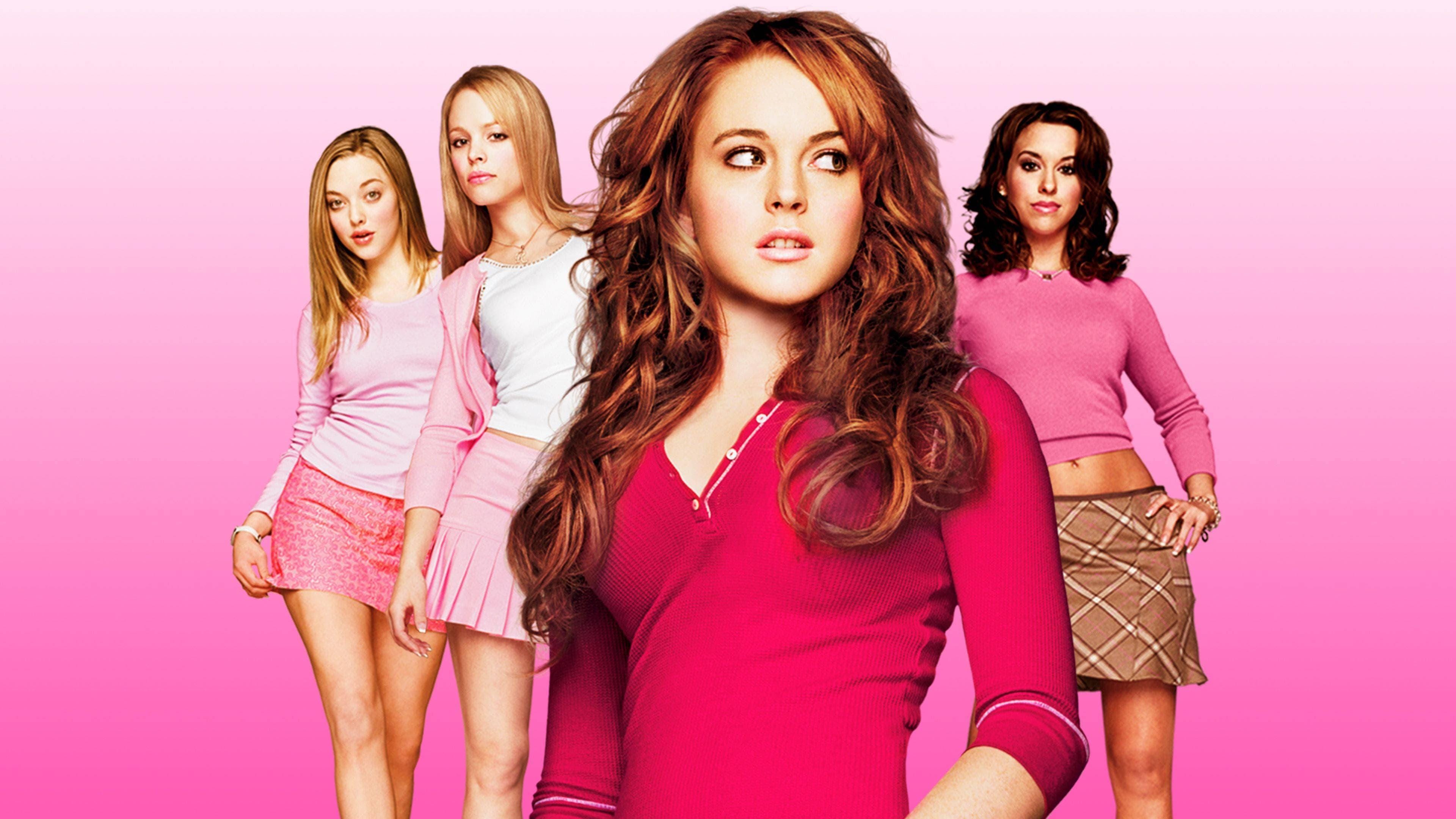
From a razor-sharp high school satire to a full-blown pop culture machine, Tina Fey turned Mean Girls into a franchise that still rules the social hierarchy decades later.
Judging by her credits, Tina Fey prefers writing for television: She created 30 Rock, co-created Mr. Mayor, Unbreakable Kimmy Schmidt, and wrote several episodes for Saturday Night Live.1 But when it comes to features, as of this time of writing, she’s only written the one screenplay: 2004’s high school comedy Mean Girls.
Just that one2. And while most screenwriters never break through on their first screenplay, Fey’s sole feature film script credit just so happens to be a pop culture classic.
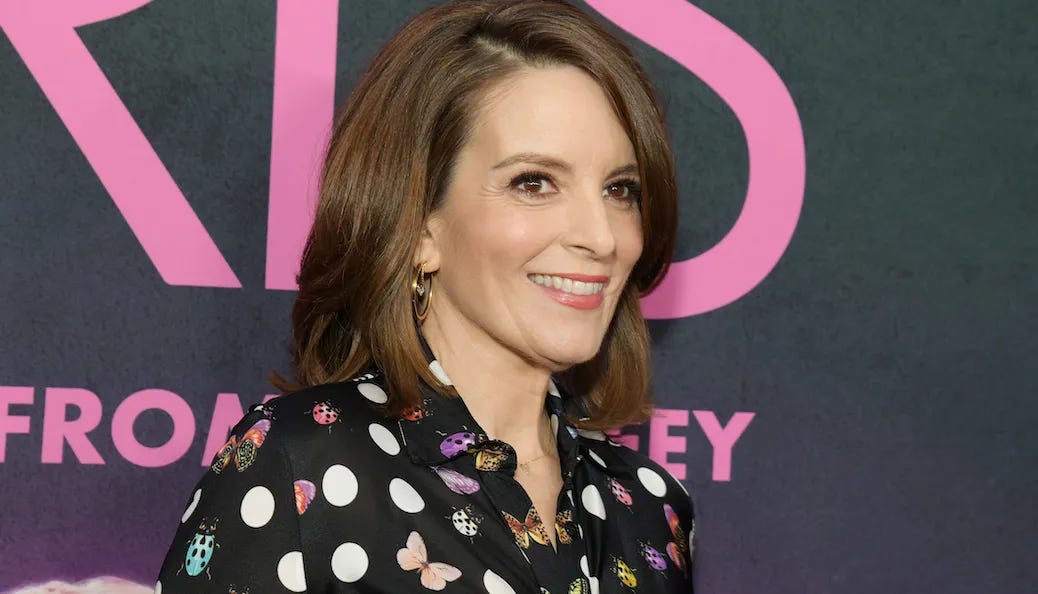
At first, Mean Girls was supposed to be about the teacher.
Sometime around 2002, Fey came across ‘Queen Bees and Wannabees,’ a non-fiction self-help book by Rosalind Wiseman. The author, who had over a decade of experience working with girls on issues such as cliques, self-image, and social dynamics, wrote the book for parents to better understand their teenage daughters and how they could help them to deal with life in high school3. In other words, it is decidedly not a work of fiction ready-made for a big screen adaptation4.
Still, Fey was intrigued. The book provided all the insightful anthropological research she needed for a film about a teacher5 dealing with high school girls. “I thought I had been on SNL for a while and that I should try and branch out,” Fey says. “And I read the book, and I thought, ‘this will be like ‘Stand and Deliver,” and be a movie in which I can star.”
But the more work and research she did, the more she found that “the girls were the most interesting part.6 The true stories of the way young women behaved were insidious, but they were also kind of funny in their vicious cleverness.”
From this realization, Fey shifted the story to the perspective of the students, told through the eyes of Cady Heron, a homeschooled teenager who attends high school for the first time after a lifetime spent with her globetrotting research zoologist parents7, discovers that the fictional North Shore High School in Evanston, Illinois has a lot in common with the wild African savannahs, and gets roped into a series of adventures involving the school’s popular girl clique, The Plastics.
In other words, it started to shape into the film as we know it.
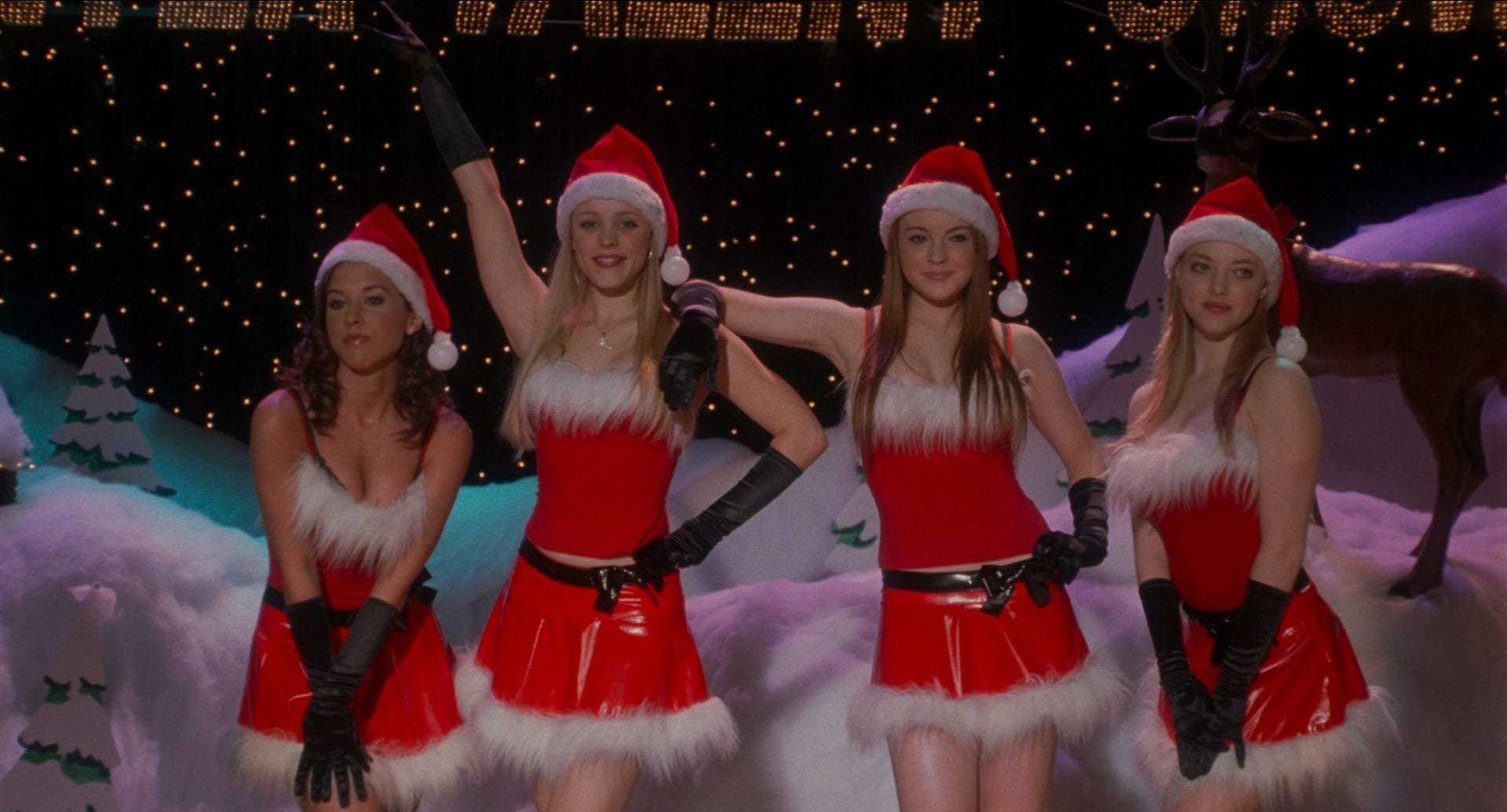
In 2002, Fey pitched Mean Girls (originally titled Homeschooled) to her Saturday Night Live boss and producer, Lorne Michaels, describing it as “a movie about what the call ‘relational aggression’ among girls.” If Michaels was bemused, it wasn’t enough to say “no” because he agreed to produce it.8 But even though Fey had written for Saturday Night Live, a feature film was an entirely different beast; worse, despite being based on a book, she was still essentially creating a story from scratch. “I had these amazing behaviors and anecdotes, but I didn’t have characters or story,” she recalls. “So, I literally read Syd Field, read “Save the Cat,” had a million index cards.”
Since Fey already knew the world in which she wanted to set the story, she drew from her own life and experiences9, right down to the characters: Cady Heron was inspired by her friend, Cady Garey; her older brother’s good friend was named Glen Cocco, so a minor character would be named the same; Janis Ian was named after real singer Janis Ian, one of two musical guests who appeared on the very first SNL episode back in 1975; and the “almost too gay to function“ Damian Leigh was named after Fey’s good friend, TV Guide writer Damian Holbrook.10
Meanwhile, writing about high school meant Fey had to revisit her past memories. “I revisited high school behaviors of my own — futile, poisonous, bitter behaviors that served no purpose,” Fey remembers. “That thing of someone saying ‘You’re really pretty’ and then, when the other person thanks them, saying, ‘Oh, so you agree? You think you’re pretty?’ That happened in my school. That was a bear trap.”
On a more surprising note, Fey admits to being a mean girl in high school. “That was a disease that had to be conquered,” she says. “It’s another coping mechanism — it’s a bad coping mechanism — but when you feel less than (in high school, everyone feels less than everyone else for different reasons), in your mind it’s a way of leveling the playing field. Though of course it’s not. Saying something terrible about someone else does not actually level the playing field.”11
For two years when Saturday Night Live was off the air, Fey spent the summers of 2002 and 2003 hunched over a desk in a “mild dewy” backroom of a Fire Island rental home, cranking out the pages on her laptop while fueled by Entermann’s chocolate-covered donuts and coffee. “She would old-school just sit and eat doughnuts and drink coffee, like a secretary from the ’50s or something,” remembers her husband, the composer Jeff Richmond. “Not glamorous but very conducive to creativity.”
Mean Girls opened on April 30, 2004; by the end of its theatrical run12, it had taken in $130.1 million on a budget of $18 million. Distributor Paramount was taken by surprise by its success. “I thought we were mid-to-high teens ($ millions),” the studio’s head of distribution Wayne Lewellen told Box Office Mojo. “The appeal with older females came on strong in the last few days, which seemed to be the difference.” Paramount’s research found that 75% of the audience was female, while 50% was under the age of 18. Perhaps the real surprise was that over 80% of men in their 30’s, a group outside the film’s target demographic, rated the film as either “excellent” or “very good”. Endlessly quoted or parodied, Mean Girls became ingrained into the millennial pop culture veneer.
Meanwhile, many of the film’s cast members went on to successful careers, the two most notable ones being Rachel McAdams, who played antagonist Regina George and appeared that same year on screen again two months later in The Notebook13; and Amanda Seyfried, who nabbed a lead role opposite Meryl Streep in 2008’s Mamma Mia! and eventually got an Oscar nomination for Best Supporting Actress in 2020’s Mank.14
As for Fey, shortly after Mean Girls, her pilot for 30 Rock got picked up by NBC, and she was off to make her fortunes in TV. She never wrote another feature film again. The thing is, she never needed to: Mean Girls was such a vibrant cash cow. It was made as a 2009 PC game featuring characters specifically created for the game, and it was also a cancelled Nintendo DS game developed by Crush Digital Media15. It spawned an interactive animated web story called Senior Year by Episode, set after the events of the film and following a new North Shore student in, you guessed it, senior year. Two other stories, Sorority Rush and Spring Break, followed. In 2017, Scholastic published a novelization based on the script from author Micol Ostow, while another novelization came out in 2019, this one by Ian Doescher and written in the style of William Shakespeare; it was titled, William Shakespeare’s Much Ado About Mean Girls. There was Mean Girls: Senior Year, a 2020 graphic novel, written by Arianna Irwin and illustrated by Alba Cardona, against set after the events of the film about a new student who wants to be the popular kid. In 2024, twenty years after its release, the 2004 film became a children’s book by Cara Stevens and illustrated by Vivien Wu and Chivaun Fitzpatrick.
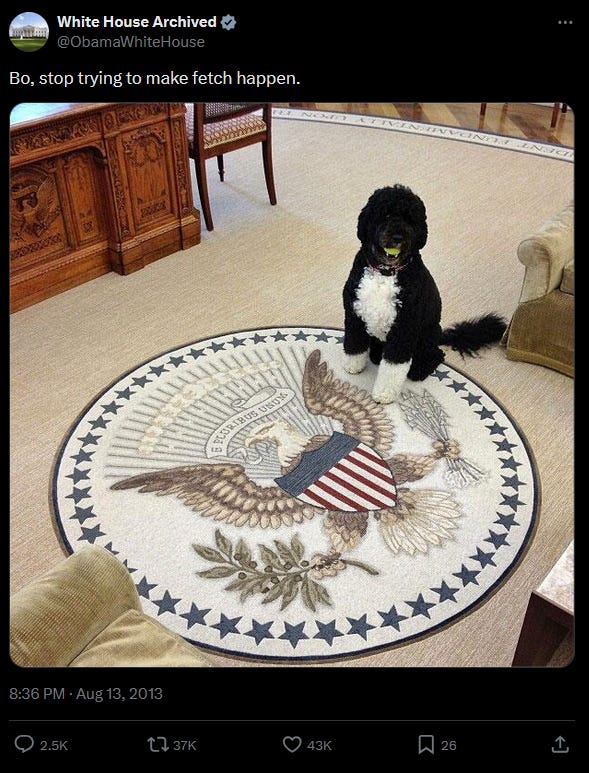
And this is not including the pop culture cachet it has accrued through references across the media. Ariana Grande parodied the film in her 2018 music video, “Thank U, Next”16. K-pop singer Sunmi’s song “You Can’t Sit With Us” is from a quote in the film. Primark launched a film-inspired loungewear range, and even the American government got on the Mean Girls train when the White House tweeted a photo in 2013 of President Obama’s dog, Bo, clutching a tennis ball, captioned, “Bo, stop trying to make fetch happen”.
The two biggest adaptations, however, has to be the 2018 Broadway musical that Fey adapted with her husband Richmond; which, in turn, was adapted into a 2024 musical film. Fey continues to tinker the story, mostly by updating the humor, since what worked in the early 2000s did not today.
“I was writing in the early 2000s very much based on my experience as a teen in the late ’80s,” she notes. “It’s come to no one’s surprise that jokes have changed. You don’t poke in the way that you used to poke. Even if your intention was always the same, it’s just not how you do it anymore, which is fine. I very much believe that you can find new ways to do jokes with less accidental shrapnel sideways.”
To which she cites some of the changes she made for the 2024 film. For the notorious Burn Book, Dawn Schweitzer is called a ‘horny shrimp’ instead of a ‘fat virgin’ because even Regina knew that would not pass. “She’s going to find a way to inflict pain on people, but she’s not going to get herself in trouble,” says Fey. “For example, there’s a joke in the original movie when Janis gets up on the table and Regina says, ‘Oh my God, it’s her dream come true: diving into a huge pile of girls.’ It was mine and Sam Jayne’s feeling that Regina wouldn’t try that now because she knows the kids around her would be like, “That’s homophobic.” She would know not to be homophobic, and hopefully, truly would not be homophobic.”
For a film that is not an action-adventure, horror, thriller, fantasy, science-fiction, or a superhero story, Mean Girls has proven to have incredible longevity; the possibilities down the road are endless— a legacyquel with the original cast dealing with their own kids navigating high school? A remake set 20 years from now? It’s no wonder that Fey has been content to mine the Mean Girls IP— done right, she knows it will always have cross-generational appeal. “Adults find it funny. They are the ones who are laughing,” remarks Fey. “Young people watch it like a reality show. It’s much too close to their real experiences so they are not exactly guffawing.”
Thanks for reading! If you liked this essay, you can sign up here for more issues. If you’d like to support Three Left Feet Media, share this newsletter with a fellow film lover you think would appreciate it.
Long live the movies!
D.L. Holmes
She even wrote a 2011 memoir called ‘Bossypants’.
Technically, she also wrote the script for the 2024 musical adaptation, which was based on the stage musical, which itself was based on the 2004 movie— but it’s still the same movie, so I’m counting it as one!
For instance, Wiseman urges parents not to overlook the social importance of seemingly small moments such as not getting invited to a birthday party, saying, “These aren’t trivial issues. They lay the groundwork for girls faking their feelings, pretending to be someone they’re not, pleasing others at their own expense, or otherwise sacrificing self-esteem and authenticity.”
That’s why ‘Queen Bees and Wannabees’ is given a Based On credit.
Fey did play the film’s teacher, Ms. Sharon Norbury, but her role was significantly reduced in the finished film. In fact, an earlier script draft gave her a more prominent position, in which Norbury got suspended because Cady thought she was doing drugs (the teacher had actually confiscated another kid’s drugs), and instead of the Mathletes contest for the film’s climax, it would be a school board meeting where Cady helped Ms Norbury get reinstated. You can read more about the differences in the early version of Mean Girls versus the film.
This is similar to how early iterations of Guillermo Del Toro’s Pan’s Labyrinth had the pregnant mother as the protagonist instead of the daughter, before he realized that the kid had the more interesting story. You can read more about that here.
Hence, the reason for being homeschooled.
He did ask if the film could still have cool cars and cool clothes, though. Fey’s responded: “Oh, for sure!” Boys will be boys, I guess.
When in doubt, write what you know!
Fey: “I tried to use real names in writing because it’s just easier.”
Fun fact: Regina’s habit of complimenting people as a way of making fun of them was lifted from something that Fey’s mother did.
Which would be September 9th, over 120 days later! Sony Pictures Motion Picture Group Chairman and CEO Tom Rothman is right: Cinemas need longer windows. Or to put it more succinctly: “It’s the windows, stupid.”
The rest, as they say, is history.
Lead actress Lindsay Lohan unfortunately experienced a downturn in her film career shortly after, but she is making a gradual comeback, making her first big screen return since 2023 in 2025’s Freakier Friday, a sequel to her 2003 hit Freaky Friday.
In 2021, YouTuber Ray Mona (also known as Raven Simon received a file for the game from an anonymous email, and uploaded a full playthrough to her channel on July 15, 2021.
Actors from the film, Jonathan Bennett and Stefanie Drummond, appeared in it.