


Nobody realized it at the time but when Mulholland Drive came out 25 years ago, it would be David Lynch’s penultimate feature film, perhaps the one for which he is remembered best. A dizzying, mystifying neo-noir that defies easy explanation and is open to interpretation, it is Lynch at his best: surreal, strange, infuriating, wonderful.
Here’s the thing, though: Mulholland Drive was never meant to be a film. It was meant to be Lynch’s return to TV after he created shockwaves with Twin Peaks.
So how in the world did a TV pilot end up as one of Lynch’s most memorable movies?
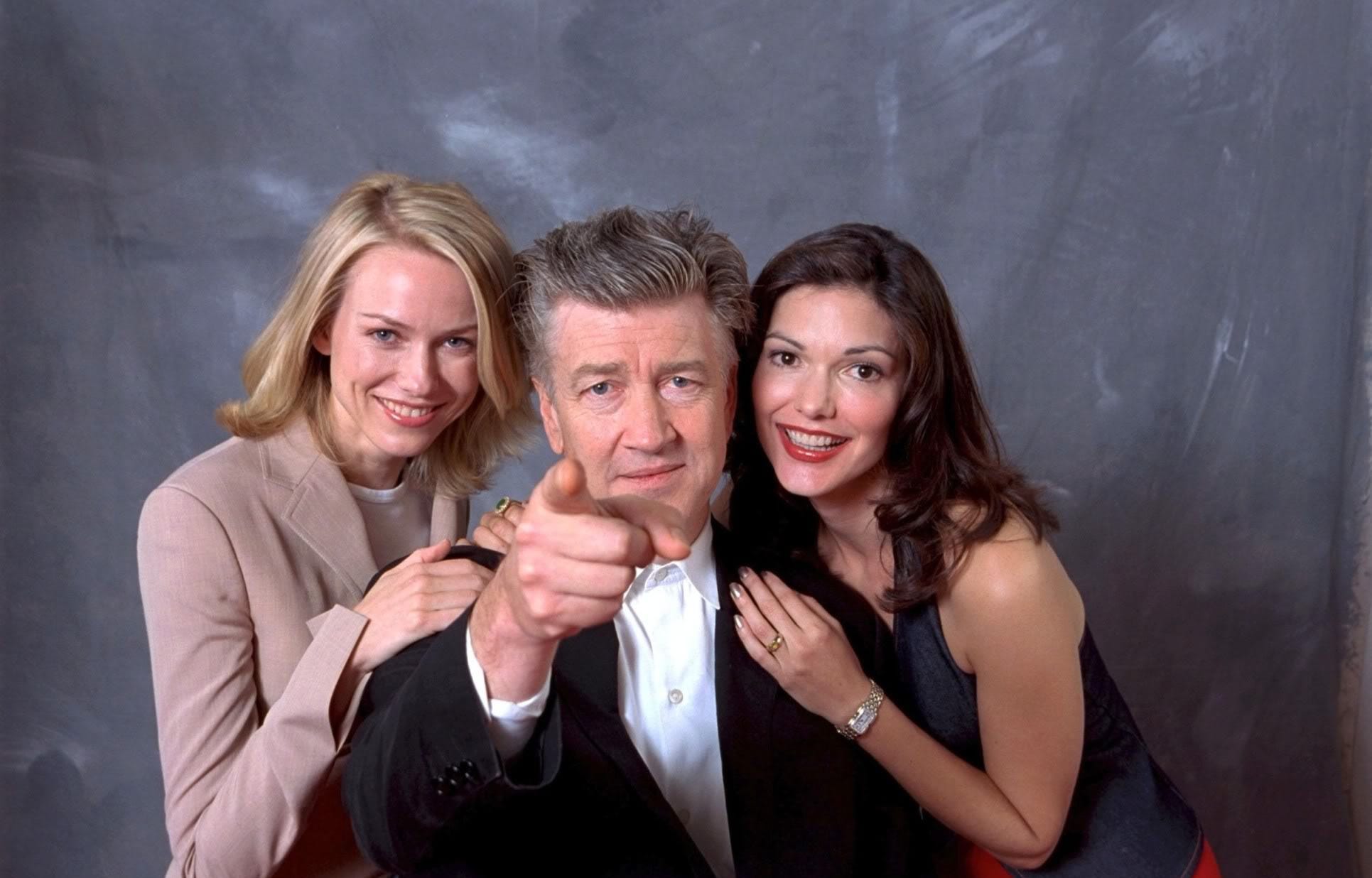
The knowledge that Mulholland Drive was structured as a series explains why for most of the film, characters are embroiled in their own plotlines without intersecting except briefly. That’s what happens in a TV show.
Lynch first came up with the show around the time that Twin Peaks was on the air. Over dinner with Tony Krantz, the agent responsible for packaging Twin Peaks, he mentioned his idea about an amnesiac woman who survives an assassination attempt and tries to get answers with the help of her new friend, an aspiring actress named Betty. Krantz pushed Lynch to make it, but the director was reluctant especially as his enthusiasm for the medium of television waned and the cancellation of Twin Peaks soured him, once saying, “With all the commercials and its terrible sound and picture, TV is a hair of a joke, really.”
But Krantz persisted, and finally convinced Lynch by persuading him that television was a “Scheherazade-like medium” that required endless storytelling. Said Lynch,
“Tony knew that I’ve never liked having to bend my movie scripts to an end halfway through. On a series you can keep having beginnings and middles, and develop story forever.”
So Krantz set up a meeting at ABC, opening the pitch for ten minutes before Lynch took over. Needless to say, the executives were hooked. Just as they were on the edge of their seats, Lynch paused and lit a cigarette. They asked him what happened next.
Lynch replied, “You have to buy the pitch for me to tell you.”
The Scream Sequels That Would Never Be

Had things gone according to plan, Scream 7 (currently in theaters) would have been an entire other movie. But it’s not the first time that the franchise took a completely different turn, according to its creator Kevin Williamson. When Williamson and director Wes Craven reunited to make
Instead of the usual few hundred thousand dollars given for development, ABC put up four and a half million dollars for an unusual two-hour pilot. Disney’s Touchstone television contributed another two and a half million dollars, but with the stipulation that Lynch shoot extra footage for a ‘closed ending’, to recoup the money by releasing the longer version as a film in Europe through Buena Vista International. Lynch grudgingly accepted; it was hard to say “no” when they were willing to pony up $7 million for a pilot, which was unheard of.
Lynch had been upfront about his intention to make Mulholland Drive unique, unusual in a medium that skewed towards making shows that borrowed from earlier successful hits to target their advertising demographics. Joss Whedon recalls pitching Buffy as The X-Files meets My So-Called Life, saying. “[TV executives] liked it because The X-Files was a big hit, and because the kid audience buys a lot of shit.” Lynch turned in a 92-page pilot script to ABC and while executives were excited, they also grew concerned. The script didn’t tie up loose ends, jumping around instead and breaking off halfway. A meeting was held to discuss their worries and pestered Lynch with questions about the story; Lynch covered up a lot of times, simply because he actually didn’t have answers, but didn’t want to worry the executives. To appease them, he hinted that the characters of Adam (Justin Theroux) and Betty (Naomi Watts) would have a romance, but remained vague about Rita’s identity, only promising that when it was finally revealed, it would open more mysteries.
But despite the excitement sweeping through Hollywood and the advertising community1, the dailies only increased the nervousness of the ABC executives. The plotting was slow compared to what they’d read on the page, nor were they thrilled with the casting choices of Laura Harring and a then-unknown Naomi Watts. Lynch sent in a work print of the pilot, clocking 2 hours and 5 minutes, to Krantz and to ABC. He personally loved it; so did Krantz.
ABC freaked out.
Suddenly, they wanted the pilot shortened to 88-minutes, and sent Krantz a memo with about thirty instructions on what the network wanted cut or “paced up”. Lynch was pissed, arguing that his ‘creative control’ clause gave him final cut authority. But Krantz reminded him that the contract was with him and Imagine Entertainment; at the end of the day, the network had ultimate creative control.
And the network exercised their ultimate creative control by choosing not to pick up the pilot for broadcast. At the time, that seemed to be the end of Mulholland Drive.
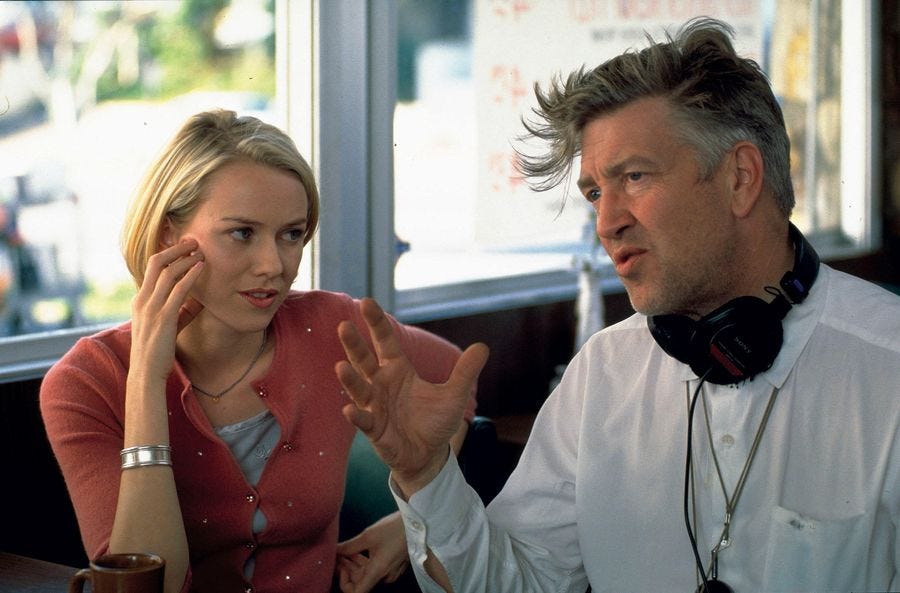
Then French producers Pierre Edelman and Alain Sarde saw the footage. Liking what they saw, they talked to Lynch about finishing it as a feature film. Not with the extra footage that Touchstone had wanted, but how Lynch wanted to end it. The two Frenchmen went back to France and convinced StudioCanal (Canal+) to finance it. On the strength of their persuasion, the French production company secured the rights from ABC and gave Lynch another $7 million to shoot additional footage.
Lynch, though, was stymied. Mulholland Drive had never been intended to be a feature, and there was no previous case study of a pilot-turned-feature that he could use as a blueprint; he didn’t even know if the footage he had could be repurposed as a feature. He was in uncharted territory.
Lynch was a famous practitioner of transcendental meditation, and he sat down one night to meditate, hoping for an answer.
“And in there,” said Lynch, “I say like a string of pearls, all the ideas came, all at once, and there it was.”
He continued: “Hollywood is a dream. Any film about Hollywood is a small, small slice of Hollywood.”
Determined to capture the feeling of Hollywood always changing, Lynch wrote another 18 pages of material, which included the infamous love scene between Betty and Rita, the Club Silencio performance, and the final 25 minutes in which everything that we’d seen was a dream by Diane Selwyn, a failed actress played by Naomi Watts.
Watts was relieved— the new scenes added some complexity to her character, whom she’d found to be too one-dimensional. But she and Harring were uncomfortable about filming the new love scenes, even when Lynch found ways to create as much privacy on the set for them. Still, they trusted the director and powered through, and in October 2000— over a year after he shot the pilot— Lynch filmed the new scenes.
Mulholland Drive premiered at the 2001 Cannes Film Festival, and Lynch shared the Best Director prize along with Joel Coen for The Man Who Wasn’t There. On 12 October 2001, Universal Pictures released Mulholland Drive into theatres, and the film would gross $20 million worldwide while earning Lynch’s some of the best reviews in his career; not to mention earning him his final nomination for the Best Director Academy Award2.
If there’s a lesson to this, perhaps it’s this: don’t discard your ideas right away. While not all of them can be salvaged, you might be able to repurpose some of them in the way that Lynch was able to recontextualize his pilot footage into a full-length feature film— especially if people see the potential in it and believe in it. Sometimes, you have to put an idea on ice until the opportunity arises to rework it.
How Benecio Del Toro Helped Reshape One Battle After Another Into A Better Film

‘One Battle After Another’ has been picking up one award after another on the awards circuit and has a good chance of going the distance at the 98th Academy Awards on March 15th. But if it wasn’t for Benecio Del Toro, things could have turned out wildly differently.
Thanks for reading! If you liked this essay, you can sign up here for more issues. If you’d like to support Three Left Feet Media, share this newsletter with a fellow film lover you think would appreciate it.
Long live the movies!
D.L. Holmes
An executive told Lynch’s producer, Neal Edelstein, that when they gave a presentation to the ad execs and mentioned that David Lynch was coming back to television, they literally gasped!”
He lost to Ron Howard for A Beautiful Mind.
Love this story, which I was already familiar with, but this is a good telling of it, DL!