


Welcome to Script by Line. This week, we’ll be taking a look at The Dark Knight Rises, and breaking down the final entry in Christopher Nolan’s Dark Knight trilogy.
Let’s dive in.
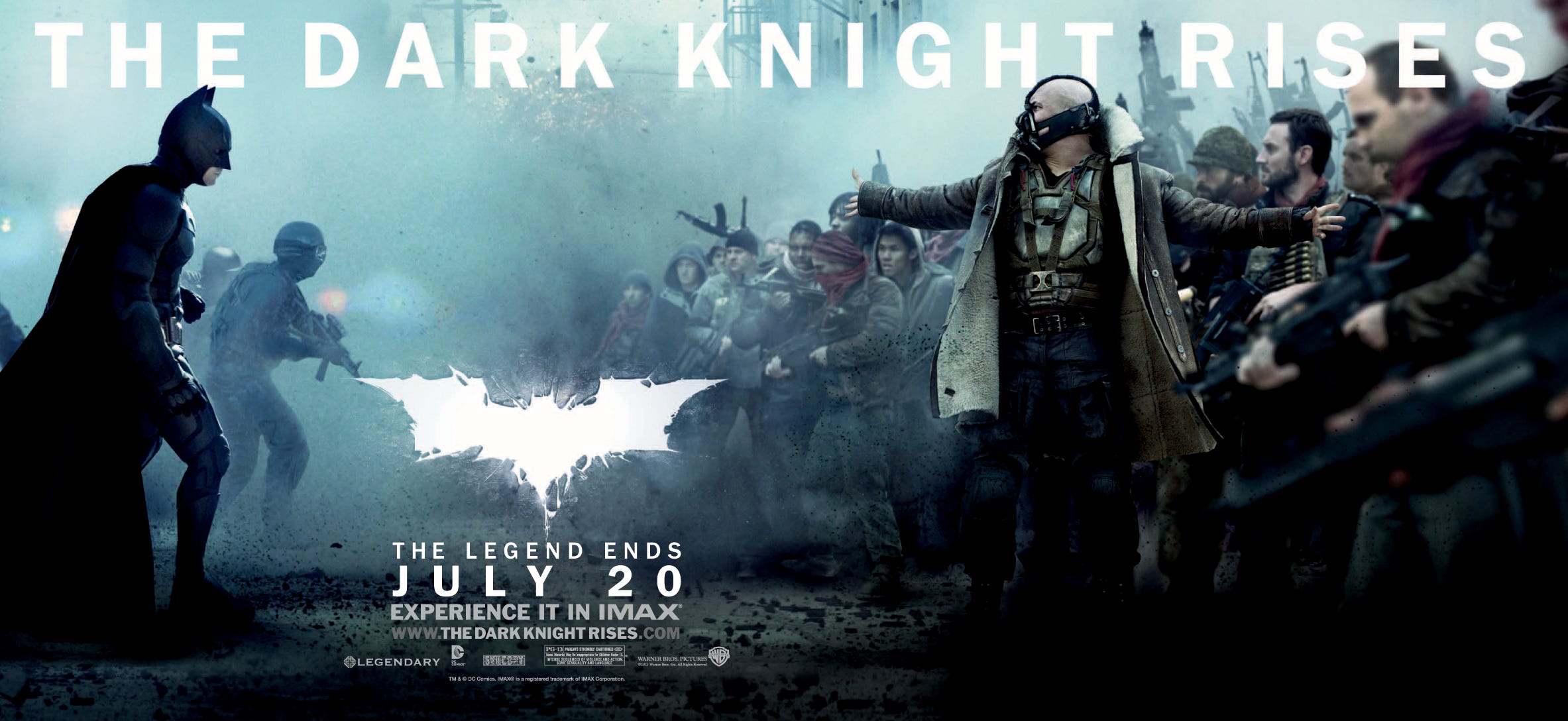
Logline: Eight years after Batman disappeared, the masked villain Bane arrives to overthrow Gotham City, forcing Bruce Wayne to come out of retirement and once again become the Batman to save his city.
Written by: Jonathan Nolan and Christopher Nolan
Story by: Christopher Nolan and David S. Goyer
Based on: Batman created by Bob Kane with Bill Finger
Pages: 164
To put it mildly, The Dark Knight Rises is a lot.
It’s the end of a trilogy, the culmination of a vision. It weaves in a new story while wrapping up loose threads. Old characters return, new characters are introduced. It’s a sequel to The Dark Knight, but it’s also a callback to Batman Begins. The Dark Knight Rises screenplay, written by Jonathan Nolan and Christopher Nolan and based on a story by Nolan and David S. Goyer, clocks a staggering 164 pages1.
Even then, it takes on a little more than it can handle.
It’s been eight years since the last sighting of Batman. Peace has come to Gotham City, as law enforcement and courts use ‘The Dent Act’—named after the late Harvey Dent— to finally break organized crime. But it is a false security, built on a lie. Dent is acclaimed a hero, Batman a killer; the rich have grown richer and the poor only poorer; and under the city, the masked villain Bane emerges from the sewers to overthrow Gotham City. Once again, Batman’s beloved city is in danger. The Batman has to return.
But it takes a while to convince him to get back in the suit. Since the ending of The Dark Knight, Bruce Wayne has retreated into a Howard Hughes-ian reclusiveness (a nice homage to Nolan’s unused Howard Hughes biopic). Even after the mysterious Selina Kyle steals his fingerprints and Commissioner Gordon barely escapes Bane and his thugs early on, Bruce is reluctant. So is Alfred, who quits over fears that Bruce is outmatched.
Sadly, the trusty British butler is right: even with new gadgets provided by Lucius Fox, including a nifty flying vehicle called ‘The Bat’ (a.k.a. the Batplane), and new allies such as officer John Blake, Batman learns what happens when an unstoppable force meets an immovable object. He has his fortune stolen, his back broken, and gets thrown into an underground prison for a good portion of the script while Bane takes over Gotham and subjects the city to five months of terror with the threat of a nuclear bomb that could go off at any moment.
And that’s not even factoring in the ambiguous nature of Catwoman, the newcomer and do-gooder Miranda Tate, and the industrialist Daggett who plots—and succeeds in— a corporate takeover of Wayne Enterprises. Not to mention Bruce rebuilding himself to escape and return to save Gotham, while Gothamites struggle to survive the madness.
Like I said, it’s a lot.
For the most part, The Dark Knight Rises is entertaining. The action beats are solid and well-written…
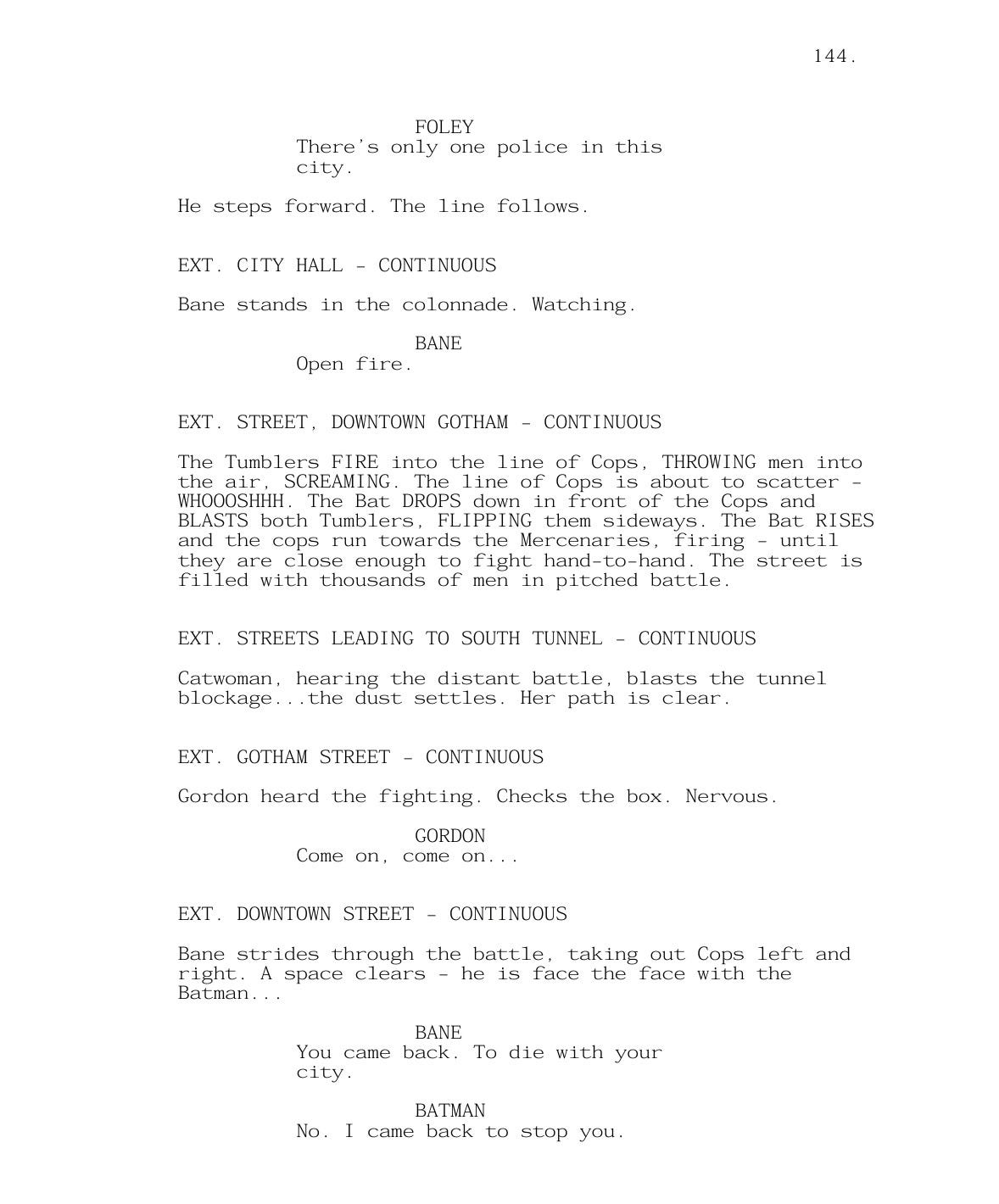
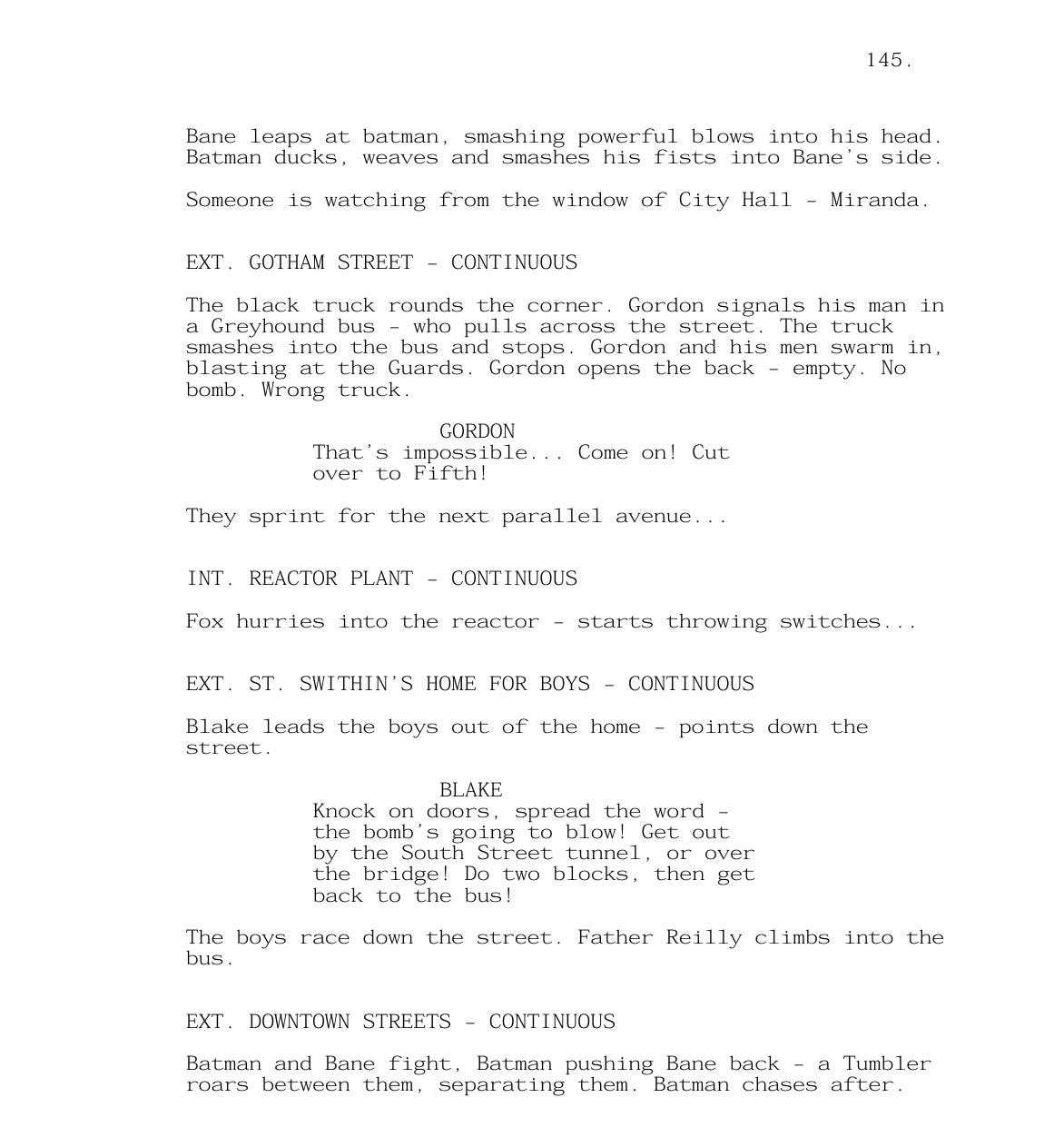
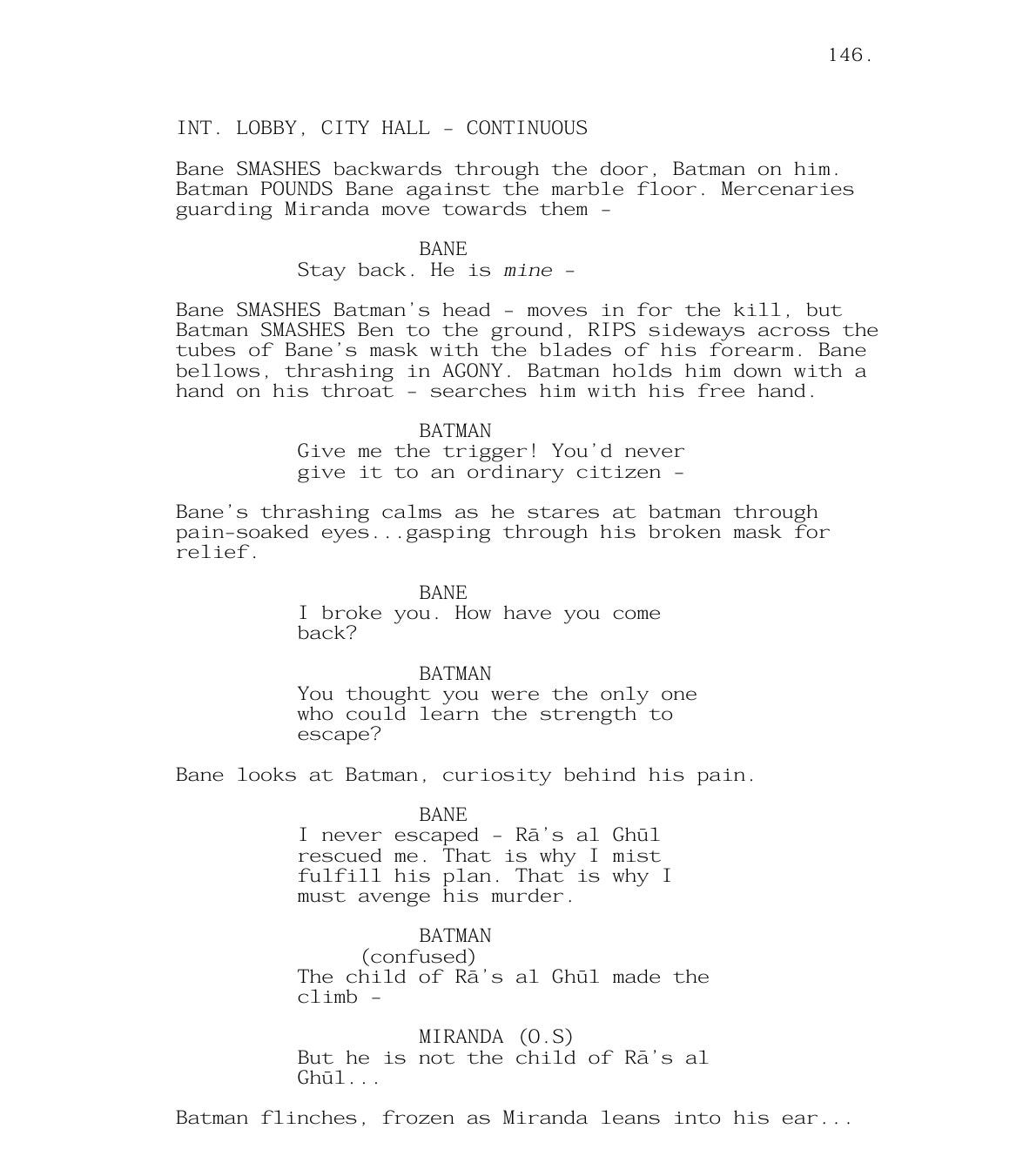
The character dynamics, between old and new, are engaging. I enjoyed the scenes between Bruce and Selina…
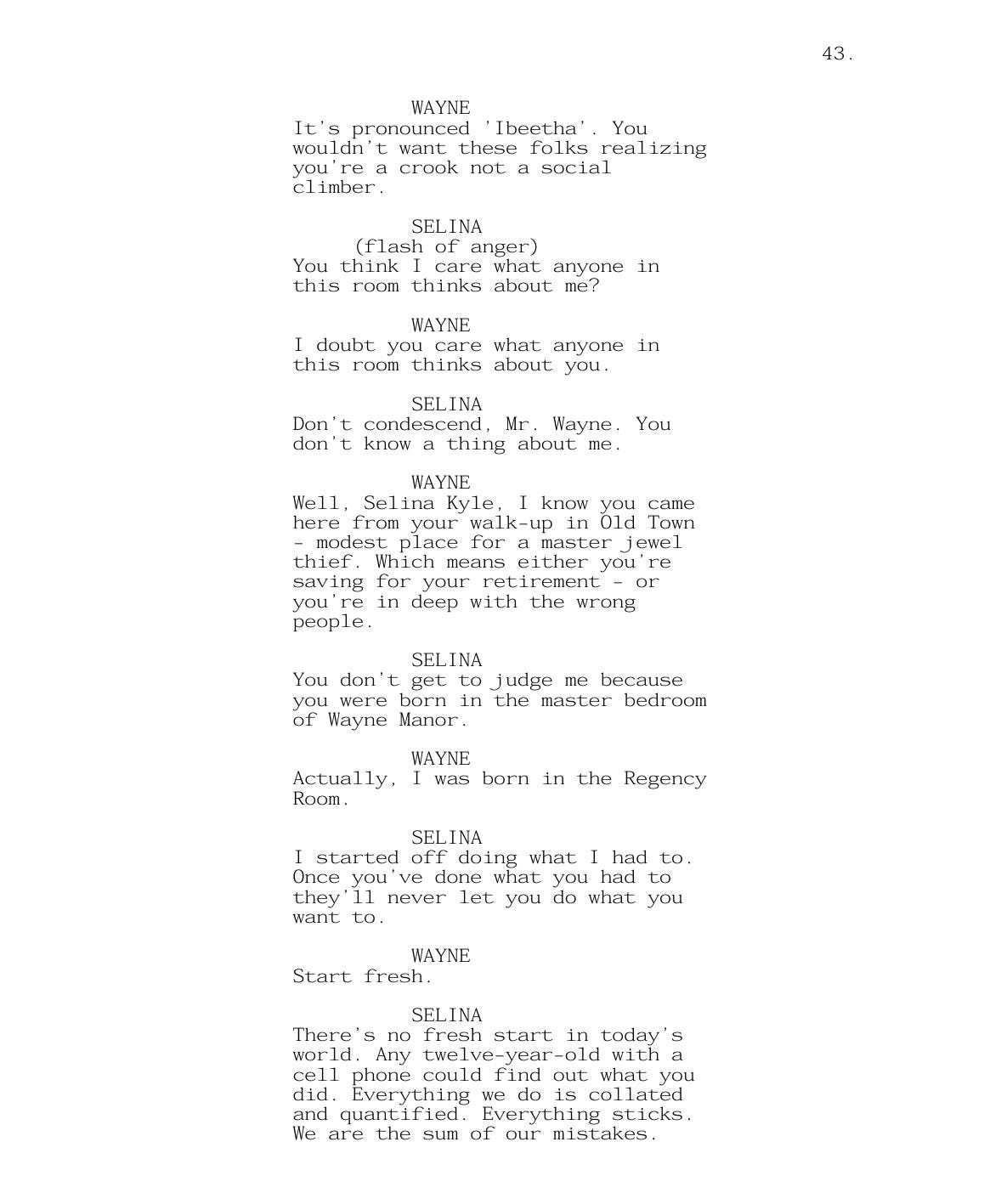
It capture the spirit of the Bat and the Cat in the comics…
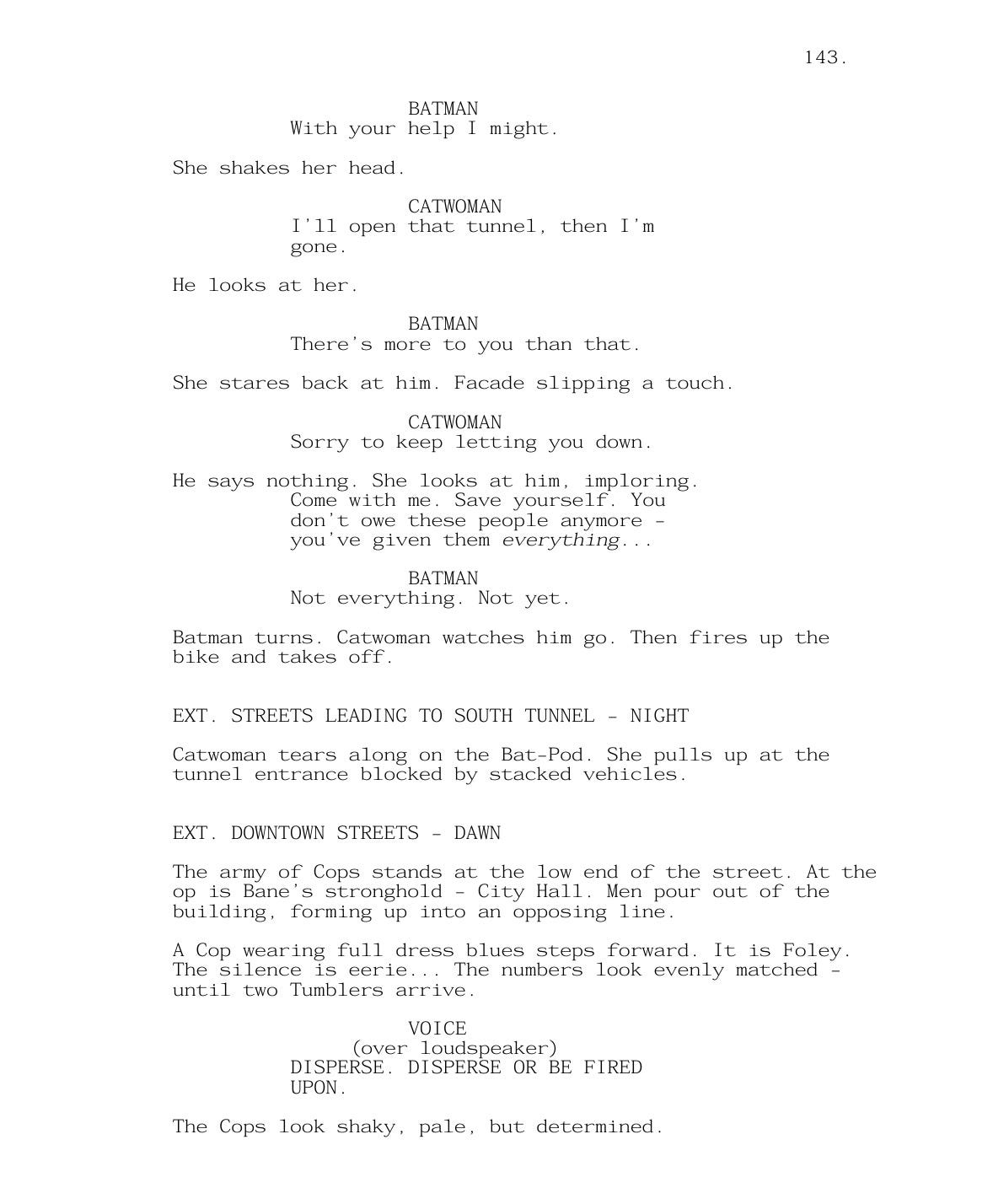
I also like Bane as a ruthless force of nature, something that the trilogy hasn’t seen before, although his lines have become memorable for bordering on parody…
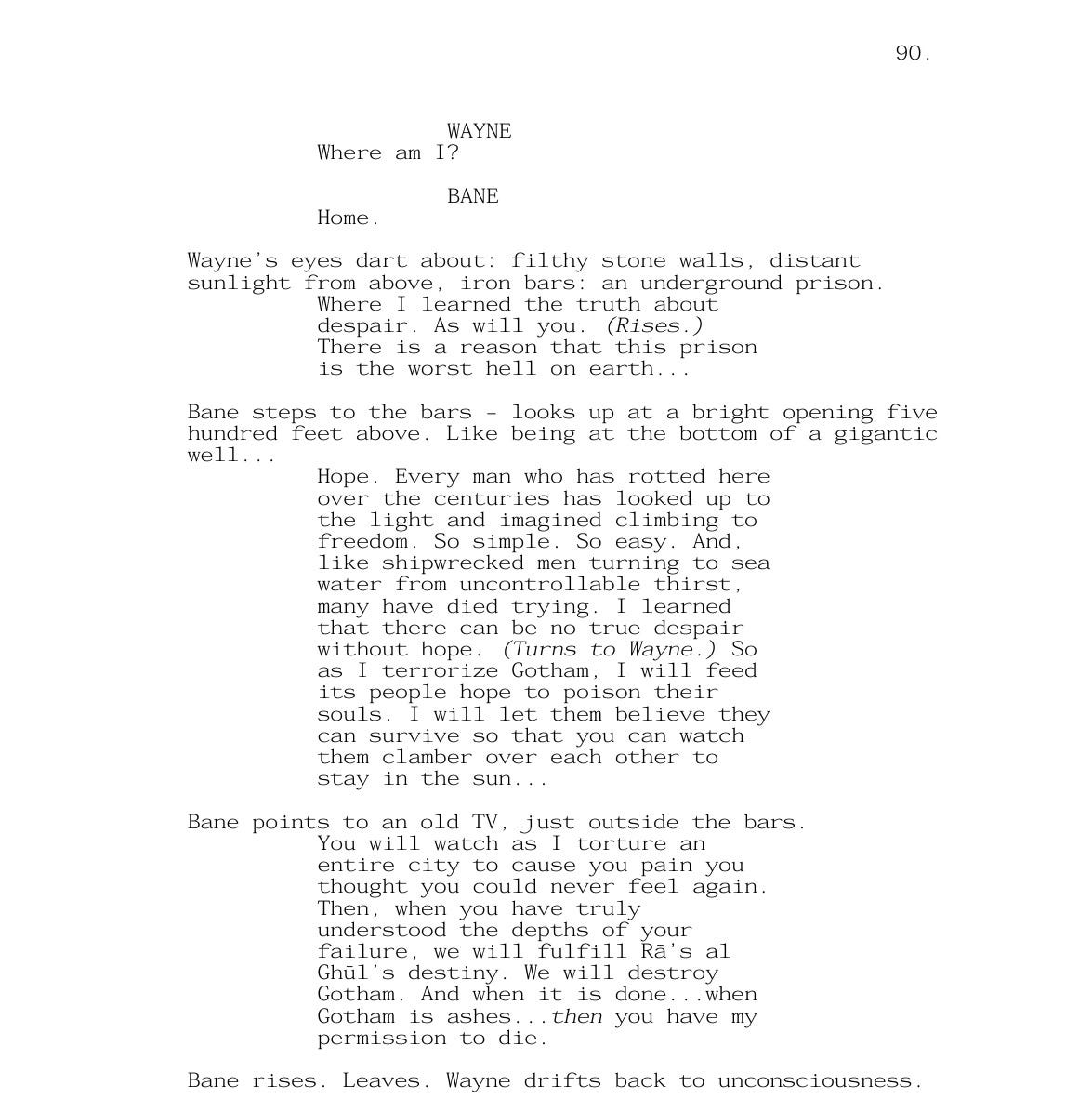
And most of all, it barrels through to a deeply emotional climax. I was deeply moved by the moment when Batman sacrifices his life to save Gotham…
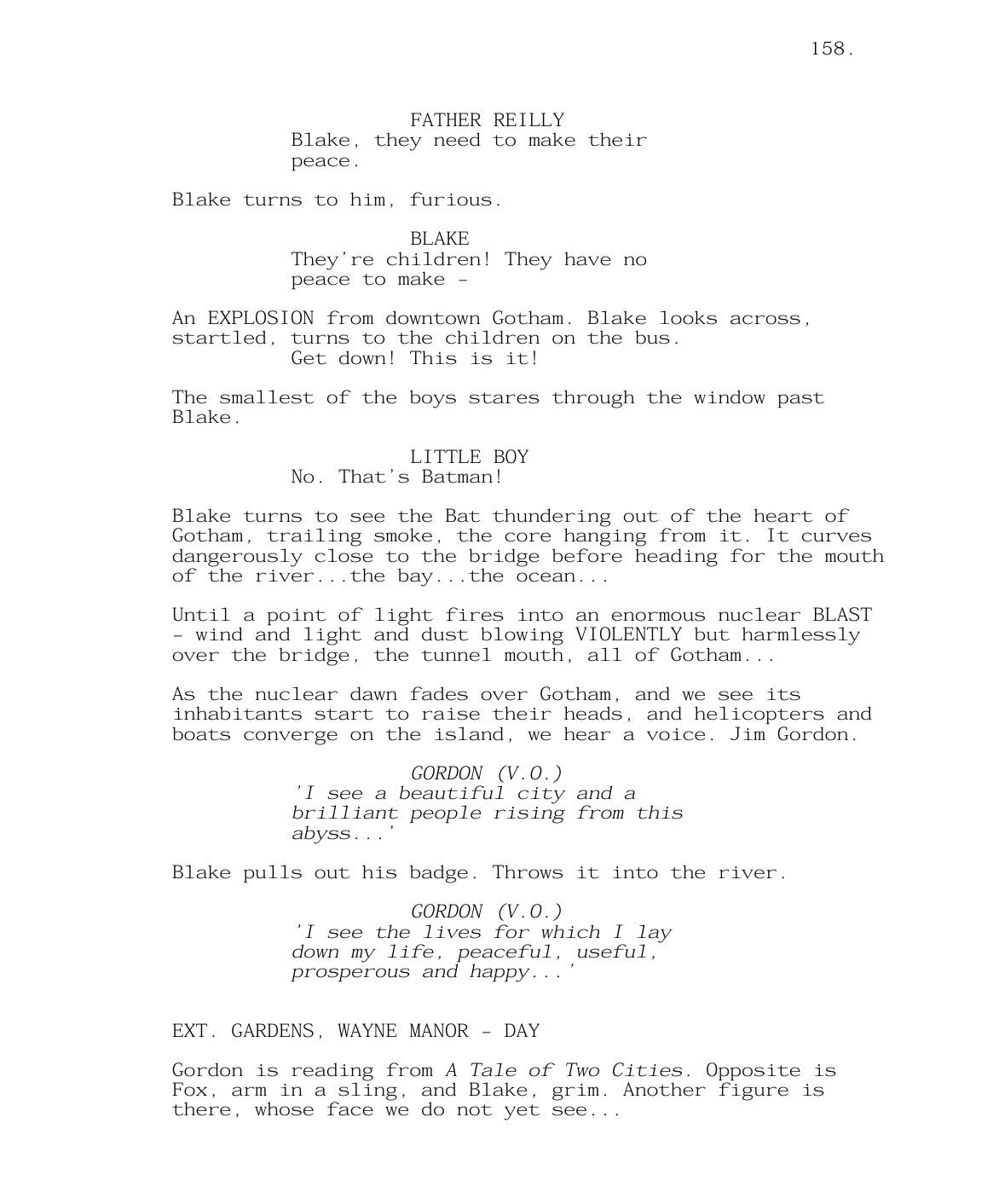
And there’s a nice tease of the Batman legacy continuing when Wayne gives Blake coordinates to the Batcave (although Blake’s legal name turning out to be ‘Robin’ is groanworthy).
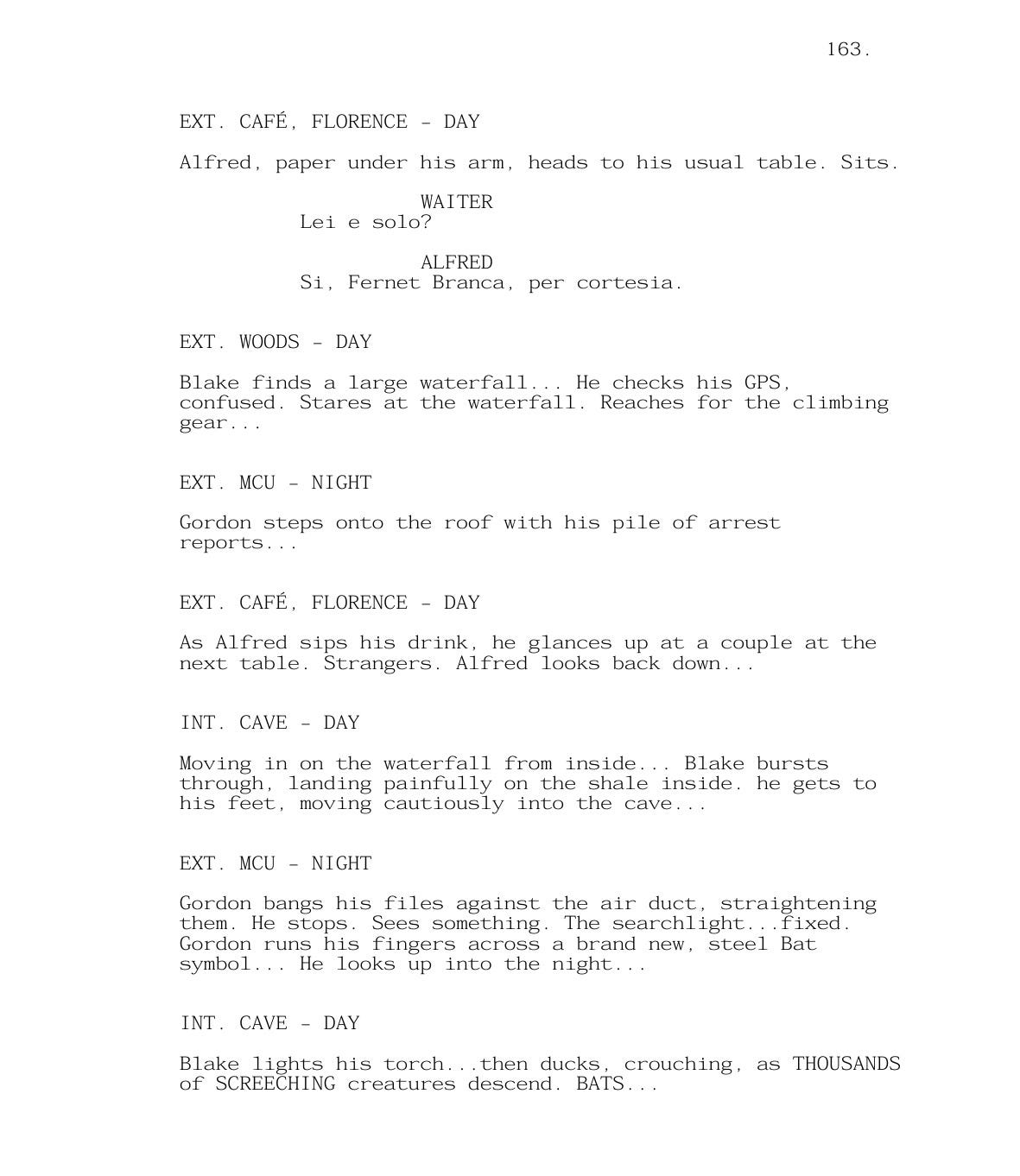
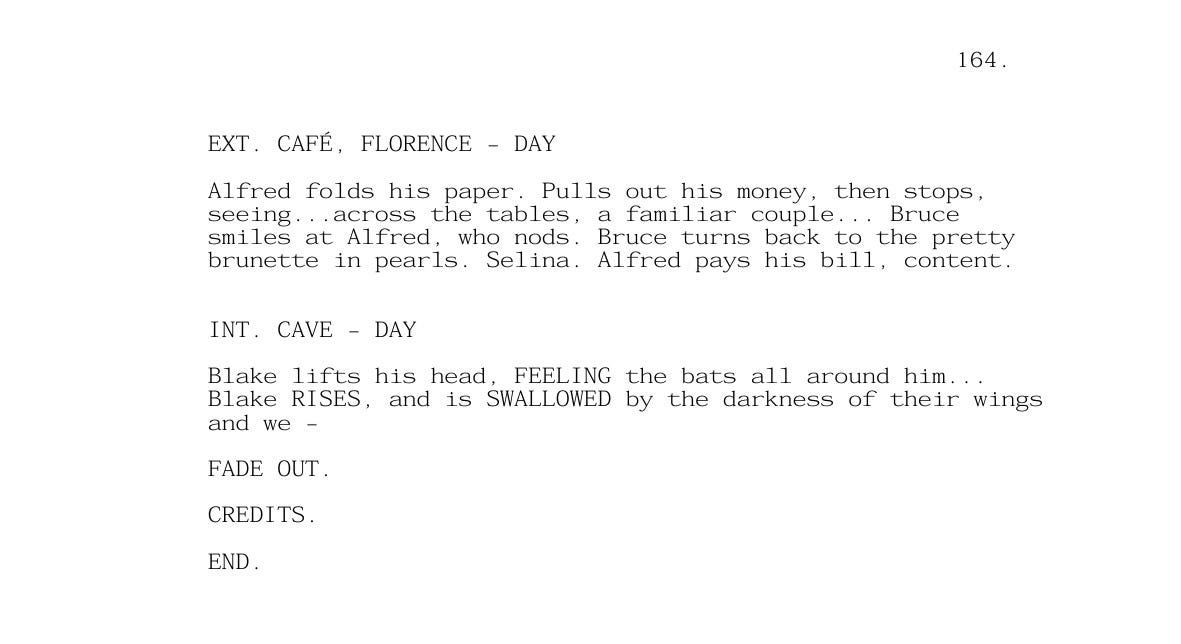
All good stuff. My qualms with the screenplay, however, lie with three pernicious problems.
Problem No. 1: Characters in The Dark Knight Rises make illogical and baffling decisions
Decisions that serve the plot than the character, and nobody suffers from this more than Gordon. Consider: early on, Gordon writes a speech which tells the truth about Harvey Dent, but decides not to go through with it. But instead of getting rid of it— cause, you know, sensitive information!— he carries it around with him for over 24 hours! And that’s when he falls into the clutches of Bane, who, wouldn’t you know it, takes the speech and conveniently uses it to complete his overthrow of Gotham!
Another mistake that Gordon makes is sending the entire police force into the sewers to apprehend Bane. I repeat: the entire police force. And wouldn’t you know it, Bane anticipated this—so he blows up the sewer tunnels and keeps them trapped underground for months, effectively removing any armed forces to oppose him. Gordon’s character is severely undermined as a result, and I wasn’t thrilled by it.
He’s not the only one, though. Batman commits greater offenses: The world’s greatest detective gets outsmarted by everyone. I know that the entire creed of The Dark Knight trilogy is to imagine what Batman would be like if he was real, but it seems that in the real world, Batman is a little stupid. He blindly trusts Selina and walks into a trap; he fails to intuit and prevent Daggett from ousting him; worst of all, he doesn’t run a background check on Miranda Tate, who—wouldn’t you know it— turns out to be the daughter of Ra’s al-Ghul and in league with Bane! I can live with Batman getting his ass handed to him by Bane, and even getting outsmarted by Bane, but everything else is just poor characterization.
Honestly, the smartest character in The Dark Knight Rises not named Bane is John Blake, who suspects that something serious is unfolding under their noses, investigating Daggett and learning the connection between him and Bane, and having guessed a long time ago that Bruce Wayne is Batman. Although his explanation for such a deduction makes you roll your eyes. There has to be a better explanation than what was given.
Now you might scream at me and say that it’s just a movie. I agree! But when characters take decisions that don’t line up with their characters and instead is in service to the plot, I reserve the right to complain.
Problem No. 2: The Dark Knight Rises has a Severe Lack of Batman
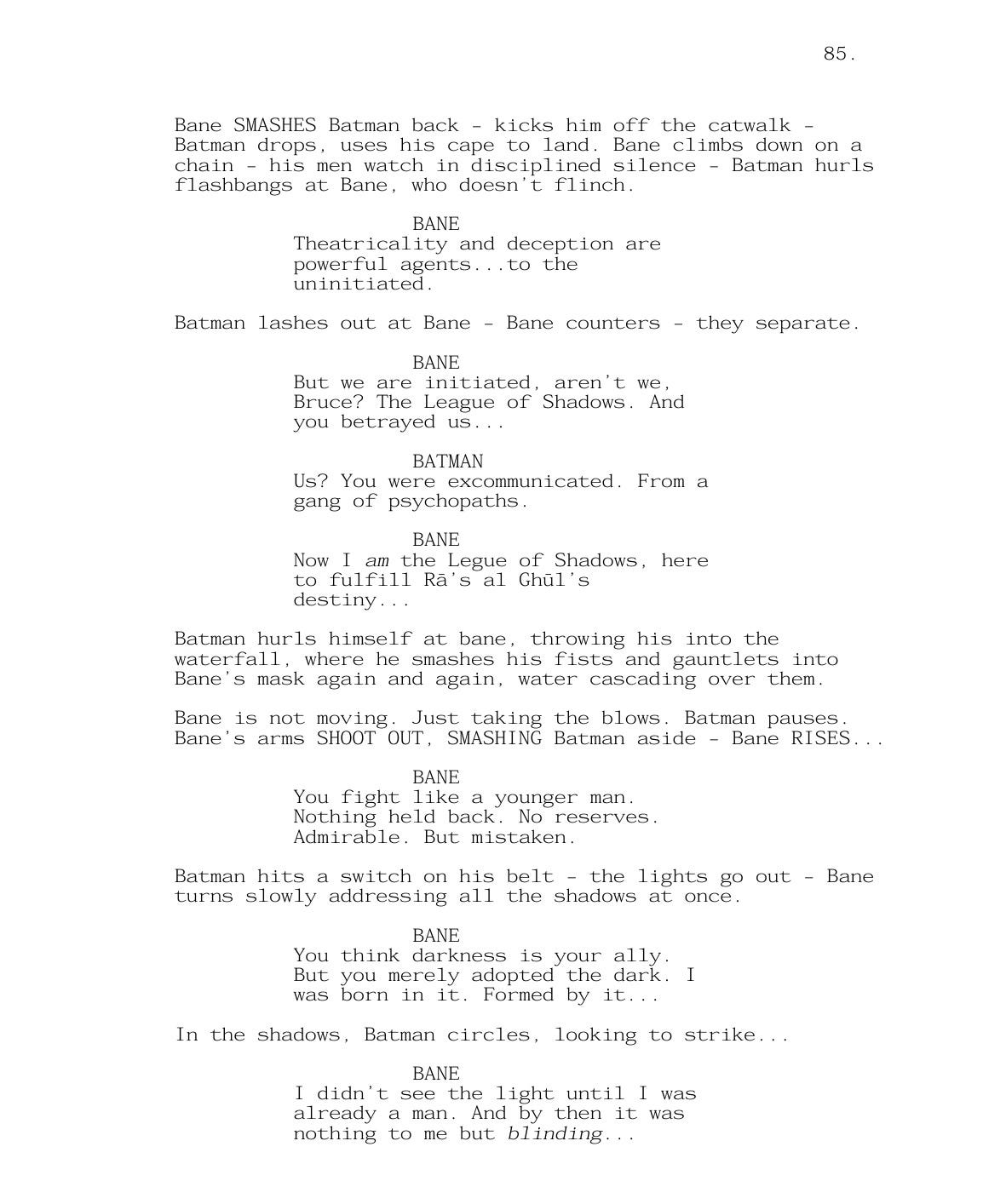
This isn’t hyperbole. Batman doesn’t make his (admittedly satisfying) appearance until page 53— pursuing Bane and his thugs in a motorcycle chase that pays homage to a scene from Frank Miller’s The Dark Knight Returns comic.
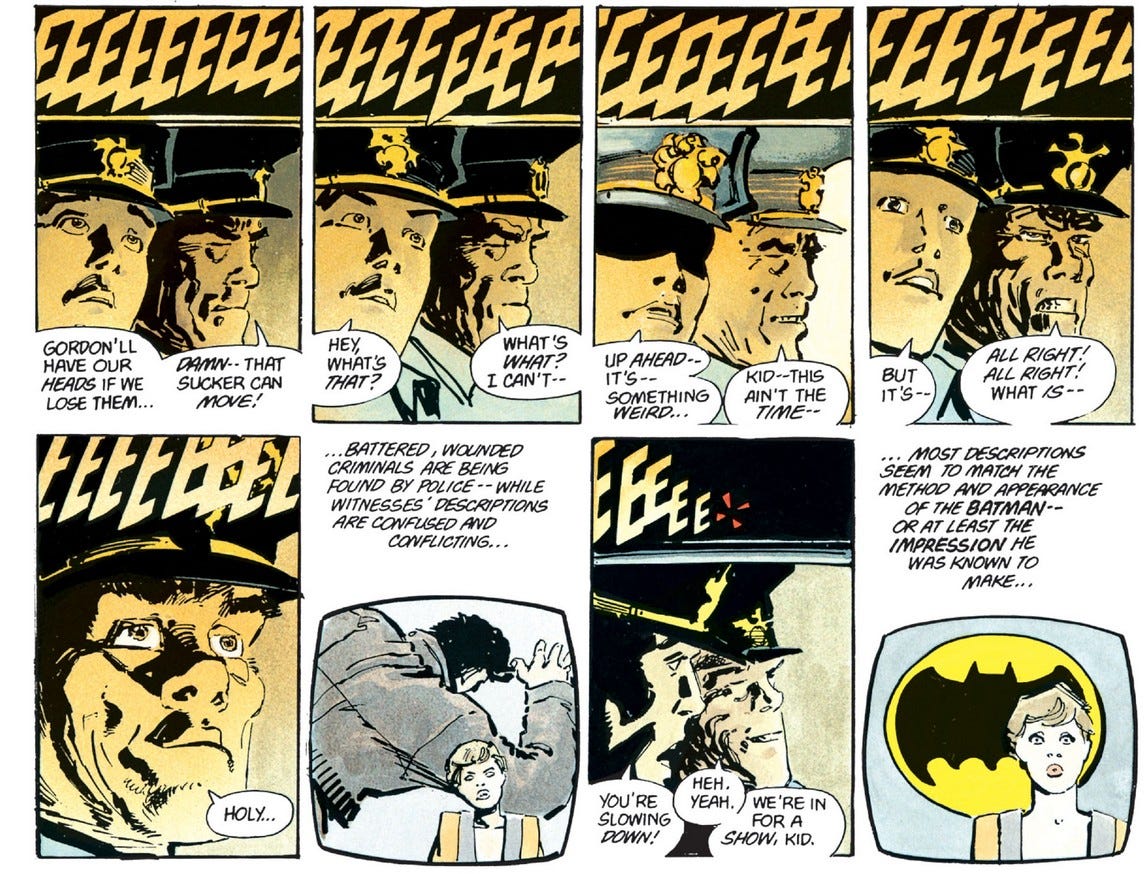
As in the script:
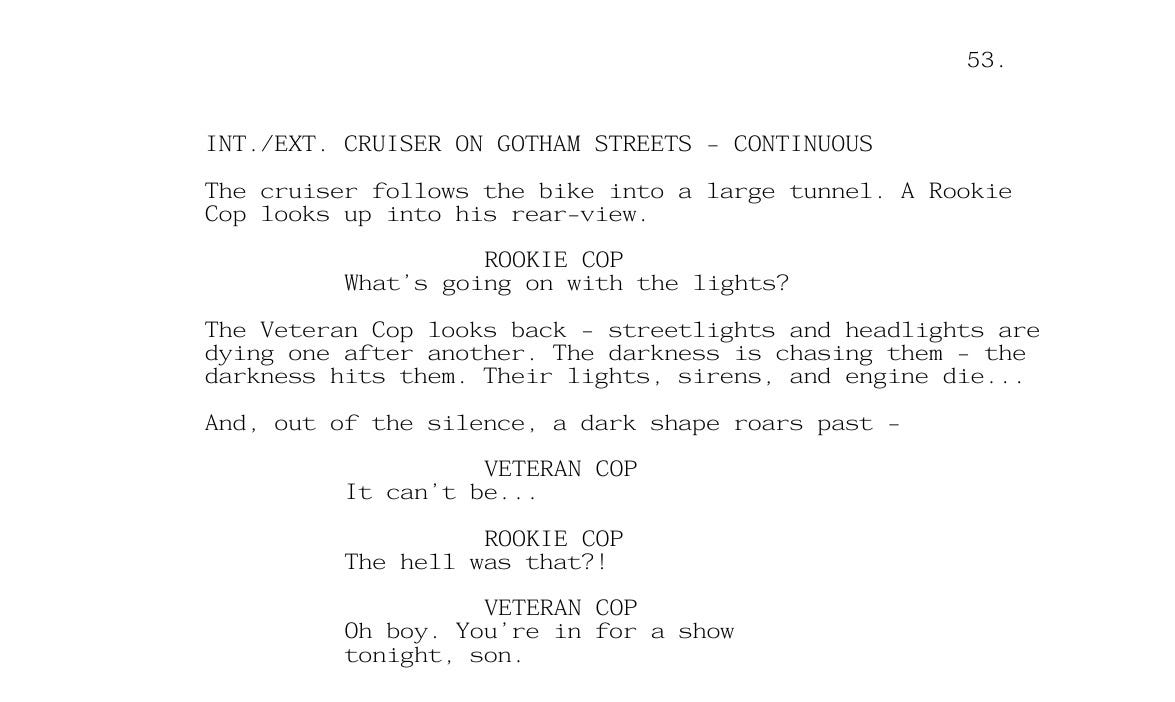
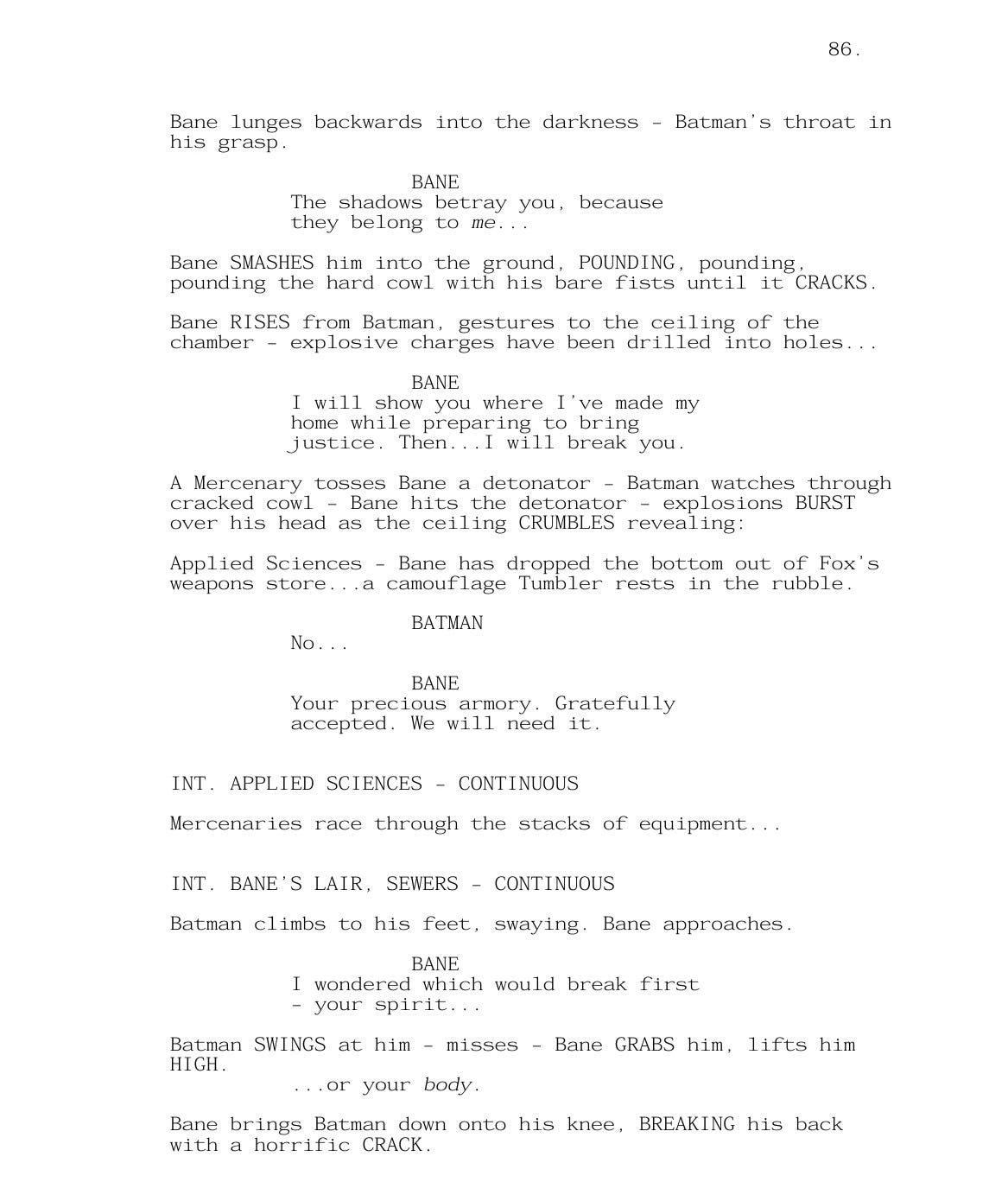
This runs for about nine pages (and includes Batman evading the Gotham police and helping Catwoman fight off Bane’s mercenaries). The next time Batman appears is when Catwoman leads him to Bane and he has his first fight— that lasts five pages. The final time that Batman turns up is towards the end; from the moment he emerges from the shadows to save Gordon until he disappears in a nuclear blast, that’s approximately 20 pages. So:
Chase + rooftop fight – 9 pages
Batman vs Bane – 5 pages
Batman returns to save Gotham – 20 pages
That’s only 34 pages! In a 164-page screenplay, Batman has less page time than Bane. Not cool. Yes, I get that Batman is really the story of Bruce Wayne, etcetera etcetera, but come on! Having Batman in action for one-third of a script is a serious letdown!
Problem No. 3: Slow start
Once it gets going, especially in Act 3 after Batman returns to Gotham in the winter, it gets going. But it takes a good while for the story to get up and running. For instance, it’s not until page 30, when Blake knocks on Wayne’s door and tells him that Batman needs to return that Wayne starts acting; even then, it takes another 16 pages before he commits to wearing the suit again.
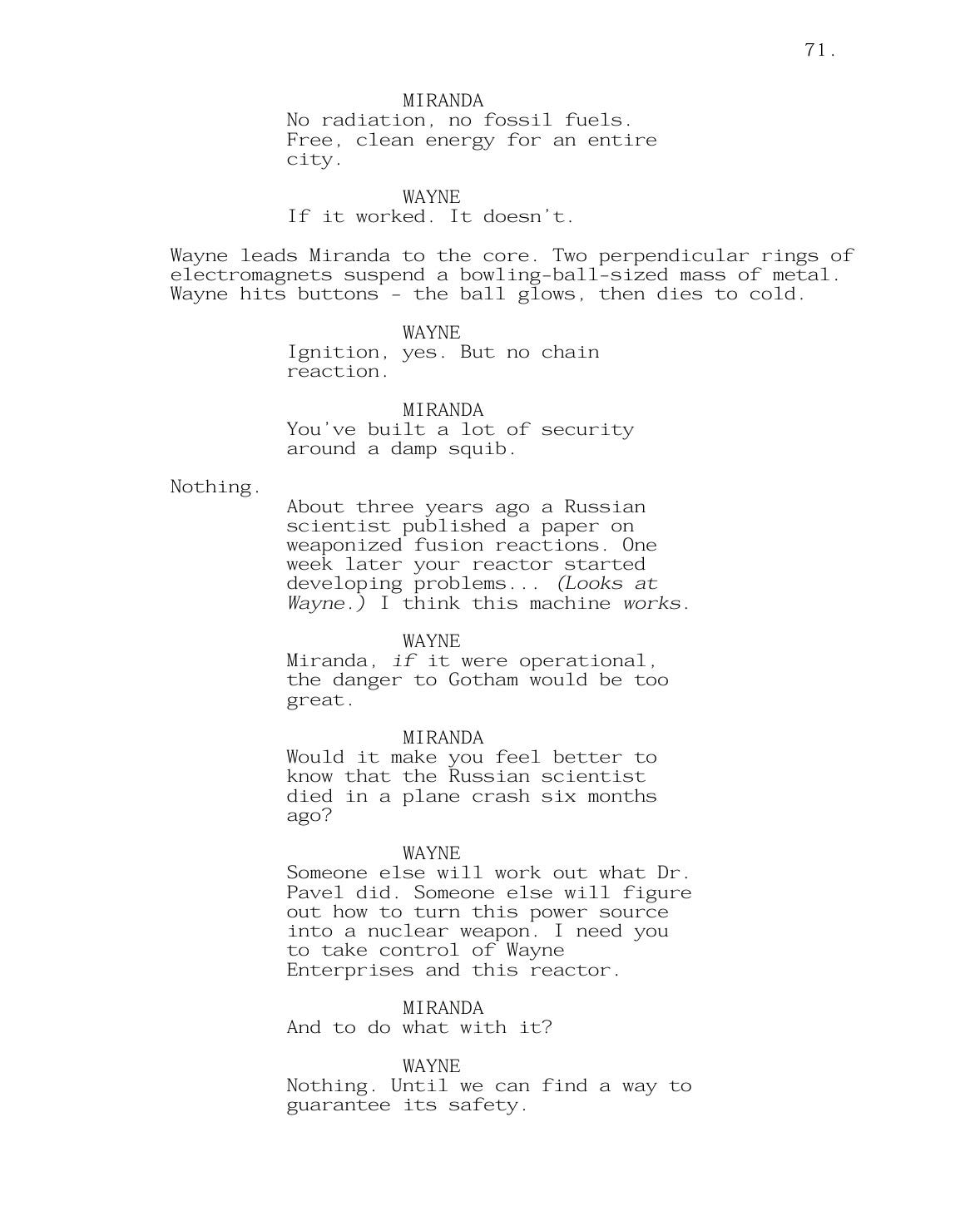
Granted, the script kicks off with a James Bond-esque opening. Yes, it uses the old trope of the enemy deliberately getting himself captured (yawn) but Bane hijacking a CIA plane to abduct Dr. Pavel is both fun and also establishes Bane as a formidable enemy. It’s great… until we have to wait for page 71 to get a hint about Dr. Pavel’s connection to the plot…
… and another 20+ pages to understand why Bane needed him.
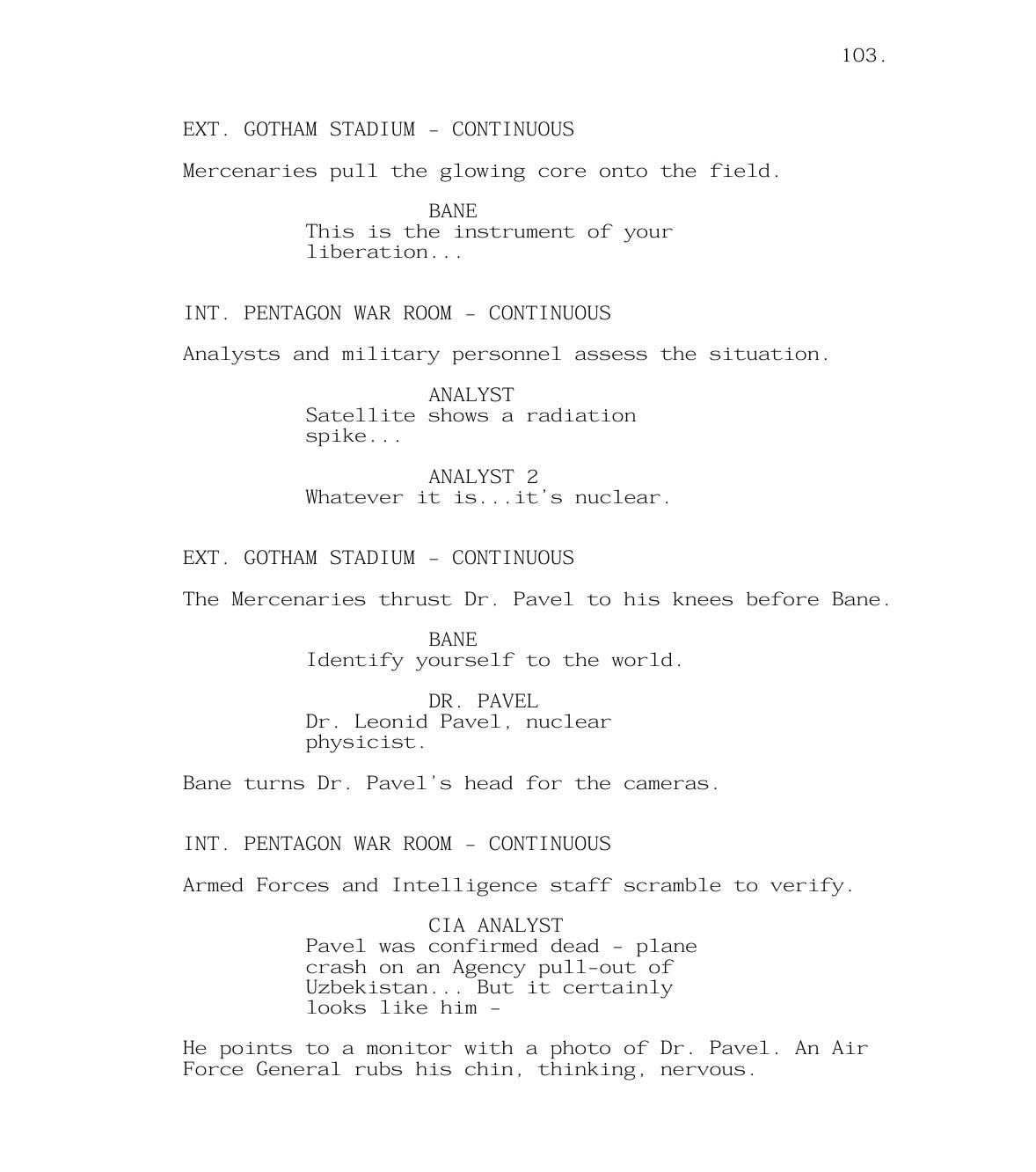
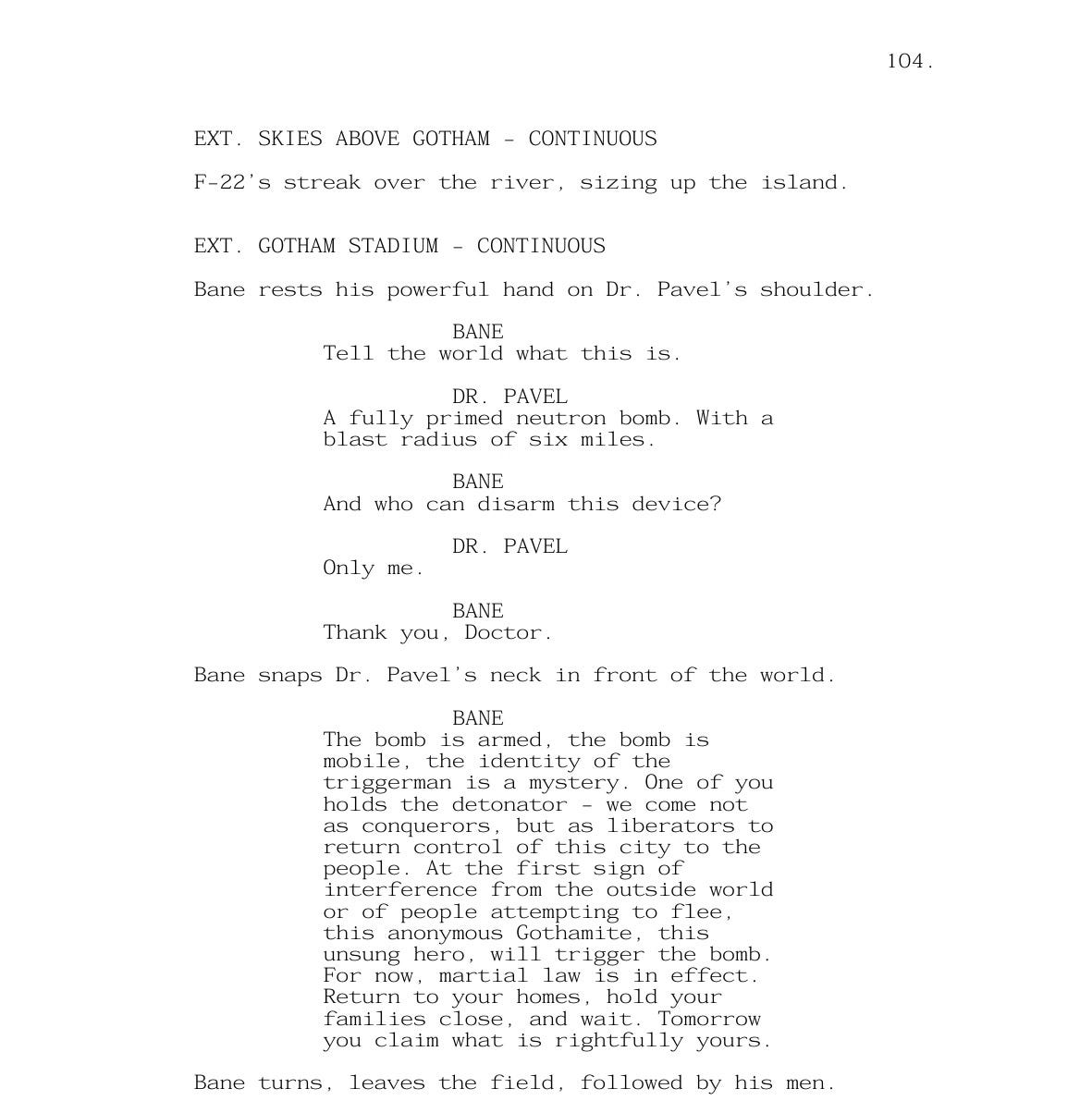
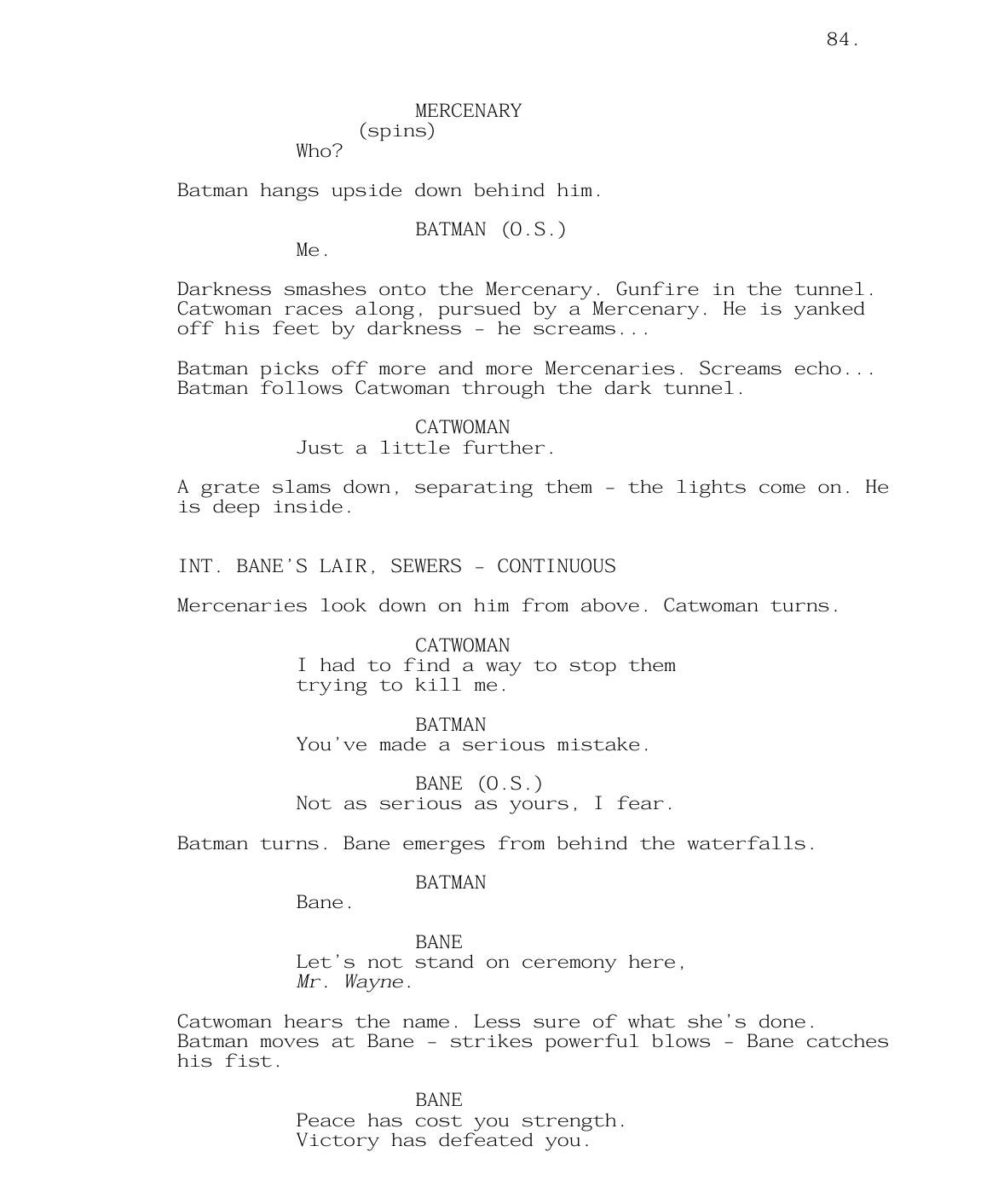
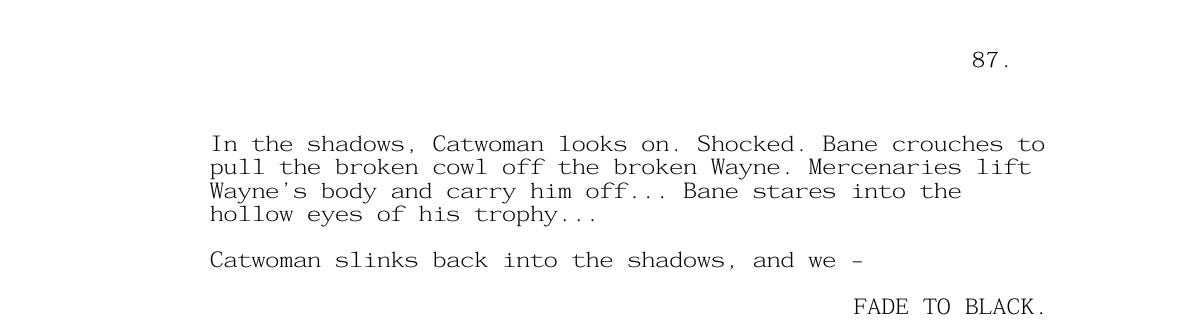
Meanwhile, Batman’s defeat at Bane’s hands feels like the Midpoint as it comes in around page 87; but the real Midpoint feels like Bane’s capture of Gotham City, which only begins around page 912.
After The Dark Knight succeeded beyond anyone’s expectations, Christopher Nolan and co-writer David S. Goyer met up in 2008 to discuss the possibility of a third instalment. Nolan was reluctant about committing to a third film unless he could do something good; he also had to meet the high expectations set by the first two films. It’s possible that we’ll never truly know, but it appears that there was never a real plan to make a Batman trilogy, which meant configuring the third instalment to wrap all three stories together. Goyer recollects that what sparked the possibility of a direction was the final scene of the script as well as the trilogy. Almost four years later, the last scene in The Dark Knight Rises would be exactly what they spoke about.
“It remained completely unchanged,” Goyer says. “We both knew in our hearts that we were onto something special. I have to tell you, having finally seen everything strung together a little while ago and seeing that scene, I got a complete lump in my throat.”
Like an archaeologist slowly unearthing a fossil, the theme of a third film began to emerge: ‘the truth will out.’ Nolan credits his brother, Jonathan, with the idea that their villain rise up from the city’s sewer system to symbolize “the image of something long suppressed rising up”.
“It was [also] Jonah who came up with this idea of this underground prison, open to the sky, too, which is just a phenomenal idea,” says Nolan. “I had told him that Bruce needs to be broken down and taken to this place and it’s got to be somewhere exotic. What’s interesting is, it never would have worked as anything other than an underground prison. It doesn’t work if you imagine it in a building but as a hole in the ground, as a pit, then it has resonance, like being trapped at the bottom of a well.”
In Nolan’s Dark Knight trilogy, the villains were always selected to meet the story’s requirements. in Batman Begins, Ra’s al Ghul arose from the need to have a villain with “a paternal quality”, as Goyer describes it, to be a father figure to the orphaned Wayne; Scarecrow fitted the theme of phobia. For The Dark Knight, the Joker3 embodied the anarchy and chaos that disrupts Batman and his allies’ efforts to restore order to the city.
“Ra’s al Ghul is very much this Bond villain, an intellectual who’s got a philosophy he’s trying to put on the world,” Nolan explains. “The Joker is mad. He’s a serial killer.”
For the third film, Warner Bros. wanted the Riddler; Nolan resisted. He wanted a different kind of villain who could break Batman; in the comics, only one villain had ever truly succeeded in that: Bane.
Adapting Bane for Nolan’s Batman world needed serious reinterpretation. Comic book Bane is HUGE— as in, half the size of The Incredible Hulk. He’s an escaped prisoner from South America who goes to Gotham to destroy Batman. He wears a bright wrestling mask that also obscures the tubes pumping the powerful Venom super-steroid that gives him his strength.
In The Dark Knight Rises, Bane is reconfigured as a revolutionary; to bring the trilogy full circle, he is now a former member of The League of Shadows, mentored by Ra’s al-Ghul. His mask is a practical apparatus that pumps in an anaesthetic to help cope with unbearable pain. His plan to take over Gotham is less to do with becoming a crime lord and more to obliterate it under a veneer of demagoguery.
“Bane needed to be the monster,” says Nolan. “It’s Jack Palance in Shane; it’s Darth Vader; it’s Kurtz. He’s a soldier.”
It was also Jonathan Nolan who fought to introduce Selina Kyle a.k.a. Catwoman, Batman’s famous love interest, for this instalment. Christopher Nolan and Goyer were initially unconvinced. For the former, Catwoman reminded him of Eartha Kitt’s campy portrayal in the Batman ’66 series.
“Chris often comes from a position of, ‘Why should we do this?’ You know, presumed guilty,” explains Jonathan Nolan. “But I said, ‘What we’re endeavouring to do here is tell a complete take on the Batman mythos. And a complete take on the Batman mythos without that character for me was sacrilegious. You’ve gotta have her, because she has a delicious greyness to her that helps define who Batman is.
“She keeps wavering on this line of, ‘Is she a good guy or a bad guy?’” he continues. “Well, she’s kind of neither. And that’s why, to me, that relationship and that character only enhances the universe — and the Batman character.”
Thanks to the younger Nolan’s persistence, though, the director and Goyer soon came around and started seeing the character “as an off-the-grid grifter, who spends much of The Dark Knight Rises in pursuit of the ‘clean slate’ technology that will allow her to erase her criminal past.”
What are the influences of The Dark Knight Rises?
Just as Batman Begins and The Dark Knight took inspiration from Batman comic lore, The Dark Knight Rises was heavily influenced by the famous ‘Knightfall’ (1993) comic book story arc, in which Bane was introduced and broke Batman’s back. The script also drew heavily from The Dark Knight Returns (1986), in which an older Batman returns after a decade-long absence; as well as ‘No Man's Land’ (1999), in which Gotham is sealed off from the rest of the world following an earthquake. But one of the biggest inspirations came from outside the comics: Charles Dickens’ classic A Tale of Two Cities, a historical novel set during the violent upheaval of the French Revolution. When Jonathan Nolan handed in his first draft, he told his brother, “You’ve got to think of A Tale of Two Cities, which, of course, you’ve read.”
“Absolutely,” said Nolan. But as he read the script, he realized he’d never read the novel and quickly ordered a Penguin edition. The novel heavily influenced the tone of the story. If Batman Begins was a standard superhero origin story, and The Dark Knight was a crime drama in the vein of Michael Mann, then The Dark Knight Rises would be a historical epic or a disaster film.
“The third one, we needed to blow up bigger, because you can’t scale down,” says Nolan. “The audience doesn’t give you any choice, but nor can you go back and do what you did before. So you’ve got to shift genres. We went for the historical epic, the disaster film—The Towering Inferno meets Doctor Zhivago. The way Jonah put it to me is like, ‘Look, we’ve just got to go there with the third act of the film.’ We’d made two films and everybody’s made all these films about ‘This awful thing’s going to happen.’ We needed to go there. ‘All of these films have threatened to turn Gotham inside out and to collapse it on itself. Let’s just go there and have the horrible thing happen.’”
Some of the influences from A Tale of Two Cities are direct. The most notable is Gordon reading the book’s famous last lines at Bruce Wayne’s grave; others are more cosmetic. Daggett’s assistant is named Stryver, after the bombastic social-climbing lawyer in the novel; Bane’s right-hand man is named after the book’s British spy, John Barsad. The biggest influence, however, was in its depiction of a city overturned by an uprising, chasing revolutionary justice as an excuse to mete out cruel punishments. Both A Tale of Two Cities and The Dark Knight Rises also feature a prison breakout— the former in the Storming of the Bastille, the latter in the release of prisoners from Blackgate Penitentiary. Compared to the first two instalments, this script has more political undercurrents, though Nolan insists that he never sets out to make political films.
“The Dark Knight films are not political acts,” says Nolan. “They’re exploring ideas of fears that are important to all of us, whether on the Left or the Right. The Dark Knight is about anarchy, and The Dark Knight Rises is about demagoguery. It’s about the upending of society.
“[The Dark Knight Rises] is as close as I’ll get to adapting A Tale of Two Cities,” adds Nolan.
I think that what handicaps The Dark Knight Rises is the burden to connect it to Batman Begins. There certainly is a thrill to the ‘it’s all connected’ aspect, but one wonders if the story would have been better off without it. Still, it is more useful (and better) to measure the script on what it is instead of what it could have been; and for all its flaws and brief Batman appearances, The Dark Knight Rises is ambitious and mostly sticks the landing.
Notes:
The Dark Knight Trilogy: The Complete Story Of Christopher Nolan’s Batman Films By Dan Jolin (Empire)
The Nolan Variations: The Movies, Mysteries, and Marvels of Christopher Nolan – Tom Shone (2020)
Thanks for reading this post! If you liked this and want to support my work, subscribe for free to receive new posts from Script By Line.
Had Heath Ledger, who played the Joker in The Dark Knight, not died, it’s possible that he would have returned for a third instalment. Instead, Nolan chose to address the Joker’s presence in the second sequel by not mentioning the Joker at all. Nolan says, “That is something I felt very strongly about in terms of my relationship with Heath and the experience I went through with him on The Dark Knight. I didn’t want to in any way try and account for a real-life tragedy. That seemed inappropriate to me. We just have a new set of characters and a continuation of Bruce Wayne’s story. Not involving The Joker.”