


Towards the end of the 1970s, something unexpected happened in Hollywood that changed the direction in the kinds of movies that the major studios made. That unexpected something, of course, was Star Wars. Before Star Wars, Hollywood made dramas, comedies, musicals, or epics; after Star Wars, Hollywood started chasing the kind of movies and genre fare that low-budget independent filmmakers like Roger Corman or B movie filmmakers used to make. In his book, How I Made a Hundred Movies in Hollywood and Never Lost a Dime, Roger Corman comments on this as he started making fewer movies by the 1980s:
The market for low-budget exploitation films was shrinking because the majors were making the same kind of films—science fiction, sword and sorcery, action/adventure, youth comedy, horror films—at an average cost of $15 to $20 million and getting much bigger production value on the screen.”
Weirdly, the very movies that the major studios stopped making— dramas, melodramas, comedies— would get picked up by the independent film producers, and today, move towards TV/streaming. Everything truly is cyclical.
Take a look at the top-grossing films in America between 1978 and 1987 and see if you can spot the difference:
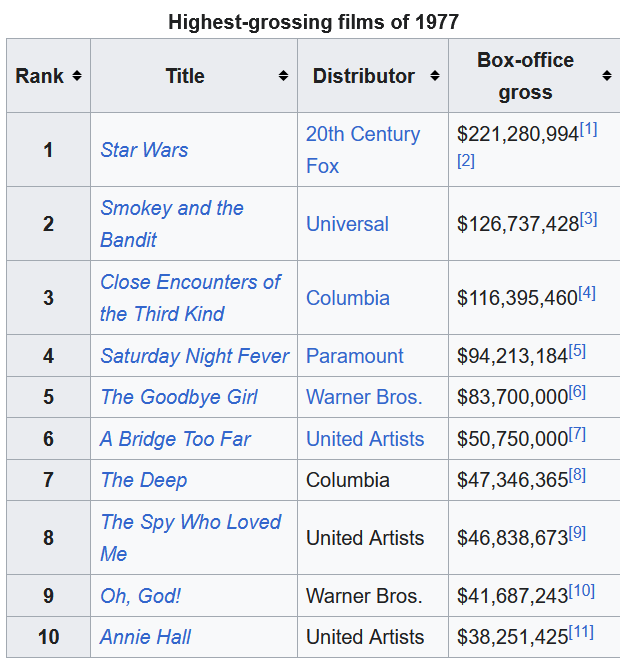
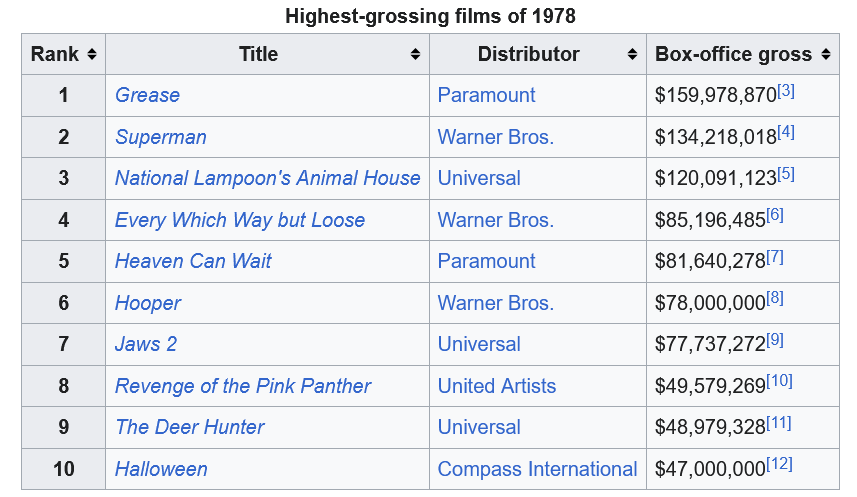
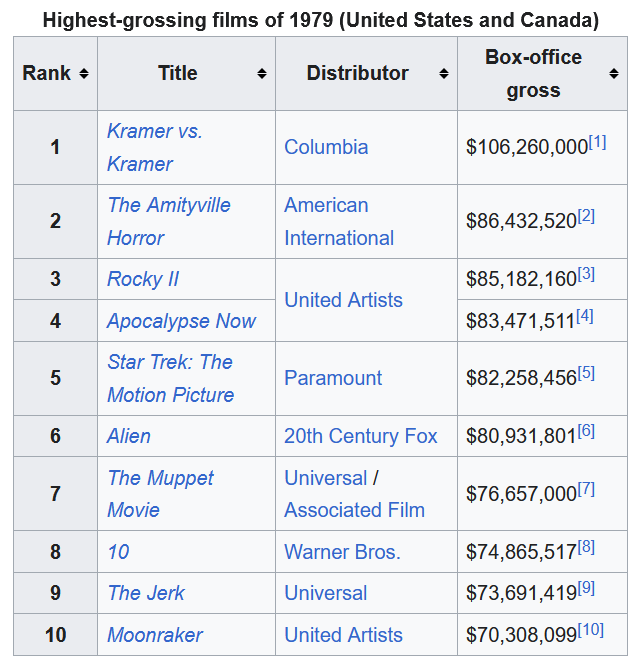
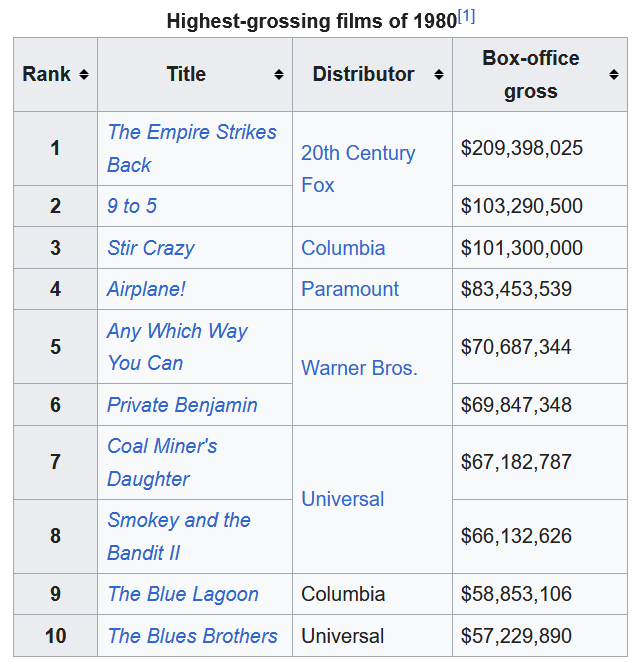
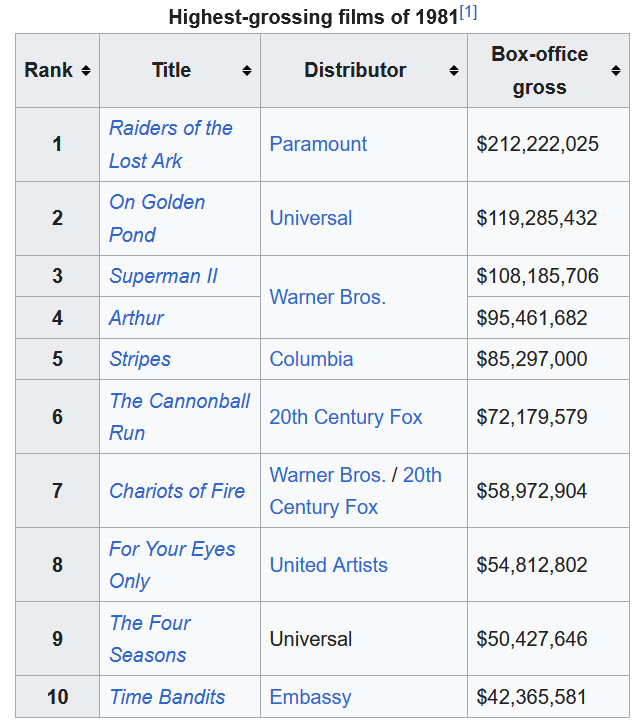
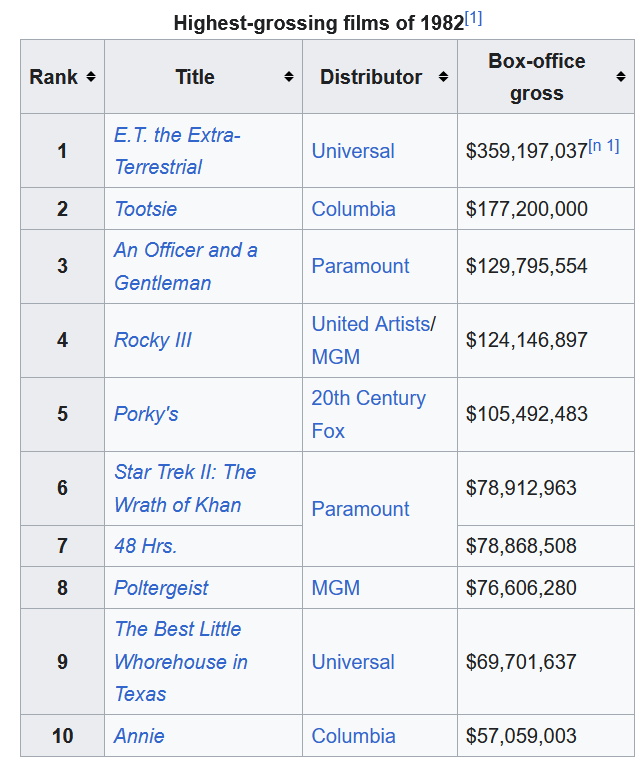
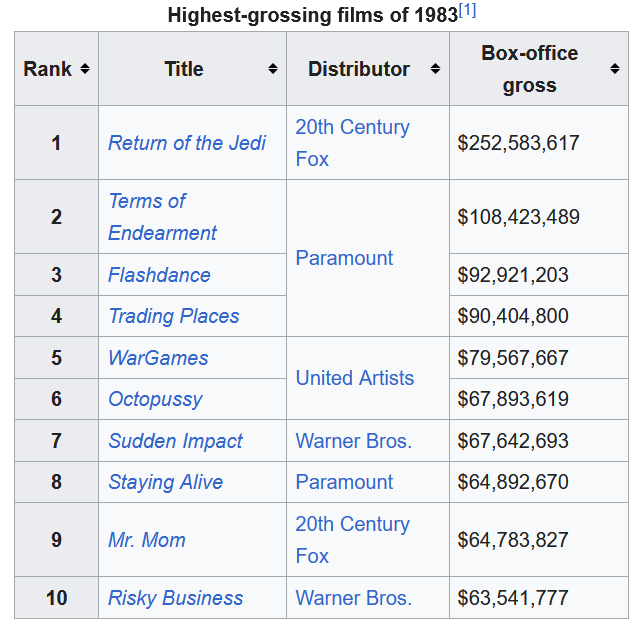
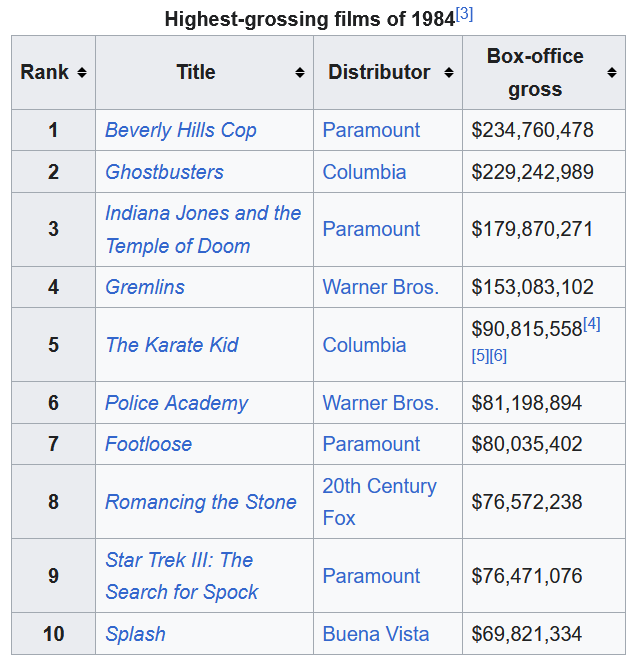
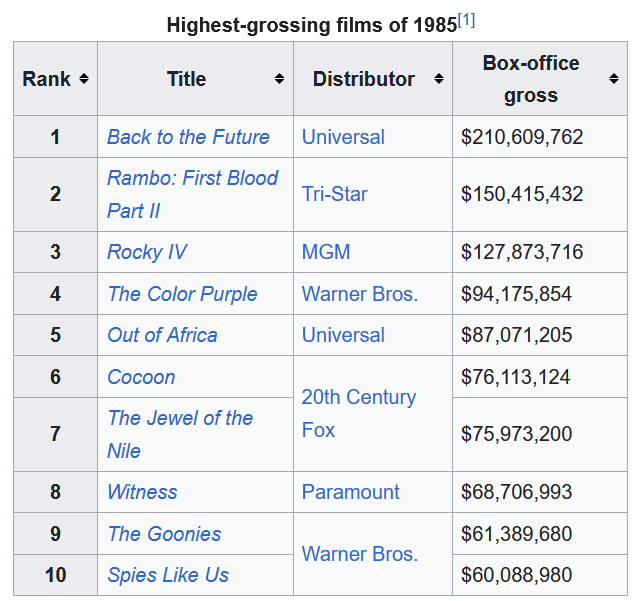
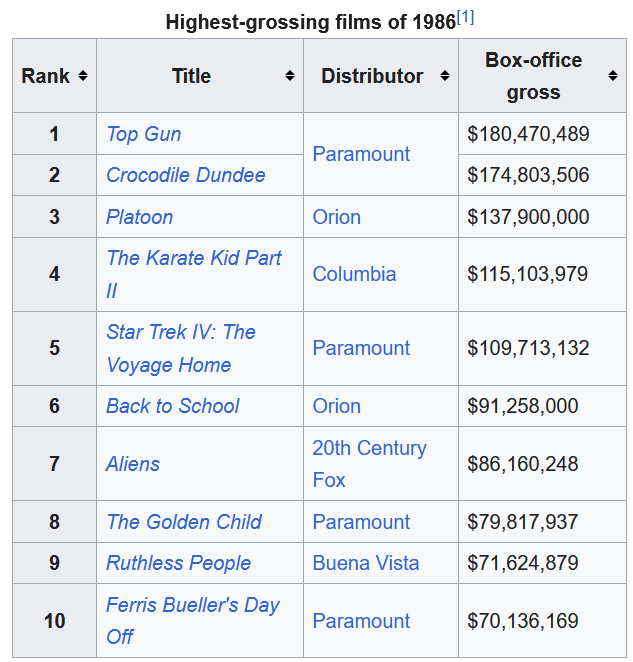
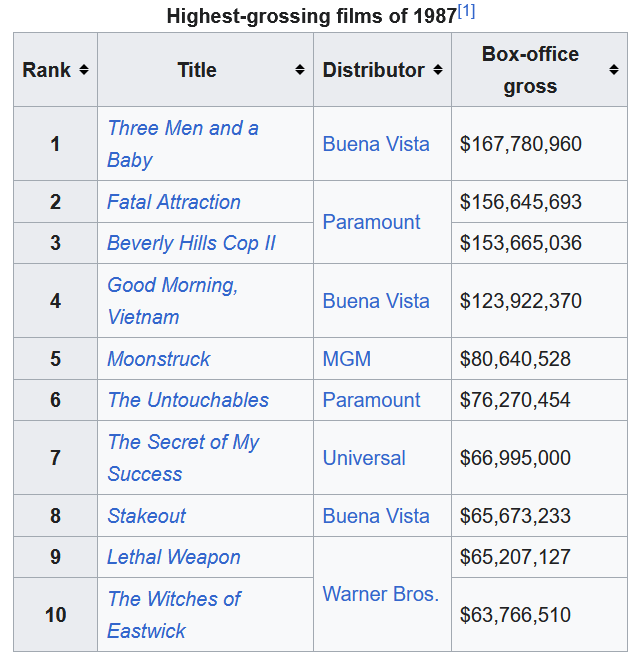
Fewer comedies and dramas, and an uptick in genre fare; though there was still an appetite for big-budget dramas. In 1983, Terms of Endearment was the second-highest-grossing film after Star Wars: Episode VI - Return of the Jedi.
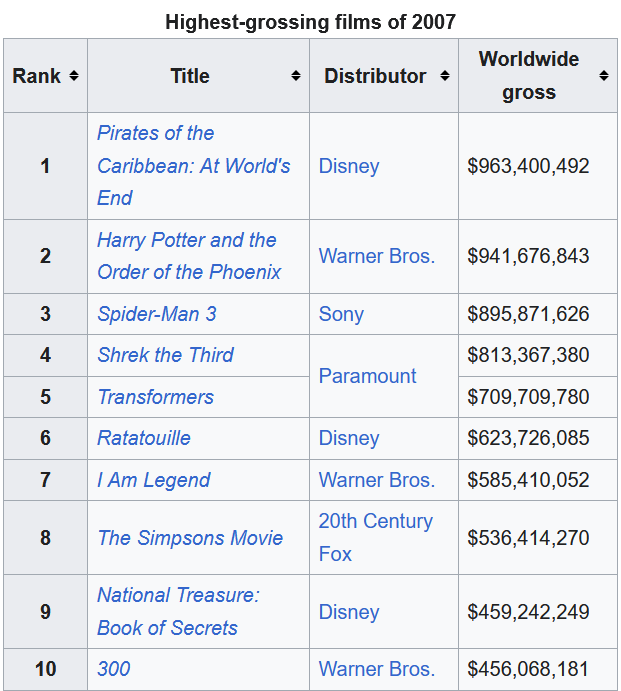
Fast-forward to 2007…
… to 2017…
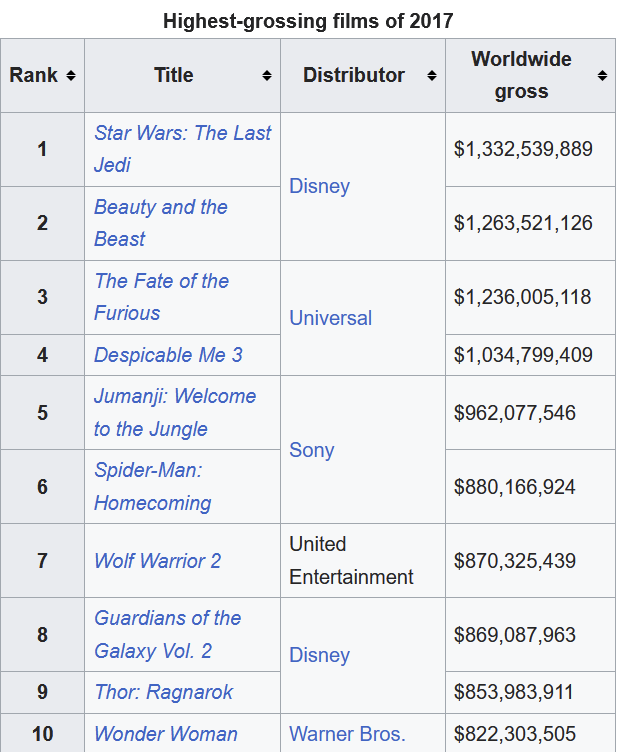
… and the picture changes so dramatically it feels like whiplash. The straightforward dramas and comedies are gone, or subsumed into other genres— Jumanji is a comedy! So is Guardians of the Galaxy Vol. 2 and Thor: Ragnarok!. Everything is genre genre genre, especially when studios realized this stuff exported well in other countries as language stopped being too much of a barrier issue.
Back to the 1970s.
Star Wars wasn’t the first sci-fi movie made by a big movie studio— although it’s really more space opera— but it was still a genre rarely touched by the majors. The last time it did so was in the late 1960s, such as Fantastic Voyage (1966), 2001: A Space Odyssey (1968), and Planet of the Apes (1968). But the the cataclysmic success of Star Wars prompted the big players to sit up and pay attention to all the stuff they’d previously sneered at.
In fact, the big studios copied “The Peter Pan formula” pioneered by independent filmmaking company American International Pictures— or rather, its publicity department— that is STILL being used today, even if they don’t consciously realize it:
A younger child will watch anything an older child will watch;
An older child will not watch anything a younger child will watch;
A girl will watch anything a boy will watch1;
A boy will not watch anything a girl will watch2;
Thus, the demographic that they needed to appeal the most to was the 19-year-old male. Ergo, “The Peter Pan Syndrome”.
But that’s a different story altogether. My point is that in 1977, the studios saw that kids were flocking to watch Star Wars, drawing in the kind of audiences that would normally gravitate towards the low-budget stuff, and saw that science fiction was the hot new genre. And 20th Century Fox wanted to capitalize on it.
The only script it had sitting on their shelves from that genre, however, was a story from two relative unknowns: about a crew of space miners who explore a distress call from a strange planet and encounter a terrifying extraterrestrial species…
The studio decided to leap on it.
‘Jaws in space’. That was the pitch.
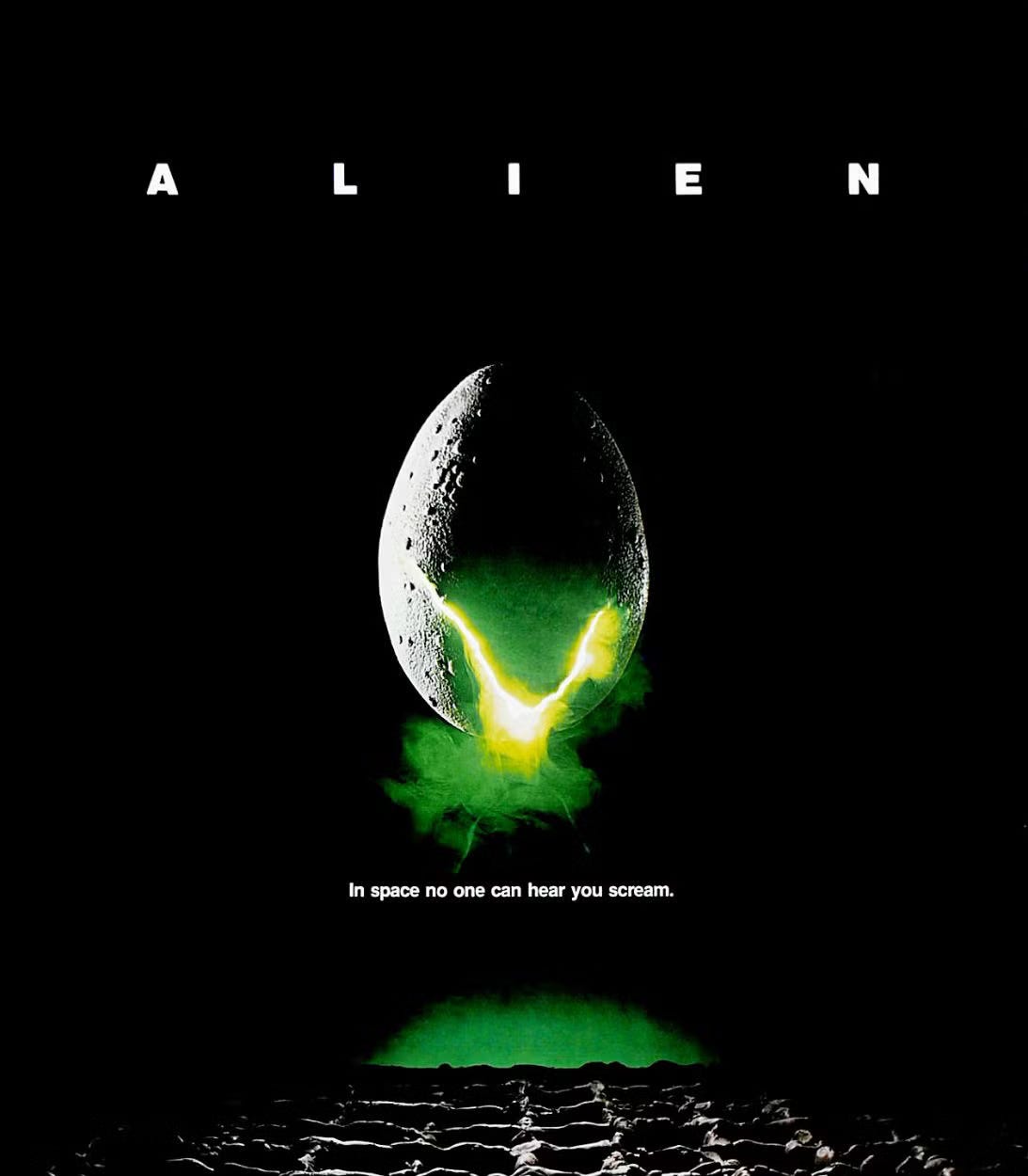
Simple, memorable, and definitely bound to catch the attention of eager studio executives desperate to be responsible for a colossal-sized hit.
The story of Alien is credited to Dan O’Bannon; although disputes arose over who deserved final screenplay rights. I’ll get to that later, but what is indisputable is that the O’Bannon came up with the idea.
The idea, in fact, was an amalgamation of everything that O’Bannon liked as a child. In fact, he’s famously gone on the record to say: “I didn’t steal Alien from anybody. I stole it from everybody!”
Some of these influences include:
The Thing From Another World (1951) - Professional group pursued by a deadly alien creature through a claustrophobic environment3
Clifford D. Simak’s short story ‘Junkyard’ (1953) – A crew discovers a chamber full of eggs on an asteroid
Forbidden Planet (1956) – A ship is warned not to land on a planet and when they disobey, a mysterious creature picks them off one by one
Philip José Farmer’s Strange Relations (1960) – Alien reproduction
Planet of the Vampires (1965)4 – Heroes on unexpected planet discover giant alien skeleton
EC Comics horror titles – Monsters eating their way out of people
O’Bannon also grew up on a farm near St. Louis, Missouri; his fascination with insects and their anatomies no doubt fueled his interest in non-human features and habits.
I want to pause for a moment here to point out something in the above influences.
Apart from their sci-fi roots, a genre that O’Bannon loved, all of these films and stories came out between 1950 and 1965. O’Bannon- born in 1946- grew up reading and watching these stories as a child. And just as George Lucas did with Star Wars, he took all the things he enjoyed as a child and poured them into Alien.
That’s why it’s important for artists— of all kinds— to read and watch widely especially as children because it helps to:
Identify what kinds of stories you like and would like to tell;
Be able to borrow so widely and disparately that you end up creating something entirely original out of familiar parts.
The latter is something that I picked up on when studying for my undergraduate degree as a psychology student. I was taught that to write academic papers, we needed to cite at least five papers. Less than five, our paper was at high-risk of being flagged for plagiarism; more than five, our paper would become more original.
Over time, I’ve come to see that the same applies to creativity.
If you borrow from less than five other films/books/ideas, it’s plagiarism or worse, unoriginal.
But if you take from more than five other films/books/ideas, you have something that increasingly becomes more original.
The genesis of Alien began with a short script that O’Bannon wrote years ago called Memory. Nothing came out of it.
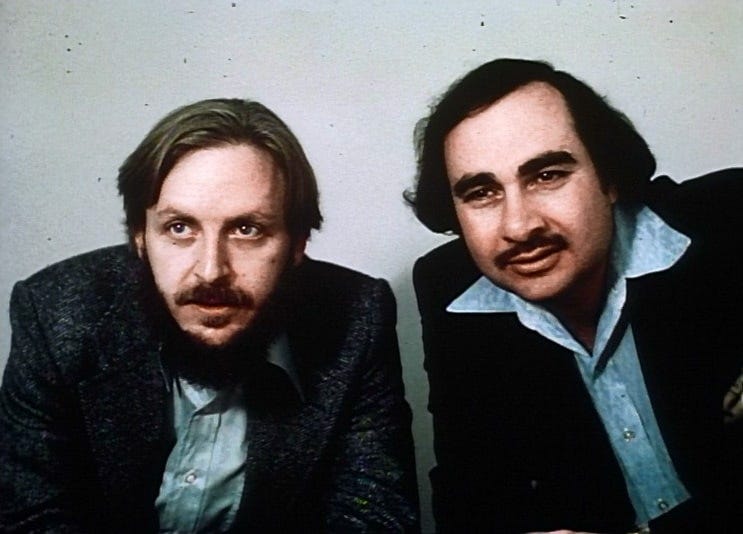
In the 1970s, O’Bannon found himself homeless and broke in Los Angeles after Alejandro Jodorowsky’s attempted adaptation of Dune fell through— he’d been hired to supervise special effects. Living on the couch of his friend Ronald Shusett and in need of money, he and Shusett decided to write a spec script that studios would be eager to buy. That’s when they picked up O’Bannon’s unused Memory script. Shusett suggested it with another O’Bannon World War 2 story about gremlins infiltrating a B-17 bomber, only set on a spaceship.
Bit by bit, the script started falling into place. Initially, it was called Star Beast. Later, they changed it because O’Bannon disliked it; noting the number of times that the word ‘alien’ appeared in the script, and liking its simplicity— it was both noun and adjective— they switched it to Alien.
But the two stalled when it came to figuring out how the alien could get onto the ship. It had to be interesting, not merely “it just snuck in”.
One night, Shusett shook O’Bannon awake. He said, “Dan, I think I have an idea: the alien screws one of them [...] it jumps on his face and plants its seed!”
O’Bannon said, “Oh my God, we’ve got it, we’ve got the whole movie.”
Now here comes an interesting part that signals the growing shifts and trends in Hollywood.
At the time they O’Bannon and Shusett took their spec script around, Star Wars still hadn’t released, and the major studios still looked down on science fiction. O’Bannon and Shusett were about to sign a deal with Roger Corman’s New World Pictures— a film that specialized in that kind of sci-fi movie— when a friend offered to get them a better deal and passed the script to Gordon Carroll, David Giler, and Walter Hill. The trio had formed a production company called Brandywine, and had a deal in place with 20th Century Fox.
They couldn’t have known it at the time, but when Brandywine agreed to pick up the script, it was going to change things.
However, Hill and Giler weren’t satisfied with the script, so they rewrote and revised it several times. O’Bannon and Shusett were less than pleased, because Hill and Giler had very little experience with science fiction. This became a point of tension when it came to the final credit of the screenplay. Hill and Giler, for instance, came up with the android character of Ash and his subplot; across their eight subsequent drafts, they focused mainly on this aspect while writing the dialogue to sound more natural and reducing sequences on the alien planet. But though they wrote the final shooting script, the Writer’s Guild of America ultimately awarded O’Bannon sole credit for the screenplay with Shusett getting a ‘Story by’ co-credit.
Then, in 1977, Star Wars hit. 20th Century Fox, eager to capitalize on the sci-fi interest, found the Alien script and gave it the greenlight.
Enter Ridley Scott, the man who— like George Lucas— would give this sci-fi picture a sheen of respectability and A-grade production value.
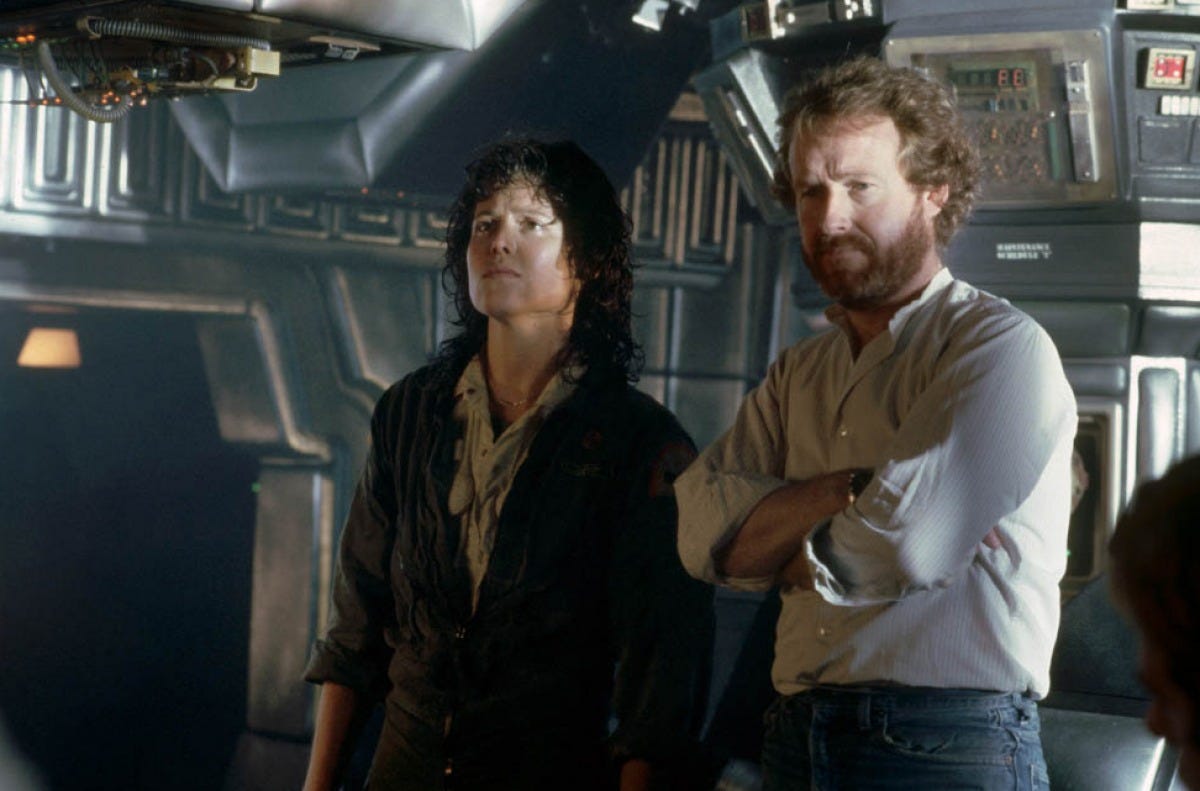
At the time that 20th Century Fox hired him to direct Alien, Ridley Scott had only made one film, The Duellists (1977). He wasn’t the studio’s first choice— according to Scott, he was their fifth choice. Not surprising since Scott was new to films— he came from the world of commercials and art— but the other contenders to direct Alien were truly baffling, including Peter Yates (Bullitt), Jack Clayton (The Innocents), John Boorman (Deliverance), and Robert Altman (M*A*S*H*). The first director that Fox wanted was Walter Hill himself, but he declined due to other commitments and his reluctance over the visual effects needed for the film.
Scott’s hiring proved vital in what happened next. The initial budget was $4.2 million, but when Scott created meticulous storyboards for Alien, Fox was so impressed that they doubled the budget.
This is vital because now Scott and his team had more money to create some serious production value, the kind that Roger Corman and other independent filmmakers making sci-fi films could never compete with. Had it not been for Scott, Alien could have looked like a low-budget film; now, it could look as good as Star Wars. Combined with Scott’s fantastic eye for visuals and the rapid advances in visual effects technology, low-budget genre fare would never stand a chance competing with the majors.
This would be critical as both films elevated the visual look and polish of genre fare; which in turn created legitimacy and, dare I say it, respectability. I wouldn’t be in the least bit surprised if a major studio scores a hit with a ‘romantasy’ story that legitimizes it in the mainstream.
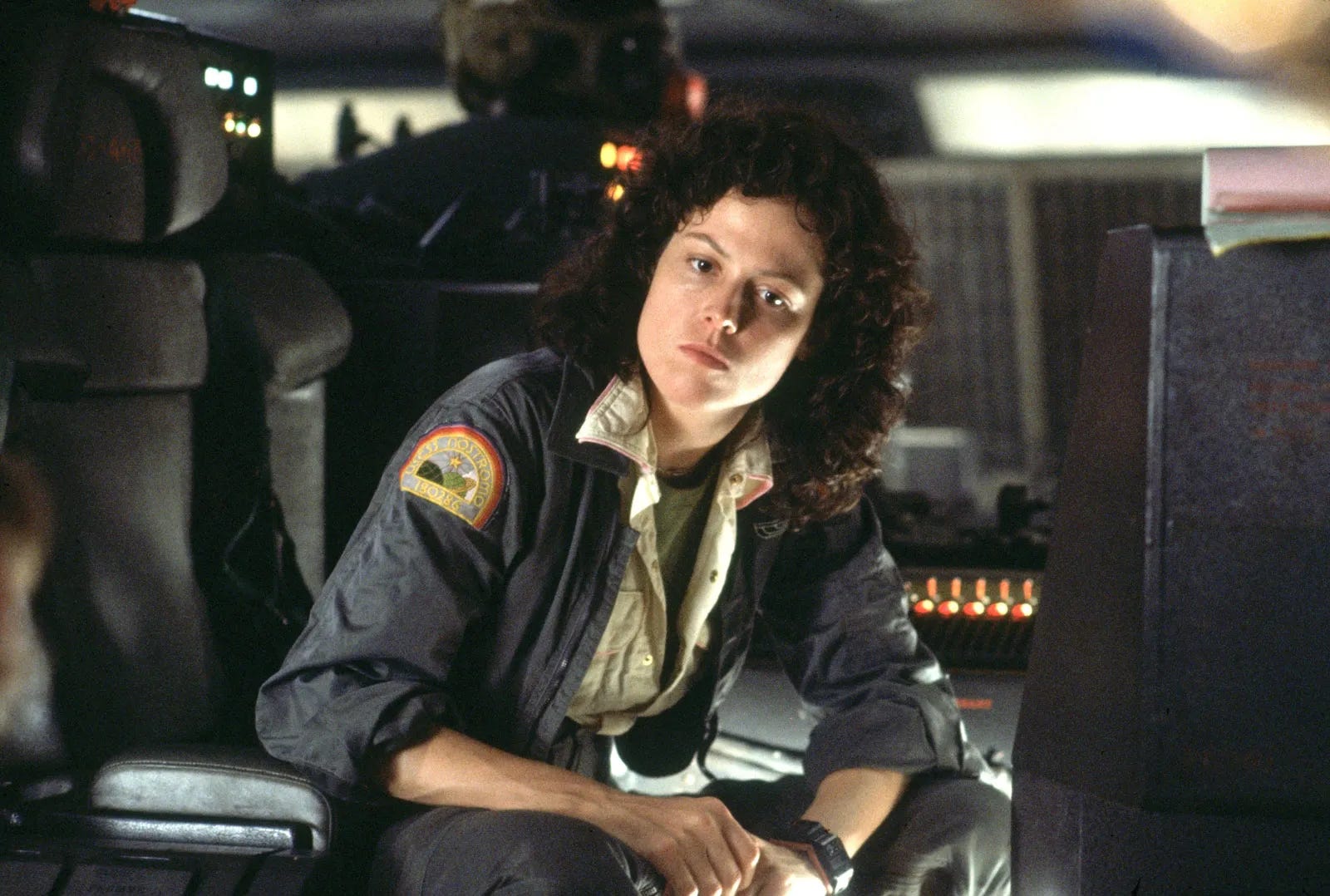
No story about Alien is complete without mentioning Scott’s other crucial decision: to gender-swap the character of Ripley. Originally written as a man, Scott cast a young Sigourney Weaver in the role— something unheard of in the genre. For Scott, it was more pragmatic than gender politics.
I thought, ‘Why not?’ I’ve always gotten along with females, as friends and equals. I never understood the fuss over what roles they should fill. I never saw it as significant, that the hero is a woman.
Even Scott acknowledges that this helped with preserving Alien’s element of surprise, as it carried over a tradition from horror films at the time like Black Christmas (1974), Texas Chainsaw Massacre (1974), and Halloween (1978) in which the girl is the final survivor. In fact, Scott greatly desired to amp up the horror aspect of the film than the science fiction, describing Alien as “The Texas Chainsaw Massacre of science fiction”. Scott notes:
When you see this pretty woman, or girl, virtually, as Sigourney was in her early 20s, you think she’s going to be the one who goes first, or in the middle of the film. And when she hangs on, and becomes the boss, that surprises people. When Hitchcock did Psycho, he murdered his star in the first 40 minutes. And that shocked us, because we thought, ‘Well, now we’re really vulnerable.’ I think Alien surprises people too, because of their expectations.
Alien celebrates its 47th anniversary this year, becoming a classic that spawned a still-thriving franchise. But it’s interesting that it was one of the films that helped, alongside Star Wars, to legitimize science fiction and space stories in the mainstream, whereas it was previously a niche genre. The same thing happened with superhero comics, especially after Marvel’s Blade (1998), X-Men (2000), and especially Spider-Man (2002) made studios realize that there was a lot of money in adapting comic books, leading to the glut of superhero movies that we’re still dealing with today.
While this meant we got better-looking sci-fi stories, the downside is that the studios encroached the territory of low-budget filmmakers in the independent space; the same space that helped famous film directors, writers, and producers cut their teeth on learning how to make movies.
Francis Ford Coppola. Martin Scorsese. Jonathan Demme. James Cameron. John Sayles. Ron Howard. Peter Bogdanovich. Polly Platt. Gale Anne Hurd. Joe Dante. Curtis Hanson. Robert Towne.
Which is sad because the independent film scene today is not as profitable as it was in Corman’s day. In a bizarre reversal of roles, as the studios started making the type of films that independent filmmakers were famous for, the independent scene started making the type of movies that the studios began to abandon— dramas and comedies.
It makes you wonder: if it becomes possible to create good visual effects at a low cost, could we see the independent scene reclaim genres again?
Everything is cyclical, I guess.
Thanks for reading! If you liked this essay, you can sign up here for more issues. If you’d like to support Three Left Feet Media, share this newsletter with a fellow film lover you think would appreciate it.
Long live the movies!
D.L. Holmes
Not the most enlightened of times.
Sadly, not much has changed since.
A few years later, John Carpenter remade it as The Thing.
Contrary to the title, there are no vampires.