

Three Ways Blue Moon Uses A Single Location To Tell A Story
The Oscar-nominated biopic spans the course of a single night at Sardi's on the premiere of Oklahoma! but manages to avoid feeling like a recorded stage play.

Until I watched Blue Moon, I’d never heard of Lorenz Hart, and that’s on me. But you also don’t need to have heard of Lorenz Hart to appreciate this 2025 Richard Linklater picture that might be one of the best ‘single location’ films in recent years; one that doesn’t like a gimmick and offers some valuable lessons in how to write a single location screenplay.
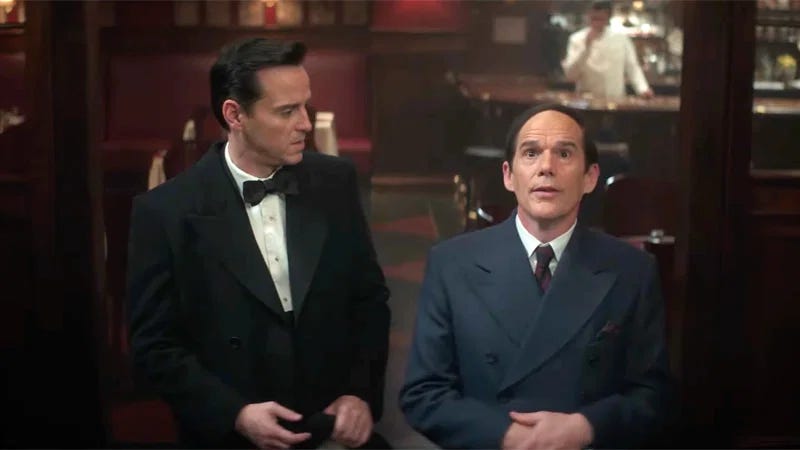
Blue Moon plays over the course of a single night on March 31, 1943, in the bar at Sardi’s in New York. It’s the night of the premiere of Oklahoma!, the musical written by composer— and Hart’s longtime collaborator— Richard Rodgers (Andrew Scott) and his new writing partner, Oscar Hammerstein II. Hart— or Larry, as people call him— takes refuge in the bar. Jealous, bitter, he’s aware that the show will be a hit and that his time is over.
Technically, it’s not 100% over the course of a single night— it opens with Hart collapsing in the street, with a radio announcement in voice over letting us that he will die in a few days. The rest of the film is a flashback.
And technically, it’s not 100% set in one location. Along with the aforementioned street, there’s one more scene in the packed theater playing Oklahoma! before the story moves to Sardi’s. But even then, the film uses different spaces within this one location— the bathroom, the coat room, the stairwell.
But for the most part, it takes place in a single location.
Oh, and its writer was nominated for the Oscar for Best Original Screenplay for his efforts.
For his first screenplay.
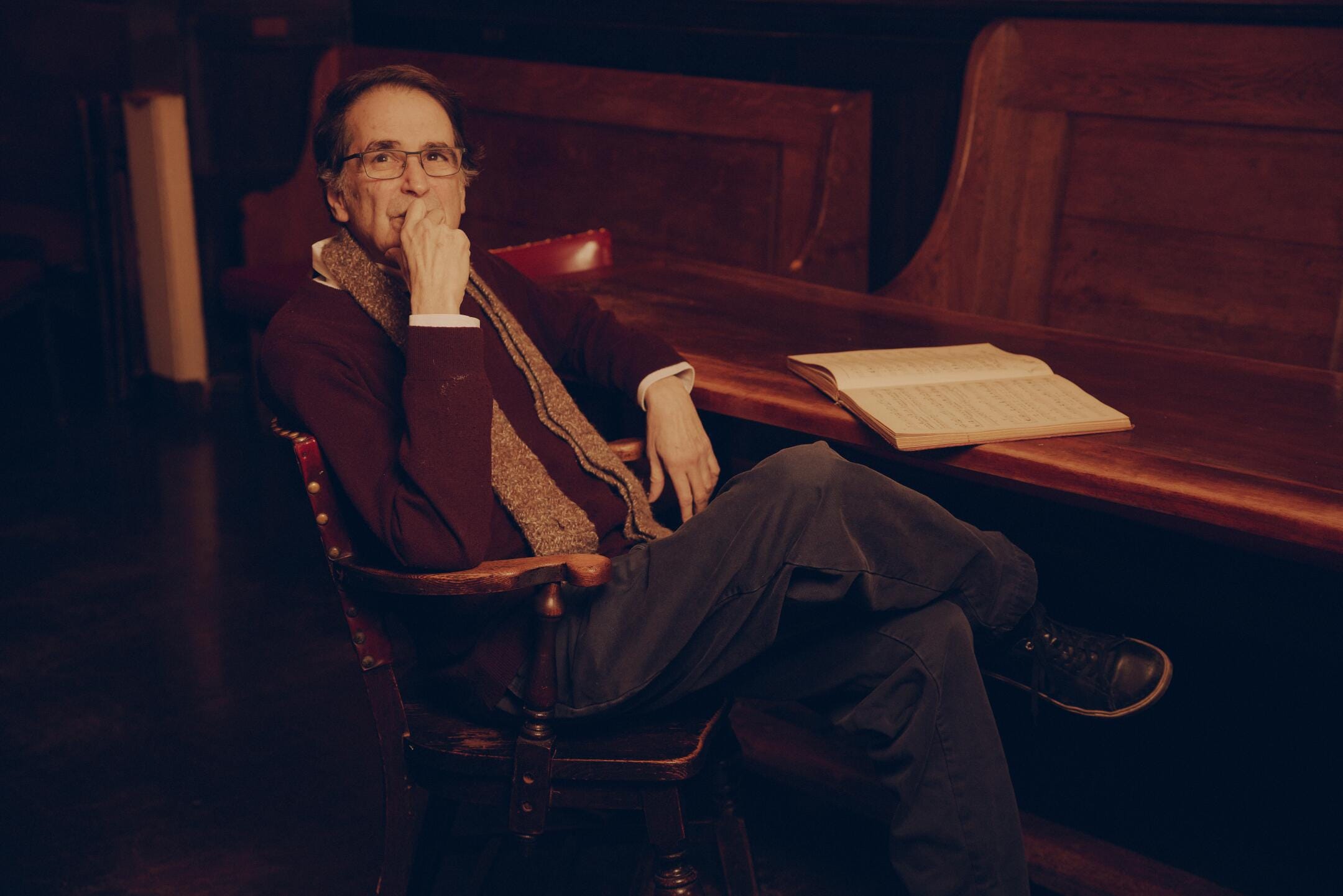
Robert Kaplow is not exactly a Hollywood veteran. He spent 30 years as a high-school teacher, writing novels and comedy songs for NPR’s Morning Edition. His 2003 book, Me and Orson Welles, brought him into contact with Richard Linklater when the Oscar-nominated filmmaker wanted to adapt the novel into the 2008 film of the same name.
One day, Linklater asked Kaplow what he was working on.
“I’m trying to write this thing about the last days of Lorenz Hart,” replied Kaplow.
Linklater, a big Rodgers and Hart fan, was immediately piqued. “I’m really interested in that — could I read that?”
When Kaplow was in his 20s, he came across an interview with Richard Rodgers, Hart’s former writing partner. One part in particular caught his attention:
“… I got to a part where Rodgers dismisses Hart. Something stayed with me from that moment. There was something icy and chilling in Rodgers’s tone. It was as if this was an emotional thing for him, but he was not going to reveal that he was armoring his heart and making it very businesslike. And I thought about that a long time, and I knew even then that someday I would write about it.”
Kaplow thought about Hart a lot. The figure in his head would not go away— “[Lorenz Hart] was just dying to talk”— until one day, Kaplow bought a school notebook and begin to write down what was in his head. When he stopped, Kaplow saw he’d written 71 pages.
His interest in songwriting also led him to biographies of Rodgers, Hart, and also Stephen Sondheim, who was Hammerstein’s protégé. This research helped him build material, as well as understand the person that Hart was.
“[Hart] is almost invisible. To me, that was the challenge: to make a voice that was playful and funny, but where, a millimeter below the surface, was a guy who was sort of desperate to find a reciprocal love and also on some level knew he never was going to.”
Kaplow also realized that many people didn’t know that before Rodgers and Hammerstein, there was Rodgers and Hart. And it wasn’t a career blip, either— their partnership, before that of Rodgers and Hammerstein, lasted 25 years.
“There was a kind of love story between Rodgers and Hart — they acknowledge the need for each other, and they’re also exasperated by each other. The film opens with Lorenz Hart collapsing and then with what’s supposed to sound like an archival radio obituary from 1943. That was Richard Linklater’s idea, because people aren’t going to know who this guy is, and in 40 seconds, we do all the exposition we need to do.”
Following: Six Lessons From How Christopher Nolan Made His First Feature Film

How do you get to making a $250-million-dollar star-studded film, shot entirely on IMAX 70mm footage— the first film to ever attempt such a gambit? If you’re Christopher Nolan, a track record of reliable box-office hits helps.
After the phone call, Linklater and Kaplow would spend the next decade working on the script— Kaplow would send “pages and pages of Lorenz Hart monologues”, and Linklater would send it to Ethan Hawke, whom he had in mind for the role. The decade-long delay was because Linklater wanted the actor to age into the role rather than use makeup1.
In the meantime, Linklater, Kaplow, and Hawke would workshop the script, a process that the director is known for doing:
Linklater would host a series of readings with Hawke, with Kaplow making adjustments to the script after each one… through the workshops, Hawke was also finding his way into the complex role.
For Blue Moon, Linklater asked for five weeks of rehearsal, and some actors were like, “I only have five scenes, do I really need to come?” But for the director, it was non-negotiable. He believed in the magic of rehearsals because, to him, that was where the creativity happened.
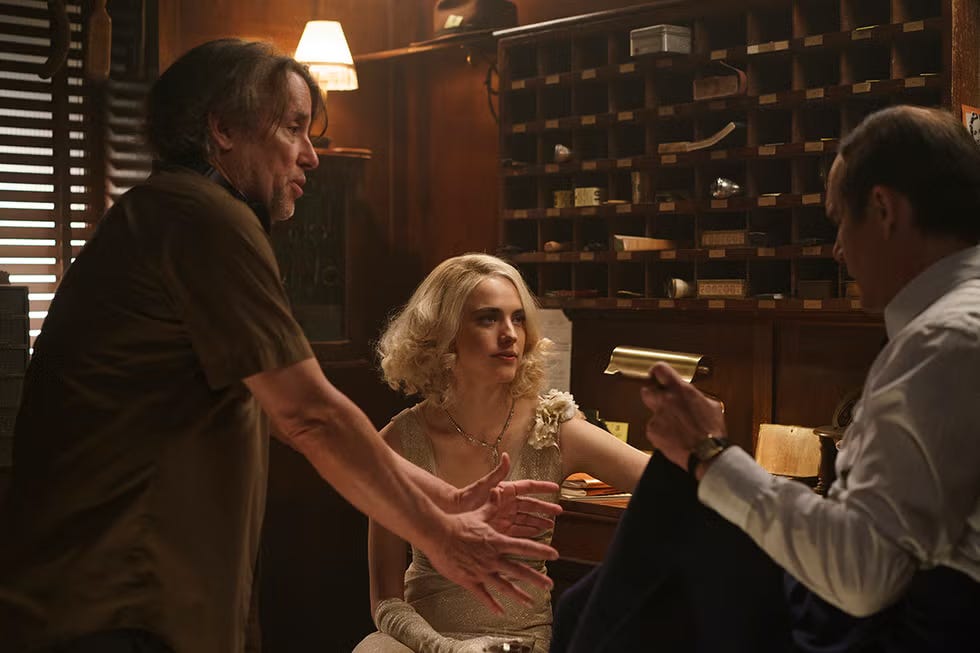
The risk inherent in a film with a single location is that it can end up feeling like a recorded stage play. Kaplow, however, felt that the story was more intimate than theater; whereas the stage required actors to project their emotions to the back, the movies could convey an emotion using the camera. Kaplow points to a scene between Ethan Hawke and Margaret Qualley in a coatroom, and how a close-up could never achieve the same effect on a stage:
“One of the reasons the scene works is that the camera’s a foot away from their face. When Margaret Qualley finally has to say to him, ‘Of course I love you, Larry, but just not that way,’ you see her eyes are filling with tears because she knows, I have to say this. I want to do it in a way that is not going to devastate him because I do love him.”
To Kaplow, the Swedish filmmaker Ingmar Bergman is the perfect example whose works could be seen superficially as a play, and yet, isn’t:
“I think you don’t see Ingmar Bergman’s Scenes From a Marriage and say, “This should be a play. It’s only got four people.”
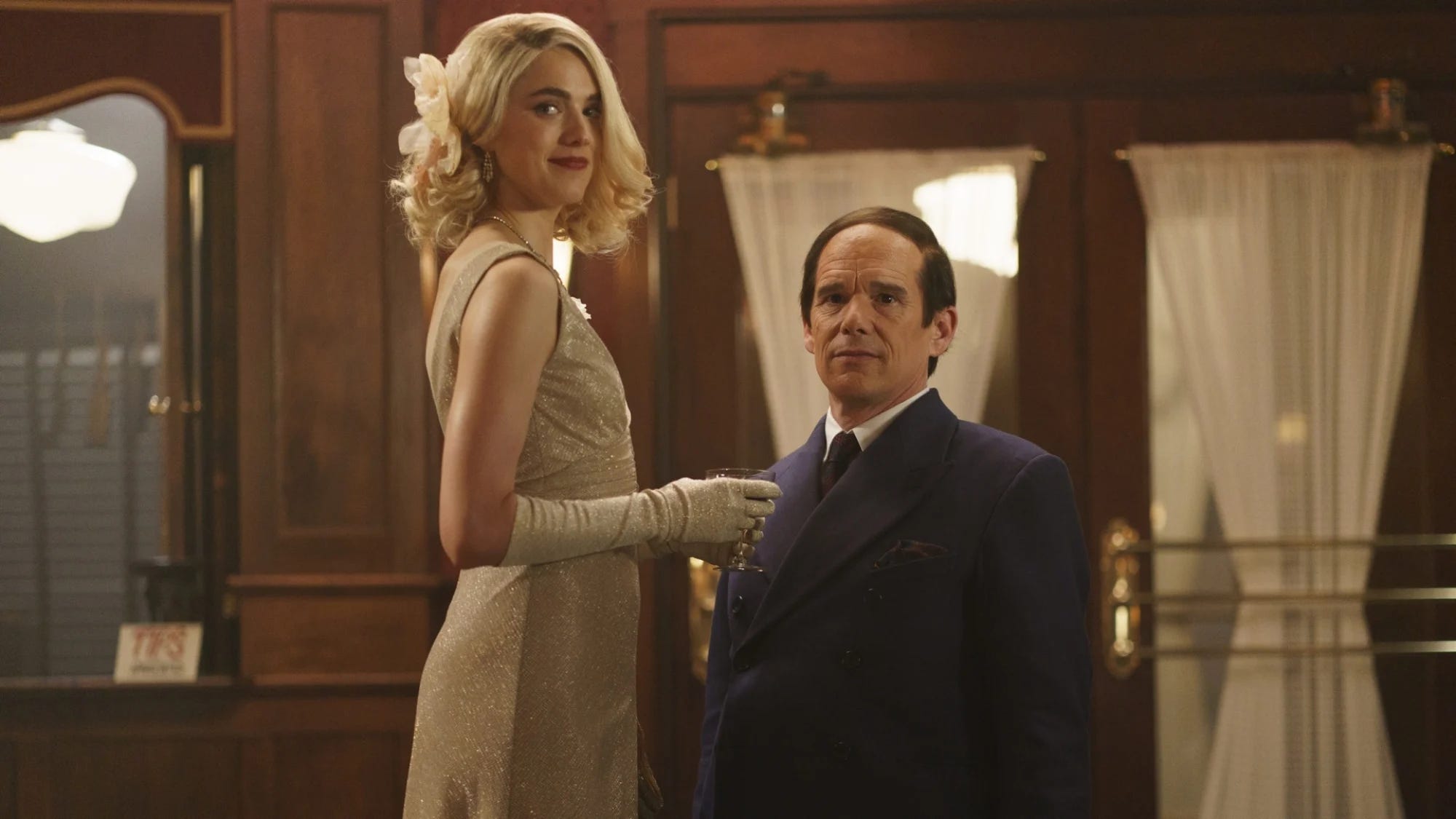
The single location also meant that the film could shoot anywhere in the world, which helped with the budget. Blue Moon was shot on soundstages in Dublin, Ireland over 15 days. But even though Linklater was an established filmmaker, the independent nature of the film meant it was always challenging to raise money. Michael Barker and Tom Bernard at Sony Pictures Classics picked up Blue Moon2. Hawke praises the executives, especially Barker:
“His commitment to finding new voices and championing filmmakers from all over the world is rare. If all you give people is hamburgers, they’ll eat hamburgers — and that’s fine; hamburgers are good — but if you offer them something else, they’ll discover they like that too. If you don’t make One Flew Over the Cuckoo’s Nest available, how will people ever know how great it is?”
Single location films aren’t just for first-time filmmakers; Linklater made Blue Moon because it was a creative challenge. Nothing about the film feels stage-y, and that’s because it does certain things to make it cinematic:
It has more than two characters. In fact, there’s a lot of characters with whom Hart interacts; this creates variety and shows different sides of Hart depending on whom he is talking to. The way Hart talks to the bartender, Eddie (Bobby Cannavale), is not the way he talks to his former partner Rodgers, and certainly not the way he talks to Elizabeth—but they are all very much him. If you are writing a single location film, have more than two characters— this will create interesting shifts and rhythms to prevent the story from getting stale.
It takes advantage of the camera. For all the film’s hyperliterate dialogue more commonly found in a stage play, Linklater makes it feel cinematic by capturing quiet moments and reactions that could never be done in the theater. Use silence, use close-ups; let the camera roam if needed. Film is a visual medium— use it to avoid making your film feel like a filmed stage play.
It uses different places within a single location to create some novelty and avoid stagnation. Blue Moon moves from the bar to the coatroom to the stairwell, which also helps the film to sidestep the trap of coming across like a filmed stage play. Take advantage of the entirety of your location instead of confining the action to a single place.
Blue Moon is a wonderful film, and an especially exceptional single location film that has quite a few lessons to teach aspiring filmmakers. For his part, Kaplow was never convinced that his script would ever actually reach the screen. “It’s an odd project,” he says. “I was never sure it would get made.”
And did I mention that he got nominated for the Best Original Screenplay Oscar— for his first attempt?
Thanks for reading! If you liked this essay, you can sign up here for more issues. If you’d like to support Three Left Feet Media, share this newsletter with a fellow film lover you think would appreciate it.
Long live the movies!
D.L. Holmes
It landed Hawke his fifth overall Oscar nomination— his third one overall for acting, and his first one for Lead Actor. Wait, Ethan Hawke has NOT been nominated as a Lead Actor before?? What a travesty!
Sony Pictures Classic distributed 2013’s Before Midnight.