

Toy Story: How Pixar Revolutionized Animation With Talking Toys
Toy Story put Pixar Animation on the map and changed animation for good. But it was a long and difficult road to get there.

Toy Story 5 is dropping on our heads this Friday, thirty-one years after the original hit the big screen and upended the field of animation. The Toy Story franchise is Pixar Animation’s mothership, and for good reason— Toy Story has yet to release a bad film. I’m aware that some complain about Toy Story 4 but with the fifth film, it becomes clear that the fourth one was the start of a new trilogy. Toy Story also allows the technical team to use the franchise as a “testing ground for technology”, according to Pixar’s VFX supervisor Thomas Jordan, since the “look” of the film is already established, and they can “reuse characters and their environments from past films”.
What’s quite certain is that Toy Story 5 will do gangbusters at the box office1— apart from the unrelated spin-off Lightyear, every subsequent Toy Story film has made more money, with 3 and 4 earning over a billion dollars at the box office. It probably also has the Oscar for Best Animated Feature Film this year more or less locked— the only real contender is former Pixar alum Brad Bird’s Ray Gunn.
It’s a far cry from when the first Toy Story came out. Nobody was sure if it would be a success since it was the first computer-generated animated film. Nobody probably imagined that it would become such a beloved pop culture staple, either, or that the franchise would have so much longevity.
Which makes this the perfect time to revisit the film that started it all, the one that sparked a revolution, and built the fortunes of Pixar Animation2.
It’s time to go back to Toy Story.
What’s remarkable is that when the first Toy Story was being made, nobody imagined that an entire animated film could be made inside a computer. That the old way of doing animation by hand was about to become a distant memory; or that 3d animation would supplant 2d animation.
But the road to Toy Story was never guaranteed to lead to success. If anything, it’s a tale of persistence in an impossible vision, a band of mavericks led by an equally impossible maverick, and prioritizing story above the technology.
A brief history of Pixar:
Pixar started as the Graphics Group at Lucasfilm. It was led by Ed Catmull, who foresaw that one day it would be possible to make animated films using computers. However, the technology was nowhere close to being ready, so he knew that he’d have to bide his time and wait. In the meantime, they took every opportunity to learn, test, and prototype the nascent capabilities of computer-generated effects.
Around 1983-1984, Catmull made a decision that would be crucial for the company’s fortunes: it hired a young animator named John Lasseter, who made a short film called The Adventures of André & Wally B. on a computer. But the Graphics Group’s fate was in jeopardy: there was a threat of it being sold in the wake of George Lucas’s divorce. So, to keep the group of animators and technicians together, it was spun off into an independent company called Pixar. Catmull took a look at the current state of the field and realized that the technology was still not ready to make an animated film entirely on a computer— but the time was drawing near. They partly learned this the hard way when a deal to make a film called Monkey for a Japanese company fell through after they crunched the numbers and discovered that it would be too expensive.
But, in another five years, Moore’s Law would make it possible to do it affordably.3 So until that time came, Pixar decided it would focus on being a hardware company, selling their Pixar Image Computer to governmental, scientific, and medical markets.
Meanwhile, George Lucas went around looking for buyers. Steve Jobs was interested, but Lucas only accepted after other investors declined. That’s how Steve Jobs wound up at Pixar… or how Pixar wound up with Steve Jobs, depending on which way you look at it.
The hardware business was not great for Pixar. At a certain point, the company was running on Jobs’s personal money. Around 1988-1989, after Jobs called Pixar’s senior leadership to a meeting and announced drastic spending cuts, Lasseter hesitantly asked for money to make a computer-generated short film called Tin Toy. Jobs was skeptical, so Lasseter invited him to see the storyboards, pitching the film for the very life of Pixar’s survival. Luckily, Steve Jobs was a man who believed in a person’s passion for an idea and warmed up to Lasseter’s enthusiasm. He gave the money only on one condition: he had to make Tin Toy great. It became the first computer-generated animated film to win the 1989 Oscar for Best Animated Short Film.
That was also around the time that Disney approached Pixar with an offer: find a way to make animation more efficient. Pixar helped Disney develop CAPS (The Computer Animation Production System) to reduce animation labor costs that helped revive animation back at Disney. Then in 1991, Pixar had another stroke of good luck: they signed a deal with Disney to produce three computer-animated films.
Catmull’s vision was on the horizon. The time was here. Interestingly, though, the Pixar team knew very little about making a feature-length animated film. In Creativity, Inc.: Overcoming the Unseen Forces That Stand in the Way of True Inspiration, he notes:
None of us had ever made a movie before—at least not one longer than five minutes—and since we were using computer animation, there was no one to ask for help. Given the millions of dollars at stake and the realization that we’d never get another chance if we blew it, we had to figure it out fast.
No pressure. But luckily they did have an idea for what the first of those three movies would be, and that would become Toy Story.
Part of the reason Disney made the deal was really because of John Lasseter. The Disney Chairman at the time, Jeffrey Katzenberg, tried unsuccessfully to woo Lasseter to Disney but Lasseter wouldn’t decamp. Partly out of loyalty, but most surely because he probably hadn’t forgotten how Disney had fired him unceremoniously for stepping on his superiors’ toes when trying to convince Disney to use computers for animation.
Anyway, since Lasseter wouldn’t leave and Katzenberg wanted to be in the Lasseter business, they made a deal with Pixar, and the nascent animation company jumped to work on the idea they had about a boy and his toys, but told from the perspective of the toys.
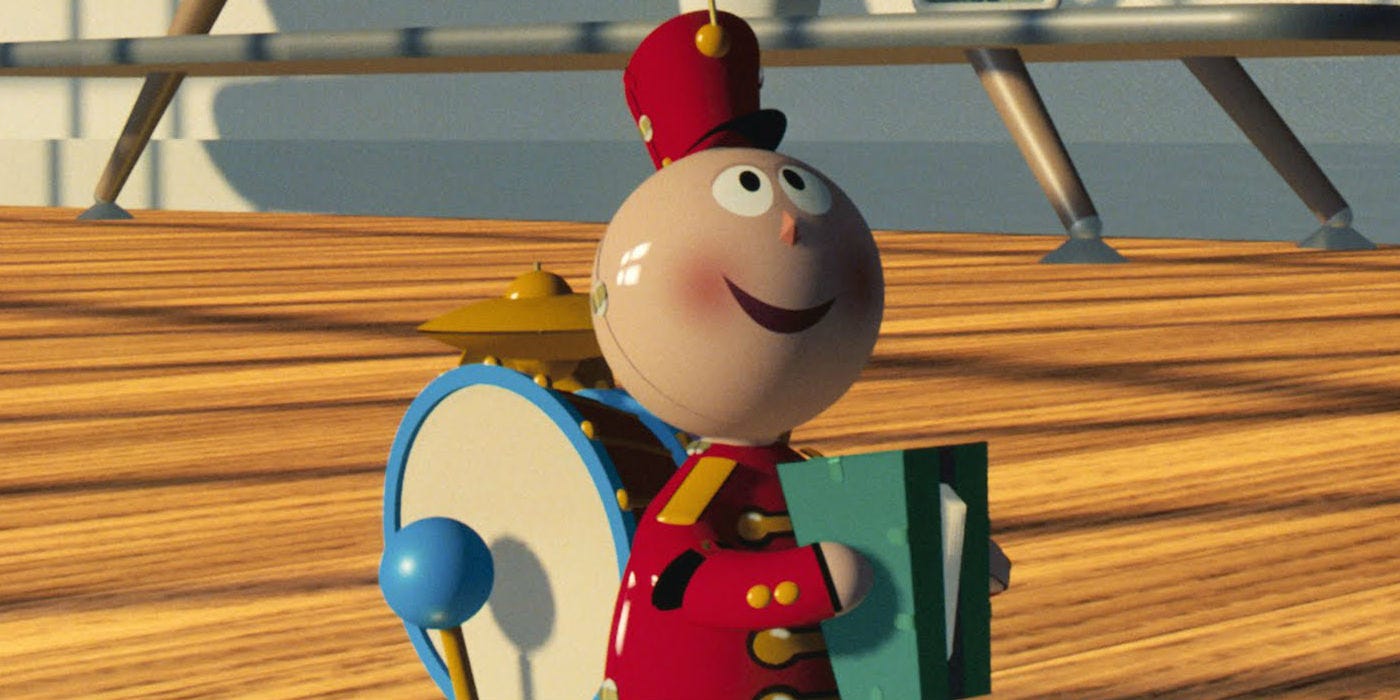
Toy Story was born out of Tin Toy, since it was originally planned to expand the short film into a feature film. Lasseter would be the director. At the time, he’d hired a group of people who’d become key Pixar players: Andrew Stanton, Pete Docter, and Joe Ranft, the latter having worked before with Lasseter. What the team lacked in experience, they made up in enthusiasm and willingness to go the distance.
In Creativity, Inc., Catmull is startlingly blunt when he says that in the initial stages, Pixar’s films “suck”. Their job, he writes, is to keep working away at the core idea until they find a version of the story that does “not suck”. As a result, the first version of a Pixar barely ever resembles the final version that we see.
Take the original treatment for Toy Story (written by Lasseter, Stanton, and Docter):
TOY STORY (WORKING TITLE)
Everyone has had the traumatic childhood experience of losing a toy. Our story takes the toy’s point of view as he loses and tries to regain the single thing most important to him: to be played with by children. This is the reason for the existence of all toys. It is the emotional foundation of their existence.
Our story opens in a small factory where tin toys are manufactured. They sweep down a conveyor belt with all types of other toys of different sizes, shapes and colors. We single out a group of tin toy musicians, then we focus in on one, our star, Tinny.
His eyes are opening up and he’s looking around, wide-eyed with excitement. The conveyor belt goes to the shipping area where he’s boxed up and put into a big carton. As the box is folded up, we follow him into the dark.
After Tinny is given to a little boy as a birthday present, the family accidentally leaves Tinny at a gas station. There, he meets a ventriloquist’s dummy, and ultimately, the pair wind up as toys in a kindergarten classroom4. The treatment concludes:
As the kids show up, they start playing with the toys and the air is singing with the toys’ joy. Tinny and friends have really found their heaven, and their happy ending.
Eagle-eyed viewers will spot immediately that this treatment contains the core idea of Toy Story: that toys deeply want children to play with them, and this desire drives all their hopes, actions, and fears. They’ll also recognize that the basic structure of Toy Story is also present in the treatment, such as:
Tinny given as a birthday present;
Tinny left behind at a gas station;
Tinny climbing into a truck;
Toys releasing the latch on a truck5;
The treatment’s Slinky caterpillar becoming a Slinky dog;
A threatening pet dog from which the toys must escape.
Lasseter presented it to the Disney team. Katzenberg, though supportive, thought the initial treatment lacked drama since both leads wanted the same things for the same reasons. He suggested that Lasseter instead mold Toy Story into an odd-couple buddy picture, like 48 Hrs. or Midnight Run, films about two men thrown together by circumstance, forced to cooperate despite their hostility, and eventually gaining one another’s respect.
Lasseter and his team took the advice, and returned with a second treatment.
TOY STORY
A musical toy named Tinny is given as a gift to two children. Like other toys, Tinny is “born” as he is unwrapped—naïve and innocent. Until now, a ventriloquist’s dummy has been the children’s favorite toy. When the children play with the toys, a wonderful world of make-believe materializes, enveloping both the children and their toys. As they play with Tinny, the dummy becomes jealous. He and Tinny begin to compete for the children’s attention. They start to bicker, each one looking out only for himself.
The children’s father announces that the family is moving to a new town. After a hard day of packing, the family decides to go out for a pizza. The children bring along their favorite toys. Due to their selfishness, Tinny and the dummy fall out of the car at a gas station and are left behind. They find themselves completely alone in a big, frightening world, blaming each other for their predicament.
The two toys nearly catch up with the family at the pizza parlor, but instead wind up in the clutches of a “a mean kid who tortures his toys.” The dummy is tossed to the boy’s vicious dog, and Tinny is tied to a model rocket. The pair survive and hatch an escape; but discover that their owners are leaving. Tinny makes it onto the van, but the dog catches hold of the dummy before he can climb in. Tinny jumps off to distract the dog, while the dummy secured the help of the other toys to rescue Tinny.
The second treatment still starred Tinny and the dummy, but the bones of the film were emerging. However, Lasseter was growing dissatisfied with Tinny, finding him too antiquated. He recalled:
“So we started to analyze what a little boy would get these days that would make him so excited that he stopped playing with anything else.”
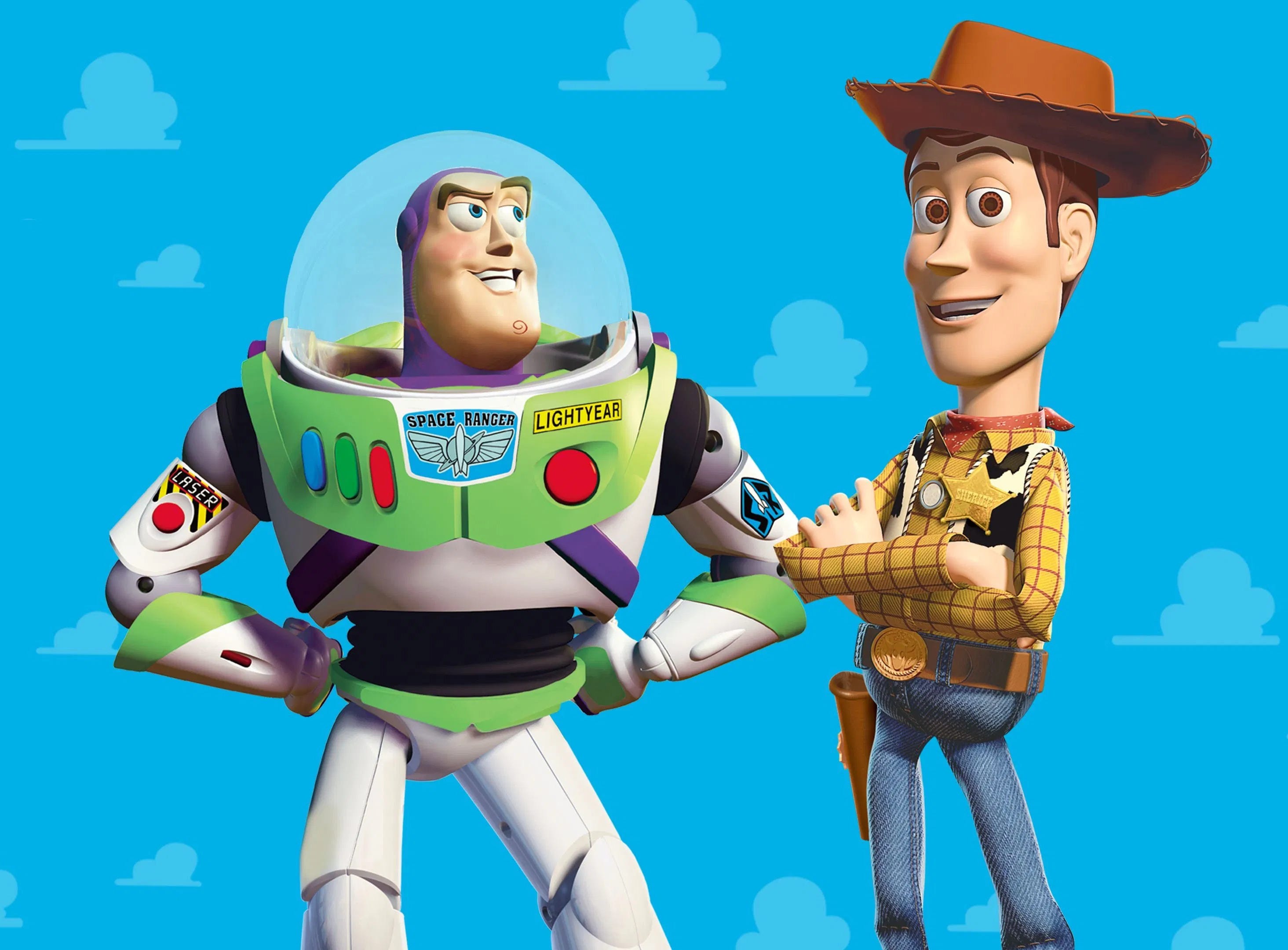
Tinny first morphed into a G.I. Joe–style action figure, a toy that Lasseter liked most as a boy. From G.I. Joe, Tinny became a space hero— along the lines of Major Matt Mason, another 1960s toy— and for a while, was called Lunar Larry, then Tempus. The Disney executives were against having a ventriloquist dummy, since they’d become a staple in horror films, so the dummy was changed into a cowboy named Woody, in honor after Woody Strode, an African American character actor who appeared in John Ford and Sergio Leone westerns. Lasseter would rework Woody into a stuffed toy with a pull-string, inspired by his boyhood toy of Casper the Friendly Ghost; and Tempus was changed to Buzz Lightyear, inspired by the astronaut Buzz Aldrin.
Since Pixar’s team were inexperienced at writing scripts, Disney exercised its right to help develop Toy Story by appointing writers Alec Sokolow and Joel Cohen to help them. Later, they’d bring Joss Whedon on board to help, but Whedon’s contributions would come much later. Around the same time, Lasseter and Docter attended a three-day seminar conducted by screenwriting guru Robert McKee, and returned like Paul the Apostle who’d seen the light on the way to Damascus. At Pixar, McKee’s teachings would become the law of the land, such as the doctrine that “a protagonist and his story become interesting only as much as the forces arrayed against him make him interesting; character emerges most realistically and compellingly from the choices that the protagonist makes in reaction to his problems.”
After Disney greenlit Toy Story in January 1993, Katzenberg kept giving notes. Despite Pixar’s misgivings, they accepted it because they thought that the Disney chairman had a better grasp of storytelling due to his experience— which included adding more “edge” and sanding down Woody’s earnestness. As a result, the Woody character became darker, meaner… and plain unlikeable:
Woody was jealous. He threw Buzz out the window for spite. He bossed the other toys around and called them demeaning names. He had, in short, become a jerk.
Pixar had a right to be doubtful: When they went to Disney on November 19, 1993 to show the new story reels featuring the edgier Woody, Disney shut down the production until an acceptable script was written. Pixar would forever dub that day as ‘Black Friday’ as the company’s survival was even more precariously on the line.
This was around the time that Joss Whedon enters the picture.
Whedon was still in his early pre-Buffy days, though it was his spec script for a Buffy film that was getting him attention. He thought that the Toy Story script had a great structure, which was the main reason he took the rewriting gig. He recalled:
When you read something where the structure was John Lasseter’s story concept, which was rock solid, and you could just go in there and do a strong rewrite, that’s good.
But when he got to Pixar, he discovered that it wasn’t a script doctoring job—it was a complete rewrite. He sat down with the team, and together, they decided to remove everything that didn’t work and focus on the narrative and make sure the story was connecting with the audience.
The big problem was Woody. By incorporating Katzenberg’s requests to make Woody an “edgy” character, he’d turned into an unlikable self-centered jerk. Said Stanton: “He had to wind up selfless in the end, so our strategy had been, let’s make him selfish in the beginning.”
Whedon contributed one of the most significant changes to the rewrite that became the film’s defining plot point. Originally, Buzz Lightyear had been conceived as a Dudley Do-Right type, a dim-witted but cheerful and self-aware character. It was Whedon who proposed that the character should be an action figure who doesn’t realize he’s a toy, and actually believes he is an Intergalactic Space Ranger. This idea would turn the whole movie around, and become the bedrock on which Toy Story built its story and generated chemistry. Whedon also added the character of Rex the timid dinosaur and wrote Barbie as a pivotal role; when Mattel would not license the character, she was turned into Bo Peep.
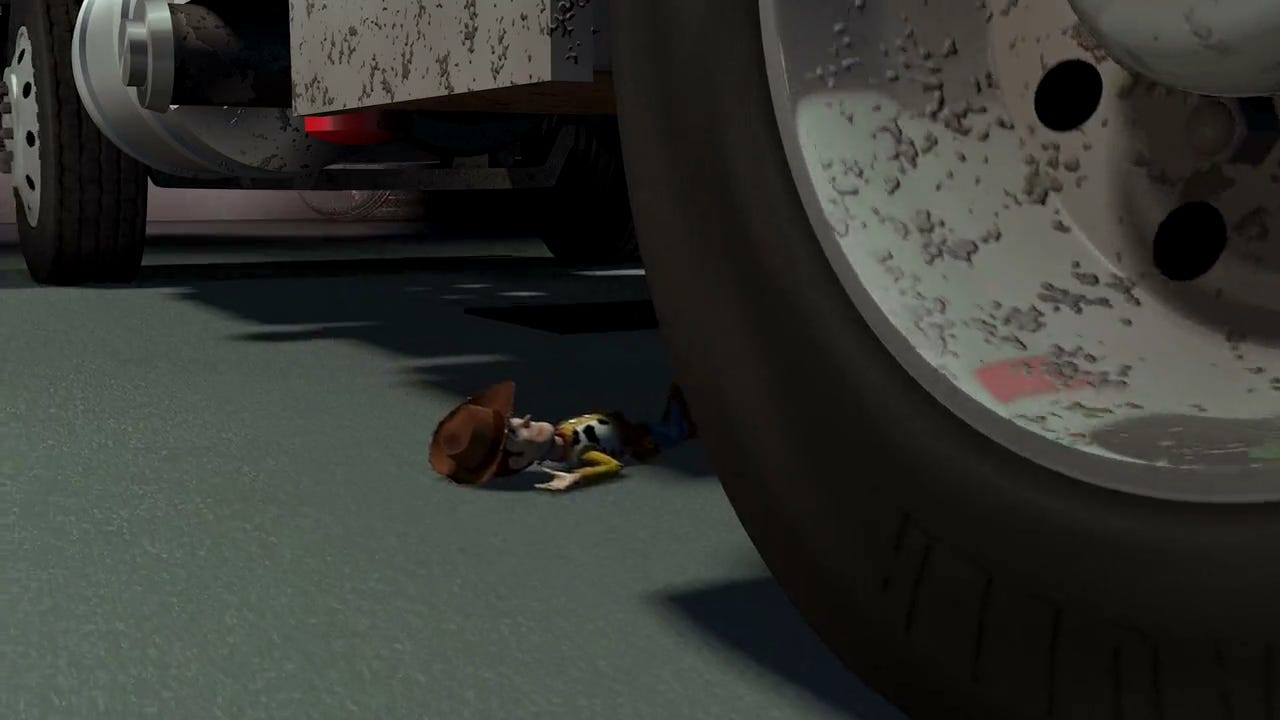
Stanton credits Whedon for setting the bar at Pixar that would became the company’s brand: a mix of sincerity and reverence. He also recalls that Whedon wrote a lot of the film’s most memorable lines: “His best one was under the truck, where Buzz says to Woody, ‘You are a sad, strange, little man. You have my pity. Farewell.’”
At this time, Lee Unkrich had also joined Pixar and became an integral member of the original Pixar group—Lasseter, Stanton, Docter, and Ranft. Together, they spent several months reworking the film, breaking the script and putting it back together, learning to trust their own storytelling instincts over the studio notes.
With Whedon’s assistance, the script slowly evolved. Woody became the more sympathetic character we know: earlier, the film established Woody as a sneering overlord of Andy’s room; but the new script opened with Andy playing with Woody, highlighting the attachment between them, as well as positioning Woody as a sage leader looking out for the other toys. Now, Woody didn’t push Buzz out the window— instead, Buzz falls out the window after he gets hit by a swinging lamp, the result of a lesser trick by Woody that had unexpected effects.
In April 1994, after Lasseter and his team showed Disney the new script and reels, Katzenberg approved Pixar to start production again.
The crew grew from its original size of 24 to 110, including 27 animators, 22 technical directors, and 61 other artists and engineers. The small budget— a modest $17.5 million— meant that Pixar couldn’t afford to pay high salaries, but it tried to compensate by making other working conditions better. It also didn’t hurt that crew who joined had the prestige of having been a part of the first fully computer-animated feature film.
Since Toy Story was not being produced in-house at Disney, Pixar and Disney created a joint venture called Hi Tech Toons to shielded the two companies from liability and to simplify production accounting. It was a standard Hollywood practice, and in the case of Toy Story, this new entity also resolved the union issue for Disney—meaning that they could produce a non-union film through an entity that was nominally, at least, at arm’s length.
As Pixar was working in a new medium, it was more important than ever to make Toy Story feel familiar and not alien. One of the ways they accomplished this was to approach the visual aspect by imagining how they’d have shot it as a live-action film, with real cameras, dollies, and tripods. In The Pixar Touch, David Price writes:
At times the group even emulated specific shots of live-action directors; a “Branagh-cam,” as they called it, borrowed from Kenneth Branagh’s 1994 Frankenstein, circling Woody at the moment when the other toys were concluding that he had pushed Buzz out the window. A “Michael Mann–cam,” inspired by a technique used in the series Miami Vice, locked onto a wheel of a tanker truck as it pulled into a gas station and appeared ready to flatten Woody.
Throughout production, the writers continued polishing the script. Late additions included the addition of the alien squeak toys at Pizza Planet— they’d been unable to settle on what kind of toys Buzz would find in a rocket-shaped crane arcade game until someone at a brainstorming session uttered the key words: the claw. Stanton recalls the words firing up everyone’s imaginations:
We began batting back and forth every mindless sect out of every movie we could think of: ‘Don’t fight the claw,’ ‘do the will of the claw,’ and so on.
In the end, it would be Chris Sanders, a story artist on Beauty and the Beast, who sketched a distinctive three-eyed design of a green alien. It was carried over into the final film.
During all this, Steve Jobs was looking around for buyers to sell Pixar. As of late 1994, he had approached Hallmark, Microsoft co-founder Paul Allen, Oracle CEO and co-founder Larry Ellison, and Microsoft.
At this point, Jobs was the full owner of Pixar. In 1991, he’d bought the employees’ stock shares in exchange for continuing to fund the company, which caused a lot of bitterness among staff who lost their shares. But Pixar’s situation was serious. Jobs had been fired from Apple, the company he founded; NeXT was not exactly a hit, either; and Pixar was costing him money. Pixar co-founder Alvy Ray Smith speculates that Jobs refused to let Pixar end as a failure because he could not suffer another defeat. But it seems that at the very least, he wanted to recover his money because Microsoft was prepared to make an offer.
Yet at the last moment, Jobs withdrew the sale though he would license Microsoft several Pixar’s patents including Pixar’s techniques for anti-aliasing, motion blur, and realistic depth of field. Why the change of heart?
The obvious answer is that Jobs had finally realized that something momentous was happening at Pixar. By this point, Toy Story was coming together, and his instinct for sensing the extraordinary appeared to have detected a once-in-a-lifetime opportunity, only this time it was happening under his very nose.
We know this because by 1995, Jobs went from being a skeptic to becoming Pixar’s biggest believer and protector. Which is why he startled Catmull and Lasseter by his intentions to take Pixar public as soon as Toy Story was released.
Catmull and Lasseter demurred. They thought it would be better to have a couple of films under their belts first. Financial advisers were blunter: An IPO for a production company that had never made a profit was unthinkable to serious investors. Hell, even Disney had not gone public until 1940, three years after Snow White and the Seven Dwarves was released— and they had at least a decade of animated short films to back them up.
But Jobs would not be dissuaded. He believed that Toy Story would revolutionize animation just as Disney did with Snow White, but it was imperative that they moved quickly. Catmull describes what happened and it’s a fascinating glimpse into how Steve Jobs’s mind worked:
[Jobs] went on to lay out his logic: Let’s assume that Toy Story is a success, he said. Not only that, let’s assume it is a big success. When that happens, Disney CEO Michael Eisner will realize that he has created his worst nightmare: a viable competitor to Disney. (We only owed his studio two more films under our contract, then we could go out on our own.) Steve predicted that as soon as Toy Story came out, Eisner would try to renegotiate our deal and keep us close, as a partner. In this scenario, Steve said, he wanted to be able to negotiate better terms. Specifically, he wanted a 50/50 split with Disney on returns—a demand, he pointed out, that also happened to be the moral high ground. In order to fulfill these terms, however, we would have to be able to put up the cash for our half of the production budgets—a significant amount of money. And to do that, we would have to go public.
More importantly, going public would give Pixar a war chest that allowed them to co-finance its films as an equal partner.
Catmull and Lasseter could hardly disagree with Jobs’s logic. Besides, it was Steve Jobs. The man could be forceful when he needed to be. But nobody at the time could have foreseen that he was about to make a big bet that would win big. Well, nobody except Steve Jobs.
The first thing Jobs did was to reorganize the company hierarchy. Instead of one president, there would be an ‘Office of the President’, a triumvirate consisting of Jobs as chairman and chief executive officer; Catmull as senior vice president and chief technical officer; and a new hire, Lawrence Levy, a well-respected chief financial officer whom Jobs brought on board specifically to make Pixar ready to go public— Levy would provide the credibility to Wall Street that Jobs and Catmull both lacked. Catmull took the demotion with grace; he was more concerned with Pixar’s longevity and if this was what it took, so be it (he would later be reinstated as president). Lasseter would be vice president for creative development. (The IPO would cause dissent in the Pixar ranks, but that’s another story.)
It was a hell of a gamble. Toy Story early reactions weren’t exactly encouraging: a test audience at an Anaheim theater in late July 1995 indicated the film needed some tweaks especially to the opening scenes— so Lasseter punched them up— and the ending, which originally ended with an exterior shot of Andy’s house and the sound of a new puppy— Walt Disney CEO Michael Eisner told Lasseter that it needed to end with a shot of Woody and Buzz reacting together to the news of the puppy.
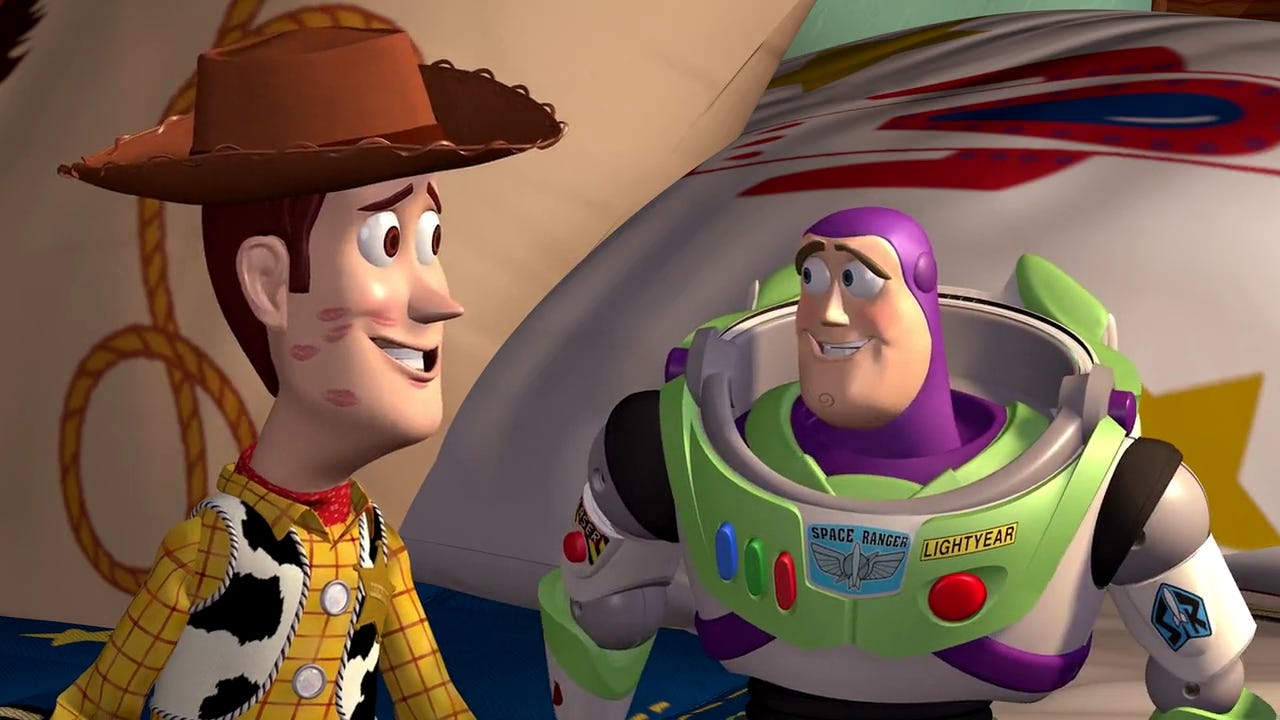
But when the film finally did open on November 22, 1995, Pixar could breathe a sigh of relief. Critics praised Toy Story, and it became the second highest-grossing film of 1995, besting Disney’s own Pocahontas as well as GoldenEye, the first James Bond film in several years, and Batman Forever. At the time, there was no Oscar for Best Animated Feature, but Toy Story did become the first animated film nominated for an Academy Award for Best Original Screenplay (it lost to The Usual Suspects), and Lasseter was bestowed with a special achievement Academy Award in 1996 “for his inspired leadership of the Pixar Toy Story team, resulting in the first feature-length computer-animated film.”
On November 29, 1995, Pixar went public. The stock reached as high as $49.50 before closing at $39; after subtracting bankers’ fees were subtracted, the sale had raised $139.7 million for the company. It just made a little more than Netscape as the biggest IPO of the year.
Pixar got its war chest.
And Steve Jobs became a billionaire before he returned to Apple a few years later to rescue that company.
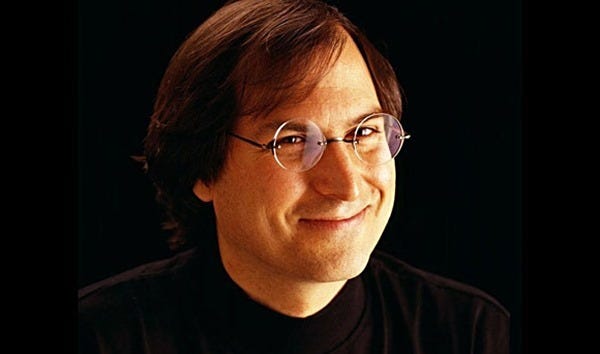
Catmull also recalls Jobs’s prophetic words playing out exactly as he’d anticipated:
As our first movie broke records at the box office and as all our dreams seemed to be coming true, our initial public offering raised nearly $140 million for the company—the biggest IPO of 1995. And a few months later, as if on cue, Eisner called, saying that he wanted to renegotiate the deal and keep us as a partner. He accepted Steve’s offer of a 50/50 split. I was amazed; Steve had called this exactly right. His clarity and execution were stunning.
Catmull had finally seen his dream of making an animated feature entirely in a computer come true. And he’d also proven, thanks to a smart team of animators and storytellers, that there was an appetite for animated films that moved away from fairy-tale plots and focused on adultlike characters with adultlike problems, while still entertaining families.
Normally this would be where I end the essay, but there are a few things that have to be addressed when discussing the history of Toy Story, and not all of it is happy.
It’s worth noting that Pixar’s first decade— well, it’s first 15 years, really— was stunning. The company churned out hit after hit that made money, was critically acclaimed, and became synonymous with many children’s childhoods. All this happened under the leadership of Ed Catmull, Steve Jobs, and John Lasseter.
In 2011, Steve Jobs died. That same year, and the years to follow, saw Pixar lose its sure-footing for the first time. Financially, Pixar films continued to make money, but between 2010 and 2020, the company began to prioritize sequels that never matched the heights of its predecessors. They suffered their first box-office failure with 2016’s The Good Dinosaur and even the stories mostly began to lose some of Pixar’s magic touch.
In 2017, John Lasseter took a six-month leave of absence after reports surfaced about the Pixar chief creative officer (CCO) had a history of alleged misconduct towards female employees, and was known for “grabbing, kissing, making comments about physical attributes.” After 2018, Lasseter would permanently leave Pixar and move over to Skydance Animation
In 2019, Ed Catmull left Pixar after steering and helping shape the Pixar culture that made it such a big brand. Catmull instinctively understood the risky and unpredictable terrain of creativity and put in place several mechanisms that allowed Pixar to flourish so successfully.
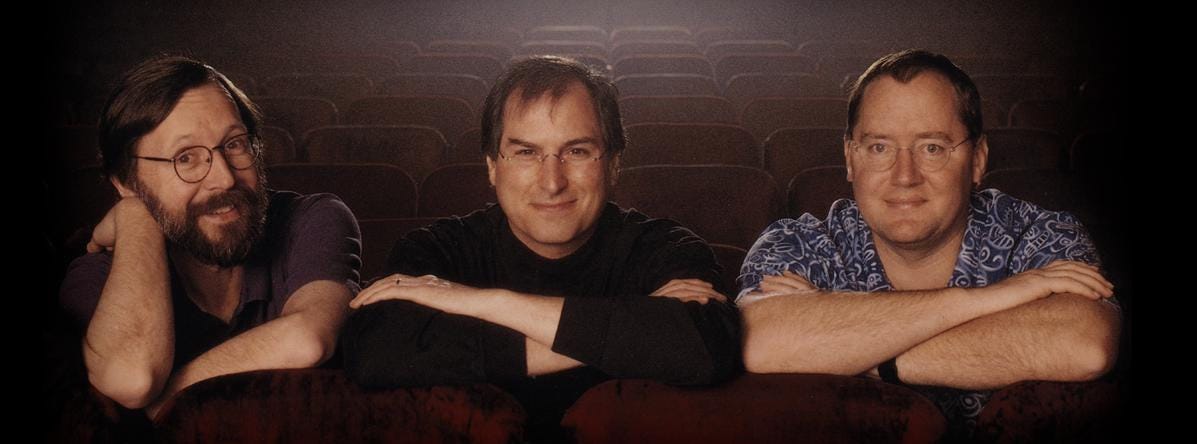
All three forces had left Pixar before 2020— by death, by exile, and by their own choice respectively— when Pete Docter took over as Pixar’s CCO. And the 2020s have been, for better or worse, Docter’s tenure. He would encourage filmmakers to explore more “authentically felt, personal stories that embrace different genres” that wasn’t exactly “part of a Pixar house style”, leading to a spate of films from new Pixar filmmakers such as Onward, Luca, Turning Red, and Elio.
Alas, the COVID-19 pandemic hit just as these films were ready for release, badly hurting its box-office chances and robbing us from ever knowing whether these films could have done financially well as past Pixar films (I personally think Turning Red would have posted big numbers).
And according to a WSJ article, employees current and former are citing Docter’s “autobiographical” directive as part of the reason why Pixar has been struggling as “too many audience members struggled to connect” with these more “personal” films. In 2023, Docter course-corrected and said that they’d “erred in making so many autobiographical movies and needed more broadly commercial hooks” and “universally relatable concepts like talking toys and monsters in the closet” that once made Pixar unstoppable.
What’s undeniable is that Pixar under Docter is very different than it was under Lasseter, who had “final say” in the Pixar braintrust— a collective that offered feedback on every Pixar project throughout its development— and was “the loudest voice”. Whereas Docter, according to people who’d worked with the Academy Award-winning director, described the current CCO as “the least assertive member of the braintrust” who never seemed to “want to be the bad guy”— while also being described as “supportive,” “humble” and a “filmmaker’s filmmaker”.
This is, of course, not great. But there’s a fourth point to be made about Pixar between 1995’s Toy Story and 2026’s Toy Story 5: Can the new generation of filmmakers live up to the standards of the first Pixar wave?
Lindsey Collins, Pixar’s senior vice president of development, said:
One of the things that brought the initial group together here was a desire to rebel against the traditional Disney musical. This next generation grew up on Pixar and they’re figuring out their version of rebellion.
The animation is not in question; the question lies in whether this new generation of filmmakers can tell stories that last the test of time. Toy Story 5 is being helmed by Andrew Stanton (Finding Nemo, Wall-E) who was among the original creators of the first Toy Story— and co-directed by Kenna Harris— so it’s really a film from the old vanguard. But from thereon out, Pixar’s slate consists of films from the new wave. Hoppers, which also came out this year, did modestly at the box office and was well-received, but there’s an uncanny sense that it’s operating at a creative level closer to what you’d expect at a rival animation studio than Pixar.
The success of Toy Story is the sum of many parts. But if Pixar wishes to return to its golden years of animation, it would be worth studying what worked then and implementing it for the next decade (minus Lasseter’s behavior, naturally!).
What’s your favorite Toy Story film? Share your answers in the comments below.
Thanks for reading! If you liked this essay, you can sign up here for more issues. If you’d like to support Three Left Feet Media, share this newsletter with a fellow film lover you think would appreciate it.
Long live the movies!
D.L. Holmes
And merchandise sales.
And Steve Jobs, who became a billionaire thanks to taking Pixar public.
Pixar co-founder Alvy Ray Smith put Moore’s Law plainly as follows: “Everything good about computers gets an order of magnitude better every five years.”
Sounds to me like this is where Toy Story 3 got its daycare plot.
Here, a garbage truck; in the film, a moving van.