

Batman Begins (Or How To Do A Gritty Reboot Properly)
How Christopher Nolan revived Batman for the movies and inspired a slew of imitators in Hollywood.

Twenty-one years ago on this very day, Christopher Nolan’s Batman Begins hit cinemas and inspired a wave of gritty reboots in Hollywood i.e. films and TV shows that explored the origins of a famous character, often with a realistic approach.
Arrow. The Amazing Spider-Man. RoboCop. The SnyderVerse DC movies1. Star Trek. Ridley Scott’s Robin Hood. King Arthur: Legend of the Sword. The cancelled CW PowerPuff Girls pilot. The Guy Ritchie Sherlock Holmes movies. The 2015 Fantastic Four. Riverdale. Rise of the Planet of the Apes. HBO’s Perry Mason. The Mortal Kombat reboot.
You get the drift.
The funny thing is… Batman Begins wasn’t exactly a gigantic box-office hit. Yes, $375 million is nothing to sneeze at, and it was the second-highest grossing Batman film since Tim Burton’s Batman, but compared to the success of its two sequels— The Dark Knight and The Dark Knight Rises both grossed over $1 billion dollars2— what Batman Begins made was peanuts.
Here are a list of movies that earned more money in 20053:
The Chronicles of Narnia: The Lion, The Witch, and the Wardrobe - $745 million
War of the Worlds - $603 million
King Kong - $556 million
Madagascar - $542 million
Mr. and Mrs. Smith - $487 million
Charlie and the Chocolate Factory - $474 million
Yes, Madagascar, a Brad Pitt film, and a Narnia film out-earned Batman at the box office. Simpler times.
Yet the real success of Batman Begins lies in the cultural impact it had. For over a decade, you couldn’t turn anywhere without bumping into some “gritty” origin story. But of all the imitators, the only one that worked on a similar level was the James Bond reboot Casino Royale, which followed the same playbook as Nolan. The other films really depend on your mileage— personally, I liked The Amazing Spider-Man and Man of Steel, and I only enjoyed Arrow‘s season two.
So why did Batman Begins work and nearly every other attempt fail to replicate its success? Is it because Batman was already tailor-made for a dark and gritty take while others weren’t, or was it simply because Christopher Nolan had an incredible vision for the character?
Funny thing about Batman… Warner Bros. wasn’t planning to reboot the franchise at all.
In fact, Christopher Nolan wasn’t planning to make a superhero film at all. In fact, he was preparing to direct 2004’s Troy while Warner Bros. was preparing to make a Batman vs. Superman film. But the latter film’s director, Wolfgang Petersen, dropped out of the project and wanted to make Troy, which he had been developing for Warner Bros. So Warner Bros. removed Nolan from the Homer adaptation and gave him Batman as a “consolation prize” instead.
Ironic considering that twenty-plus years later, Nolan is making The Odyssey, which is a sequel to The Iliad which was the basis of Troy.
But here’s the thing…
Christopher Nolan lacked comic book expertise
“Even though I’ve always been a fan of Batman, I am by no means a comic book expert, and so I didn’t feel capable of doing a first draft and coming up with that story myself. I needed a writer on the project who knew the character inside and out, and knew the comic world. Everything we did in translating the character’s comic story to film would have to be extremely reverential to the mythology of Batman.” – Christopher Nolan
Nolan was a Batman fan, but by his own admission, he didn’t know much about the comics. That didn’t trouble him, though. He simply hired the biggest comic book fan working in Hollywood: David S. Goyer, the guy who helped kick-start the comic book adaptation craze with Blade (1998).
Even though Batman was at the top of Goyer’s wish list, he was so busy in pre-production on Blade: Trinity (which he’d direct) that he had to reluctantly turn down Nolan’s offer to co-write the script.
See, Nolan was interested in was the artistic challenge of taking the ‘comic’ out of the ‘comic book movie’, approaching Batman like would any other film he had made.
But he needed a proper comics book expert to get the mythology and lore correct. So a week later, Nolan called Goyer again. Goyer declined again. “But,” he added, “if I was going to write it, this is what I would do.”
And proceeded to spend one hour on the call explaining what he envisioned.
To Goyer, there were only two ways to reignite an audience’s interest in Batman:
Either jump forward to the future—something already explored in the excellent animated series Batman Beyond;
Or to go back to the beginning.
The second idea was exactly what Nolan had in mind. He insisted that Goyer had to write the first draft. At last, Goyer was persuaded. The two worked out a system where Goyer would work on Batman Begins from seven in the morning until noon, and then work on Blade: Trinity until ten at night.
“It almost killed me,” he recalls, “but it all worked out in the end.”
It seemed that being a diehard fan of the source material wasn’t a prerequisite for rebooting an established property. In fact, that very distance could have allowed Nolan to take the Batman IP into creative territory. To make up for his lack of knowledge, he picked a collaborator who was well-versed in Batman lore.
Use the source material as a starting point
Batman first appeared in Detective Comics #27 in 1939. That meant Nolan and Goyer had sixty-plus years of stories to draw from instead of reinventing the wheel. Unlike other attempts to adapt comics by practically ignoring the comics, Nolan and Goyer studied what stories they could use.
There were at least three comics that proved monumentally influential to their adaptation:
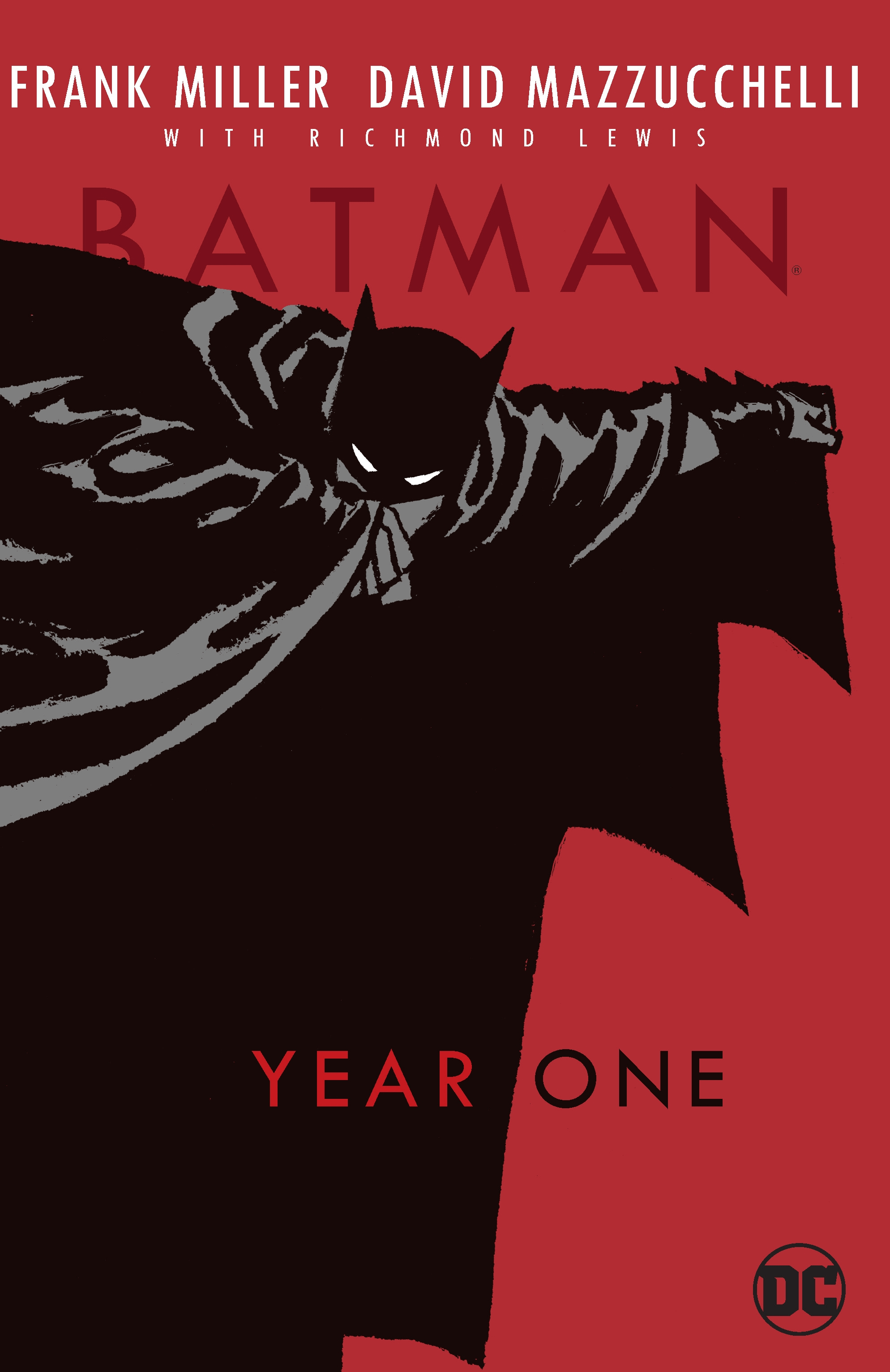
Batman: Year One by Frank Miller and David Mazzucchelli (serialized in DC Comics’s Batman nos. 404–408, 1987)
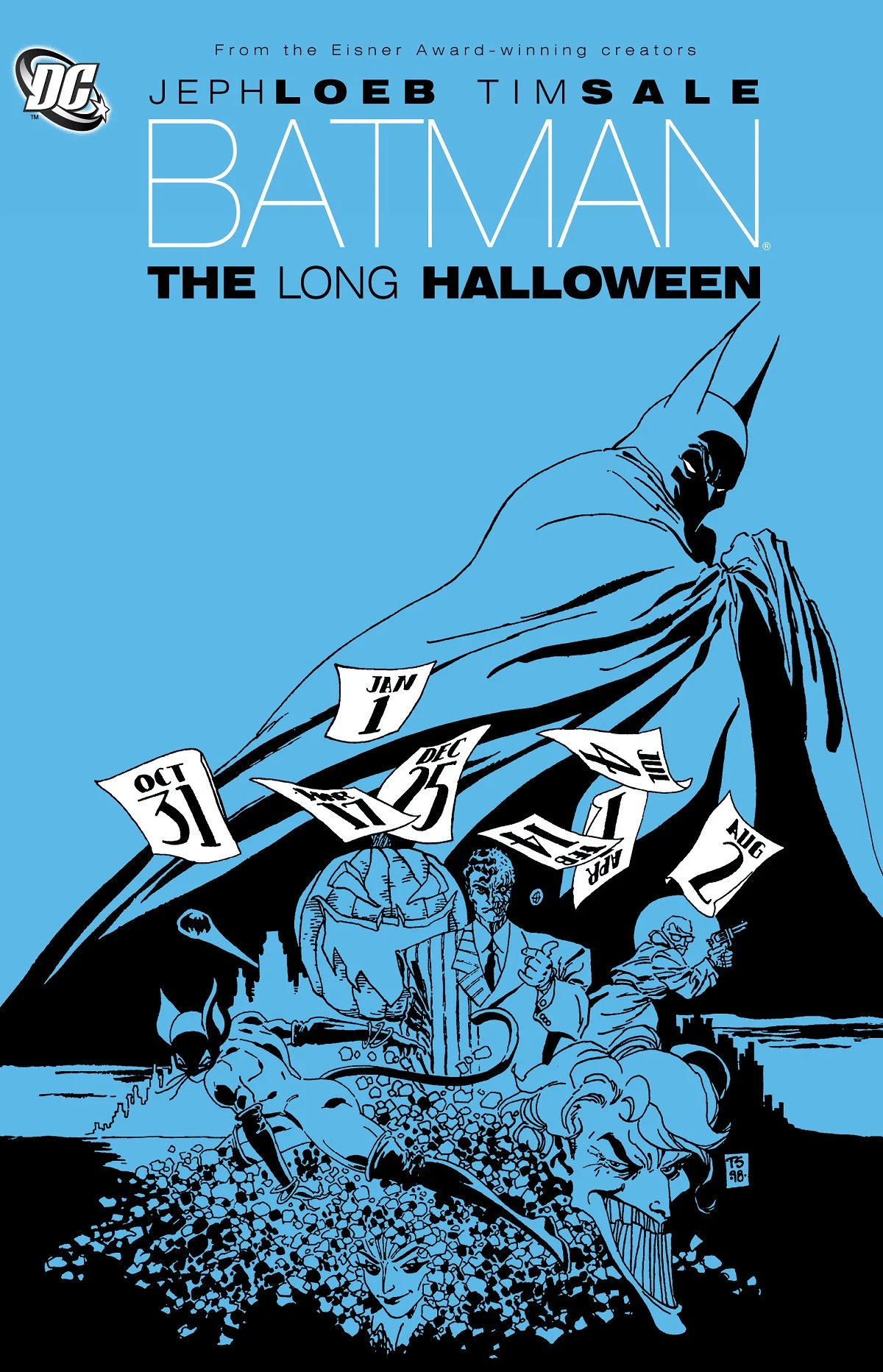
Batman: The Long Halloween by Jeph Loeb and Tim Sale
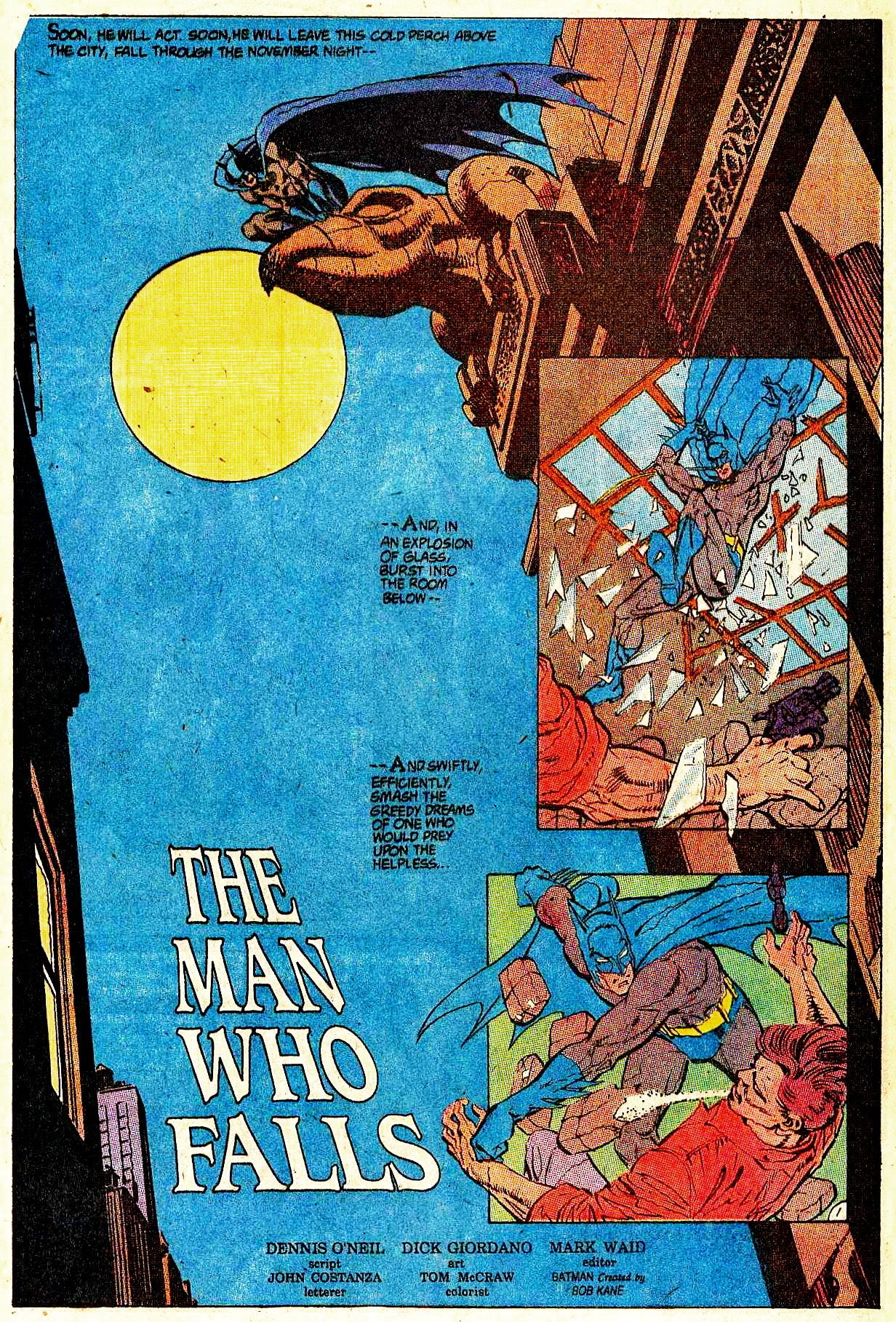
“The Man Who Falls” by Dennis O’Neil and Dick Giordano, a short story originally published by DC Comics in Secret Origins, 1990.
Frank Miller’s and David Mazzucchelli’s Batman: Year One provided several key story elements that wound up in Batman Begins, such as Bruce Wayne’s return to Gotham City, his early forays as Batman, the relationship between Batman and Jim Gordon (who wasn’t a commissioner yet), and the corruption in Gotham City.
Said Goyer:
… I think Miller was the first to suggest that the police force in Gotham City was corrupt. That was important, because it left an opening for Batman. If the police were doing their job, there wouldn’t be a need for Batman.
This thread was picked up in Jeph Loeb’s and Tim Sale’s Batman: The Long Halloween which introduced mob boss Carmine Falcone as the root cause of Gotham’s corruption and poverty, indirectly leading Joe Chill to kill the wealthy Waynes in front of their son that led him to becoming Batman.
There was also one other crucial influence on the Batman Begins script…
Christopher Nolan repurposed his abandoned Howard Hughes biopic for Batman Begins
After Insomnia, Nolan was going to make a film about Howard Hughes. But when he learned that Martin Scorsese was already making The Aviator, he reluctantly tabled the script4.
But there’s no such thing as an abandoned script. Given the parallels between Howard Hughes and Bruce Wayne— millionaire orphans, eccentrics, inventors— a lot of ideas in the Howard Hughes script ended up in Batman Begins instead5.
In Tom Shone’s The Nolan Variations: The Movies, Mysteries, and Marvels of Christopher Nolan, Nolan recalls:
A lot of my Hughes script went into Batman Begins. And the Bond films—huge. We really wanted to give it a more Bond-like global footprint. Those movies were our guiding light in terms of how the geography of a film can enhance the feeling of scale. There was also such a clear influence of Fleming from the gadgets Bob Kane [and Bill Finger] had given Batman that we felt we could repay the favor by having a Q-like figure in the character of Lucius Fox. Those influences, along with a lot of the other seventies and eighties blockbusters I’d grown up with, opened up our approach to Batman.
Later, he would reflect:
I didn’t want to treat [Batman Begins] as a comic book movie. Everything we did was about being in massive denial that there was such a thing. Batman Begins and The Dark Knight go massive lengths to do that. By the time we got to The Dark Knight Rises, there indeed was a superhero genre— The Avengers came out the same summer and then it grew and grew after that. The superhero genre as it exists now, that’s just a given. At the time, we were simply making action films that aspired to stand alongside any kind of action film. We were trying to make epics.
There was another thing that really helped influence the direction of Batman Begins, and it’s the kind of tactic that filmmakers making smaller films are told to do…
Imagine what the concept of the teaser trailer will look like
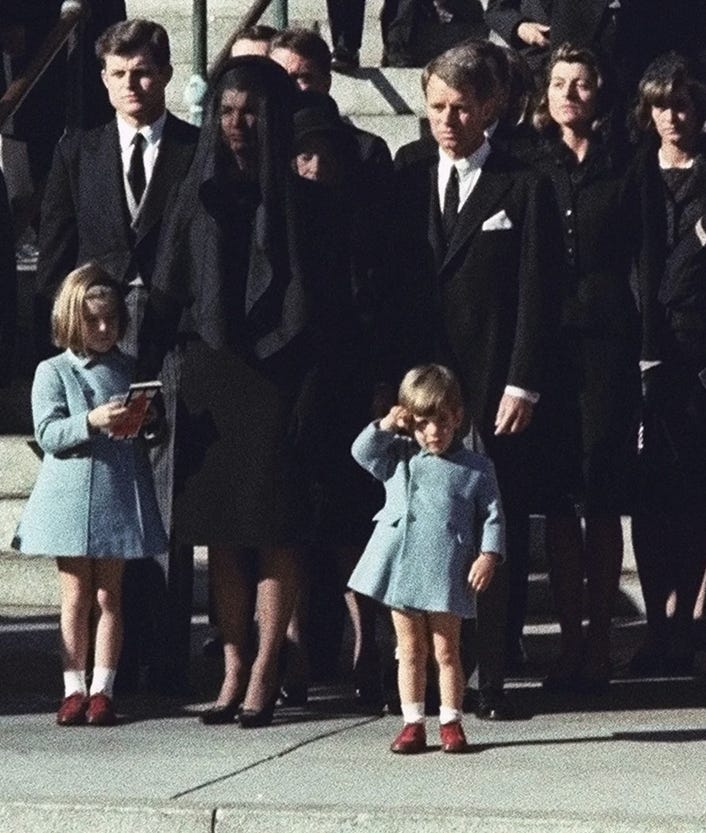
One of the biggest inspirations for Batman Begins had nothing to do with Batman. Instead, it was a famous photograph: That of three-year-old John F. Kennedy Jr. at his father’s funeral. Nolan and Goyer were thinking about what they wanted to show and convey in the film’s teaser trailer— that it was going to be about Batman’s origins and his life before the costume.
In The Art and Making of The Dark Knight Trilogy, Goyer revealed:
That photograph, which showed this little child trying to look stoic and brave, triggered something for us. We thought it would be great if the first trailer showed Bruce Wayne as an eight-year-old boy, after his parents had been killed. We referred to him as the loneliest boy in the world because he becomes heir to this multi-billion-dollar company, Wayne Enterprises, but he can’t run it for another twenty years. We viewed him as a prince regent being groomed to one day become king— and the commoners can’t touch him.
In fact, this is exactly what ended up in the Batman Begins teaser trailer, which only hints at Batman with a glimpse of the character at the end. Until that moment, it really could have been a different kind of movie.
I think this practice of starting with an image is a valuable tactic that works for filmmakers. When researching for an essay about Terminator 2, I came across something similar: Stan Winston was having a hard time grasping James Cameron’s idea for the liquid T-1000 and told the director that he needed an image beyond a silver blob; and that was what prompted Cameron to make the T-1000 as a cop.
But more importantly, the fact that Nolan thought about the teaser trailer LONG BEFORE writing the script shows that thinking in central images and what the marketing campaign will look like helps to create something cohesive and marketable. The Dark Knight and The Dark Knight Rises would also do something similar, using the teaser trailers to convey the ideas of those films— a powerful force shattering the Batman symbol and Gotham City crumbling respectively.
Another image that would be crucial, though absent in the teaser trailer, was Rachel Dawes. An original character created for the film, Dawes is Bruce Wayne’s childhood friend and the daughter of one of the Wayne Manor maids; Nolan and Goyer envisioned young Dawes looking up and waving at the forlorn young Bruce looking out from an upper-story window after his parents’ funeral. Said Goyer:
She would look up and see this lonely little boy waving back at her, as if he was a prisoner of Wayne Manor.
This post-funeral scene was something that Nolan wanted to explore because little of Wayne’s childhood had actually been shown in the comics. Said Nolan:
All you ever saw of him as a little boy was the brief flash of him coming out of the movies with his parents, and then the bad guy shooting them—and that was it. We didn’t know anything about the parents, or what happened to Bruce after their deaths. This was our ‘in’ into the psychology of Bruce Wayne—that he grew up as the loneliest boy in the world, sheltered and secluded, a very tragic figure.
Making Bruce Wayne the central character
Past Batman film didn’t give much thought to the Bruce Wayne character— the only one that had was arguably 1993’s animated film Batman: The Mask of the Phantasm, which covered Batman’s origins in flashbacks. For his film, Nolan wished Bruce Wayne to be as compelling as Batman. Says Nolan:
To me, what was even more interesting than the duality between Batman and Bruce Wayne was the duality within Bruce Wayne. There was his public face as a dilettante and playboy, the last person anyone in Gotham would suspect of being Batman. And then there was the private Bruce Wayne—and that’s the figure that our film had to bring to life.
That meant reconfiguring the character’s origins for the 21st century without completely deviating from it. Batman was a creation of the Great Depression; as Grant Morrison summed it up neatly in Supergods:
“Superman began as a socialist, but Batman was the ultimate capitalist hero. He was the defender of privilege and hierarchy.”
This Great Depression origin is hinted in Batman Begins. Gotham City is in a terrible state, controlled and run by mobsters like Carmine Falcone—not unlike Chicago during the reign of Al Capone—with the Waynes trying to combat poverty through various philanthropic initiatives. Indeed, Batman Begins would arrive in cinemas three years before America was plunged into the Great Recession.6
Nolan also wanted to answer the question: why a bat? The comics don’t really provide a satisfying reason, so Nolan and Goyer came up with the opening scene in which Bruce falls into a well as a child and is traumatized when bats engulf him in the darkness. When the Waynes go to an opera—Mefistofele— the “batlike creatures” onstage trigger the memory in young Bruce, which prompts the parents to exit through Crime Alley… and gets killed.
Nolan elaborates:
It reminds him of his trauma— this terrible experience with the bats—and he asks his parents if they can leave, and it’s in leaving the opera that they encounter the mugger who kills them. We wanted to tie together Bruce Wayne’s feeling of guilt over his parents’ death with his fear of bats. We wanted his parents’ murder to be forever associated with the idea of the bat, which is why that symbol becomes so significant in his life.
Fucked up, isn’t it? I love it!
Batman goes global
In The Nolan Variations, Nolan says:
When I was writing Batman Begins I spent time in San Francisco and London just to travel; a lot of The Dark Knight I wrote in Hong Kong, while I was location scouting. Interestingly, when Batman Begins came out, it was considered to be a bit gritty and real compared to the other films. The reality is, it’s a very romanticized film, a very classical film. If you’re looking for an emotional connection to landscape, I think, of all my films, Batman Begins is the most successful in that regard. I think there’s a very, very strong set of connections. There’s a romance and a relationship between the way the environments feel and what they represent. Batman Begins has everything to do with his transition into a superhero, and that’s a big chunk of the film in the beginning.
Just as the Bond films tend to be globe-trotting affairs, Batman Begins include locales outside Gotham to position this fictitious city against a grander global scale. Compare that to past Batman films that confine the story to Gotham alone, creating a slight artificiality. The traveling aspect was partially inspired by Nolan’s own love of traveling when he was younger, thanks to the free tickets that his mother got as a flight attendant.
There was also a narrative question to all this travel: If Bruce Wayne returned to Gotham City to become Batman, then where was he before that? This was inspired from a 1989 comic book short story, ‘The Man Who Falls’, by Dennis O’Neil and Dick Giordano, which chronicled Wayne’s early years.
Said Nolan:
[‘The Man Who Falls’] story suggests various points in the development of Bruce Wayne into Batman, including the idea that he disappears for seven years and travels the world, learning all of the skills that eventually become important to being Batman. That was the jumping-off point for our story.
This also allowed Nolan to inject his love of juggling timelines, though in constrained form, in the first act of Batman Begins, switching from past to present to depict why Bruce Wayne was a lost and angry young man in an unspecified Asian prison; his trauma of bats and the death of his parents; and his reasons for leaving Gotham.
Nolan muses:
I felt very strongly that if we wanted to make a film that could be considered outside that specific genre—if Batman weren’t just Batman but this figure that Bruce Wayne becomes—you would have to put all that work in just to make the audience believe it. So we wanted to do all that work. That was maybe the difference between what we were doing and what had come before us. It’s the duality that is interesting.
The Villain Who Mirrors— And Trained— The Hero
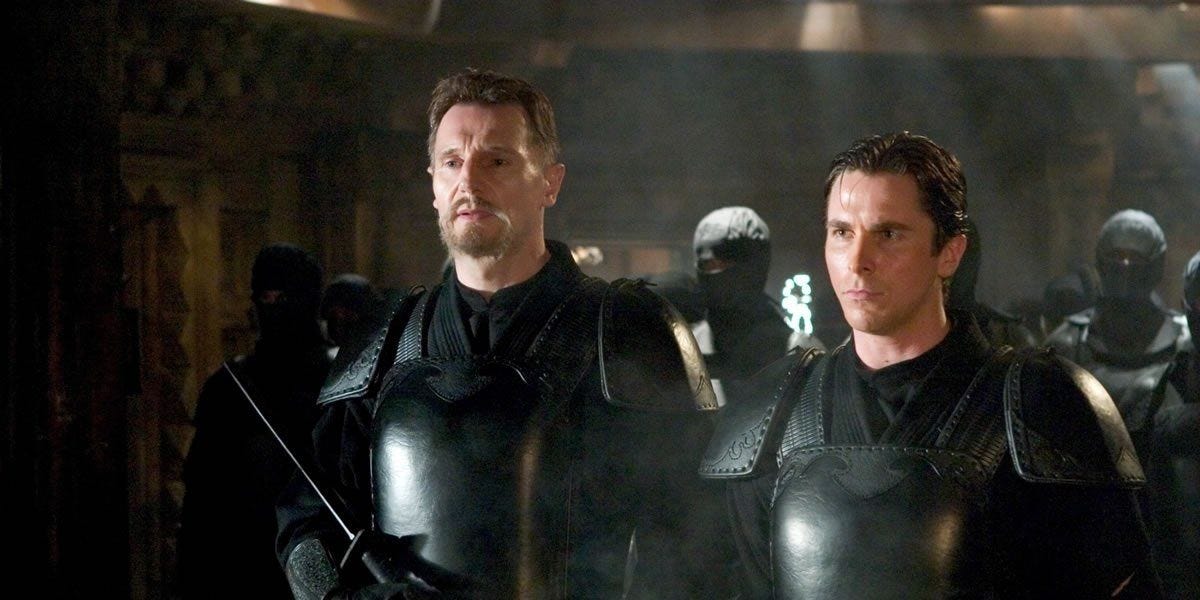
Nowadays, the trope of the villain being a mirror of the hero is old hat— Marvel Studio make a killing out of it— but Batman Begins was the first Batman film to suggest that Batman was mentored and trained by a supervillain, putting the two on collision course due to having different ideas of justice.
As Nolan notes:
As the most human of the super heroes, Bruce Wayne is always poised on this knife-edge between taking the right path and taking the wrong path. Ducard [Ra’s al-Ghul] and the League of Shadows offer him one way to deal with criminality, which involves many positive things. He learns combat skills, theatricality, and deception, all things that will play into the Batman persona. But, ultimately, the path they offer is questionable, and Bruce must decide whether to follow it or go his own way.
It was—and still is—a radical approach. In The Nolan Variations, Shone makes this point:
No other superhero saga begins this way. Superman doesn’t become Superman by playing apprentice to Lex Luthor. Spiderman doesn’t become Spiderman by auditing the Green Goblin. The idea that Bruce Wayne, in order to become Batman, must first be apprenticed by his enemies is new not just to the Batman franchise but to the superhero genre as a whole, baking moral ambivalence into the saga from the get-go and making that ambivalence concrete by giving Bruce a place, or series of places, that represents his riven self.
A realistic approach meant everything had to have a “why”
Everything in this version of Batman had to have a plausible reason behind it. That started, of course, with the biggest question of all: Why does Batman dress up as a bat, and why does it scare people?
Says Nolan:
The best explanation offered by the comics, and the one that was the most interesting to me, was the notion of him using fear against those who would use fear themselves. It was the idea of becoming a symbol, and not just a man. A flesh-and-blood man can be destroyed. A symbol is much more frightening and intimidating. And so he looks for the most intimidating symbol that he can think of, and he naturally gravitates toward the thing that has frightened him most since he was a child—bats.
The plausibility rule then extended to Bruce Wayne’s transformation into Batman. To feel credible, Nolan and Goyer decided that all of Batman’s tools would be based in real-world sources. Nolan elaborates:
We wanted the audience to experience the process of becoming Batman through Bruce Wayne’s eyes, to really get inside this guy’s head and go on that journey with him… We got into the detail of his gadgetry and how that hardware came to be. How would you put together the tools to be Batman? We thought of things like Bruce spray-painting his equipment a matte black, or using a grinder to form his own metal Batarangs. It was a homemade approach, because that’s how Batman would have to start. He couldn’t jump in as a branded figure with these beautifully designed gadgets. It was important that we start with more crude tools, and show where they came from and how they were put together.
For the film, Batman’s gadgets would come out of Wayne Enterprises himself, courtesy of Wayne employee (and later CEO) Lucius Fox, head of Applied Sciences Division. Fox is a quasi-father figure to Bruce Wayne as he knew his father, making him one of three father figures in the film; the other being al-Ghul, and of course, the loyal butler Alfred Pennyworth.
Said Goyer,
The main theme in the movie is how fear regulates our lives. But the other important theme is about fathers, and living up to the legacies and expectations of fathers.
This realism meant that even something as small as Batman’s gauntlets had to have a reason for being there. Goyer remembers:
That was Chris’s mantra the whole time we were working on the script— ‘it has to be real, it has to be real.’ For example, we were looking at a comic book one day and Chris noticed that there are bars on Batman’s gauntlets. So he asked: ‘What are those things? What do they do?’ I had no idea. ‘They have to do something, Goyer. Figure it out.’ He was like that with every little thing. ‘Why are the bat ears so tall? There has to be a reason for that!’
Adds Goyer:
[Christopher Nolan] was very exacting, and there were times when that drove me completely crazy—but it was also great. You want someone to push you, and you’re willing to be pushed by Chris because he’s so good and he cares so much.
This also meant that a lot of fantastical Batman villains like Mad Hatter and Clayface were ruled out immediately from stories. Even Scarecrow was touch-and-go because Nolan wanted a good reason for why the Scarecrow wore a mask. In the end, they settled on an explanation that the mask served as a gas mask that protected Jonathan Crane from the effects of his fear toxin.
The films that influenced Batman Begins
Nolan is a filmmaker, so naturally Batman Begins was influenced by other movies. One of the biggest influences was Richard Donner’s Superman, a film that cast known actors such as Marlon Brando (The Godfather), Gene Hackman (The French Connection), and Glenn Ford (The Big Heat) in these fantastical roles, lending gravitas and credibility to a comic book story.
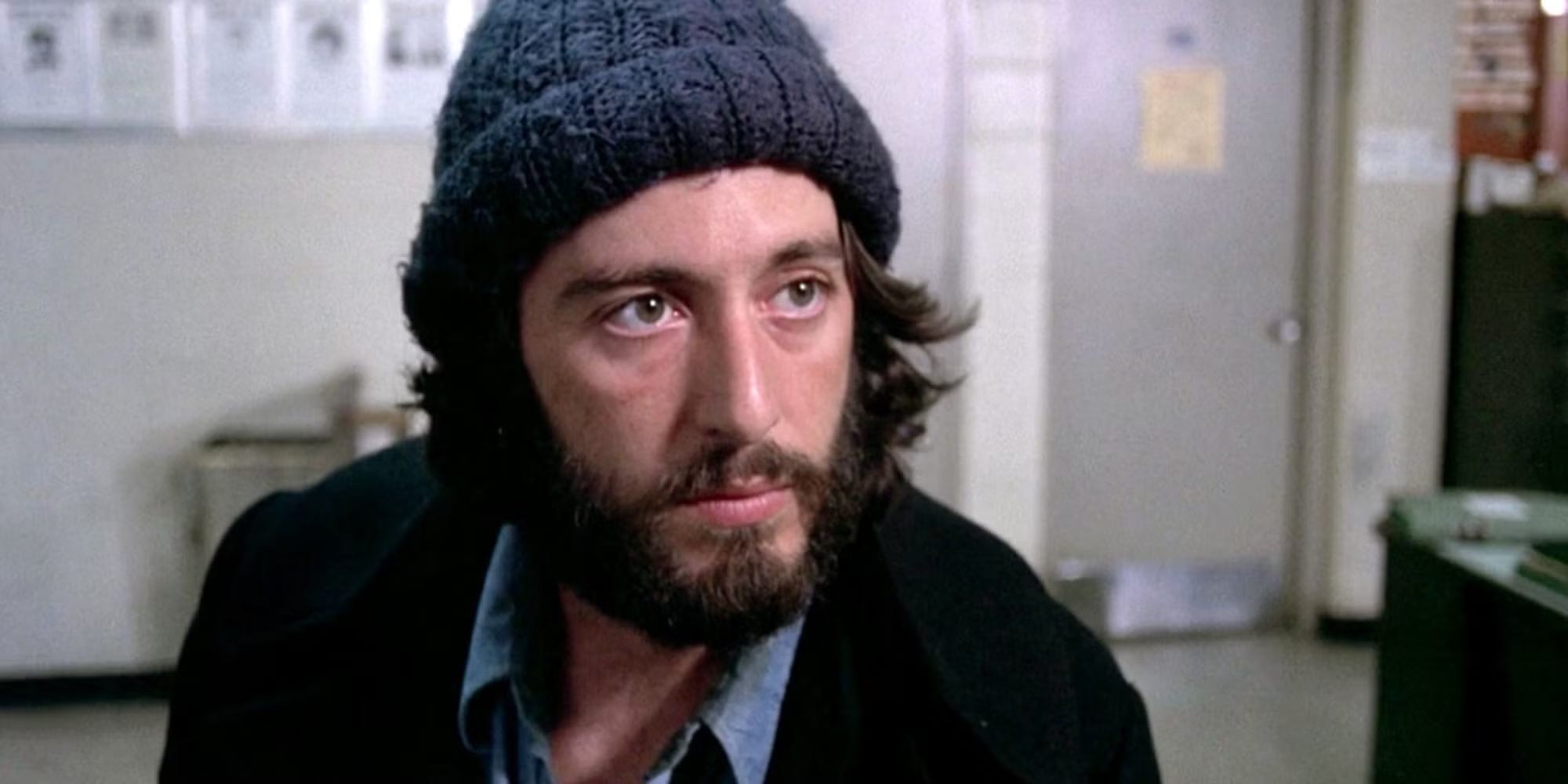
Another influential film was Blade Runner in depicting the decaying state of Gotham City, as well as Sidney Lumet’s Serpico. Lumet is a surprising big influence on Nolan7; surprising because Lumet wasn’t a formalist filmmaker like Stanley Kubrick or Nicholas Roeg, both influences on Nolan. Instead, Lumet made realistic dramas with fiery themes that never had a formal style but were undeniably Lumet:
12 Angry Men.
Network.
Dog Day Afternoon.
The Verdict.
Serpico.
Nolan elaborates on Serpico’s influence on Batman Begins:
Serpico is a horror movie set in the real world, well and truly. It’s absolutely terrifying. We lifted it completely for Batman Begins. The corruption of Gotham had to be on that depressing 1970s level; it had to be on the Serpico level for Batman to make any sense. How is it that Gordon would accept a vigilante? It has to be that Frank Serpico thing where he can’t otherwise do anything. The wheels of justice have ground to a halt. The thing I start to feel over time, seeing the films that I’ve grown up with, and where they sit in film history now, there’s something about the fundamentals, something about simplicity that tends to carry the day. That is what you get from those movies, how hard it is just to be clean in a world that’s dirty. That’s what Serpico gives you.
Nolan turned his garage into a creative lab
This might be my favorite discovery about how Nolan approached rebooting Batman: he used his garage as a makeshift office to brainstorm ideas with David S. Goyer.
But that’s not the only thing he was doing.
At the same time as the two were discussing the script, Nolan brought production designer Nathan Crowley to create prototypes of the Batmobile, based on a clay-model version that he had made. Crowley built models of the Tumbler, a utilitarian-inspired version of Batman’s car, using parts from car and airplane model kits as well as computer-based sketches. Part of Nolan’s focus on the Batmobile was to create a vehicle that could actually be driven for car chase sequences along the lines of The French Connection. Nolan was determined not to use a digital Batmobile: “I wanted a real car out on real streets.”
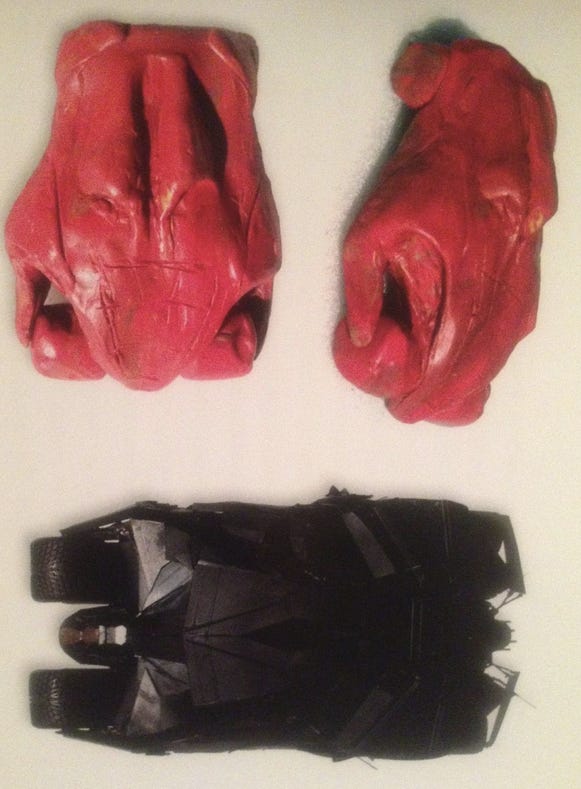
Emma Thomas, Nolan’s producing partner and wife, would call the garage a “fantastic” lab for working on Batman.
It was just brilliant having David Goyer in one room working on the script, while Nathan was in another coming up with the look of the film. There was a synergy in having them both in the same place, with Chris flitting between the two. It advanced our process considerably. It felt very normal for us, as well, because that’s the way we’d always worked. Our first feature film was shot with friends over weekends, in our flat or in Chris’s parents’ house. So this felt like a very organic, natural thing for us. The only difference was that instead of a low-budget, independent film, we were doing Batman.
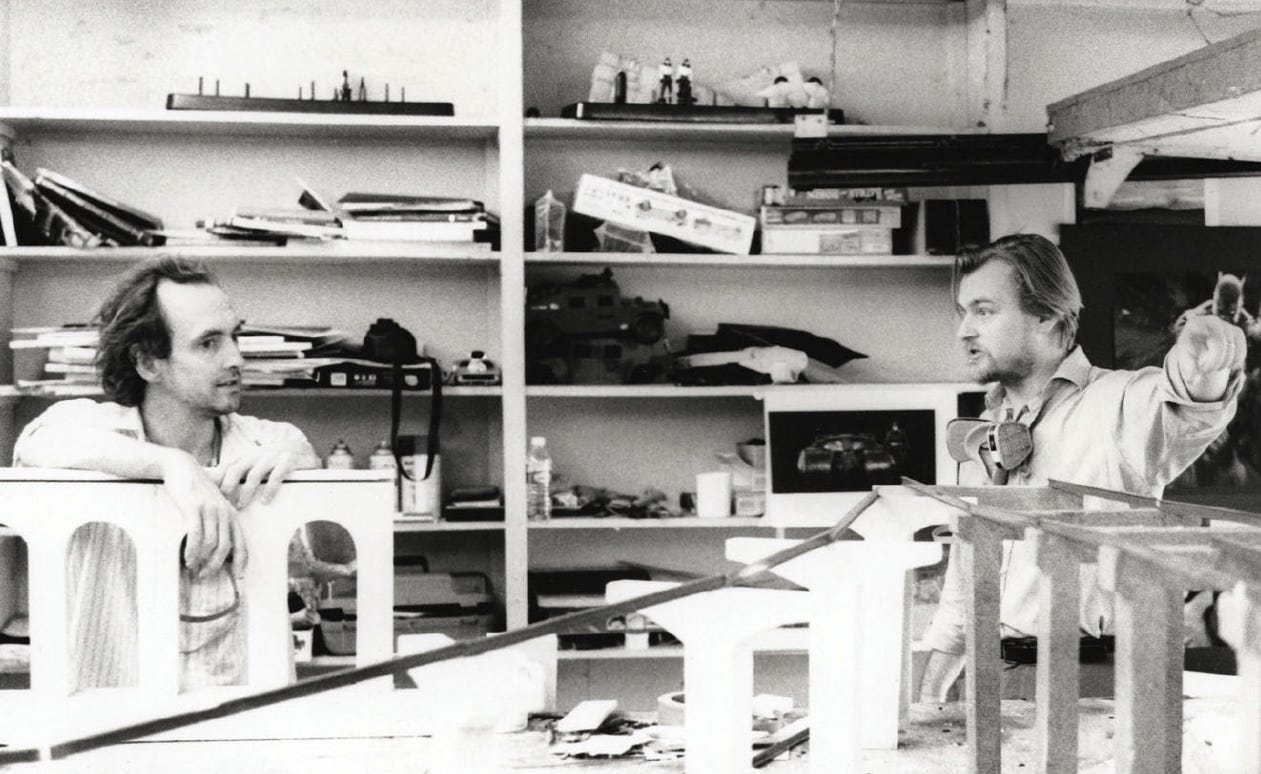
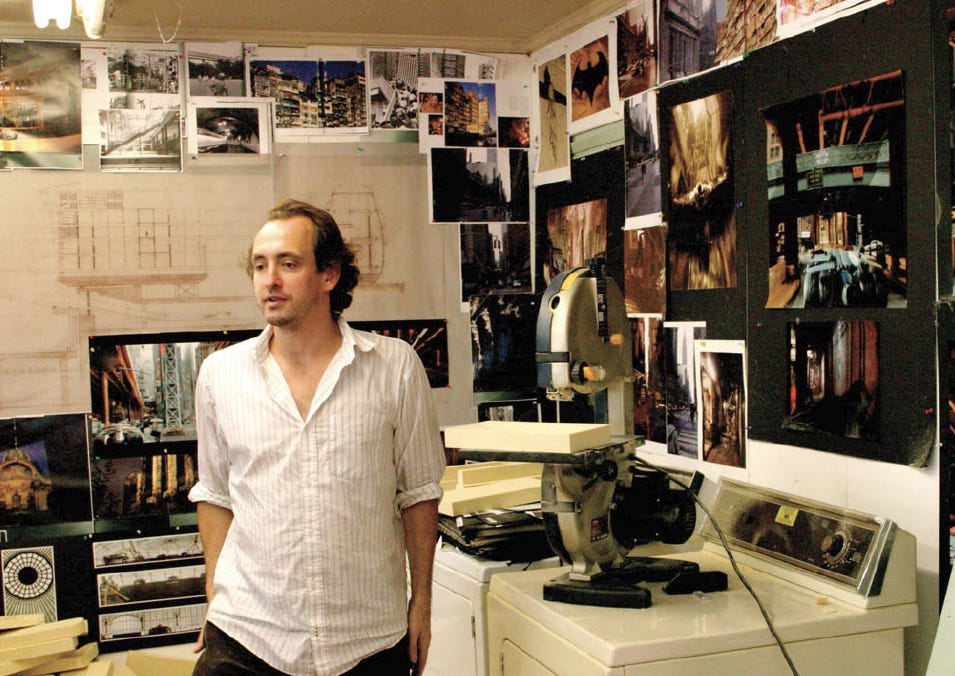
Most filmmakers, especially at that still-early stage of their career, probably wouldn’t have their writer and production designer working out of a garage simultaneously especially on such a famous IP like Batman. But there is a tactility and scientific approach to this that I absolutely love, because while they were developing the script, they could design prototypes of the ideas at the same time to see what it might look like.
I also like that Nolan really likes a hands-on approach to his work— see his idea to build a clay version of what he imagined the Batmobile to be like. There’s something about this method that makes filmmaking feel like play, that aspiring filmmakers could benefit from doing more often— especially in an increasingly digital age.
But Nolan also had a more ulterior reason for wanting to present a script and designs to Warner executives at the same time: he wanted to retain creative control and communicate what the film would be. He elaborates:
There was a way of doing those films that I was very afraid of because I knew it wouldn’t give me something of my own. We were being told all kinds of things by the studio about how long it would take to prep and what it would involve. You are encouraged in a big movie to very rapidly hire an enormous number of people—artists, concept guys, all this stuff. Then you have to feed that beast. And so, you’re in a situation where you go, ‘I need a robot for this science-fiction film. Figure me out a robot.’ And then you go away while they do whatever they feel like and come back with a robot. Which didn’t suit my way of working at all. They will spend literally millions of dollars on films that don’t happen, just a lot of design work, and you end up looking at a lot of pretty pictures. I wanted to not do that, so I had to find a way around it.
This might be a reason why Nolan has never run over-budget or over-schedule yet despite making expensive films: He doesn’t waste time and money making films the way studios are prone to doing. He takes an almost indie-like approach that eliminates waste while staying very much in control of the material.
For Batman Begins, it wasn’t a pitch deck with images borrowed from other films, but a script with an honest-to-God model of the Batmobile to convey the realistic style he wanted.
Over May and June 2003, Goyer would incorporate the ideas discussed into a first draft, handing it over to Nolan and moving to Blade: Trinity. Nolan would refine the script—working through a total of seven drafts with uncredited help from his brother Jonathan Nolan—and then invite the Warner executives to his garage to read the script and see the prototypes they’d been building in the garage.
Nolan admits that the Warners execs weren’t too happy with him and his unorthodox way of using his garage as a makeshift lab. This was the time when scripts were continuously getting leaked and vocal online fans being vocal about what should or shouldn’t be done with these characters in the movies. Luckily, the script was so good and the prototype so exciting that they soon forgot their concerns and were on aboard with Nolan’s vision; in fact, they financed building a full-size, functional Batmobile prototype.
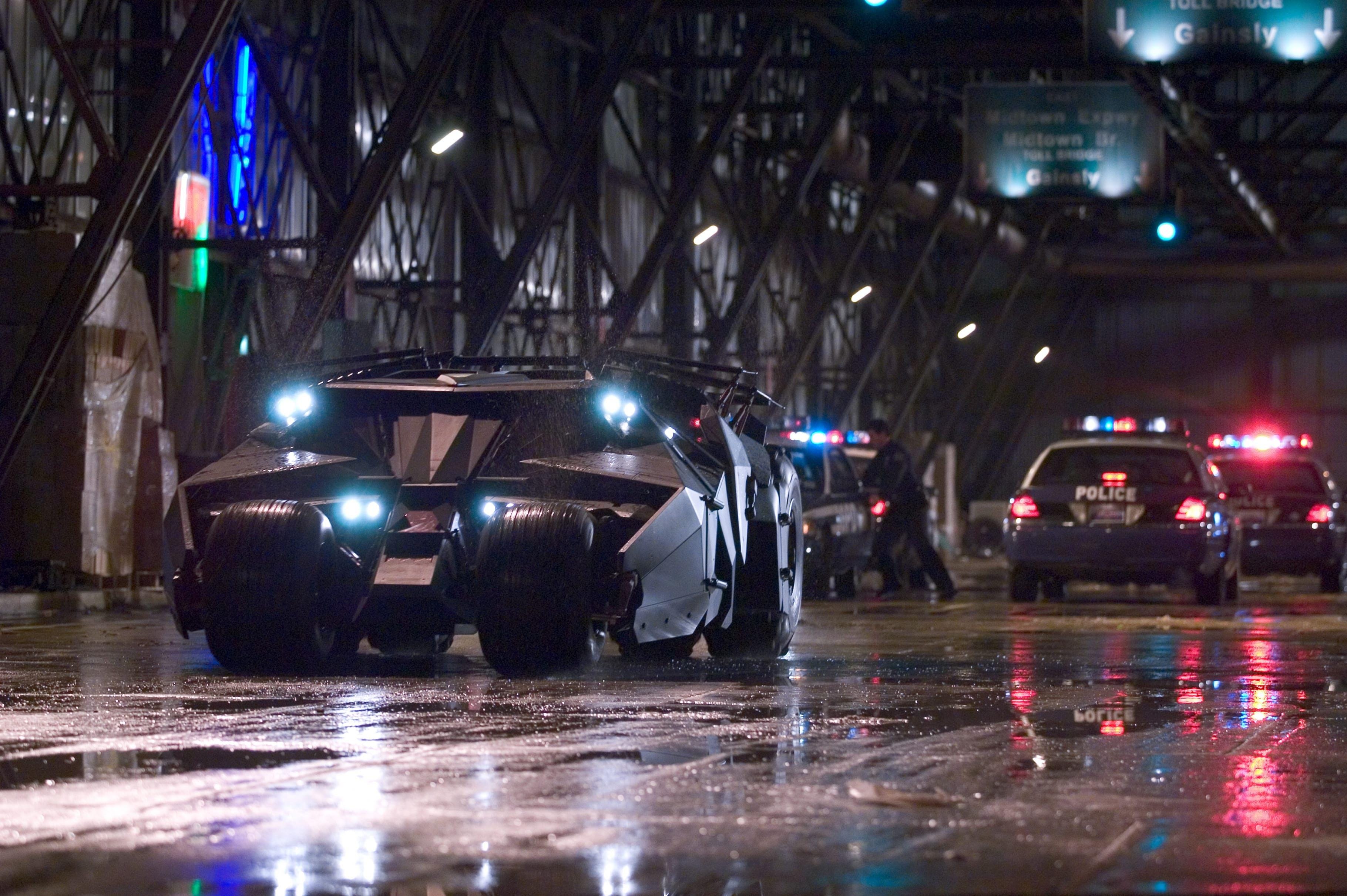
When it was time to start filming, they actually converted Cardington Sheds, the abandoned and cavernous World War I–era dirigible hangar in Bedfordshire, England, to use as a combined soundstage/backlot. They had to do this because even the biggest studio soundstages lacked the ceiling height to do the stunt work that Nolan had in mind. A stage set had a height of about 45 feet; Cardington gave them 160 feet.
Cardington Sheds allowed them to build entire sections of Gotham City while also allowing construction crews to build existing structures to mount other façades. It also allowed them to simulate nighttime environments and other weather conditions, maintaining a sense of reality without being at the mercy of English weather and shooting at night— something Nolan was eager to avoid as night shoots were exhausting.


Respecting the source material while also trying new things
Despite Nolan’s daring reimagining of Batman, he didn’t dare break all ties to the character’s long history, especially the iconography. With Batman Begins especially, they were being to deliver a traditional superhero movie; it’s only the sequels that allowed Nolan to unleash what he really wanted to do with Batman. As it was, though, he knew that his reality-based take on the character was pushing the boundaries of what both fans and DC Comics would find acceptable. Said Crowley:
On Batman Begins, we’d had to tread carefully, because we were entering a world that people had a lot of passion for, and we hadn’t wanted to ruin that for them. We’d had to find a way to fulfill their expectations while still giving them something new.
There was also the task of managing studio expectations, who want more and more in terms of scale and action. Says Nolan:
Instinctively, [the studios] are always after more, more, more. From what they read on a page they think, Well, hang on. Is there enough action? That is their biggest fear. With Batman Begins, we very specifically wrote it in the biggest way possible. We said, ‘We’ll travel the world; there’s going to be this huge Himalayan monastery and it’s going to blow up.’ We very specifically made it as big as it could possibly be. It was a huge learning curve for myself and for Nathan. Nathan had never designed a film on that scale, but he had worked as an art director on a lot of big films and had to build big sets.
He continues:
We built these enormous sets. But, of course, what we started to learn together is, building sets is not a great way to get scale on-screen. It really isn’t. Batman Begins is as big a film as has ever been made—I mean physically. At the end of it, the studio was very happy with the film, but they constantly kept saying, ‘Well, is it really big enough?’ I knew we had hit the absolute limits of geography in a movie. We couldn’t stuff any more in.
I think that’s an important thing to keep in mind. Lots of time, studios and filmmakers forget that a “gritty” reboot for its own sake is disaster: it has to give the fans something while also surprising them. Take, for instance, Ridley Scott’s 2010 Robin Hood— it evolved from one project (a sympathetic take on the Sheriff of Nottingham) to another (an origin story for Robin Hood), which is never a great thing, but perhaps the most disappointing thing is that while it does set up some of the Robin Hood myths (Little John, Maid Marian), it only hints at the Sherwood Forest and Merry Men part towards the end. Imagine if Batman Begins spent the ENTIRE film covering Bruce Wayne’s journey and only hints at his becoming Batman in the final minutes? Yeah, you’d have a riot.8
This is why Casino Royale, which came out a year after Batman Begins, got right. It took the same playbook— exploring how Bond became Bond— but it also incorporated pieces of the mythology with a fresh spin to show how the character becomes the character we know and love. For instance, there were Bond girls, yes, but Bond wasn’t exactly as suave and smooth yet— and he seemed to have a predilection for married women. Then there was his Double ‘0’ status— this Bond was still struggling to get comfortable killing people instead of coldly accepting it. We see where he gets his love of Aston Martins from (he wins the classic one in a game, then gets a modern version for his mission), we get a variation on the “Shaken not stirred” line9, and only when the film reaches the final shot, does Bond deliver his classic “Bond. James Bond” line.
You need to give what the fans want while using the origin story to show how it got there!
Whereas a lot of other “gritty” reboots fail beyond trying to cash in on a trend.
The other part of the equation is what is the filmmaker bringing to the table. Batman Begins was very much a Nolan version of Batman; just as the 1989 Batman was Tim Burton’s version of Batman10. There has to be a strong filmmaker driving the vision and keeping it together to give audiences a reason to check out a film.
It’s not the IP that sells; it’s a particular filmmaker’s TAKE on the IP that sells.
In 2023, Barbie did HUGE in 2023 not because it was Barbie, but because it was Greta Gerwig’s TAKE on the IP. That same year, people flocked to watch Oppenheimer not because everyone is a fan of the father of the atom bomb, but because it was Nolan’s take on the character.
Some IPs are bigger than the directors and might not matter so much. Musical biopics like Bohemian Rhapsody and Michael didn’t make loads of money because of the directors behind it; but because everyone is familiar with Queen and Michael Jackson.
For studios keen to make their IP work, their best bet is to let the director make it uniquely their own and to sell it as the filmmaker’s take on the IP. Consider:
Wes Craven’s Scream
Christopher Nolan’s Dark Knight trilogy
Greta Gerwig’s Barbie
James Gunn’s Superman
Matt Reeves’s The Batman
Denis Villeneuve’s Dune
Ryan Coogler’s Black Panther
People will turn out more for a filmmaker’s interpretation of the material rather than a studio-mandated version of an IP. ESPECIALLY IF IT’S A GRITTY REBOOT.
Years later, Nolan would reflect on the legacy of Batman Begins:
People liked the film a lot, but it actually wasn’t as successful as we expected it to be. You never expect success. I’m a very negative, superstitious, pessimistic person. When they were showing people the film, everybody loved it and there was a lot of excitement around it, but there was also a lot of ill feeling toward that character and that franchise because of the last couple of movies. The first time the term reboot was ever applied was Batman Begins, I believe. Certainly, I hadn’t been aware of it, and it’s part of the Hollywood grammar now. The big problem we had is that we were rebooting eight years after the last film, which felt too short—way too short. And it was too short. Now they’ll do it two years later. So the windows have gotten shorter and shorter now. For us, it was a real problem, because when we said to people, ‘Come and see the new Batman film,’ they were like, ‘I didn’t like the last one.’ There’s been a huge shift since we made the films in terms of audience expectations or audience confusion about ‘Is this the same film that I saw before? Is this not?’
Memento Turns 25: How Hollywood Rejected Christopher Nolan's Breakout Film, And How Independent Cinema Saved It

Since this essay is too long to read in an email, please click here to read the entire post in your browser.
Thanks for reading! If you liked this essay, you can sign up here for more issues. If you’d like to support Three Left Feet Media, share this newsletter with a fellow film lover you think would appreciate it.
Long live the movies!
D.L. Holmes
Which Christopher Nolan inspired through Man of Steel, but he didn’t have a role beyond that film.
The Dark Knight crossed the $1-billion mark with re-issues.
The two highest-grossing films that year were Harry Potter and the Goblet of Fire and Star Wars Episode 3: Revenge of the Sith, but these were sequels from an already successful franchise.
Going up against Martin Scorsese is suicide.
It seems that a lot of the ideas he had planned for Troy are ending up in The Odyssey, such as having the Trojan horse half-buried in the sand.
Though instead of mobsters controlling everything, it would be Wall Street.
Nolan’s introduction to the filmmaker was catching Lumet’s Murder on the Orient Express (1974) on TV.
The 2021 Mortal Kombat reboot actually did the same thing— setting the entire story BEFORE the tournament. Mercifully, it made enough money to get a sequel Mortal Kombat II that WAS about the tournament and it was much better.
More accurately, the bartender asks him and Bond angrily asks if it looks like he gives a damn.
The sequel, Batman Returns, was a pure Tim Burton movie.