


Inspiration can come from anywhere. An image, a sound, a thought. A book. A song. The snatch of a conversation overheard in a café that arrests your attention.
Dreams. Paul McCartney woke up with a tune in his head and went straight to the piano, but he thought it was a melody from another song. It wasn’t— and the tune from the dream became the song ‘Yesterday’.
An experience. When he was 17, Robert Mark Kamen was at the 1964 World’s Fair in New York when bullies attacked him. He took up martial arts to learn self-defense but his first instructor was a Marine captain who believed in violence, so Kamen switched to a teacher who spoke little English but had learned Okinawan Gōjū-ryū— a defensive style using smooth blocks and sharp counterstrikes to turn the aggressor’s aggression against them— directly from its found: sensei Chojun Miyagi. Thirty-plus years later, Kamen used this as the base for 1984’s The Karate Kid.
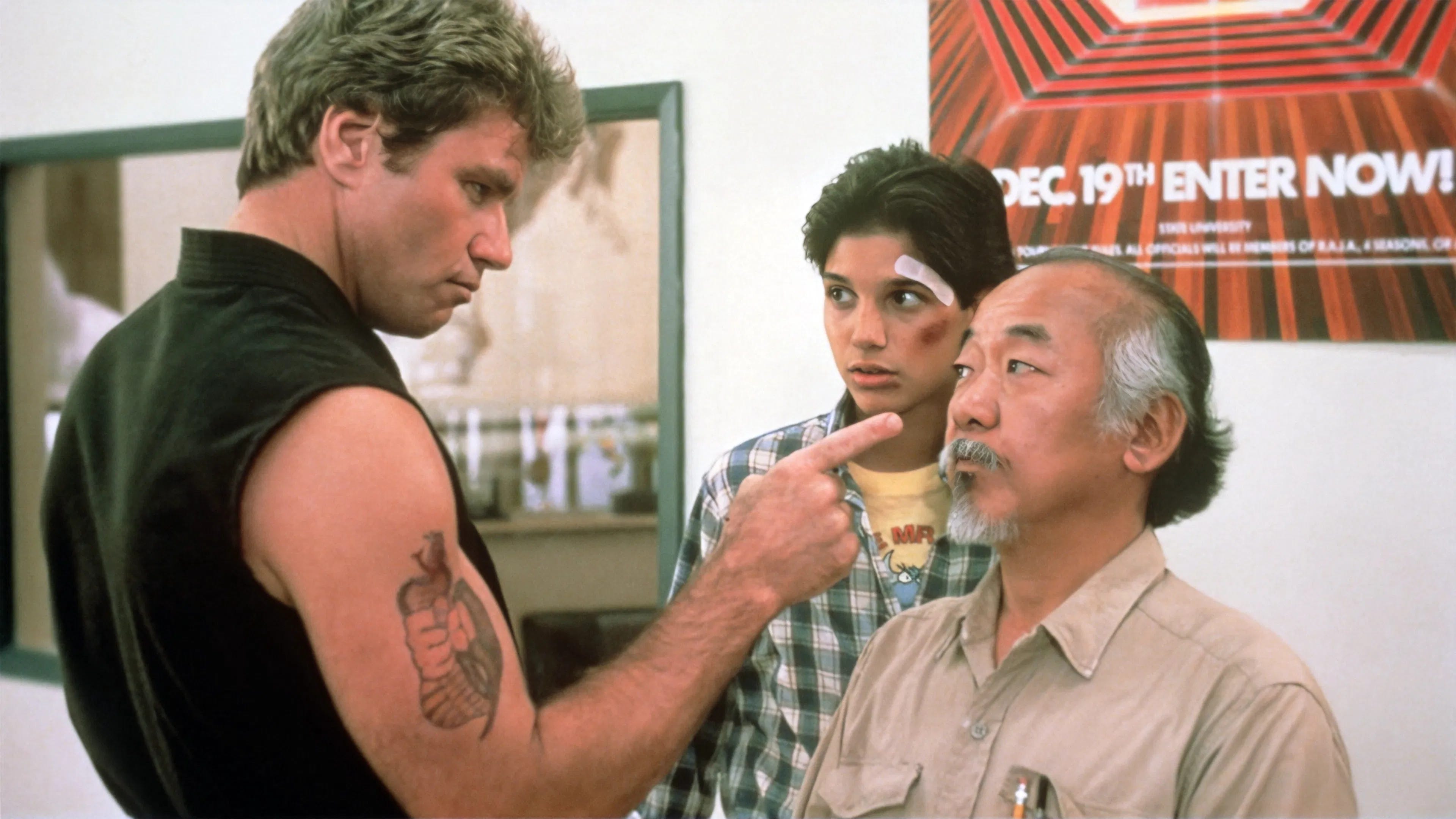
One Battle After Another (2025)
Although One Battle After Another officially credits Thomas Pynchon’s 1990 novel Vineland as the inspiration, the truth is that the film is also built out of two other ideas that Paul Thomas Anderson had; one about a bounty hunter, the other about a young female activist. But there’s one plot point that came from possibly the most unlikeliest of inspirations: the Mission: Impossible franchise.
In most Mission: Impossible films, there is usually a scene where Ethan Hunt (Tom Cruise) has an exchange with another agent, which involves using code phrases to verify that they are dealing with the correct person. Here’s one that occurs in the fifth film, Rogue Nation.
While watching the films1, PTA fantasized what might happen if Ethan Hunt forgot the code word. Would the other person say, “It’s okay. I know you’re Ethan Hunt. Let’s just get on with it”? Or would they say, “Sorry, I know you’re Ethan Hunt, but I still need the password.”
Lo and behold, a scene was born! Because that’s literally what happens to Bob (Leonardo DiCaprio) when he’s trying to get the coordinates from his former associates, the French 75, to know where his daughter Willa (Chase Infiniti) is being taken for safety. For safety— since one of their members have already been compromised— the French 75 member on the other end needs Bob to complete the code exchange so he can tell him where the rendezvous point is going to be.
Trouble is: Bob can’t remember. Not surprising, because: a) it’s been 16 years! and b) Bob has fried his brain by smoking up A LOT in those 16 years2. And the guy on the other end? Well, he’s a bit of a stickler for rules. It does not go well.
Thank you, Tom Cruise, for helping inspire one of the funniest scenes in 2025.
Barbarian (2022)
Would you let a stranger into your house in the middle of the night? If the stranger is a woman, should you accept the invite?
After reading ‘The Gift of Fear’, Zach Cregger was struck particularly by one section that instructs women to trust their intuition and not ignore the subconscious red flags they perceive in their interactions with men. Cregger sat down and started writing out a scene in which a woman turns up at an Airbnb late in the night only to discover that it’s been double-booked. The other tenant invites her inside while they sort out the issue and figure out what to do. The scene expanded into 30 pages, before Cregger decided to add in a twist owing to growing bored as the story got predictable. “I just wanted to write a fun scene for myself and it ended up being something that hooked me, and I didn't know where it was going,” says Cregger, “and then it turned into a feature film.”
That feature film was Barbarian. Cregger’s writing exercise became the film’s opening; the film itself, made on a budget of $4-4.5 million, made about 10x that number at the box-office, which in turn led to Cregger’s 2025 hit, Weapons.
So read widely, and follow the spark of an inspiration. Who knows, it might lead you to an entire career.
Collateral (2004)
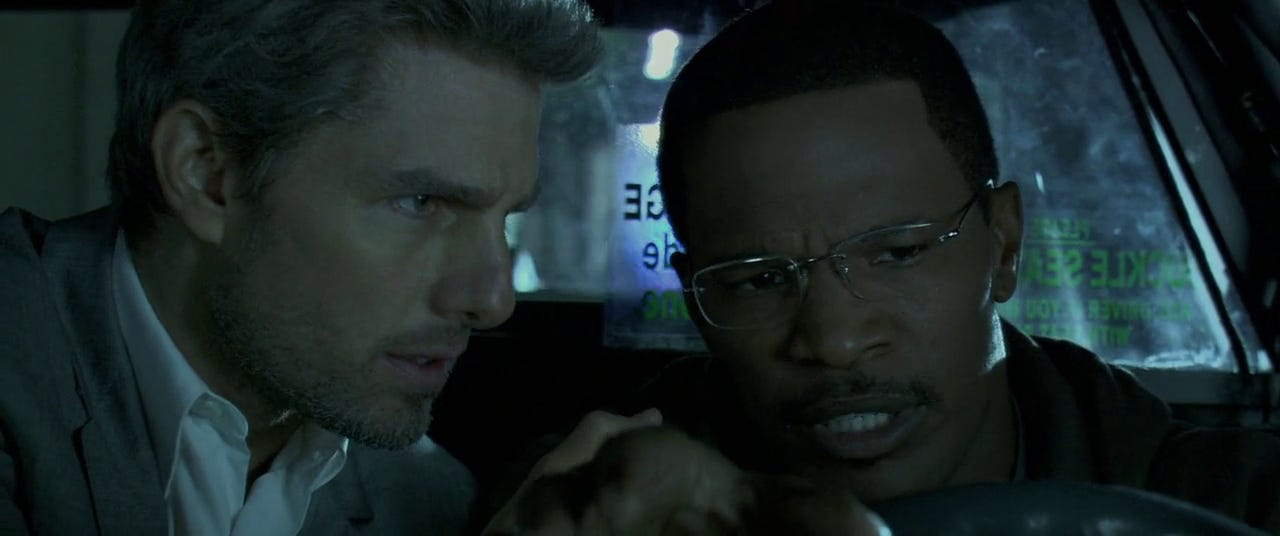
Sometime in the 1990s, Stuart Beattie was taking a taxi home from the Sydney airport and chatting with the driver as if they were old friends when he suddenly thought, “Man, I could be a homicidal maniac sitting back here and you’d have no idea— you’ve got your back to me.”
Intrigued, he went home and wrote a two-page treatment that led to his first screenplay. Originally titled The Last Domino, Beattie worked on it over the next few years. One day, he ran into an acquaintance, Julie Richardson, who was working for Frank Darabont’s production company, Edge City; the company was looking to make low-budget genre films for HBO. Beattie pitched his idea; Richardson liked it enough to pass it to Darabont, who was enthusiastic enough to work on it. But HBO passed on it. A few years later, the script wound up in the hands of DreamWorks executive Marc Haimes, who read it over a weekend and made an offer on Monday.
Some false starts and an uncredited Michael Mann rewrite later, Beattie’s script wound up being made as Collateral, starring Jamie Foxx and Tom Cruise, in which a taxi driver takes an assassin around Los Angeles.
Good thing Beattie didn’t have a smartphone to distract himself, or else we’d have lost out on a fun script.
Eternal Sunshine of the Spotless Mind (2004)
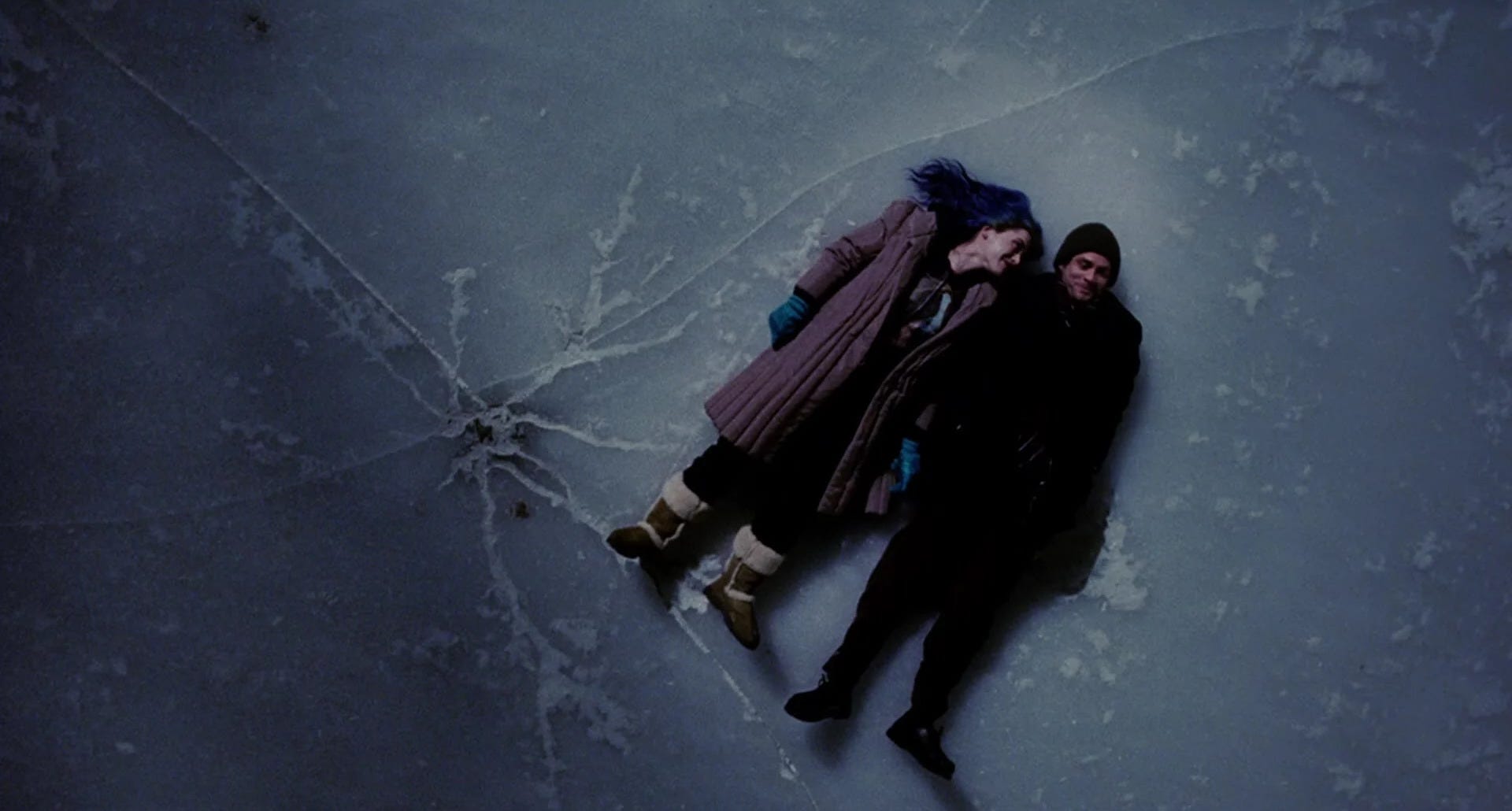
Pierre Bismuth was irritated. Tired of listening to one of his best friends constantly complaining about her boyfriend, he asked her if she’d erase him from her memory if she got the opportunity. Without hesitation, she answered, “Yes.”
The impulsive question intrigued Bismuth enough to mention it to Michel Gondry. Gondry pitched it to Charlie Kaufman: “What if someone got a note saying they were erased from somebody’s brain?” Kaufman was also intrigued, and he and Gondry began working on the script as early as 1998.
Surprisingly, several studios expressed enough interest in the script to start a bidding war3. Still, it took such a long time to crack the story that Kaufman got stuck and turned his attention to other projects like Human Nature, Confessions of a Dangerous Mind, and adapting Susan Orlean’s book, ‘The Orchid Thief’4. He almost bailed on the project entirely after watching Memento, fearing it would be perceived as too alike, until producer Steve Golin got angry and forced him to finish the script. Lucky, too: we got Eternal Sunshine of the Spotless Mind, and Kaufman won an Oscar for Best Original Screenplay.
And all because Bismuth decided to listen to his friend— or rather, got fed up of listening to her.
The Terminator (1984)
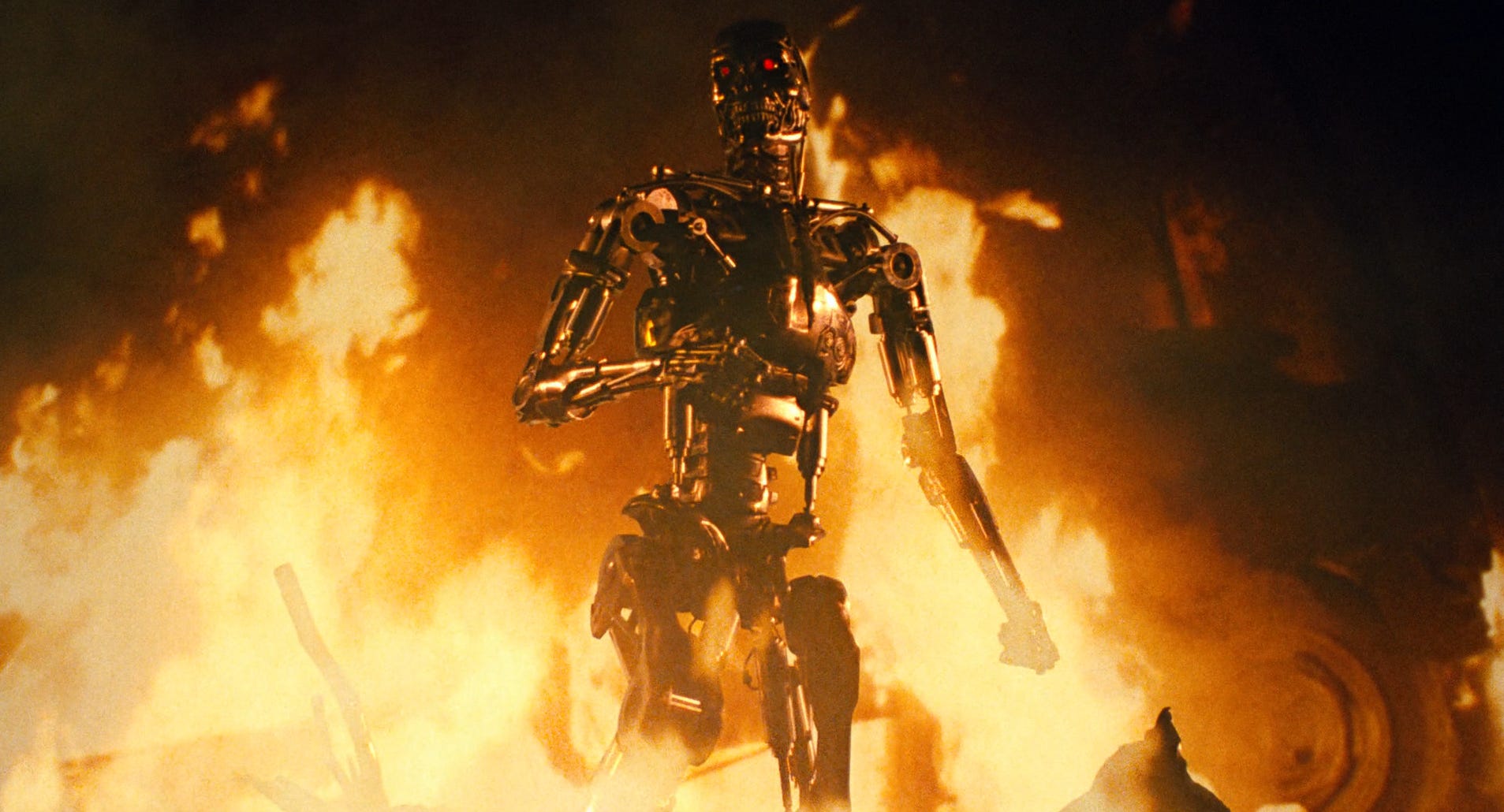
If it wasn’t for a dream, we’d never have The Terminator, and maybe James Cameron would never have a career5. Fired from his directorial debut, the low-budget Piranha II: The Spawning, broke, depressed, and stuck in a Rome hotel, Cameron collapsed onto his bed with a fever and dreamt of a chrome torso, holding kitchen knives, emerging out of an explosion and dragging itself across the floor. Cameron woke up and immediately started sketching the image on hotel stationery. And lo! The Terminator was conceived.
Aliens (1986)
This wouldn’t be the only time that dreams gave Cameron a career. In a different dream, he walked into a dark room where the only light came from the doorway. He walked into the center of the room only to realize that the entire room was covered from floor-to-ceiling with wasps and if he moved, or breathed, or did anything, they’d attack. But they weren’t attacking.
Cameron recalled the fear and terror in this dream, of being stuck in a terrible nightmare. When writing Aliens, this became the basis for the moment in which his heroine Ellen Ripley stumbles into the egg chamber and comes face-to-face with her nightmare: the Xenomorph Queen, hundreds of eggs, and several grown Xenomorphs lurking in the shadows. The scene plays out nearly identically to Cameron’s dream, and created a moment for audiences to always remember.
What stands out in these handful of examples is that filmmakers and writers who create good art pay attention. They keep their antennas tuned to catch the creative signals as they drift through the ether, and when they do, they use it as material. If there’s a takeaway from all this, it’s simply this: pay attention to your surroundings and the ideas that strike your mind.
Oh, and keep the phone away from your bedside. Can you imagine what the world would have lost if McCartney had picked up his phone to check his messages instead of going straight to the piano?
Thanks for reading! If you liked this essay, you can sign up here for more issues. If you’d like to support Three Left Feet Media, share this newsletter with a fellow film lover you think would appreciate it.
Long live the movies!
D.L. Holmes
Don’t forget, PTA directed Tom Cruise in Magnolia, which was the last time that Cruise would be nominated for his acting.
Kids, too much weed is bad for you.
It’s a good concept but what’s amazing is that the script was never advertised as an expensive sci-fi flick. Kaufman’s agent, Marty Bowen, was responsible for generating interest after he saw its potential.
The last one didn’t help because it proved equally impossible to adapt, so Kaufman fictionalized the entire headache of trying to adapt the book, and that became 2002’s Adaptation.
Nah, he’d definitely have a career, but it would be a different one.