


By the time the movies entered the 1980s, new shapes and trends were emerging in the movies. We see the rise of new directors like James Cameron and Spike Lee; we see a new animation powerhouse in the form of Studio Ghibli and Hayao Miyazaki; we see the beginnings of new talent like Eddie Murphy and Tom Cruise; and we also say goodbye to one of Hollywood’s most luminous actresses, the one and only Audrey Hepburn.
As with the previous series of shots from each decade— I already covered Film Shots of the 1960s and Film Shots of the 1970s— these are not meant to be the “best shots ever” from the “best films ever”. They are images from movies I liked made during this decade that make me think about things.
As with an earlier list of shots arranged in alphabetical order, I’ve used two rules to select the films— and thus, the shots— from the decade:
One film from each year;
The same director could not be featured twice.
What films from this era do you like best? And what shots do you love from them? Please share your answers in the comments!
(NOTE: There will be spoilers below, so proceed with caution!)
The Shining — Stanley Kubrick, 1980
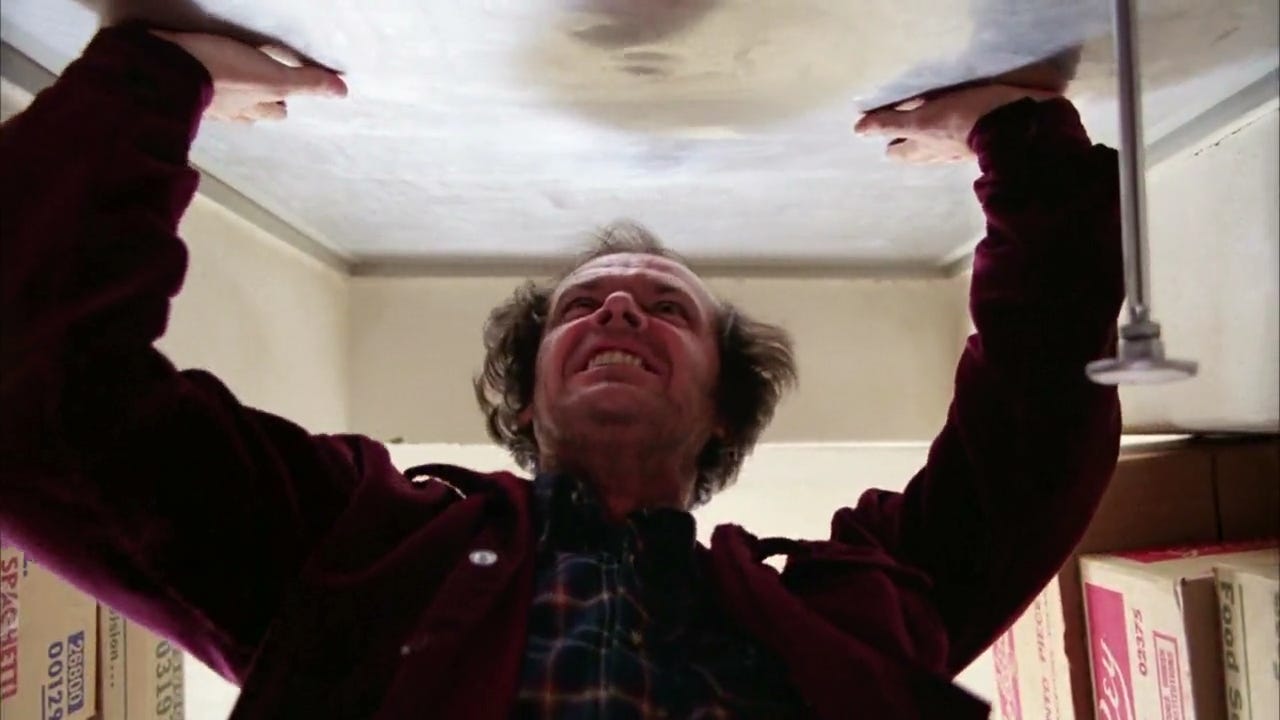
Jack Torrance’s descent into madness is much more explicit in the film adaptation than it is in the Stephen King novel, and by this point in the film, Jack has truly gone off the deep end. Kubrick has an eye for unique camera angles— formed from his days as a photographer, possibly— that captures exactly what he’s trying to say. Pointing the camera from the bottom of the door, everything is upside down, just as our view— and poor Wendy’s— is. There are no ghosts in this image. What is there is something more frightening: A man who is openly prepared to do harm to his wife and child.
They All Laughed — Peter Bogdonavich, 1981
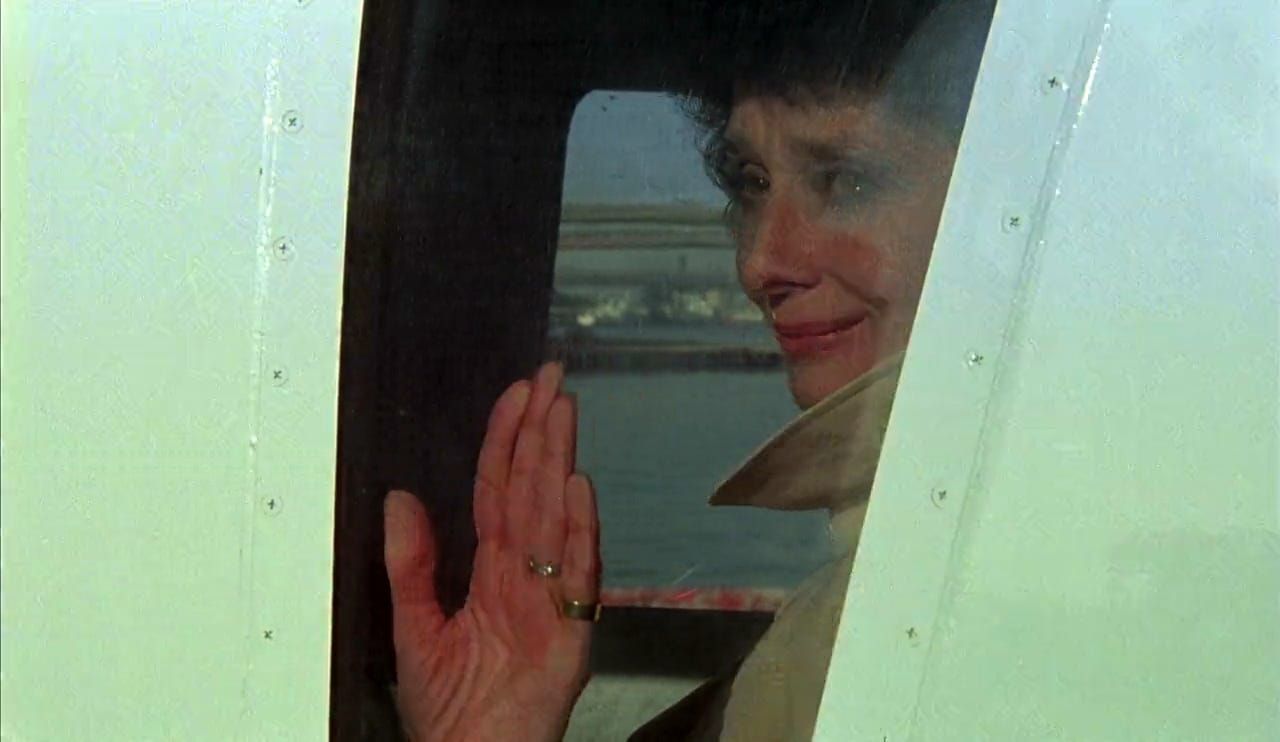
Apart from a cameo in Steven Spielberg’s Always, this would be Audrey Hepburn’s final film role, and this would be one of the final images we’d get of the luminous and talented actress. Here, her character Angela Niotes says a silent farewell to John Russo (Ben Gazzara), a private detective with whom she found a brief moment of happiness in her lonely. In a 2012 interview, director Peter Bogdonavich disclosed that Hepburn’s character was based on the actress’s real life: “Audrey Hepburn’s story in the movie is Audrey Hepburn’s story in life. She was living with a man, her second husband, he was cheating on her, and she basically stayed with him because of the child.” (The man was Andrea Dotti) They All Laughed failed to find an audience, but it’s a fine film, and knowing that Hepburn would never play a starring role again, this image always makes me feel me both melancholy and happy.
48 Hrs. — Walter Hill, 1982
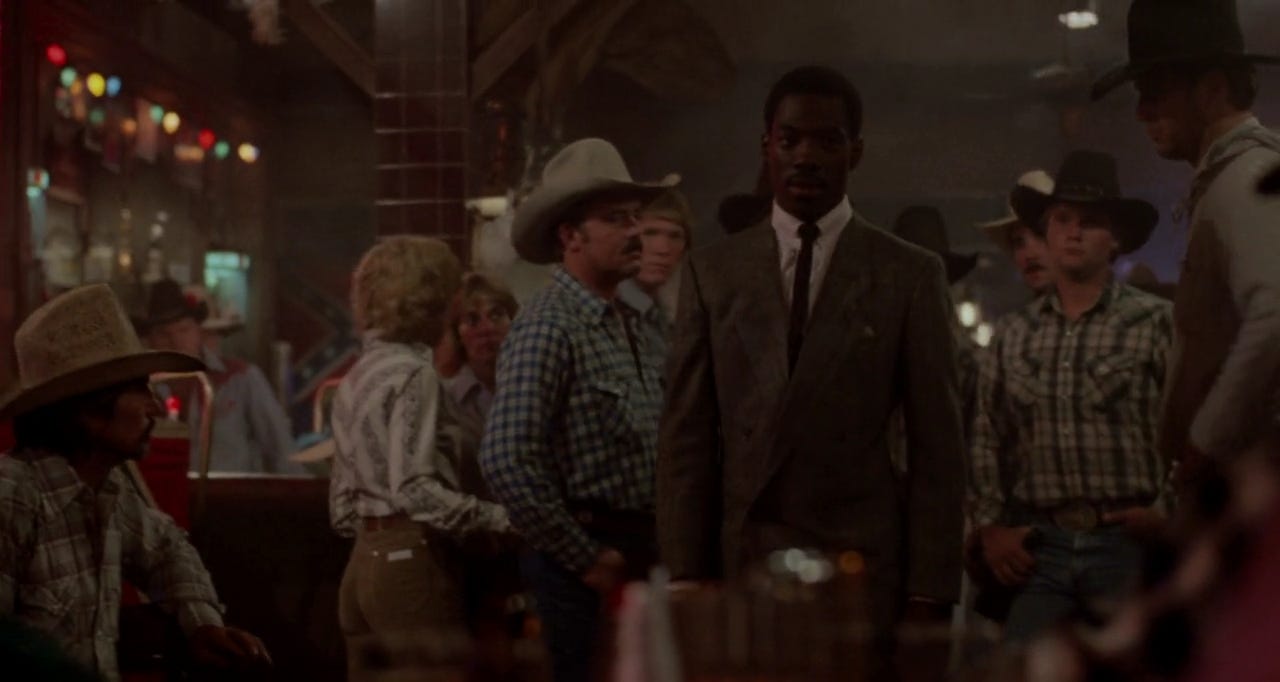
48 Hrs. was Eddie Murphy’s explosive film debut, and this image sums up both the actor and the character simultaneously. Reggie Hammond has a bet with Inspector Jack Cates (Nick Nolte) that he can get a lead from a redneck bar— and impersonates a policeman to do so. The entire scene is explosive but this image conveys the danger that Reggie has put himself in. The composition is doing a lot here: Murphy is not in the center, just a little off-right but our eye is drawn to him just as every head is turned towards him. On the left, we see the bar counter (and barman) in the background, with a string of fairy lights over the bar adding a touch of color to the picture. Also visible in the same background area: a Confederate flag, which only underscores the hostility surrounding Reggie. (Note: if you remove those colorful fairy lights on the left, the image immediately becomes less interesting.)
Risky Business — Paul Brickman, 1983
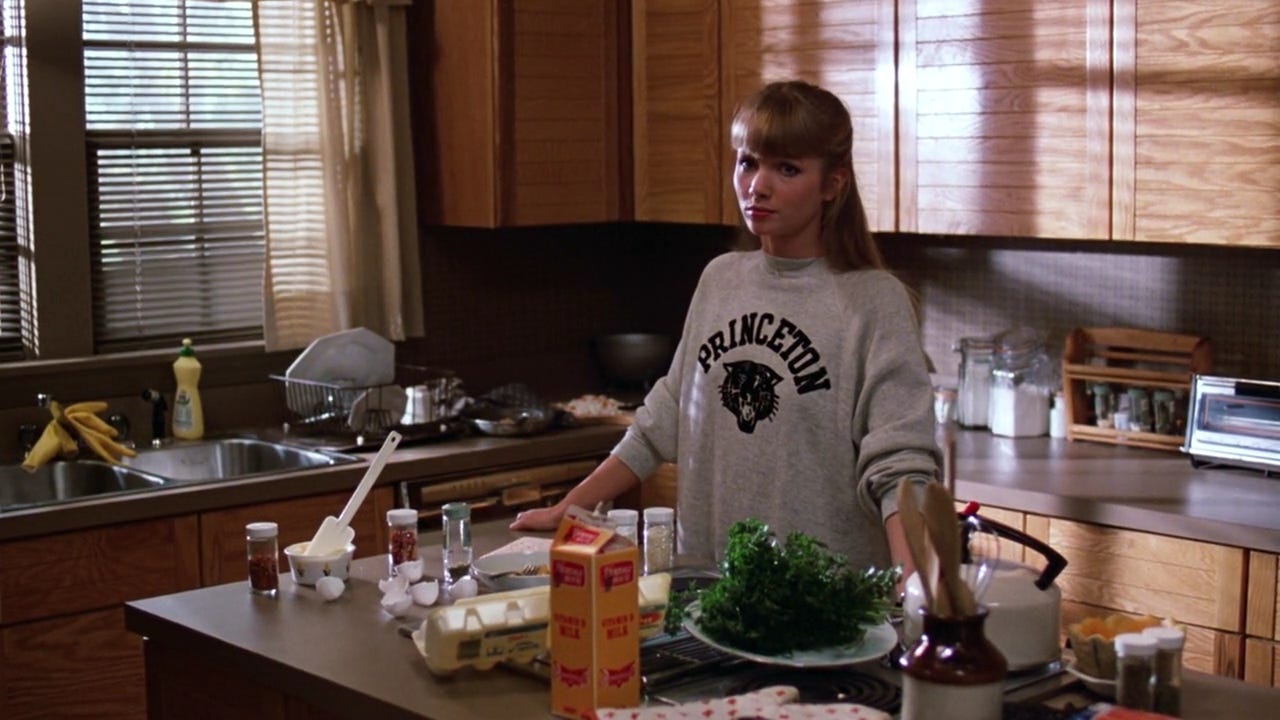
Although Risky Business is the movie that launched Tom Cruise into superstardom, it’s Rebecca De Mornay who is the more interesting character as the enigmatic escort Lana. Joel Goodsen (Cruise) still doesn’t know if he can trust her and warns her that he’ll go to the police if he finds out that anything is missing. She replies with a delivery so withering that it cuts like a knife: “Go to school, Joel. Learn something.” This might be Goodsen’s house but she is very much in charge. Despite all the wood paneling and the bland yellow suburban kitchen, little touches of color prevent the image from being the same: the yellow gloves draped over the kitchen tap and the dishwasher liquid bottle near it; the bunch of green leaves near De Mornay; the yellow milk carton.
Paris, Texas — Wim Wenders, 1984
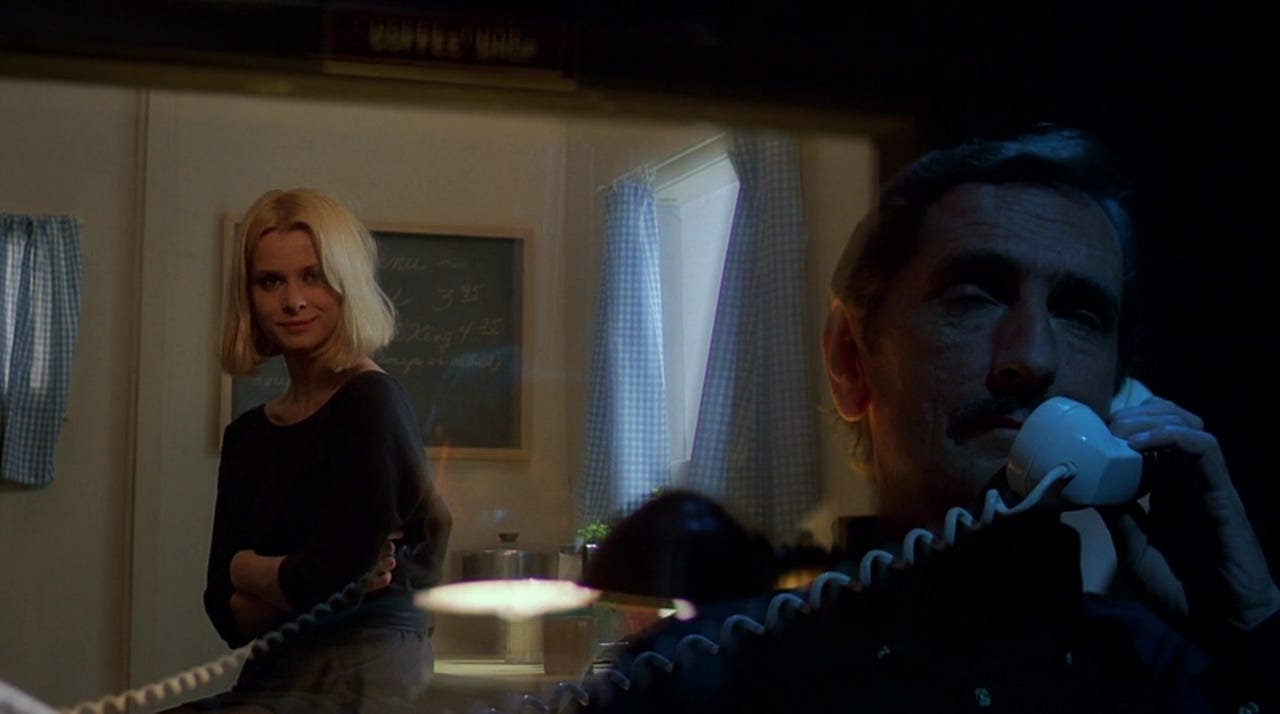
Travis (Harry Dean Stanton) has spent most of Paris, Texas searching for his wife Jane (Nastassja Kinski) and at last, he finds her… working at a peep show club where customers sit behind a one-way mirror and interact with the performer through a telephone. Traivs turns his chair away from Jane and begins to tell a story… but Jane’s recognition of the details makes it clear that it’s their story. Look at the way Wenders puts the two characters together yet separates them with a mirror; the depth of field that allows both characters to be seen which underlines their connection; the way Stanton occupies the right foreground and Kinski the left background; how Kinski is lit more openly, while Stanton is bathed in a nostalgic blue as he recounts the times when things were good between them.
After Hours — Martin Scorsese, 1985
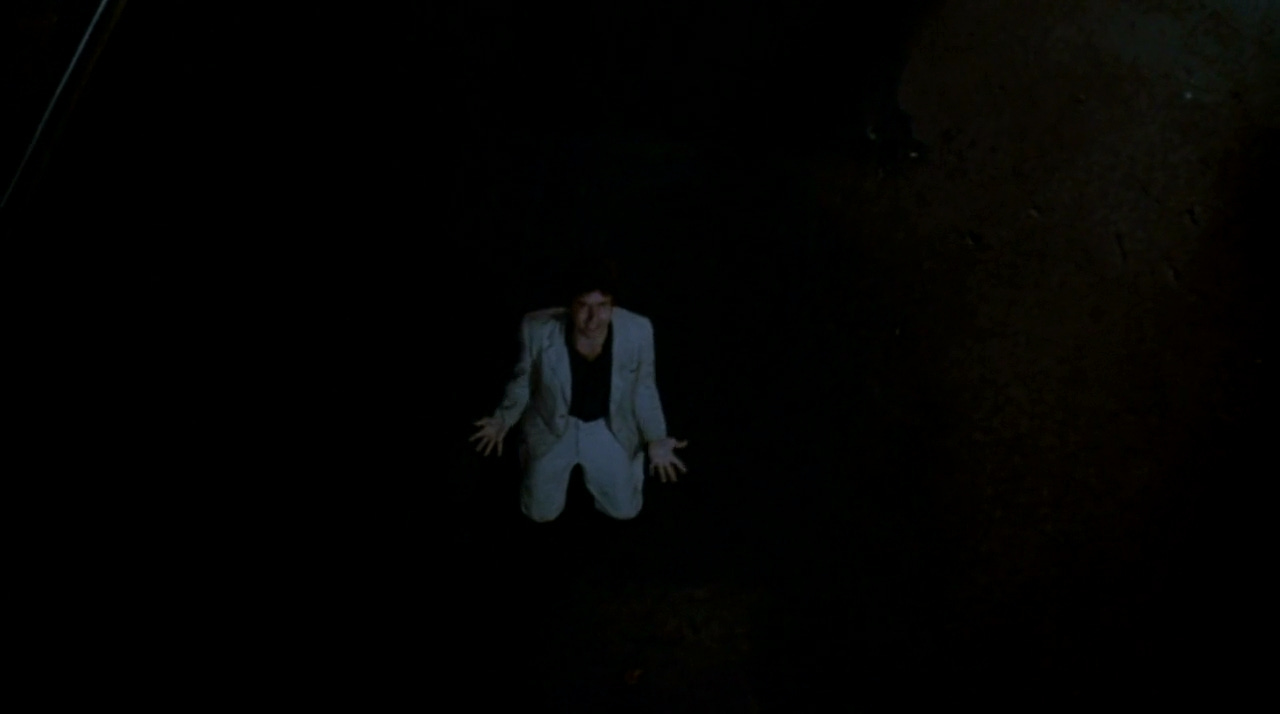
Poor Paul Hackett (Griffin Dunne). He just wanted to get laid, but the girl killed herself (because he ditched her at the last minute!), so he wants to go home, but he’s got no money to pay for the subway fare, and now a mob is after him due to a case of mistaken identity. Here, he’s screaming to the fates about what they’re putting him through, and Martin Scorsese and his DP Michael Ballhaus frame it from up high (using a crane) that captures Hackett’s plight, like a dispassionate God looking down at His hapless creation. It’s droll. I laughed.
Aliens — James Cameron, 1986
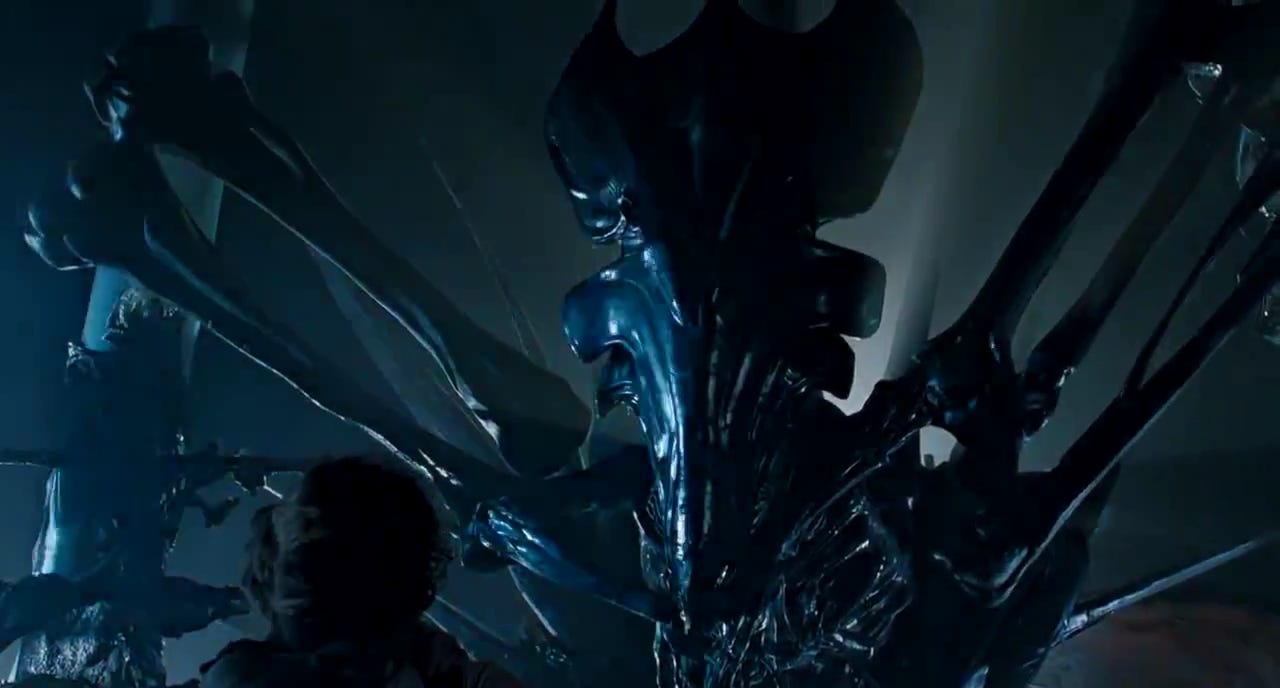
James Cameron got this image from a nightmare he had about walking into a room covered with wasps. You can feel that same palpable tension as Ripley (Sigourney Weaver) comes face-to-face with the ultimate Xenomorph: the Alien Queen herself, backlit in all her slimy H.R. Giger-influenced nightmare glory as she towers over Ripley.
Broadcast News — James L. Brooks, 1987
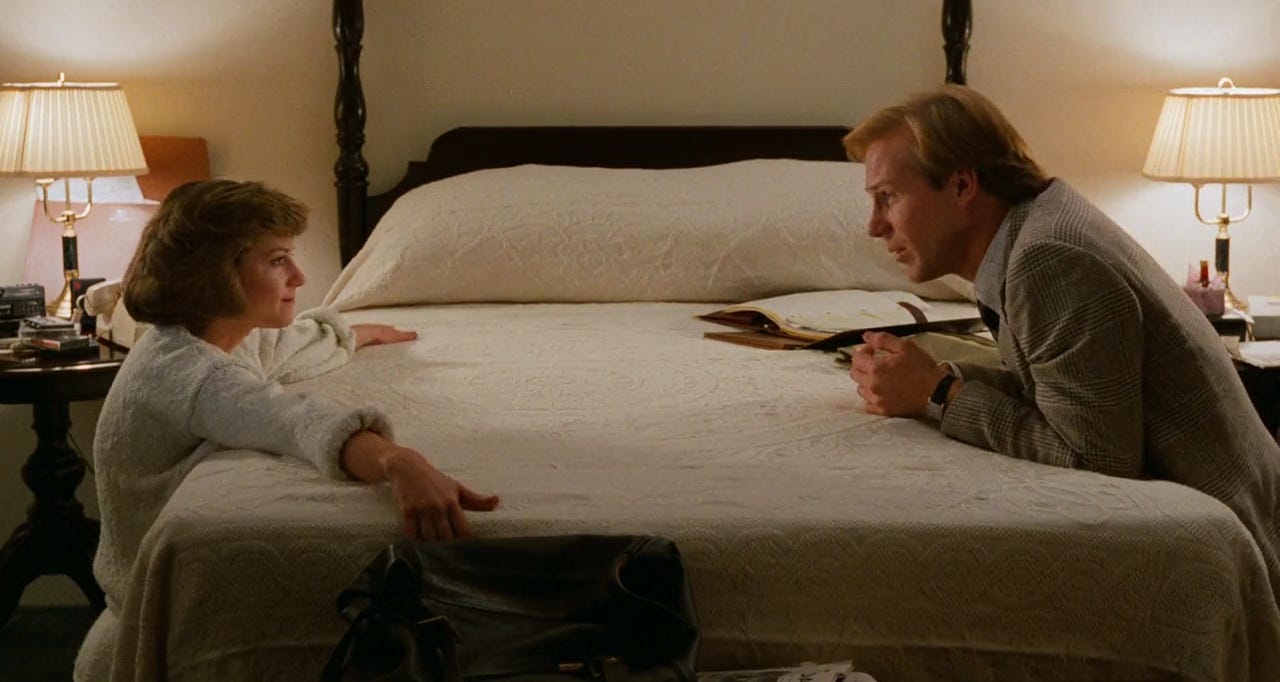
Jane Craig (Holly Hunter) and Tom Grunick (William Hurt) are attracted to each other, but something is always in between them. In this case, a literal bed. This scene in particular is both amusing and emblematic of the eternal dilemma between the characters: they’re constantly forced to choose between romance and work. Here, Tom is trying to talk about work, and Jane is making unsuccessful passes at him. It’s not until the film is over— or until you see it on a second viewing— that you realize James L. Brooks has planted the core conflict right from the start.
My Neighbor Totoro — Hayao Miyazaki, 1988
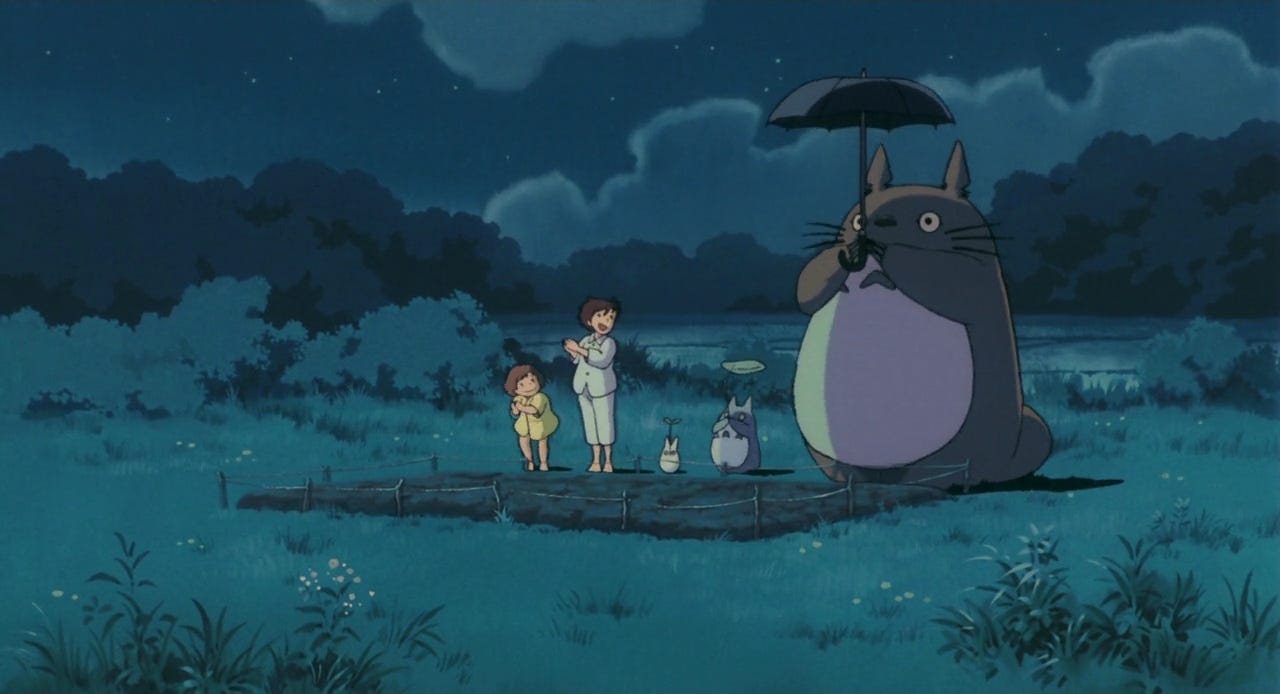
You could honestly pick any frame out of a Miyazaki film and it would be great. For me, this one really captures everything about My Neighbor Totoro: it’s got two children, the mythical cuddly-looking Totoro carrying an umbrella, and Totoro’s friends mimicking the big creature by carrying a leaf over their heads. It’s whimsical, it’s joyful, and the art is BEAUTIFUL.
Do The Right Thing — Spike Lee, 1989
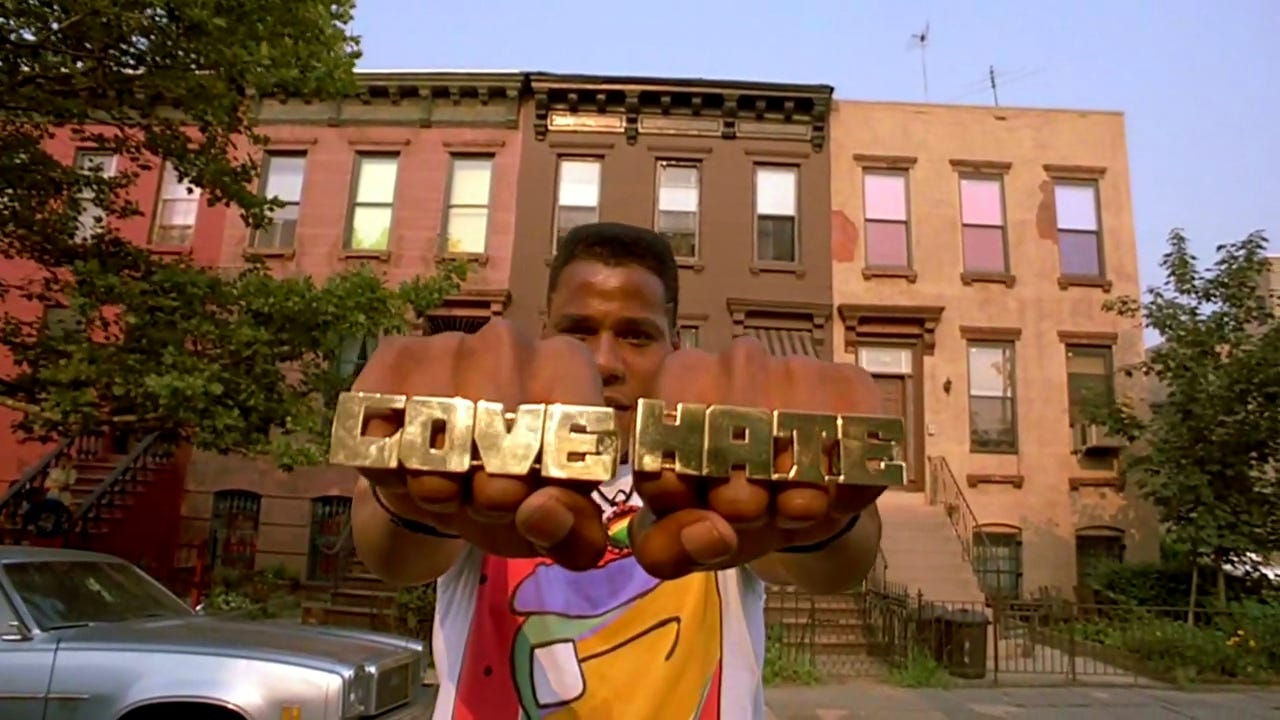
Radio Raheem’s brass-knuckle rings and soliloquy is an homage to the tattoos inked on Robert Mitchum’s knuckles in The Night of the Hunter, but Spike Lee has way more on his mind than simply paying tribute to the Charles Laughton movie. It isn’t simply about style— though it’s got all that and then some, the way Raheem (Bill Nunn) looks directly into the camera and seemingly speaking to the viewer— it captures the eternal and confusing struggle of love, joy, and hate at the heart of Lee’s film between all the communities and people involved.
Thanks for reading! If you liked this essay, you can sign up here for more issues. If you’d like to support Three Left Feet Media, share this newsletter with a fellow film lover you think would appreciate it.
Long live the movies!
D.L. Holmes