

A (Mostly) Brief Look At How Spider-Man Ended Up At Marvel Studios
Sony held the film rights to Spider-Man. Marvel Studios wanted back the film rights to its iconic character. Could the two companies make a deal?

It’s been 10 years since Captain America: Civil War was released, but the only two things that stood out for me is that it introduced Chadwick Boseman to the world as Black Panther, and it brought Spider-Man to the Marvel Cinematic Universe for the first time.
Spider-Man is to Marvel what Mickey Mouse is to Walt Disney: it is the face of the brand. The web-slinging superhero first appeared in the pages of Amazing Fantasy #15 in August 1962 before he got his own series, The Amazing Spider-Man. Spider-Man wasn’t Marvel’s first superhero under Stan Lee’s editorial purview, but it was an instant hit.
Maybe it was because Spider-Man was a teenage superhero when teenagers in superhero stories were sidelined as side-kicks (see Robin in Batman, Bucky Barnes in Captain America). Or, as comic book writer-editor and historian Paul Kupperberg says in The Creation of Spider-Man, maybe it was because Spider-Man was a “nerdy high school student” outside the costume. Kind of like how Superman was bumbling clumsy Clark Kent when he wasn’t suiting up.
Or perhaps it was that Spider-Man had everyday problems: rent, sick aunt, unsteady employment, bad luck with women. He’s also flawed— have you read the early comics? Peter Parker is one angry teenager; if he was created today, he’d be an incel. I’d even argue that if not for Uncle Ben’s death, dude could have easily gone down the villain road.
In other words: Spider-Man felt real. Spider-Man was relatable. Just an ordinary guy given extraordinary powers who, after inadvertently causing the death of his beloved uncle, spends his entire life trying to atone for that mistake by ensuring nothing like that ever happened again.
Spider-Man was Marvel’s A-list character. He’s been successful across mediums (and merchandise), and has featured in plenty of cartoons, children’s books, games, and films.
But here’s the kicker: it was always another company that benefited from it.
Especially the live-action films. Sony got the rewards, and Marvel got, in comparison, a pittance.
When Marvel Studios proved that it could produce its own movies better than anyone, they made active efforts to get all their characters under one roof— right down to Disney buying 20th Century Fox, which allowed Marvel to get back the film rights to Fantastic Four, X-Men, and Daredevil.
But the one character that they didn’t have was Spider-Man.
Marvel Studios badly wanted Spider-Man. But no way was Sony giving up its cash cow, even in the face of diminishing returns.
And yet… by 2016, Marvel and Sony came to an agreement to let Spider-Man appear in the Marvel Cinematic Universe.
The question is: how?
The story of Spider-Man’s film rights is a long and tangled, uh, web, but I promise to try and make it as understandable as possible.
The success of Superman (1978) created interest in Hollywood about making a Spider-Man movie. In 1985, The Cannon Group—a B-movie company that was now being run by two Israeli cousins, Menahem Golan and Yoram Globus— optioned the rights for a reported $225,0001. But endless rewrites and treatments indicated that Cannon did not grasp the appeal of the character, delaying the development of a film.
Mercifully— for Spider-Man at least— Cannon went bankrupt. The company was sold to Italian financier Giancarlo Parretti, who renamed it Pathé Communications in anticipation of buying French studio Pathé. When the French government blocked Parretti, he went and bought Metro-Goldwyn-Mayer (MGM) instead in 1990. This was disastrous for everyone— the James Bond franchise was put on ice, which is why it got rebooted with 1995’s GoldenEye once Parretti was ousted from MGM in 1991.
That Bond reference wasn’t random. It played a key role in Sony getting Spider-Man, which I’ll get to in a moment.
One of the Cannon guys, Golan—who formed 21st Century Film Corporation in the demise of Cannon— had split the option rights they had among different companies.
Viacom got the Spider-Man TV rights;
Columbia Pictures got the home-video rights;
Carolco Pictures— the company behind Rambo II and Terminator 2: Judgment Day— got the theatrical rights.
The only reason Carolco got the rights was because James Cameron wanted to make a Spider-Man movie. He wrote a treatment that was widely admired (and is available online, though your mileage of admiration might vary) and even drew concept art for the film.
A James Cameron Spider-Man movie. Imagine that.
Then came the lawsuits.


In 1993, Golan sued to overturn his deal with Carolco. Then Carolco sued both Viacom and Columbia separately to acquire the Spider-Man TV and video rights. Then MGM sued—and named Golan, Viacom, and even Marvel Comics—alleging fraud in the original deal made with Cannon.
During this time, Cameron tried to convince Fox Studio to buy the rights, but the studio balked because it didn’t want to get tangled up (pun) in the legal shenanigans. Cameron lost interest in the film and moved on to his next film, a little boat picture called Titanic.
Between 1995 and 1996, Carolco Pictures, 21st Century, and Marvel all filed for bankruptcy.
In 1998, after lengthy and protracted fights behind boardroom doors, Marvel emerged from bankruptcy. Wobbly but still alive. And the courts determined that the rights it had sold to Golan in 1985 had expired. Great. Marvel settled with both MGM and Viacom…
… and then in 1999, it sold the Spider-Man film rights to Sony Pictures for about $7 million.
Under the terms of the agreement, they would form a Sony/Marvel joint venture to handle merchandising from prospective films; meanwhile, Sony owned the film rights to Spider-Man and 900 Spider-Man-related Marvel Comics characters, on the condition that it release a new Spider-Man film every five years and nine months after the release of the last film.
This is a very important point in why we got so many Spider-Man movies in a very short space of time.
Meanwhile, Sony and MGM had their own settlement. Sony Pictures paid MGM $5 million for the latter’s rights to Spider-Man; in exchange, they gave the rights to the 1967 James Bond spoof Casino Royale— which was produced at Columbia Pictures, now a Sony unit. Columbia, in turn, would get all international rights to the James Bond films2.
Yeah, so Sony Pictures was going to produce new James Bond movies, but they dropped plans those plans so that they could make Spider-Man.
Well, you know how it worked out. In 2002, we got Tobey Maguire as the titular hero in Sam Raimi’s Spider-Man and it made a lot of money… for Sony.
This was the time when a guy named David Maisel approached Marvel with an idea: hey, wouldn’t it be great if Marvel could make its own movies?
It’s a whole story, but you can read it in the article below.
The Origins of Marvel Studios (Or What Filmmakers Can Learn To Build Their Own Production Company)

Once upon a time— well, about twenty years ago, give or take— Marvel Studios was a scrappy little underdog production company.
Two things happened towards the end of the 2000s.
In 2007, Spider-Man 3 became the highest-grossing Spider-Man film ever made at the time. It was also the most expensive of the three— production costs were growing, and so were the salaries of director Sam Raimi and the film’s stars Tobey Maguire and Kirsten Dunst. It was also, for many, the worst-received film of the trilogy.
In 2008, Marvel Studios released Iron Man and proved that they could make movies about their characters better than other studios.
Meanwhile, Sony Pictures and Avi Arad (founder and former CEO of Marvel Studios) were putting a package together for another Spider-Man movie. Spider-Man 4 would introduce Felicia Hardy, the anti-hero known as Black Cat; the Vulture would be the villain. Anne Hathaway and John Malkovich were slated to play Black Cat and Vulture respectively; and Angelina Jolie was briefly attached to play the Vulture’s daughter, Vulturess, who donned the wings after Spider-Man kicked her father off a building and out of the story.
But Raimi backed out. Stressed out by the pressures of outdoing himself and delivering a profitable film with a nearly-$400 million budget, and underwhelmed by the script drafts, he made a late-night phone call to Amy Pascal, the head of the Sony Pictures film division in January 2010. He told her:
“I don’t want to make a movie that is less than great, so I think we shouldn’t make this picture. Go ahead with your reboot, which you’ve been planning anyway.”
So yeah, Sony Pictures had been planning all along to reboot the franchise with a new cast and director in order to lower the costs.
Days after the call, Sony stunned fans by announcing that Spider-Man 4 was officially cancelled, but the series would be rebooted with a new cast.3
That royally pissed off Marvel CEO Ike Perlmutter.
See, Perlmutter was already annoyed that the film rights to Spider-Man had been sold to Sony for less than what he thought it was worth, at a time when the company was in a vulnerable place. Over the years, he’d routinely call high-ranking Sony Pictures executives—including Amy Pascal and CEO Michael Lynton—over a minor point or perceived slight. When the first Spider-Man made millions, Marvel sued Sony over the merchandising deal— which stipulated that Marvel would get a “lump payment for any Spider-Man film plus just 5 percent of the profits”. Sony had the rights to sell toy merchandise based on the movie while Marvel had the rights to “classic” Spider-Man product, but there was some profit-sharing on both sides.
Sony counter-sued, but the 2002 suit was eventually settled— the distinction between ‘film’ and ‘classic’ toys was eliminated; Sony would give up some of its merchandising rights, while Marvel would control all Spider-Man merchandise from that point forward. Sony, though, would get 25% of Marvel’s merchandise profit from any sales connected to the aftermath of any Spider-Man movie.
But as Marvel Studios began to grow into its own, it was missing its crown jewel: Spider-Man. And had Sony opted not to reboot the series, Marvel would get the film rights back.
Remember the stipulation that Sony had to get a Spider-Man film into theaters within five years and nine months, or else Marvel got the rights back?
Sam Raimi could stop making Spider-Man movies.
Amy Pascal would’ve liked to have waited a while before making another Spider-Man movie, to avoid franchise fatigue.
But if Sony waited too long, they’d lose the film rights and Marvel would get back the rights.
The only way for Sony not to lose the rights was to keep making Spider-Man movies.
So Sony made another Spider-Man movie to retain the rights, depriving Marvel of getting back the rights.
And Perlmutter was furious.
To placate him, Sony amended their deal with Marvel in 2011: they sold their 25% share of merchandise profit for $175 million; and each time Sony made a Spider-Man feature film, Marvel would pay Sony $35 million.
It worked. The movies sold so much merchandise that Marvel could literally afford to help their rival.
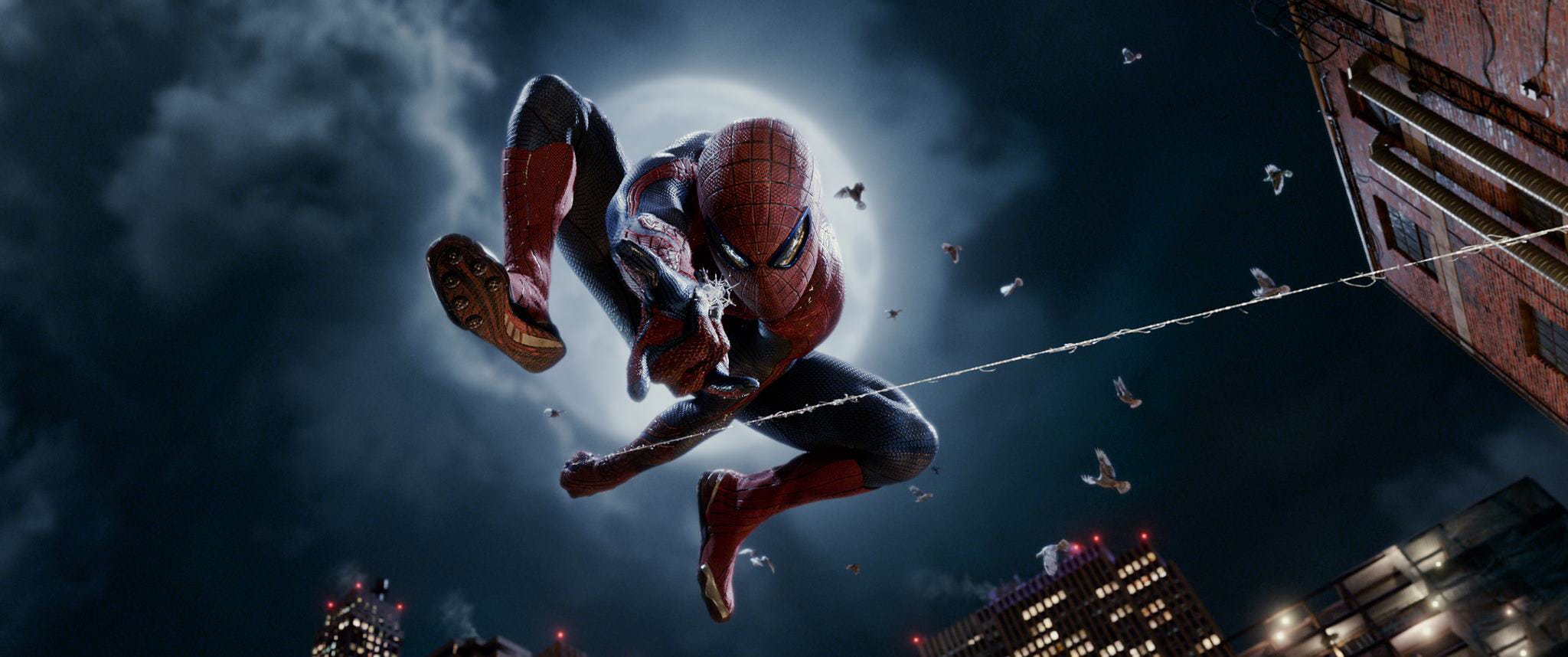
The Amazing Spider-Man came out in 2012, directed by Marc Webb, whose only feature credit was the indie (500) Days of Summer. It gave Andrew Garfield and Emma Stone their first leading roles in a feature4, from a script by James Vanderbilt—with contributions by Alvin Sargent and Steve Kloves5— that retold the origin story, but this time with Spider-Man facing off against the Lizard. A subplot about Peter Parker’s parents having arranged for him to have “special” blood—meaning that no other teenager bitten by a radioactive spider would’ve gotten powers, was scrapped. But it only made $758 million worldwide.
Good money, but it was the lowest-grossing Spider-Man film yet. Pascal was trying to develop releases based on brand-name intellectual property rather than A-list film stars, but it wasn’t promising thus far. As recounted in MCU: The Reign of Marvel Studios:
That same year [2012], the studio’s Men in Black 3 grossed $624 million worldwide, but contractually, $90 million of that money had to be redistributed to star Will Smith and producer Steven Spielberg. Sony also released the James Bond movie Skyfall, which grossed $1.1 billion worldwide, but the studio earned just $57 million from the release. (MGM still owned the Bond franchise, but when MGM came out of bankruptcy in 2010, Sony had cut a deal in which the larger studio would shoulder 50 percent of the production costs of Bond movies and get 25 percent of the profit back.) “Even though we were #1 at the box office,” Pascal wrote about 2012, “it was a shitty year.”
Pascal was trying to develop releases based on brand-name intellectual property rather than A-list film stars, but it wasn’t promising thus far. And this was when Sony realized that, with access to the entire litany of secondary Spider-Man characters, they could do spinoffs of villains like Kraven the Hunter and Venom, before uniting them in a Sinister Six movie. Pascal also considered moves about the female supporting characters such as Black Cat, Silver Sable, Silk, and Madame Web. There was also a possibility of an Aunt May spinoff, which sounds as ridiculous as typing out this sentence.
For the record: it boggles my mind that with access to all the Spider-Man characters, Sony has been unable to turn the spinoffs into moneymaking movies.
But anyway, here comes The Amazing Spider-Man 2 in 2014. It followed Sony’s mandate to include as many supervillains possible— seeming to forget that such a move did NOT work well with Spider-Man 3.
Surprise! Amazing Spider-Man 2 made even less money than its predecessor!
This is where it gets interesting.
See, all the Spider-Man movies were a co-production with Marvel Studios. And while president and producer Kevin Feige was not directly involved, Pascal would often reach out for his feedback.
On Amazing Spider-Man 2, Feige expressed his concerns in notes about Andrew Garfield’s performance as “emotionally inconsistent”6, and was especially critical about the revival of the ‘special blood’ plotline, which for some reason had been revived:
We’re distracted by the idea that Peter became Spider-Man b/c of his father’s blood—all this special back story with his super-scientist dad fights with the idea that Peter is normal kid from Queens who becomes the greatest super-hero in the world…7
Pascal was also aware that the film was not good. Two months before Amazing Spider-Man 2 came out, Pascal emailed Doug Belgrad, president of Sony Pictures, citing problems with the picture:
Uneven, schizo tone… weird, disjointed, no one single great set piece because action is just big and not storytelling8, not funny… if I’m really honest, wrong director and wrong casting.9
Her conclusion: “We will almost get away with it and we can never go back.”
Back at Marvel, sentiment was equally bleak. Alan Fine of Marvel Entertainment (and the then-still-active Creative Committee) emailed Feige after reading The Amazing Spider-Man 2 screenplay: “This story is way too dark, way too depressing. I wanted to burn the draft after I read it.”
Feige was equally dismayed by the lack of continuity between the Raimi films and the Webb films:
In a million years I would not advocate rebooting the Iron Man MCU. To me it’s James Bond and we can keep telling new stories for decades even with different actors.10
But the underwhelming performance of The Amazing Spider-Man 2 also opened an opportunity for Marvel. If Sony wasn’t going to abandon its claim to Spider-Man… what if they collaborated instead?
Actually, this wasn’t the first time such a possibility was floated. An unused version of the post-credits scene in Iron Man actually has Nick Fury (Samuel L. Jackson) citing Bruce Banner, Spider-Man, and the X-Men, confirming everything was happening in the same world.
But a deal couldn’t be made in time with the other studios to go ahead with this.
Then, when The Amazing Spider-Man was being made, there were discussions to include the Oscorp Tower in the Manhattan skyline of The Avengers as an Easter Egg, making Andrew Garfield’s Spider-Man officially MCU canon even without an official appearance from the web-slinger. But the digital skyline of the Avengers had already been rendered by the time the Oscorp Tower model was completed.
Just think: We could’ve gotten a version of Civil War in which Andrew Garfield and Robert Downey Jr. could’ve been on the same screen.
But anyway, back to 2014…
A plan was put in place. Perlmutter would make overtures to his counterpart, Lynton; Feige would do the same for Pascal.
A top-secret summit was convened at a hotel in Santa Monica. Feige met with Marvel’s creative producers to answer two questions:
What could a deal with Sony to share Spider-Man look like?
If Marvel Studios had control of Spider-Man, what stories would it want to tell?
Soon after, Feige visited Pascal on the Sony lot for lunch. Over gourmet sandwiches, Pascal talked about their plans for The Amazing Spider-Man 3, and thought Feige was there to give notes.
Instead, Feige pitched his idea:
The only way I know how to do anything is to just do it entirely. So why don’t you let us do it. Don’t think of it as two studios. And don’t think of it as giving another studio back the rights. No change of hands of rights. No change of hands of money. Just engage us to produce it. Just pretend it’s like what DC did with Christopher Nolan. I’m not saying we’re Nolan, but I am saying there is a production company that is doing this pretty well. Just engage the services of that production company to make the movie.
Pascal threw her sandwich at him and said, “Get the fuck out of here.”
Sony CEO Michael Lynton was more receptive to Perlmutter. As Michael De Luca11, then a Sony executive, said,
Michael [Lynton] had no ego about who creatively oversees Spider-Man. He felt this is a giant asset for the studio, so let’s get the best movie made. I think Amy felt personally guilty the fans didn’t love the last Andrew Garfield movie and felt she owed Peter Parker a better outing. She wanted to deliver that outing.
But Perlmutter pressed too hard. If Marvel produced the next Spider-Man movie, he insisted on 50% of the profits, but only willing to offer 5% share of any MCU movie where the character made a guest appearance (such as the Avengers movies).
Sony rejected the offer. Back to square one.
Then North Korean hackers broke into Sony Pictures’ security system and leaked a bunch of internal documents and emails in November 2014.
This was in retaliation for Sony releasing The Interview, a middling Seth Rogen comedy about a journalist recruited by the CIA to kill the North Korean Supreme Leader, Kim Jong-un.
And in these emails, Spider-Man fans learnt that Marvel Studios had made overtures to Sony… who turned them down.
They were not thrilled.
At the time, Pascal had switched the announced 2016 date for The Amazing Spider-Man 3 and the 2018 date for The Sinister Six, hoping to build some buzz. Drew Goddard was hired to write and direct the spin-off, which— according to sources— would have taken Spider-Man and the villains to the Savage Land12, where Spider-Man would ride a T-rex.13
But even before the hack, once she’d cooled down, Pascal was actually thinking about Feige’s proposal. When she realized fans online were clamoring to see Spider-Man alongside the Avengers, she sensed that having the web-slinger in a MCU movie was a better bet than The Sinister Six.
And Pascal respected Feige. She remembered him from her days during the making of the Sam Raimi movies, when he’d show up to all the meetings, get everyone’s coffee, and stay silent.
“Which makes you love somebody,” she said, “[because] when they do open their mouth, you realize that they’ve been thinking all these big thoughts and are really smart, but never had to hear themselves talk.”
Pascal invited Feige over to her house for dinner— refraining from throwing food this time—and discussed what a new Spider-Man franchise could look like under a dual stewardship. They both agreed that if Peter Parker was a teenager again, the films should focus on the adolescent drama, something like a John Hughes high school movie by way of Marvel.
If Spider-Man debuted in Marvel’s upcoming Captain America movie, Feige suggested, his suit could be made by Tony Stark.
In January 2015, a lunch was convened at Perlmutter’s condo in Palm Beach, Florida. Perlmutter, Feige, Lynton, and Pascal discussed the terms. This time, a deal came together quickly.
Marvel would cast a new Spider-Man to debut in Captain America: Civil War in 2016 who’d then appear in his solo movie in 2017.
The 2017 movie would be produced by Marvel Studios, but paid for and released by Sony Pictures.
The question of splitting profits was sidestepped: each studio would finance its own movies and keep all the profits.14
The current Spider-Man producers—notably Avi Arad—would not be involved with this new version of Spider-Man, but they could develop properties for Sony based on the Spider-Man IP.
For Pascal, the deal came at the right time. The 2014 hack had been too embarrassing for Sony and too many of Pascal’s personal messages had been made public. Less than a week after the meeting at Palm Beach, Pascal was fired as the Sony head of studio, but not before arranging to co-produce the new Spider-Man movies with Feige as part of her exit strategy.
And Feige graciously shared the title of lead producer with her, the first time that he’d shared it with anyone since the first Iron Man and The Incredible Hulk. It was a sign of his respect for Pascal and an acknowledgement of her contributions. As for Pascal, she her own production company, Pascal Pictures, to produce movies without needing to be the head of the studio. Since her departure, she’s done well— apart from Spider-Man, she’s also produced films like Molly’s Game, Little Women, Project Hail Mary, and the upcoming Narnia: The Magician’s Nephew; and in March 2025, it was announced that she would oversee the Bond film franchise alongside Harry Potter’s David Heyman.
Meanwhile over at Marvel Studios, Civil War writers Christopher Markus and Stephen McFeely had written two drafts for the third Captain America movie—one with Spider-Man, one without him. When the deal was officially a go, they got to work on the Spider-Man draft. Tom Holland was cast, and Marvel added a slot on its Phase Three roster for a Spider-Man solo movie, later titled Spider-Man: Homecoming— a sly nod to the character’s return to Marvel. Jon Watts was hired as director, and he was instructed to make this Spider-Man feel as much as possible like a John Hughes movie.
Writers John Francis Daley (Freaks and Geeks) and Jonathan Goldstein were hired to write a draft of the script15. Said Goldstein:
We wanted to depart from some of what was in the comic books. We definitely didn’t want to rehash the death of Uncle Ben. We felt like the origin story had been told so many times that either you knew it or you didn’t, and if you didn’t, you figure it out pretty quickly. When you start your movie with a death in the family, then you spend a lot of the movie sort of dealing with that emotionally and recovering from it, and it’s just not a ton of fun, obviously.16
A big difference about this Spider-Man is that he grew up in a world of superheroes. Another big change was that he was twice pitted against villains who had a grudge with Tony Stark, instead of evil scientists tied to Osborn or Parker’s family. It’s not a change I enjoyed— I think Tom Holland is a good choice for Spider-Man but the scripts he’s been given seem to miss the appeal of the comic book character. Yet again, however, I am in the minority because Spider-Man: Homecoming grossed $880 million worldwide when it opened in July 2017; and made even more in the two sequels, Far From Home and No Way Home, the latter roping in the villains and Spider-Men from the Raimi and Webb movies into the same movie. And don’t forget his appearances in Avengers: Infinity War and Avengers: Endgame!
The alliance between Marvel and Sony was both unusual and fragile. Pascal recognized the opportunities that having Peter Parker in the MCU afforded them.
“This is something that we would never [have] been able to do in any other way,” she said. “It was a very selfless thing that was very smart on the part of all the companies.”
But it almost got completely derailed when Disney tried to get a bigger slice of the money, offering to co-finance the films with Sony in exchange for half the profits. Sony and Marvel Studios parted ways briefly until Bob Iger intervened on behalf of Tom Holland, who was genuinely sad to leave the MCU. On September 26, 2019, the deal was restored, and for now, Spider-Man continues to be a part of the MCU, with a fourth film, Spider-Man: Brand New Day, on the way— something that Tobey Maguire and Andrew Garfield never got.
What, though, happens after this?
The gap between No Way Home and Brand New Day is the second longest gap between Spider-Man (solo) movies. Consider the timelines:
2002: Spider-Man
2004: Spider-Man 2
2007: Spider-Man 3
2012: The Amazing Spider-Man
2014: The Amazing Spider-Man 2
2017: Spider-Man: Homecoming
2019: Spider-Man: Far From Home
2021: Spider-Man: No Way Home
2026: Spider-Man: Brand New Day
The first longest gap between the solo outings was first between Spider-Man 3 and The Amazing Spider-Man— also 5 years. Both instances cut very close to the contractual stipulations between Sony and Marvel. I’m not sure if this clause covers appearances in other Marvel movies or just solo outings; but if we assume the latter, then Sony has to put out another Spider-Man film before the end of 2031— latest. Because no way are they letting Marvel get the film rights.
The question is: Will Holland continue to play the character or will they reboot? And if they reboot, will Spider-Man still appear in the MCU or will the deal end?
Honestly, since the concept of the multiverse has been introduced, why not simply have installments from each iteration? I badly want to see Andrew Garfield get one last outing to wrap up his story.
Or have one Spider-Man in the MCU, and the others in a multiverse non-dependent on the MCU.
Anyone who reads the comics— and I do— knows that while there are opportunities for being in a shared universe, Spider-Man can exist perfectly without the wider connections.
Given that Marvel seems to be wiping the slate clean on all their films with the upcoming Avengers: Doomsday and Avengers: Secret Wars, we’ll probably get a clearer idea of what Spider-Man’s film future holds after Secret Wars releases in December 2027— though not listed in the credits, Holland is rumored to be appearing in at least one of the Avengers films.
It’s really hard to imagine both Marvel and Sony wanting to end the partnership, especially with it benefiting both sides.
The question is whether they can continue to creatively deliver Spider-Man films, or will the Spider-Man films suffer the fate of recent MCU movies and become forgettable or blah.
Mulholland Drive Was Never Meant To Be A Movie

Nobody realized it at the time but when Mulholland Drive came out 25 years ago, it would be David Lynch’s penultimate feature film, perhaps the one for which he is remembered best. A dizzying, mystifying neo-noir that defies easy explanation and is open to interpretation, it is Lynch at his best: surreal, strange, infuriating, wonderful.
Thanks for reading! If you liked this essay, you can sign up here for more issues. If you’d like to support Three Left Feet Media, share this newsletter with a fellow film lover you think would appreciate it.
Long live the movies!
D.L. Holmes
They were the same company responsible for Superman IV: The Quest for Peace— along with forgettable action movies such as American Ninja and Sylvester Stallone’s Cobra.
Except for No Time to Die— Universal Pictures got international rights for that.
Anne Hathaway got to play another famous cat-themed comic book character: Selina Kyle a.k.a. Catwoman in The Dark Knight Rises.
Contrary to what you might think, the credits of Easy A doesn’t have Emma Stone as the lead. Which makes no sense to me.
And uncredited contributions from Paul Feig.
FEIGE, MY GUY, ANDREW WAS DOING THE BEST THAT HE COULD WITH A SUBSTANDARD SCRIPT, IT’S NOT HIS FAULT!
Okay, Feige, I’m with you on this. The subplot was beyond dumb.
Except for that final scene when Spider-Man swings in to confront Rhino— it really was the best thing about the film.
Wrong casting?! Hello??! The casting was great! It’s the script that sucked! Stop blaming the actors, especially *checks notes* Andrew Garfield who is a two-time Academy Award nominated actor and Emma Stone who is a two-time Academy Award winning actress!
This actually is true. The same goes for Batman and Superman—we know the origin story at this point so well that it’s up there with the birth of Jesus Christ.
The current co-CEO of Warner Bros. Pictures, the guy who championed Paul Thomas Anderson, gave Ryan Coogler a deal for Sinners, and produced The Social Network. I’m a big fan, if only because he produced The Social Network and is the reason we got Boogie Nights.
A prehistoric pocket of jungle life hidden in Antarctica in the Marvel comic books.
Were we deprived of seeing Andrew Garfield as Spider-Man riding a T-rex? Yes. I also think the movie could have been a disaster, even though I love Goddard’s work.
Marvel would still have to pay Sony $35 million per Spider-Man movie for the toy rights, but if any of those movies made more than $750 million, Marvel would get a bonus that helped offset that $35 million payment.
They were briefly considered as directors before Watts was selected.
Sony and Marvel had a seventy-one-page license agreement that detailed what could and could not appear in the films.
Could: Spider-Man’s powers from “Super-Human Jumping Ability” to “Super-Human Adherence.”
Could not: torture, smoke tobacco, or have sex before the age of sixteen.
Mandatory: Peter Parker had to be heterosexual, Caucasian, and raised in Queens.
I find this all hilarious, especially considering that the pre-Sony James Cameron script featured Peter Parker and Mary Jane Watson having sex atop the Brooklyn Bridge.
This was a really good read! I always wondered why Spider-man movies seemed to arrive at such a furious pace! Big fan of how you worked in the spider related puns too haha.
Gonna subscribe for sure! I also write about movies, mostly nostalgic looks at the hidden secrets that can't be unseen in classics. Would love for you to check it out if you ever have spare time and need something to read :)