


The 1990s in cinema yielded some great gems. Martin Scorsese made a Mafia classic to rival The Godfather that helped him to really rebound; Steven Spielberg entered a new phase of maturity as a filmmaker; and Hayao Miyazaki continued proving that Disney was not the only animation studio capable of creating animated magic. Meanwhile, the 90s saw the emergence of two new filmmakers— John Singleton and David Fincher— and mourned the losses of Krzysztof Kieślowski and Stanley Kubrick before the new millennium.
As with the previous series of shots from each decade— I already covered Film Shots of the 1960s, Film Shots of the 1970s, and Film Shots of the 1980s— these are not meant to be the “best shots ever” from the “best films ever”. They are images from movies I liked made during this decade that make me think about things.
As with an earlier list of shots arranged in alphabetical order, I’ve used two rules to select the films— and thus, the shots— from the decade:
One film from each year;
The same director could not be featured twice.
The 1990s are packed with some truly outstanding works, so what films from this era do you like best? What shots do you love from them? Please share your answers in the comments!
(NOTE: There will be spoilers below, so proceed with caution!)
Goodfellas — Martin Scorsese, 1990
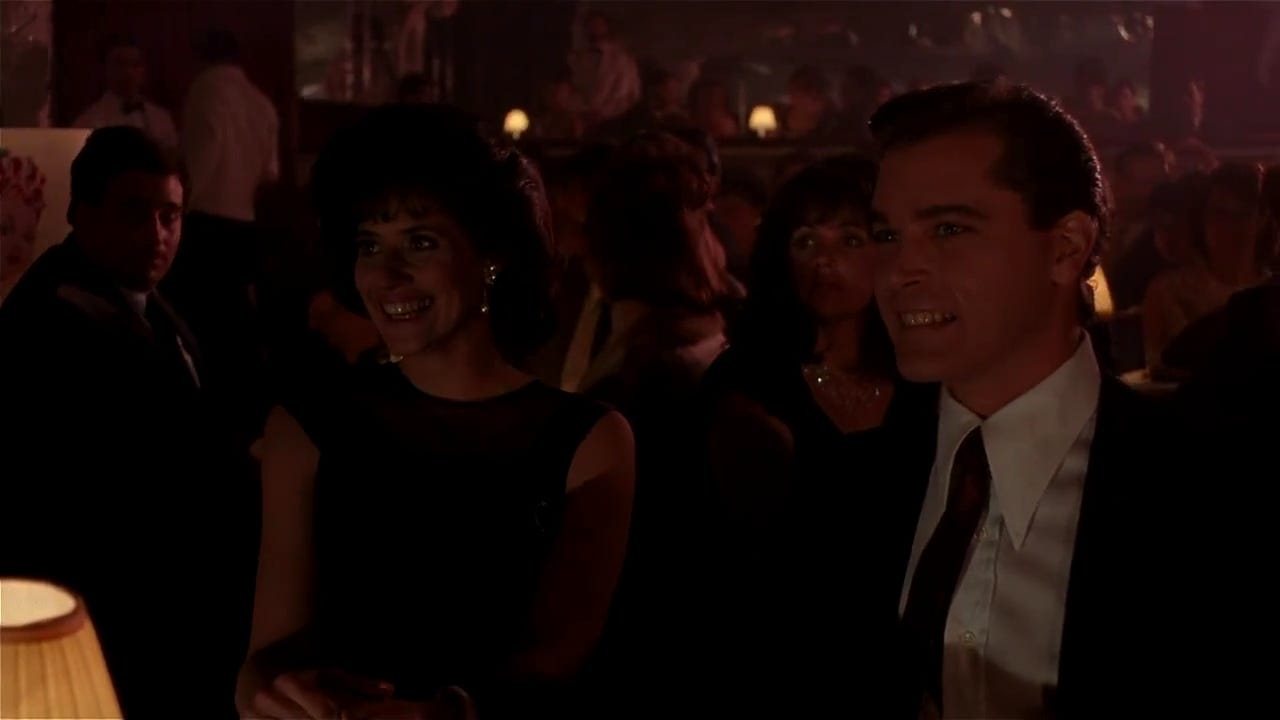
This shot comes towards the tail-end of the famous Copacabana oner, right after Henry Hill (Ray Liotta) gets him and Karen (Lorraine Bracco) a special table at the front. Karen has just asked Henry what he does. “I’m in construction,” he says. She takes his hands: “They don’t feel like you’re in construction.” Henry replies: “I’m a union delegate.” He’s bullshitting her, she knows he’s bullshitting her— and yet, Karen is charmed by both him and his ability to get into places… and she decides to go along with it. Which is exactly what Scorsese wants to show: the Mafia lifestyle is seductive. For two working-class people like Henry and Karen, it allows them to be treated like royalty. And like Karen, we go along with it. Well, at least until it hurtles to its dizzying crashing conclusion.
Boyz n the Hood — John Singleton, 1991
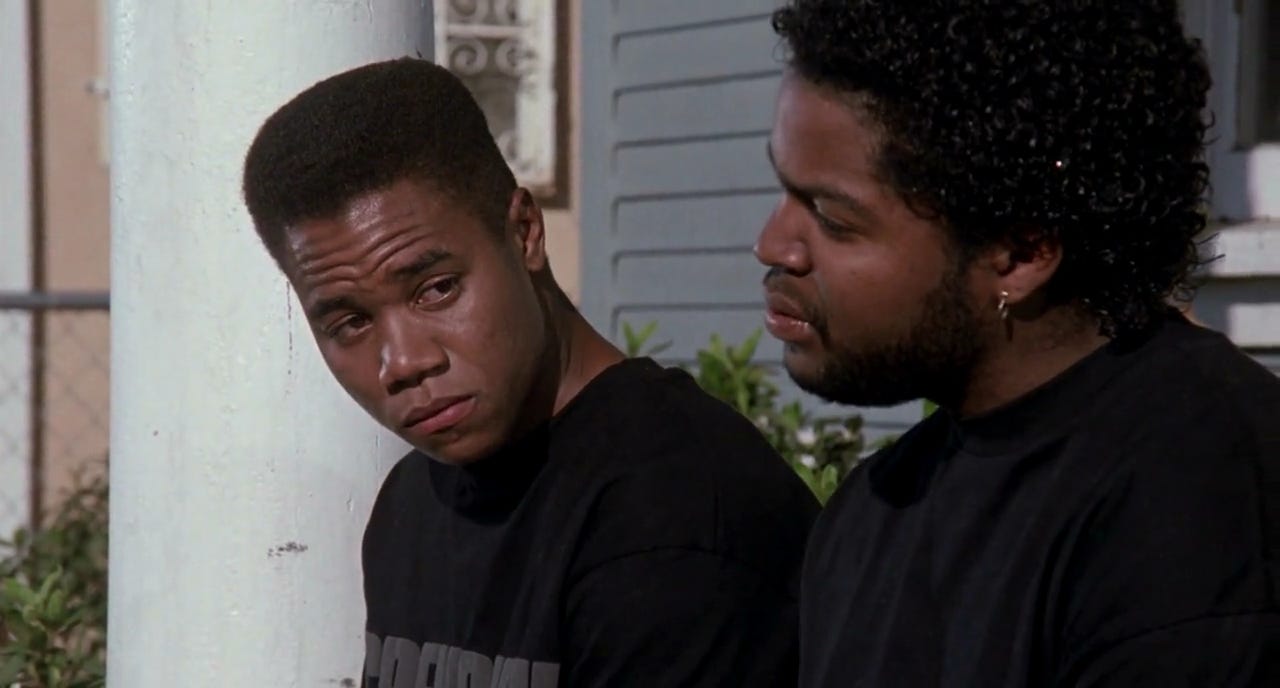
John Singleton broke Orson Welles’s record for becoming the youngest person— and the first African American— to be nominated for the Academy Award for Best Director for his debut feature… at 24 years old! This shot comes towards the end of the film, when Doughboy (Ice Cube) reflects on his brother’s untimely death, his own choices in life, and the media willfully turning a blind eye to the lives being torn by violence in America to focus on violence in other countries. What could have been an overwrought soliloquy becomes something more profound in the hands of Singleton’s direction and Cube’s performance. Even thirty-plus years later, there’s still power in this image.
The Player — Robert Altman, 1992
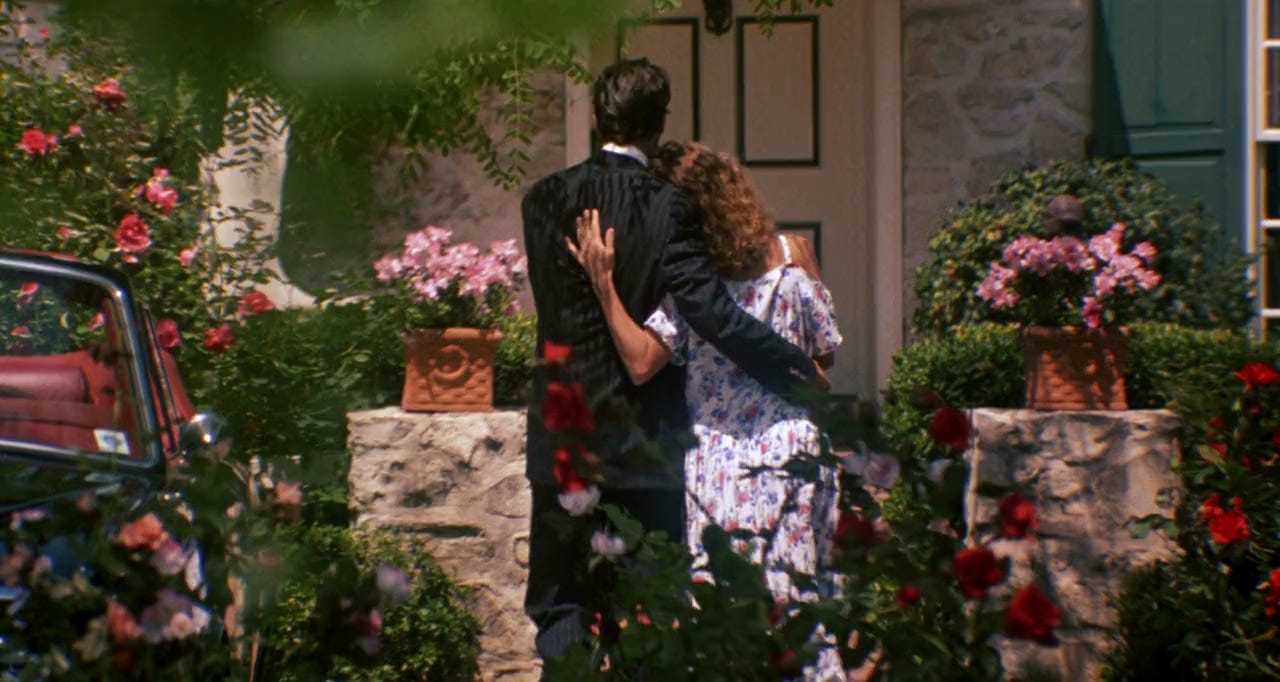
Robert Altman frames the shot like a fairy tale— it’s very much one of those happily-ever-after endings— and yet… the overbearing number of roses and flowers deliberately dials up the artifice. Griffin Mill (Tim Robbins) has not only escaped murder, he’s actually triumphed since, and gotten the girl… who was the murdered victim’s girlfriend. For Mill, it is a happy ending. He’s happy. But we know how he came to achieve that happiness, and Altman isn’t about to let us off the hook.
Schindler’s List — Steven Spielberg, 1993
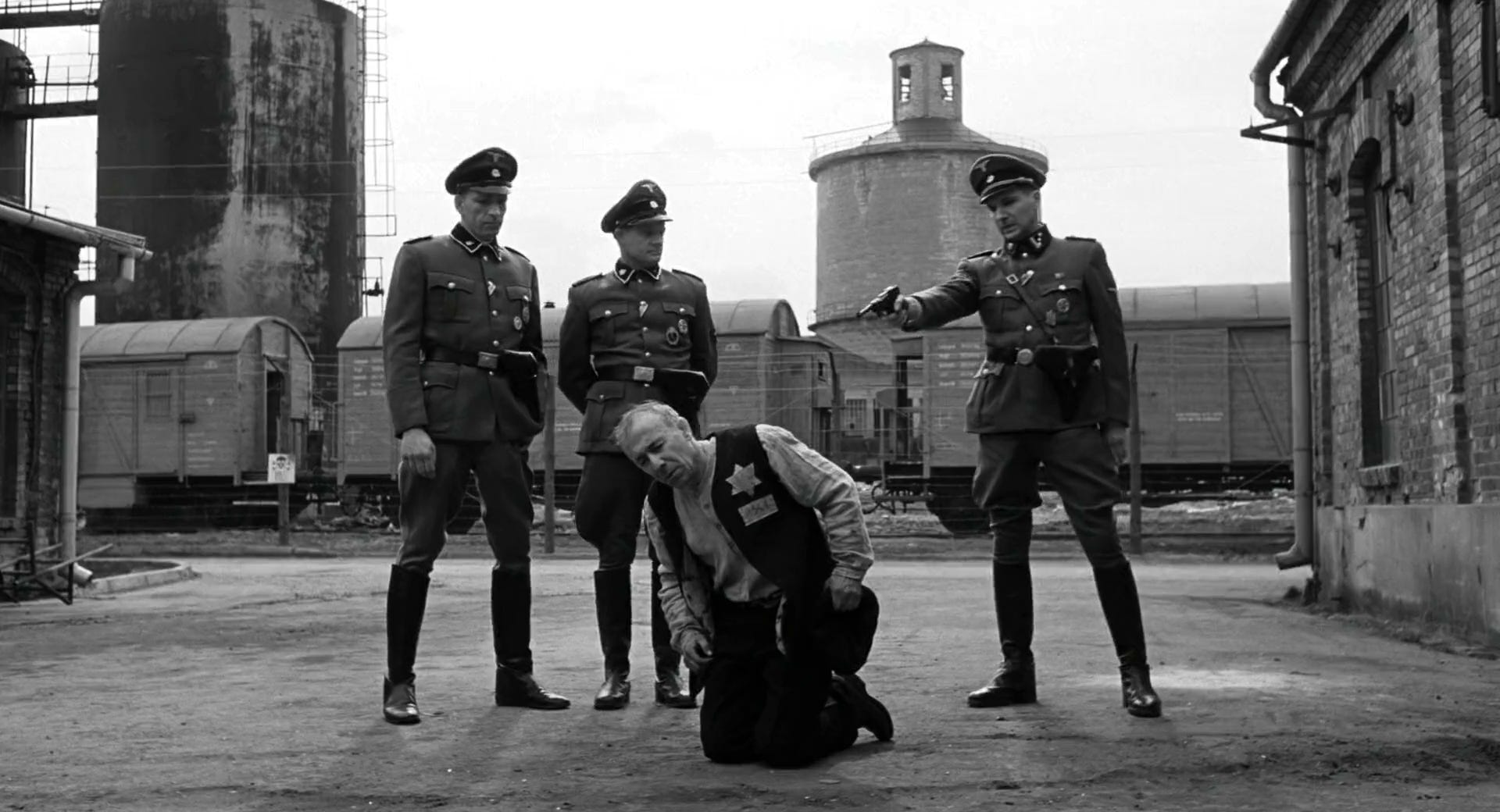
Steven Spielberg trades sensational camerawork for a more documentary-driven style, but the almost-banal result only heightens the horrifying cruelty of the Nazi regime, making it almost unbearable to watch. The officers here, led by that oh-so-charming monster Amon Goeth (Ralph Fiennes), take a rabbi out to the back of the factory to casually execute him, but the gun keeps jamming. Every time the gun clicks, you flinch along with the poor rabbi, waiting for the end at any moment— which is precisely Spielberg’s intention. “Grim” and “bleak” do not even begin to describe how stomach-churning this shot is.
Three Colours: Red — Krzysztof Kieślowski, 1994
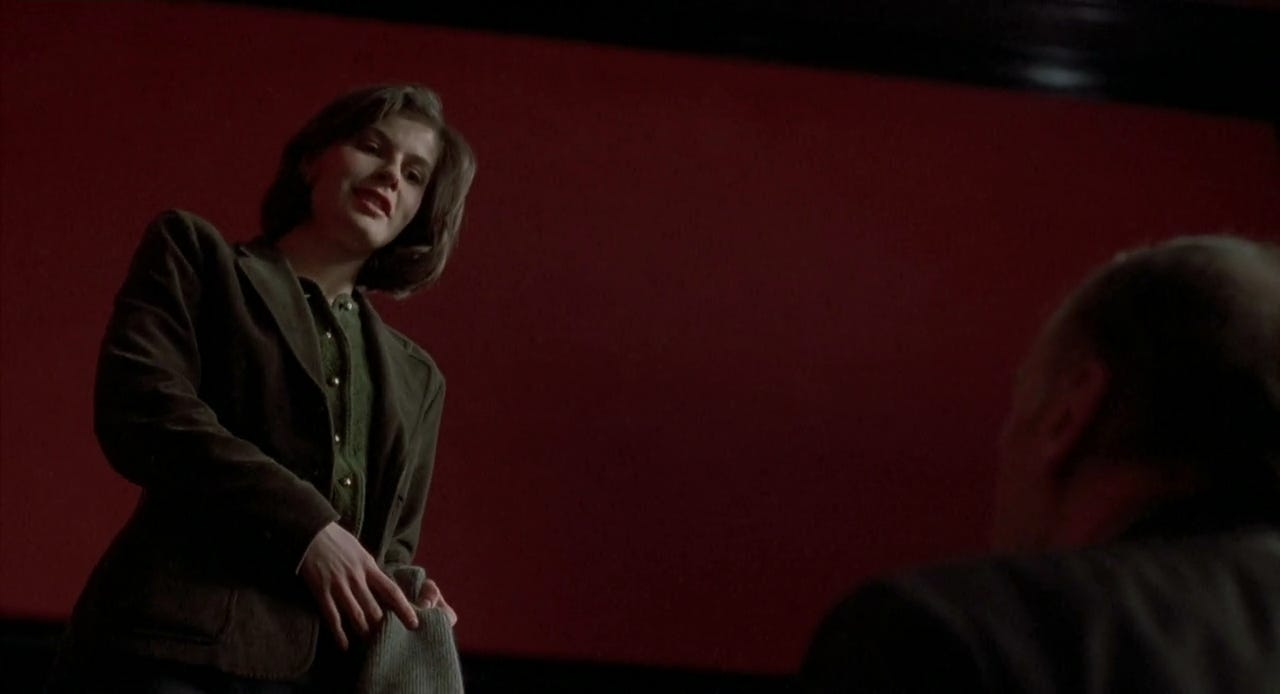
Krzysztof Kieślowski’s ability to insert the color ‘red’ throughout the trilogy really is brilliant mise-en-scène for its unobtrusiveness. The red implies passion, but not passion in the sexual sense— rather, a passion for life and humanity. Here, Valentine (Irène Jacob) walks out to greet Joseph Kern (Jean-Louis Trintignant), and her feelings towards him are warm (red), but note how she still towers over him. The two characters are never seen at the same level, and in their final meeting here, it continues.
Se7en — David Fincher, 1995
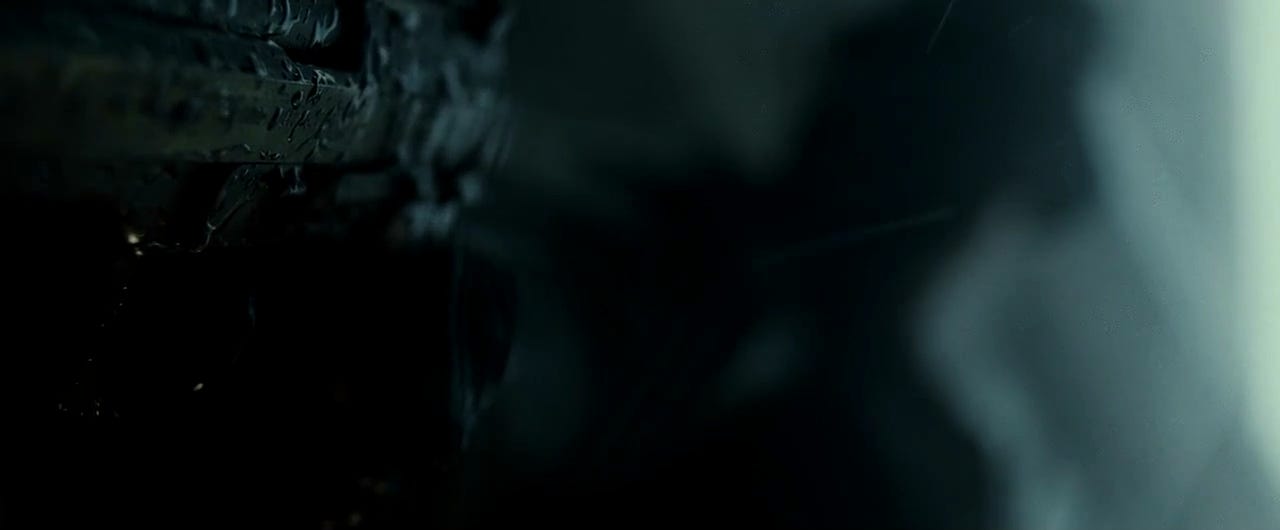
David Fincher cut his teeth on directing music videos during the 1980s— basically the 80s equivalent of what Curry Barker did with YouTube videos today— and that music video vibe is present in his work, but don’t let that fool you: Fincher knows his movies. Yes, this shot reeks of cool, but it also conveys the fear that a stunned David Mills (Brad Pitt) is feeling as he looks up at the unseen killer he chased— who has the upper hand. Which is the other thing: the killer— later John Doe— always has the upper hand. And nothing him makes him more sinister than it does here. Well, until he turns up later at the precinct with bloodied fingertips.
Secrets & Lies — Mike Leigh, 1996
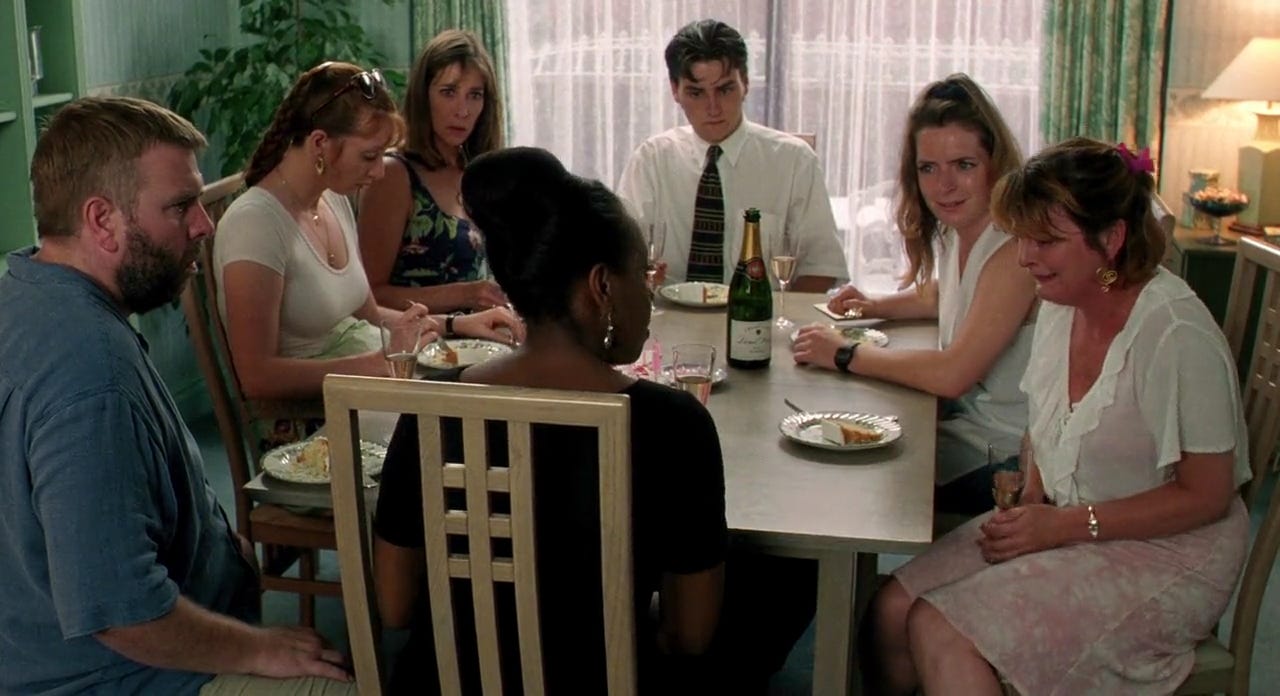
Mike Leigh doesn’t do “flashy” or “cool” shots that the Internet might go ga-ga for, but just LOOK at this shot! He and Dick Pope take an otherwise ordinary scene— eating cake in a dining room— and turn it into a masterclass of drama. (Also, table scenes are notoriously hard to film, and there are seven people in the scene, so more power to the team for shooting this!) Look at how the shot is framed: Hortense Cumberbatch (Marianne Jean-Baptiste) is (mostly) centered because she is the focus of everyone’s shocked attention— particularly Maurice (Timothy Spall), Monica (Phyllis Logan), and Roxanne (Claire Rushbrook); while Hortense’s focus is drawn to a crying Cynthia (Brenda Blethyn) who has just let slip to the others that Hortense is her daughter. An amusing touch is how Jane (Elizabeth Berrington) and Paul (Lee Ross), the only two non-family members, are looking down or away, as if they’d rather be anywhere but there. The lamp in the top-right corner adds some practical light while there’s natural daylight coming in through the big windows in the background. It’s a great example of how a story can be told visually using composition (and body language) in an ordinary space (a kitchen), without resorting to fancy tricks.
Princess Mononoke — Hayao Miyazaki, 1997
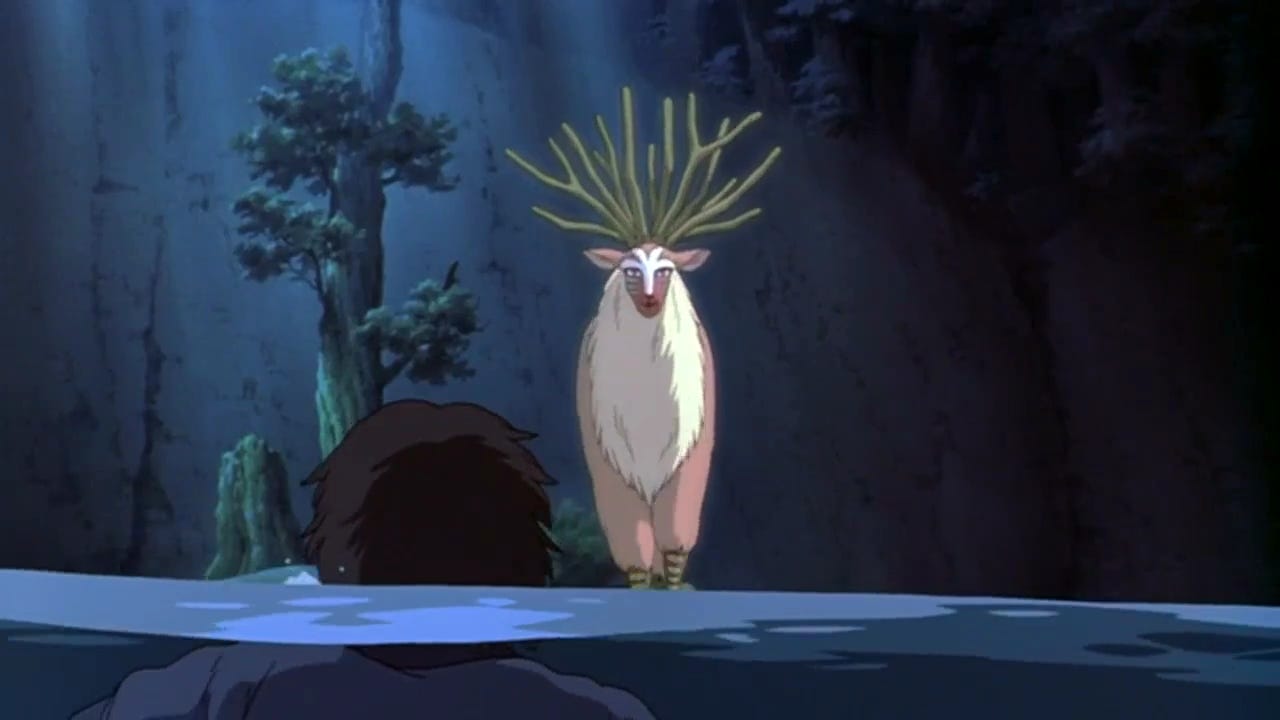
Picking one frame from a Hayao Miyazaki film is notoriously tough, especially one as beautifully drawn as this. But this shot of the Forest Spirit walking on water (a Christ-like touch) while Ashitaka bobs in the water and watches amplifies the feeling of awe, of a man who has seen the literal face of a god.
Flowers of Shanghai — Hou Hsiao-hsien, 1998
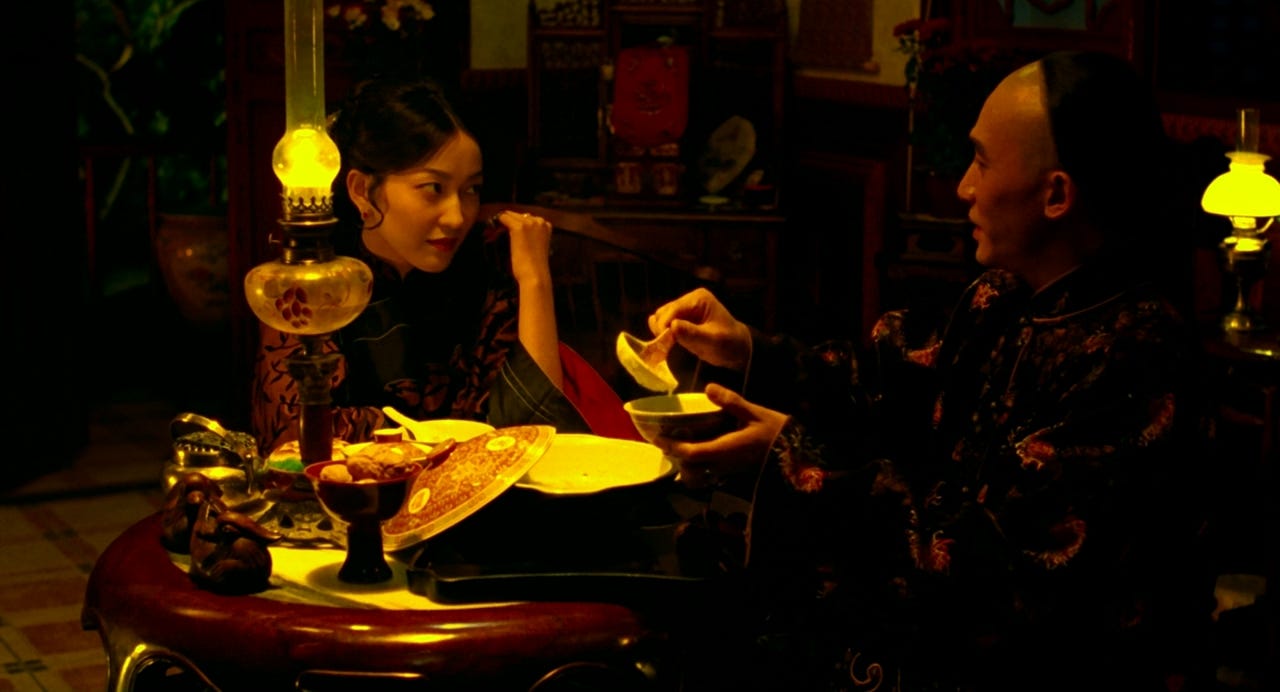
After Barry Lyndon, Flowers of Shanghai is the best film to use natural lighting to depict the past, using candles instead of electric bulbs to light the scene. It certainly works, suffusing the entire picture with a warm painterly atmosphere. The costumes add color and vibrancy, but the real draw is the two actors, Tony Leung Chiu-wai and Michiko Hada. They’ve just been through an argument and are reconnecting over food. What’s clear to us, if not to the two characters, is that there is genuine love between them… which only makes the outcome of the film all the more tragic.
Eyes Wide Shut — Stanley Kubrick, 1999
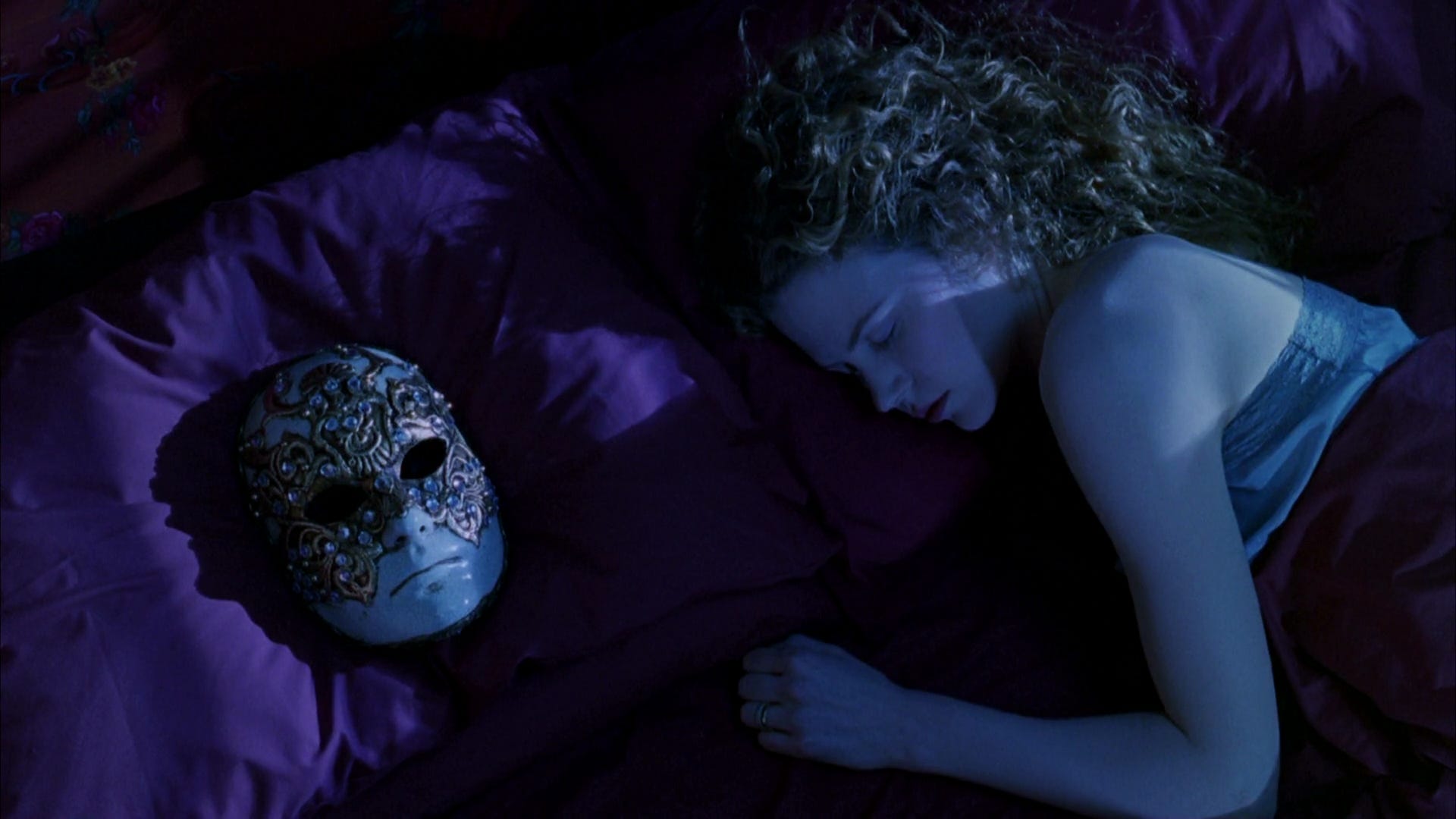
With Eyes Wide Shut, Stanley Kubrick went out on a strong note. The framing in this shot is simple, the choice of color great— purple pillows and a bluish light— and the implications ominous. We know that the mask belongs to Dr. Bill Harford (Tom Cruise), which he somehow missed when forced to leave the mansion after getting caught. And here it is, on his bed, next to his sleeping wife Alice (Nicole Kidman). The secret society has gotten into his house, and left poor bewildered over-his-head Bill a subtle message: We know where you live. Nothing extreme— no dead pets, no messages scrawled on the walls, no note. Just a mask. They are watching.
Thanks for reading! If you liked this, you can sign up here for more issues. If you’d like to support Three Left Feet Media, share this newsletter with a fellow film lover you think would appreciate it.
Long live the movies!
D.L. Holmes