


This list was a little more interesting to curate.
Up until this point, many of the movies through my Film Shots Of The Decade series (see here for Film Shots of the 1960s, Film Shots of the 1970s, Film Shots of the 1980s, and Film Shots of the 1990s) were films that I watched much, much later (that should give you a rough idea of my age). But at least half the films on this list, I’ve watched— more or less— around the time that they were released, so it’s starting to bring back certain memories.
As with the previous entries in this series, the shots I’ve selected aren’t meant to be a list of the definitive “best shots ever” from the “best films ever”. They are images from movies I liked that were made during this decade, that made me think about things.
As with an earlier list of shots arranged in alphabetical order, I’ve used two rules to select the films— and thus, the shots— from the decade:
One film from each year;
The same director could not be featured twice.
What films from the 2000s era do you like best? What shots do you love from them? If your favorite films and shots aren’t included, please share your answers in the comments!
(NOTE: There will be spoilers below, so proceed with caution!)
You Can Count On Me — Kenneth Lonergan, 2000
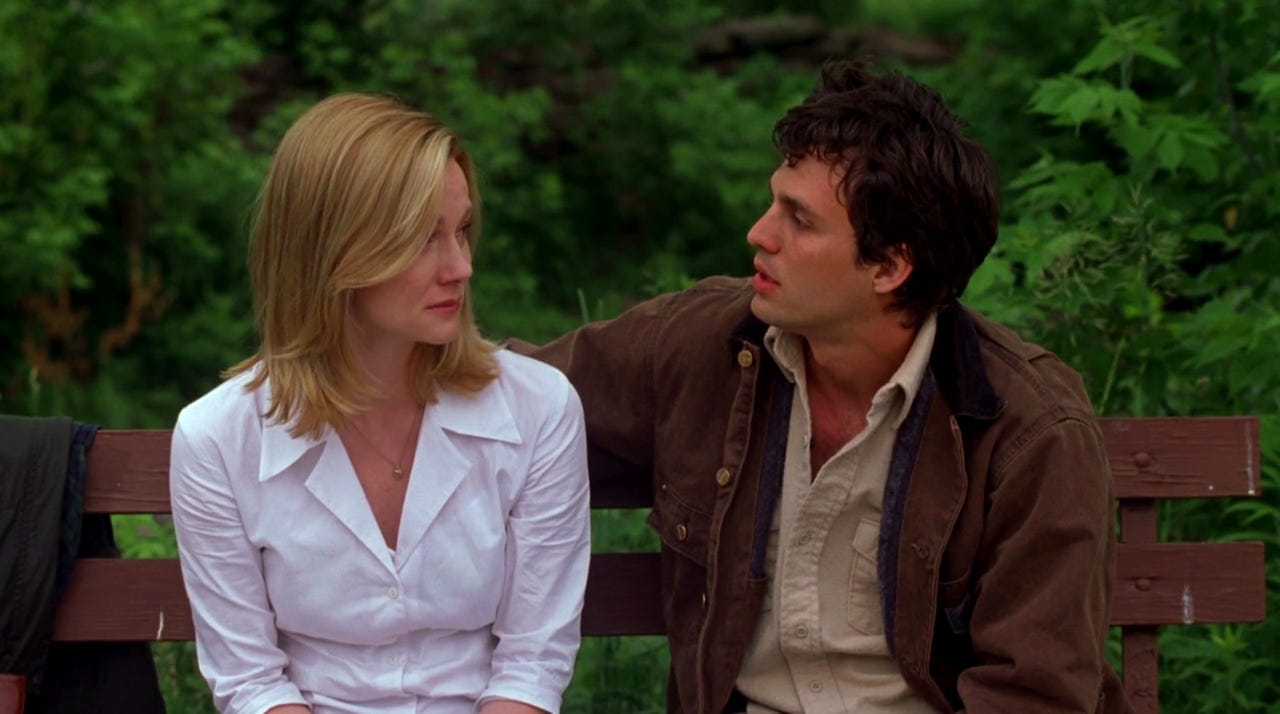
Sammy Prescott (Laura Linney) and Terry Prescott (Mark Ruffalo) only have each other in the world, having lost their parents quite young. Sammy wants her wayward brother to stay, but can’t have him in the same house. Terry decides to move again, but before he leaves, brother and sister reunite. Kenneth Lonergan frames the two in a tight medium with shallow depth of field, keeping the focus on the Prescott siblings, which only emphasizes the fact that they’re all they’ve got, which makes it easier to reconcile before Terry departs. Linney’s coat draped over the bench in the left corner is a nice touch— no really, crop the image and you’ll realize that the shot is missing something.
Y tu mamá también — Alfonso Cuarón, 2001
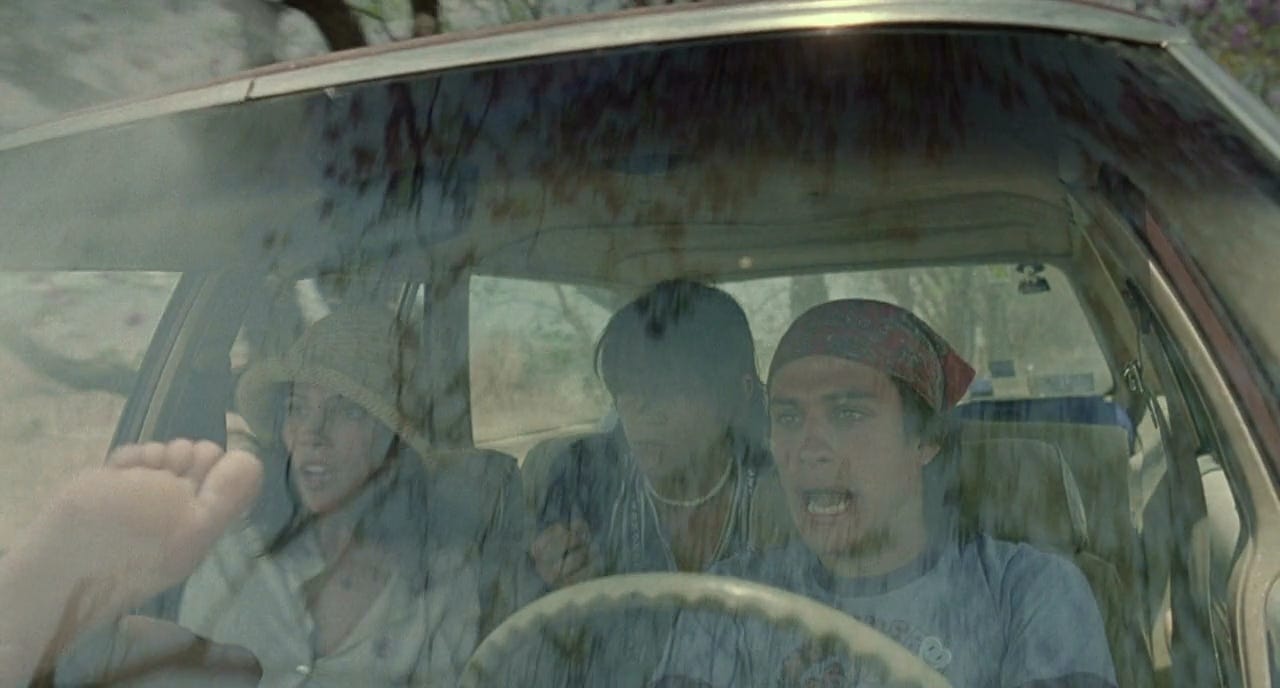
In this fun road trip that no one will forget, this moment occurs right after the two boys Tenoch (Diego Luna) and Julio (Gael García Bernal) have been boasting about their sexual experiences to Luisa (Maribel Verdú), but when Luisa asks something provocative, the two boys react comically just as the car radiator packs up. It’s a punchline (the boys’ reaction) on top of a visual punchline (the radiator choosing to break at that moment) layered with the realization that for all their boasting, these boys aren’t really prepared to deal with a woman who can talk about sex.
Cidade de Deus — Fernando Meirelles and Kátia Lund, 2002
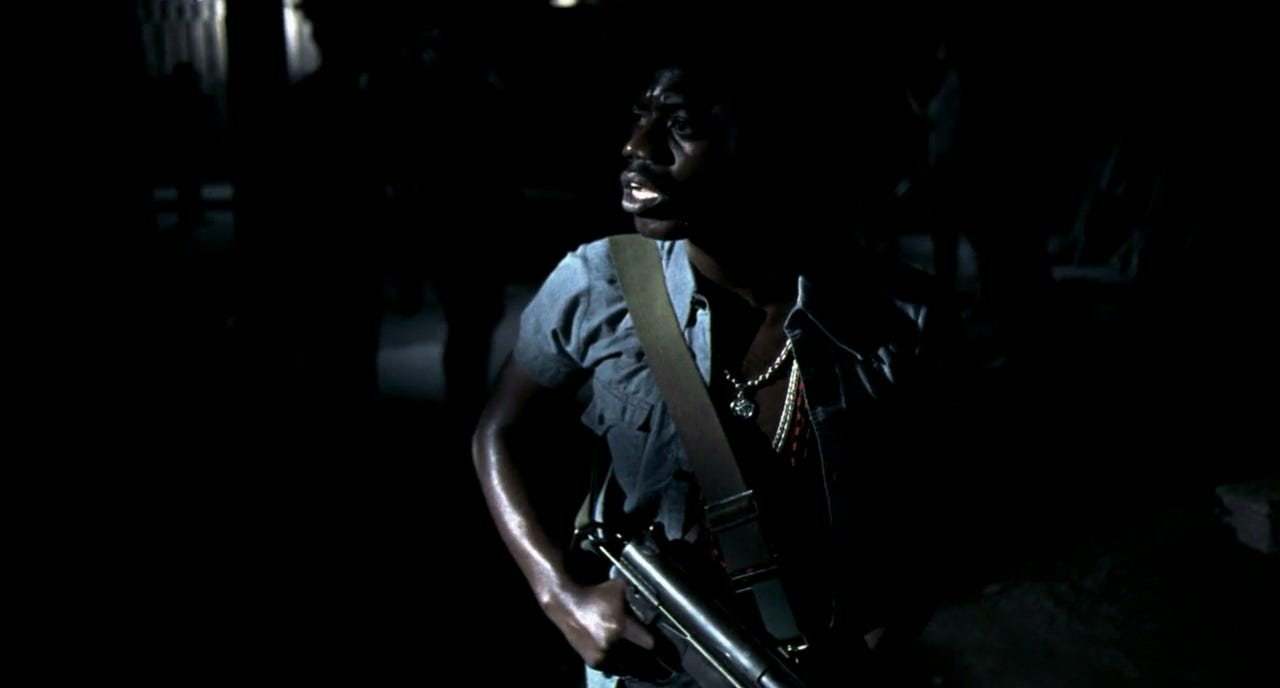
Cidade de Deus is not about the Mafia, but it’s the exact kind of crime movie that Martin Scorsese would make, one that blends social drama, politics, violence, and laughter indiscriminately. Take this shot in particular: the villainous Li’l Zé has just committed a horrible crime— he raped a girl who turned him down, beat up her peaceful boyfriend, Knockout Ned, and then walked away. But much later, Li’l Zé stops and turns around, perturbed. Why did he let Knockout Ned live? He’s so baffled that it’s hard not to laugh, only to feel horrible about laughing at the idea that he’s talking about killing someone, but that’s the thing: City of God feels alive and full of three-dimensional characters in moments like this. This medium shot is the tail end of a sped-up crane shot that adds to the effect, conveying the speed at which the thought hits Li’l Zé, plus actor Leandro Firmino’s delivery really sells the moment.
The Lord of the Rings: The Return of the King — Peter Jackson, 2003
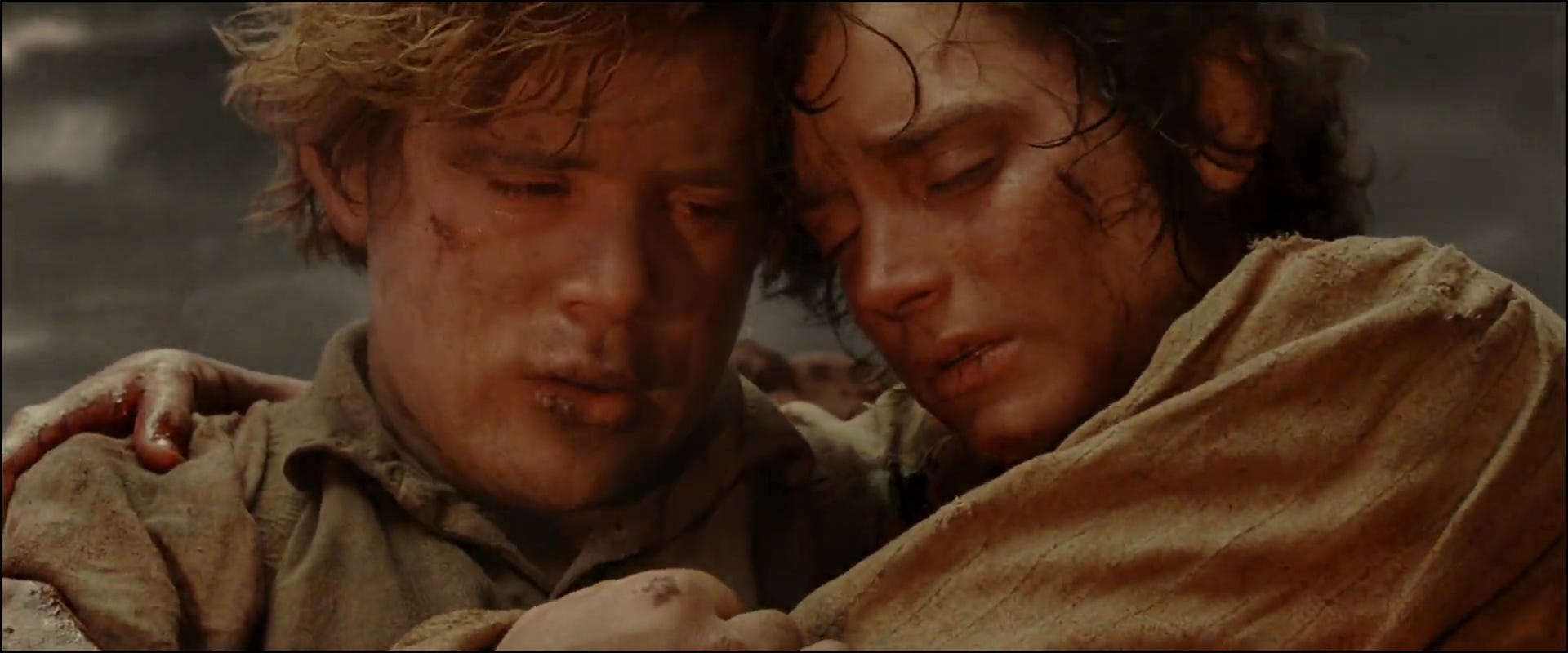
The Lord of the Rings trilogy is packed with bombastic epic images that look like David Lean’s compositions on steroids, in the best sense! But against all the staggering wide shots and the grand battles— not to mention the stakes for the very freedom of Middle-Earth— it is this medium close-up of an exhausted and bleeding Frodo (Elijah Wood) and Sam (Sean Astin) that sticks out for me, as they embrace each other and wait to die after successfully completing their mission. It reminds us that ultimately, amid all the scale, this is a story about two ordinary small folk who risk everything to save the world. Not for glory, not for deeds, but to protect their home. As Frodo said: “I’m glad to be with you, Samwise Gamgee. Here at the end of all things.”
Sideways — Alexander Payne, 2004
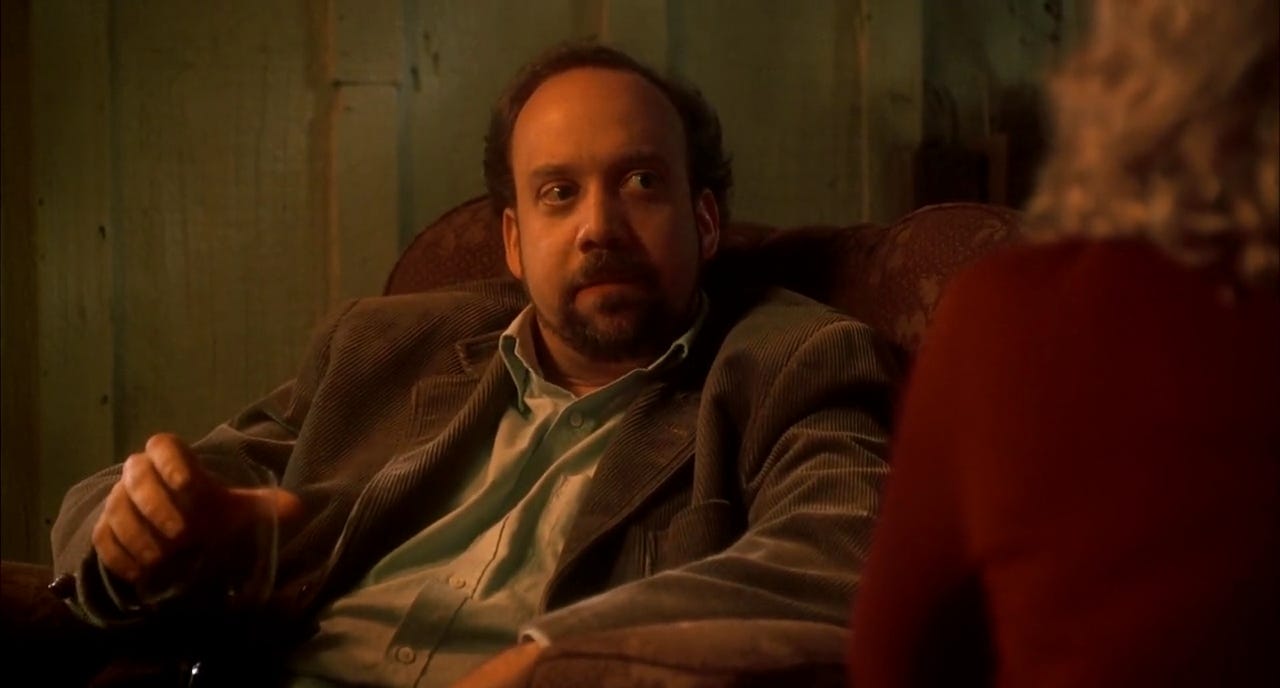
Poor Miles. That is the face of a man who knows he has colossally fucked up his chance to kiss a beautiful woman who just made a pass at him. It’s funny and pathetic and sad all at once, a sentiment that is only enhanced with the film’s warm yellow light falling on Paul Giamatti’s face in this medium shot, which prevents the actor’s brown clothes from seeming dull and muddying the image. Virginia Madsen’s red pullover in the right foreground adds a splash of color (as does a bit of her blonde curls in the top-right corner). In fact, having Madsen in the shot instead of just framing Giamatti alone only makes it funnier as he fumbles, so you can actually feel his opportunity slip away in real time.
Munich — Steven Spielberg, 2005
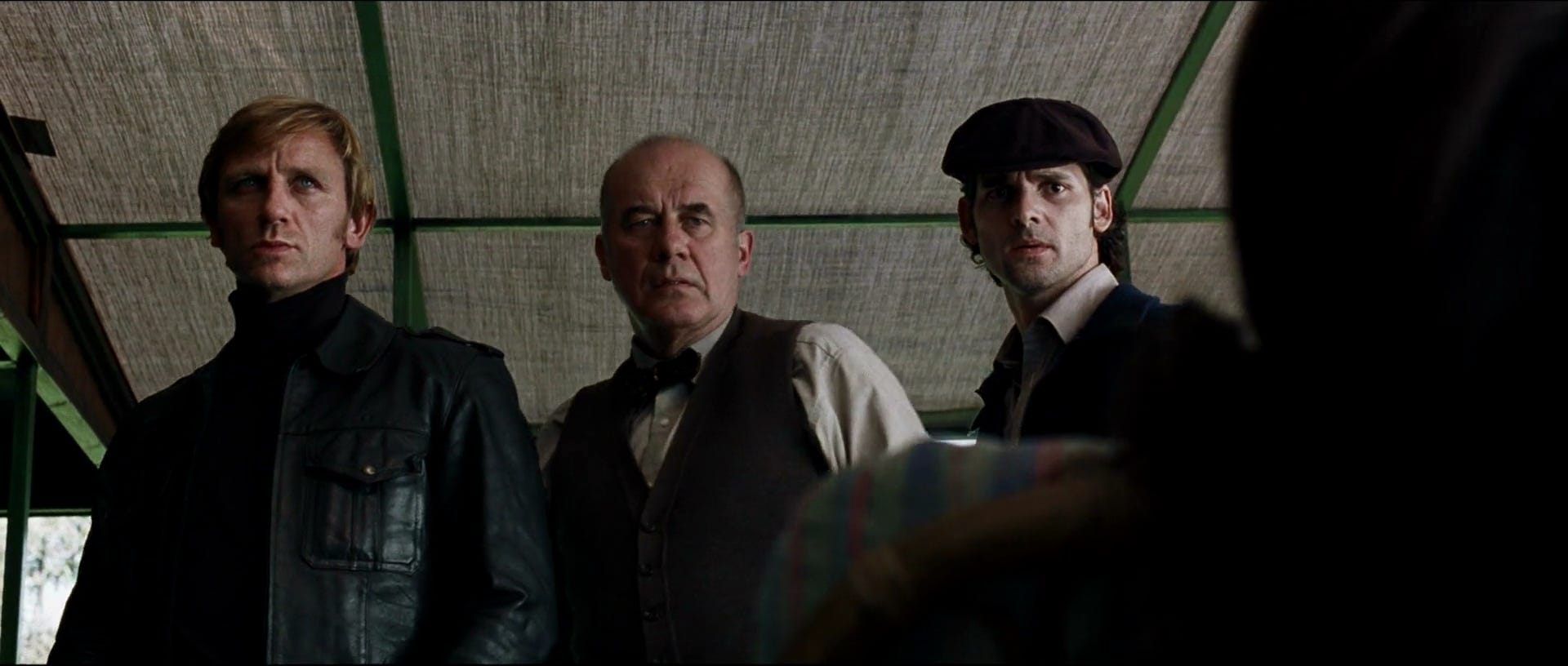
Munich was the first Steven Spielberg film that I watched in the cinema. I was 10, in the early months of deciding that I wanted to make films for a living, and learning about directors. I didn’t know a lot about Spielberg, but I knew that he was a famous director, so I begged my parents to take me to watch it. I don’t think my poor parents, as well as my brother and grandfather— who tagged along to watch— knew what the film was about or they might have refused. As it is, a lot of the political stuff flew over my head. But I was still enthralled by Munich and was able to follow the story for the most part. This scene stuck in my head, the part where they kill a Dutch contract killer on her boat in retaliation for killing one of their own. When Eric Bana and a pre-Bond Daniel Craig screwed the pneumatic tubes to shoot her, I remember being overwhelmed by the brutality and coldness of her execution. I knew why they were doing it. But even at 10, I could sense Avner’s ambivalence and his resolve for the mission wavering. Many years later, I rewatched it and realized that Spielberg had made a rare film that actually questioned about the price of war that is still raging on between Israel and Palestine. Ten-year-old me may not have understood the politics, but he certainly knew enough to know that this was a fine film.
Pan’s Labyrinth — Guillermo del Toro, 2006
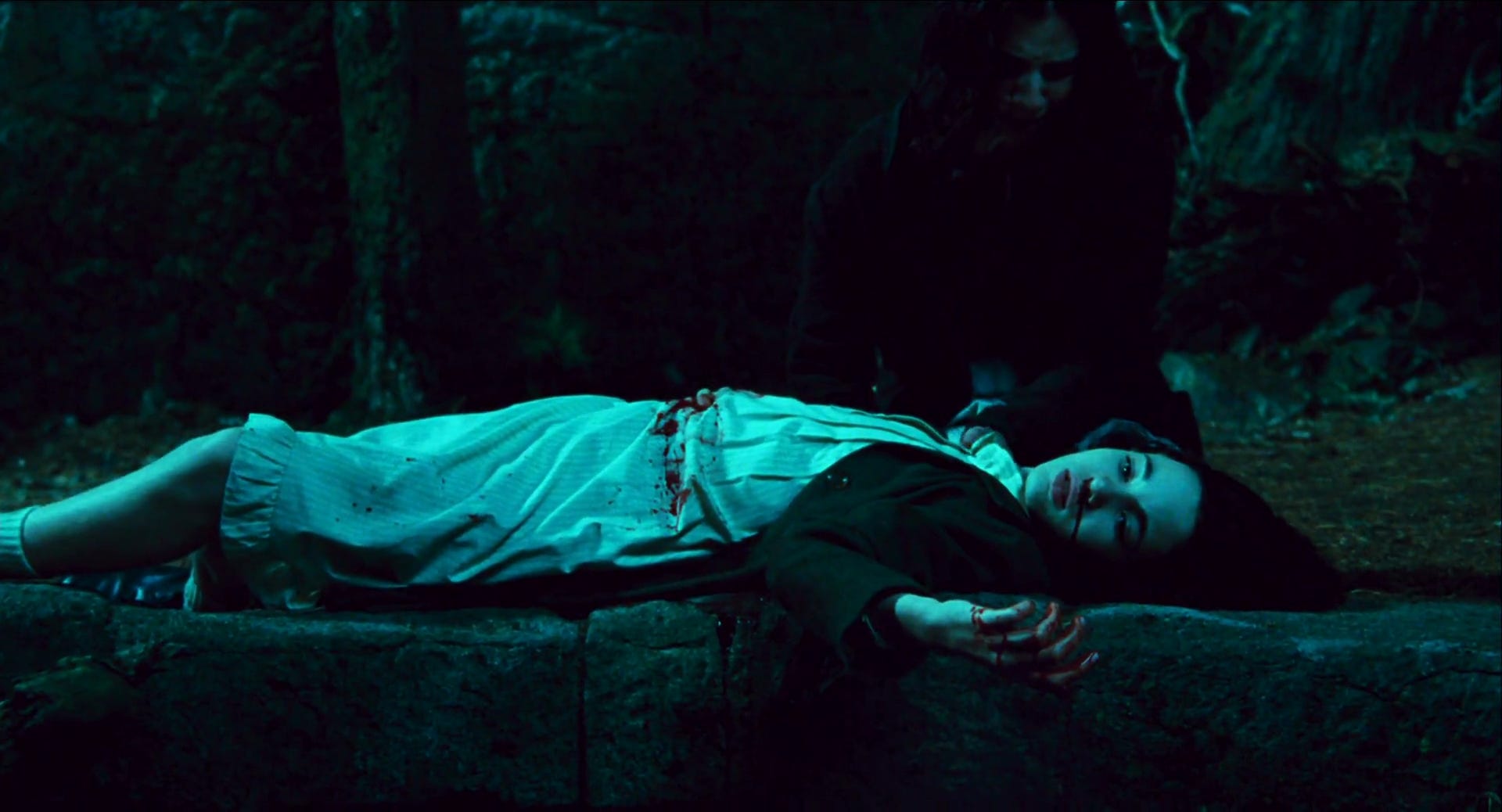
Pan’s Labyrinth shattered the myth for me that fairy tales ended happily. Not here. Even after many re-watches, when I know how it ends, this image of Ofelia bleeding to death still hits hard. Harder still is watching Mercedes (Maribel Verdú) knowing that there’s nothing she can do to save the child, except to comfort Ofelia by humming her a lullaby. The red of the blood stands out under the blue color grading, making it all the more vivid. Which only makes it more painful to watch.
4 Months 3 Weeks and 2 Days — Cristian Mungiu, 2007
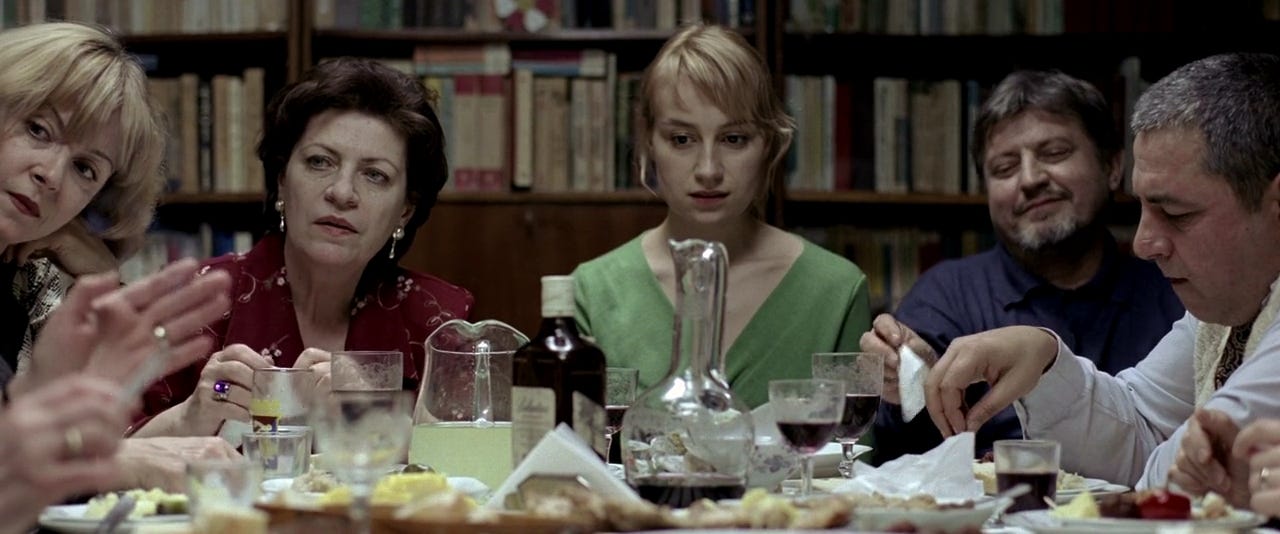
This moment in Cristian Mungiu’s film comes after a really bleak series of events— though bleak is an understatement— which only heightens everything. Otilia (Anamaria Marinca) has returned from the hotel where her friend Găbița (Laura Vasiliu) has just had an illegal abortion performed by a guy whose payment includes sex, and now she’s sitting there at her boyfriend’s mother’s dinner party listening to adults talking about trivial stuff and doing the thing that adults do where they bash the generation after them for not having the same values as they do. Watching Otilia sitting there silently as the older generation around her jabber is akin to being waterboarded, especially as the camera remains stationary throughout the scene, with Otilia hemmed in. Given that we know what she has just been through— and given that the film is set during the 1980s, when dictator Nicolae Ceaușescu’s rule was in full swing and abortion was illegal— the older generation’s hypocrisy pricks like hot needles. By choosing not to cut away or zoom in or out, this shot becomes increasingly uncomfortable to watch. Also, everyone needs to watch this movie before they start talking about abortion— because it puts a human face to a topic that is becoming increasingly polarized.
The Dark Knight — Christopher Nolan, 2008
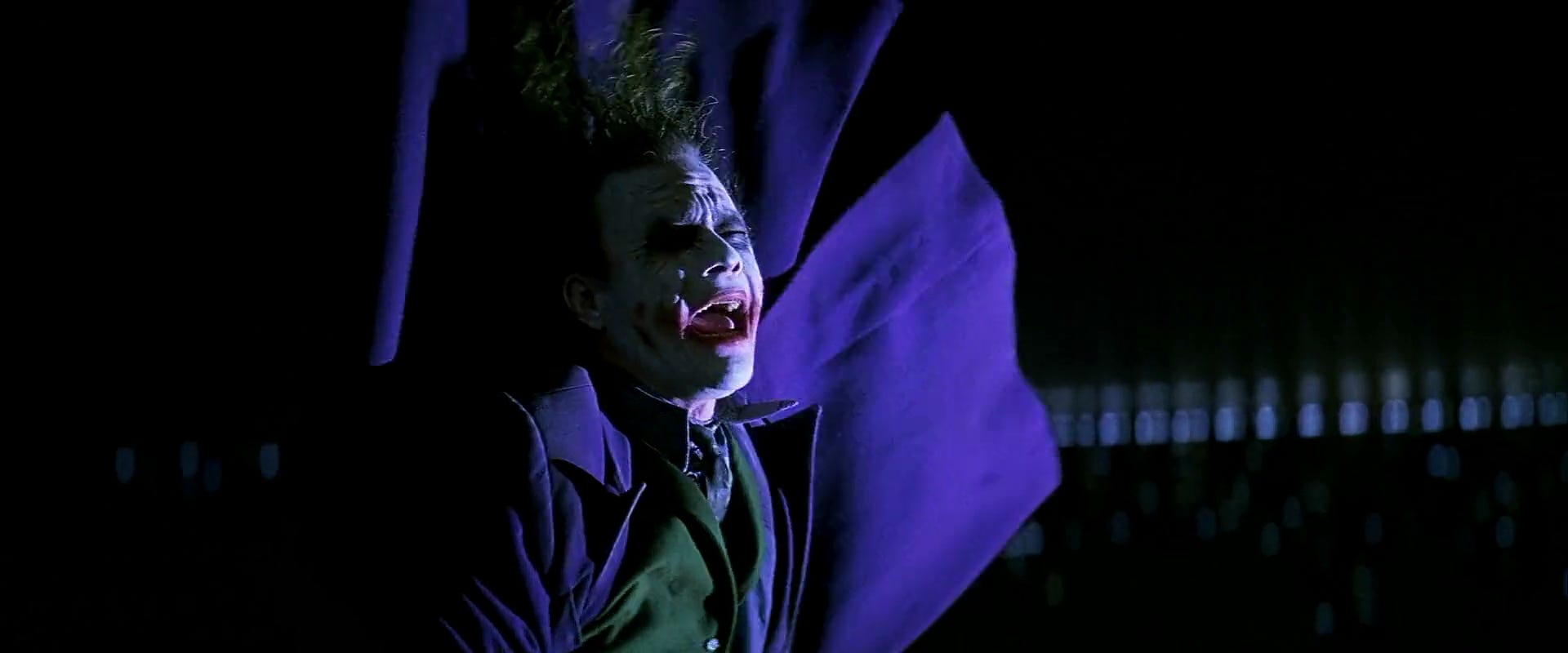
I remember the moment I learned about Heath Ledger’s death in January 2008. I was watching the news as part of a class assignment where I had to write down five headlines for a language course, when the chyron under the news program announced that actor Heath Ledger had passed away. I knew he was starring in The Dark Knight so I was a bit stunned. In my world at the time, the concept of an actor dying before their film was finished or released was new. And when The Dark Knight released, like many millennials, I remember it hit with the explosive force of a bomb, namely Ledger. Everyone was enthralled and quoting The Joker like it was Scripture. Especially online. It took me MANY years later to realize that The Joker was NOT a character to be idolized, even if he was a fascinating supervillain. In the hands of Ledger, the Joker became the embodiment of chaos, an online troll in a purple suit and completely unstoppable. In 2024, I caught The Dark Knight on IMAX, and this image— one of Ledger’s final onscreen appearances— is still on my mind. Despite being caught and defeated by Batman, he has one last cruel trick left to play: He reveals that he brought down Harvey Dent. In the background, Gotham is upside down, but the Joker is the right-side up. And he loves it.
Coraline — Henry Selick, 2009
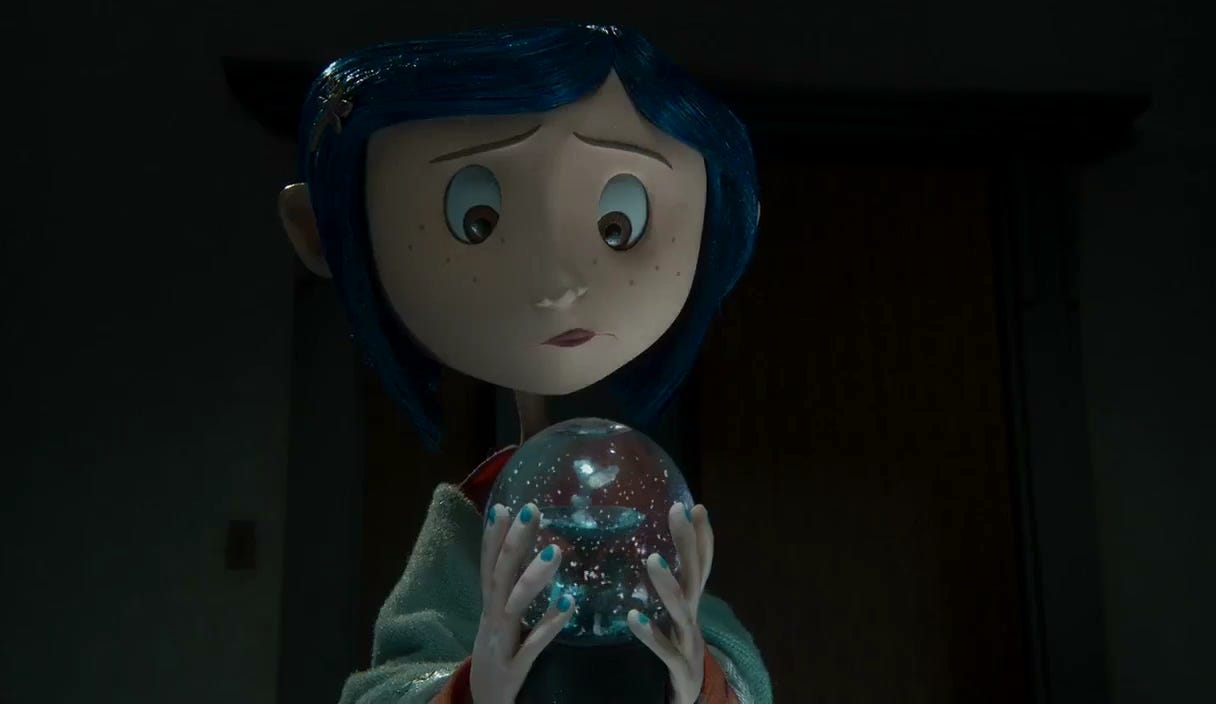
Coraline Jones is not likeable, especially for a girl, which makes her such a realistic character. In fairness, it’s hard not to blame her— all she wants is a little attention from her loving if absent-mindedness and busy parents. But this shot is an understated heroic moment: Coraline has escaped the clutches of The Beldam but her parents are now trapped. Coraline knows she has to go back. She’s scared to, but she must. It’s like Alice in Wonderland but so so much darker.
Thanks for reading! If you liked this essay, you can sign up here for more issues. If you’d like to support Three Left Feet Media, share this newsletter with a fellow film lover you think would appreciate it.
Long live the movies!
D.L. Holmes