

Mad Max At 47: The Making Of A Masterpiece - Part 1
"The best school that I went to was cutting the first “Mad Max.” It was shot for three hundred and fifty thousand dollars. It was very ambitious. Everything went wrong," reflects Miller.

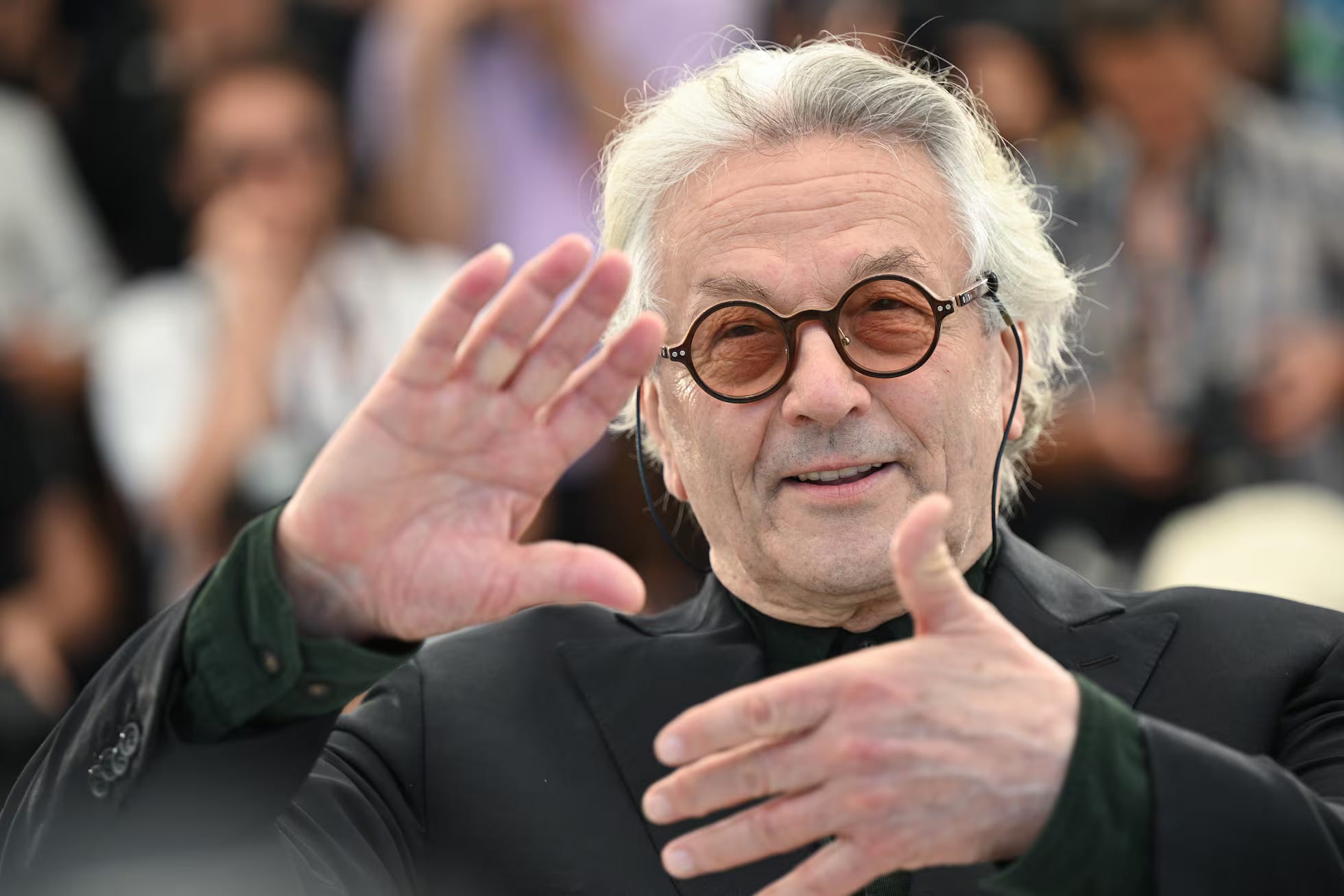
This is the first installment of a three-part essay on the making of Mad Max. Read Part 2 here and Part 3 here.
Most filmmakers breaking into the movie industry make their directorial debut with a small-scale feature film. Then there’s George Miller, whose first film was Mad Max.
At first glance, Mad Max fits the bill of most first films: it was made on a small budget with a mostly unknown cast, led by a then-unknown Mel Gibson. Unlike other debuts, though, this Australian low-budget flick brimmed with car chases and horrifically grim moments. Just as Seven Samurai forever reshaped the action film, Mad Max rewired the imaginative possibilities of post-apocalyptic and dystopian stories in pop culture.
Oh, and thanks to its tiny budget1, it held the Guinness World Record for the highest box-office-to-budget ratio of a motion picture, dethroned only two decades later by The Blair Witch Project (1999). Not many feature film breakouts can claim such an auspicious and profitable breakout.
How, then, did a “fast-moving beer-and-popcorn picture” from Australia about “marauders creating mayhem on the roads and the leather-clad cops who try to stop them” conjure spectacle on such a minuscule budget? And what kind of brilliant— even depraved— mind came up with a story like Mad Max whose influence continues to be felt even today?
To celebrate the film’s 47th anniversary, let’s take a look at the wild, unbelievable story behind the making of Mad Max, and how it was brought to life. This is Part 1.
How George Miller Got Into The Movies
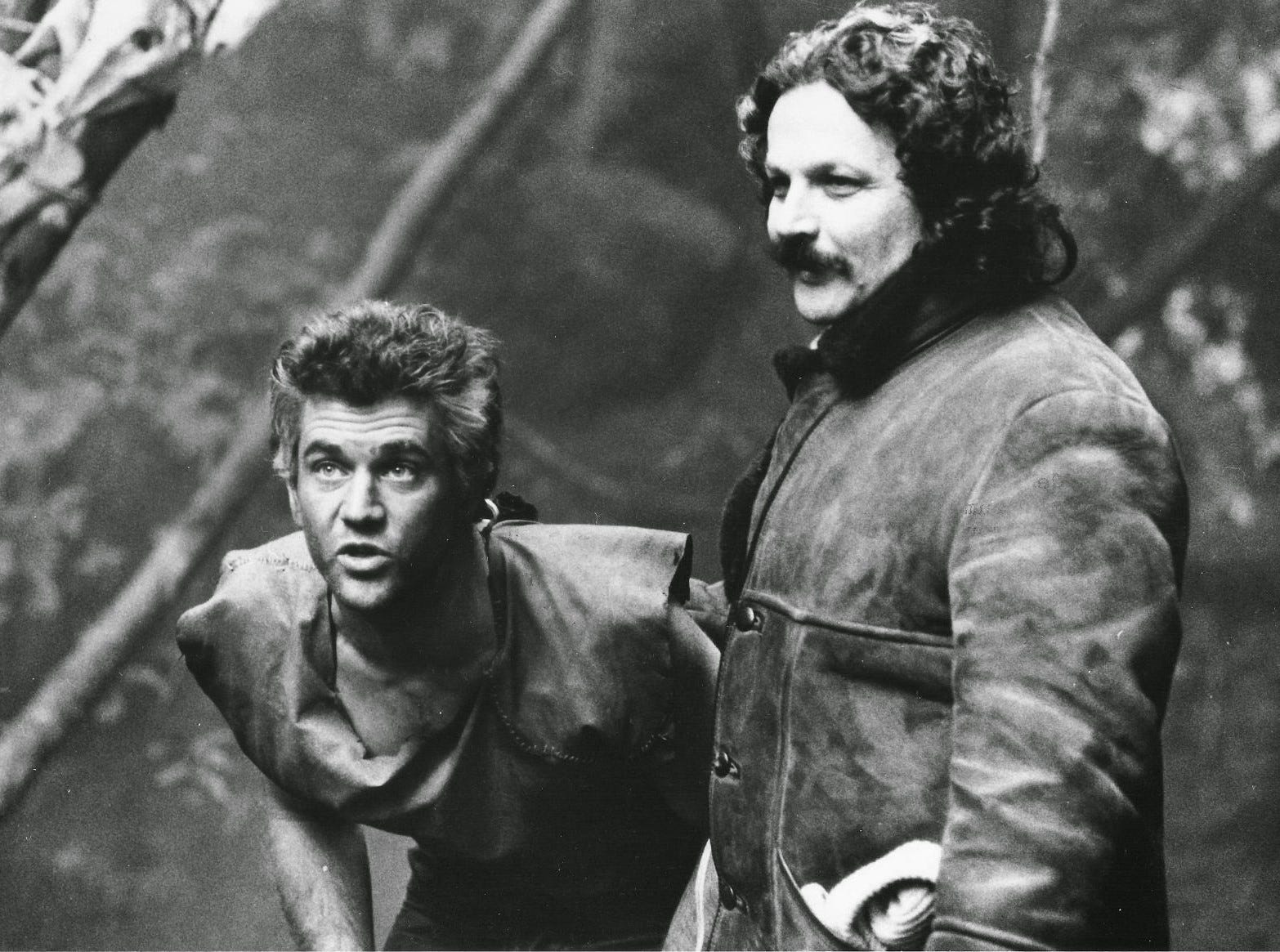
Any story about Mad Max begins with its creator: George Miller.
Miller, the son of Greek immigrants raised in the small country town of Chinchilla, Queensland, never set out to be a filmmaker. He wanted to be a doctor— at the time, the most influential career a person could aspire to be was the local GP. “Also, I was intensely curious about who we are as human beings,” he reflects, “and I believe a medical education was probably, for me at least, the best way to get to understand who we are.”
In 1966, Miller, and his twin brother John, attended medical school together at the University of New South Wales. Unlike his more conscientious brother, Miller spent more of his time checking out all that the university and town had to offer2. This included frequent trips to the cinema, including that one afternoon when he caught Robert Altman’s 1970 Korean War satire M*A*S*H at one theater, then walked into another to watch The Battle of Algiers. It wasn’t till a few years later that two incidents in particular would profoundly affect his life.
In 1971, Miller’s other brother, Chris, told him that the university was hosting a short film competition. The prize was free admission to a film workshop being conducted at the University of Melbourne; there, around forty aspiring filmmakers would learn the tricks of the trade. To compete, contestants had to shoot and edit a one-minute short film in an hour. The Miller brothers’ entry was a fifty-seven-second short film in which…
… a tracking shot slowly approaching a man with long hair, a hat and an overcoat. As the man turns towards the camera, the filmmakers cut to a cartoon caption that reads, ‘What’s so wrong about movies is that they’re not real.’ In the last couple of seconds, the man’s hat and hair suddenly pop off and his coat falls to the ground—as if nobody was actually there.
The Miller brothers’ entry won, but George didn’t give much thought to attending the Melbourne workshop. He was going to be a doctor; making films didn’t seem like a serious career option.
Around this same time, Miller took a job at a construction site while waiting to start his internship. One day, as he stood next to another worker, a brick fell from fourteen floors above them; it narrowly missed Miller, hitting the ground between them with a crack. “This was in the days before helmets,” he says. “I got an existential jolt. I thought, Damn it, I shouldn’t be on this site.”
The next day, he made the nine-hundred-kilometer trek by bike to attend the workshop in Melbourne3. And at this workshop, he met the man who’d become his best friend and filmmaking business partner/producer: Byron Kennedy
17 Lessons I Learned From Studying The Making of Mad Max

Last month, I wrote a three-part essay series about how George Miller made the first Mad Max. But looking back, I realized that it was easy to miss the lessons worth learning— the ones that I picked up on and am trying to apply in my own career— because put together, the essays add up to around 12,000-13,000 words. Even for me, that’s a lot to go throug…
How Byron Kennedy Met George Miller: The Beginning Of A Beautiful Friendship
Without Miller, the world would never have gotten Mad Max. But Mad Max would likely have never gotten made without Byron Kennedy.
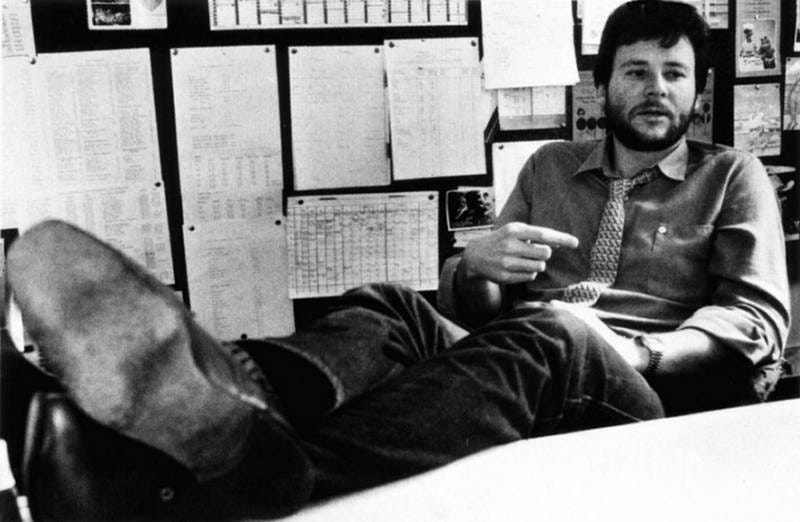
It was his mother who named her firstborn after the nineteenth-century romantic poet Lord Byron4; Lorna Kennedy wanted to pass on to him her fondness for arts and culture. But Kennedy’s artistic ambitions were fused with an entrepreneurial streak, leading him to launch his first production company Warlok Films at age 18; then, when was 21, he won the Kodak Trophy competition for a vérité-style documentary called Hobsons Bay— the prize was an overseas trip to meet and be mentored by film industry professionals. When he returned, Kennedy lent his services as a freelance cameraman and production coordinator in Melbourne and Sydney, while also lecturing at the now-defunct Aquarius Film School, conducted by a group called the Australian Union of Students. In 1971, he attended a film workshop held at the University of Melbourne. This is where he bumped into George Miller.
Although Kennedy was four years younger than the soon-to-be doctor, the pair hit it off at once, recognizing kindred spirits. Miller had the creative instincts, Kennedy the producer’s vision. Each had what the other lacked, and decided they’d be more successful together than individually. Eric Kennedy, Byron’s father, would recall: “They understood each other and they both knew where they wanted to go.”
Andrea Kennedy, Byron’s younger sister, sums it up succinctly:
“If George was the creative one, Byron was the more financial one. But they shared the same visions. They bonded instantly. They could bounce off each other and they had great rapport.”
That year, Miller and Kennedy made the first of several projects: the short film Violence in the Cinema: Part 1. Filmed in a mockumentary style, the black comedy followed a stuff academy cautioning about the impact of violence in film, only to be assaulted in various gnarly ways throughout. Both acclaimed and controversial, Violence was submitted by the government as Australia’s official entry to the Cannes and Moscow film festivals of 1973. At a 1972 screening at the Sydney Film Festival, a representative from a distribution company approached Miller and Kennedy: he wanted to distribute their film. Kennedy negotiated the contracts: British Empire Films (closely associated with distributor/exhibitor Greater Union) would release Violence release in Australia, and Metro Goldwyn Mayer (MGM) would handle the rest of the British Commonwealth. For the next few years, the pair continued working on smaller projects, including a TV comedy special on Australian films called They’ve Got To Be Jokin’, which they sold to Australia’s Channel Nine Network. Nine also picked up a 1974 Kennedy-Miller short documentary called The Devil in Evening Dress, a one-hour special examining the legend of deceased opera singer Federici, whose ghost supposedly haunts Melbourne’s Princess Theatre5.
When Miller wasn’t making films during his off-time, he was doing his residency at St Vincent’s hospital in Sydney, where he was exposed to various traumatic events that influenced the grim world of Mad Max. Recalling one particularly horrific accident when five people were rushed to the emergency room:
“There was a young girl they brought in. She had a rubber blanket around her, and I lifted it and couldn’t even make out what should have been her legs, she was so badly crushed.’ He looked around for a place to insert an IV but couldn’t find a vein in her arm, so he inserted it into the young woman’s neck. She remained conscious the whole time, repeating two words over and over again: ‘Die me. Die me. Die me.’ A priest was there, shouting out for her to repent. She was wheeled into the operating room and died that night.”
1976 was pivotal for Kennedy’s professional development. The Melbourne native attended the Milan International Film and Multimedia Market, and also the Marché du Film (Film Market) at the Cannes Film Festival, which happens to be “one of the largest films markets in the world, abuzz with the activities of buyers, sellers and scattered hopefuls”. Kennedy’s interest was in contracts, and how they worked. As Luke Buckmaster recounts in Miller and Max: George Miller and the Making of a Film Legend:
[Kennedy] spent six weeks studying the contractual and legal aspects of film production, distribution and marketing in Hollywood. He returned home well-schooled in the field, adamant that this kind of knowledge was sorely needed in the Australian film industry.
Later, Kennedy made an important trip to Hollywood to meet with some of the industry’s top lawyers on what to do with contracts.
This is how [Kennedy] was able to influence people. These legal blokes told him what to do, what to look out for, that sort of thing. They gave him a few of their contracts to keep and to bring home so he could study them.
This knowledge would become his superpower. His father remembers:
“Byron used to say that nobody in Australia knew anything about signing contracts.”
In that same year, the Kennedys moved into a new house in Werribee, Victoria. This time, they had added a new member to their household: Miller. The recently graduated doctor lived with the Kennedys for a few years, and the family have fond memories of him. “George was no trouble. He was just sort of an invisible person. You wouldn’t even know he was there,” recalled Lorna. Added Eric, “George had a sort of gentle air about him.”6 Andrea, remembers him as a “nice, gentle soul. As you see him on TV these days—that funny, science-y, goofy, unpretentious guy—that’s what he’s always been like.”
Living with the Kennedys had benefits. Miller could save money since it was cheaper than being on his own. Plus, he and Kennedy could work around the clock on whatever project obsessed them; and that year, they had decided it was time to break out in a big way with their first feature film. It would be kinetic, visceral— a “road movie, a horror film in the tradition of Carrie, a car action film, a bikie film and a cop film”. It would be called… Mad Max.
The Origins of Mad Max
Miller used to listen to a radio program called Newsbeat, in which reporter Neil Thompson would travel on night rounds with the police and interview car-crash victims7. One night, Thompson found that one of the victims fatally injured in a crash in Clarinda was his own son; instead of calling off the show that night, he insisted it proceed as usual.
“It somehow resonated with me,” recalls Miller, “because I remember the feeling of working in casualty at St Vincent’s hospital and being quite disturbed by the violence, and the road carnage, and the way we kind of processed it.”
This particular episode stirred his imagination. He began to conceive a professional desensitized to violence, only to be stirred awake when the violence struck his family. Miller thought of a name. Max Rockatansky. Profession: Journalist.
Yes. For a brief moment in time, the titular Mad Max was a journalist.
Business sensibilities, however, prompted Miller and Kennedy to reinvent Max as a fifteen-year-old teenager, to directly target the “teenaged, car-action-movie audience” that the pair saw as their audience8. What stayed consistent throughout the character’s gradual evolution was its local Australian roots, while also making certain that it could carry internationally.
But Miller struggled to make the concept work. Back to the drawing board he went; he retained the core idea—a character hardened to violence—but this time, he switched Max Rockatansky’s profession to a police officer. He also made another crucial change, and that was when it would take place: the future. Not too far out into the future— he and Kennedy wouldn’t have money for extravagant science fictions sets. No, this would be in the near-immediate future, or “the lead-up to ‘next Wednesday’: the day when society’s greatest fears have been realised, from drought and desertification caused by climate change to nuclear fallout and economic ruin.”
Miller and Kennedy knew they were on to something. Kennedy claimed that other concepts were discarded before settling on Mad Max because the others lacked international sales potential: the pair wanted to make a ‘successful’ film that would have “an immediate impact on its audience”.
But Miller was dissatisfied with the progress; the dialogue in particular, he thought, lacked flavor. Maybe it was Max’s previous trade as a journalist; maybe it was film critic Pauline Kael’s essay ‘Raising Kane’ that made him think that journalists like Ben Hecht and Herman Mankiewicz made good screenwriters; whatever it was, Miller reached out to journalist James McCausland and ask if he’d write the script.
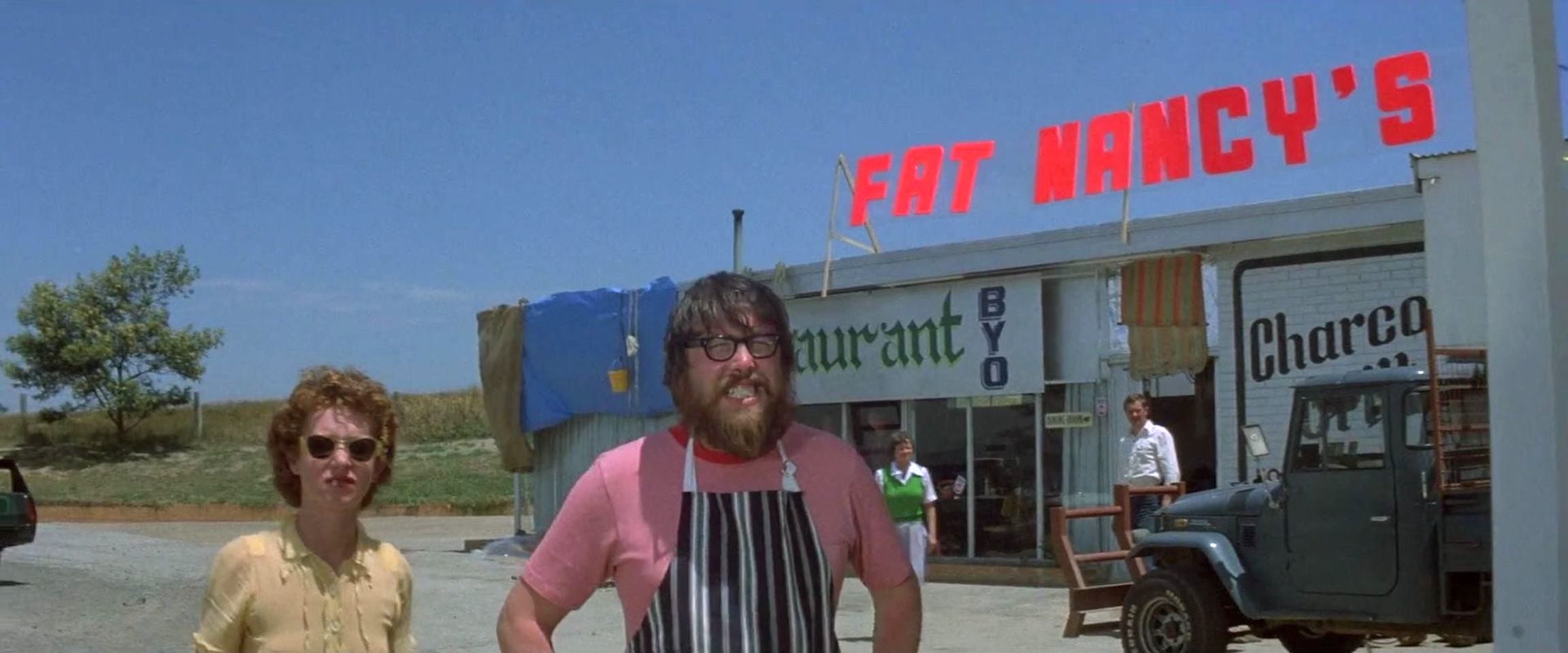
McCausland, at the time, was the Melbourne finance editor of The Australian. He and Miller had bonded over films once at a party. The New York-born McCausland reckons that Miller approached him because he’d written a story about how he came to Australia and why he stayed.
“George loved the tone of the story and said, ‘Would you like to write a film?’ I said sure. What else would I say?”
Miller brought him a one-page outline, offering about $3,500 for about a year’s worth of writing. He told McCausland, “I know you’ve never written a film, but you’re a journalist. I know journalists are sometimes cynical about things, but they can write things. Just don’t be cynical.”
Since both Miller and especially McCausland worked full-time jobs, the two novice screenwriters worked out a routine:
After McCausland came home every evening from the newsroom, he’d have dinner and toil away on the script until around midnight. George would arrive at his house early the next morning at around 6 am. Sometimes McCausland would wake up and think: ‘This movie we’re writing is absolute rubbish.’ But they kept at it, writing then rewriting and rewriting again. McCausland developed virtually all the dialogue. Miller admired how McCausland was able to bring snappy speech to the characters; how their words differed from person to person.
In turn, McCausland admired Miller for his eye for the visual:
“George had this tremendous visual sense. He taught me all about that sense. Because we had so little money, we had to have about ninety-five per cent of the film in the script when we went to film it. So it was not only the dialogue I wrote, but also cinematic effects. I can remember we did one particular scene and we must have gone over it fifty times. It was about a hubcap rolling down a hill. We would always start off: OK here it is, this hubcap, rolling down the hill into the view of the audience. It took us weeks to get the dialogue around that scene alone.”
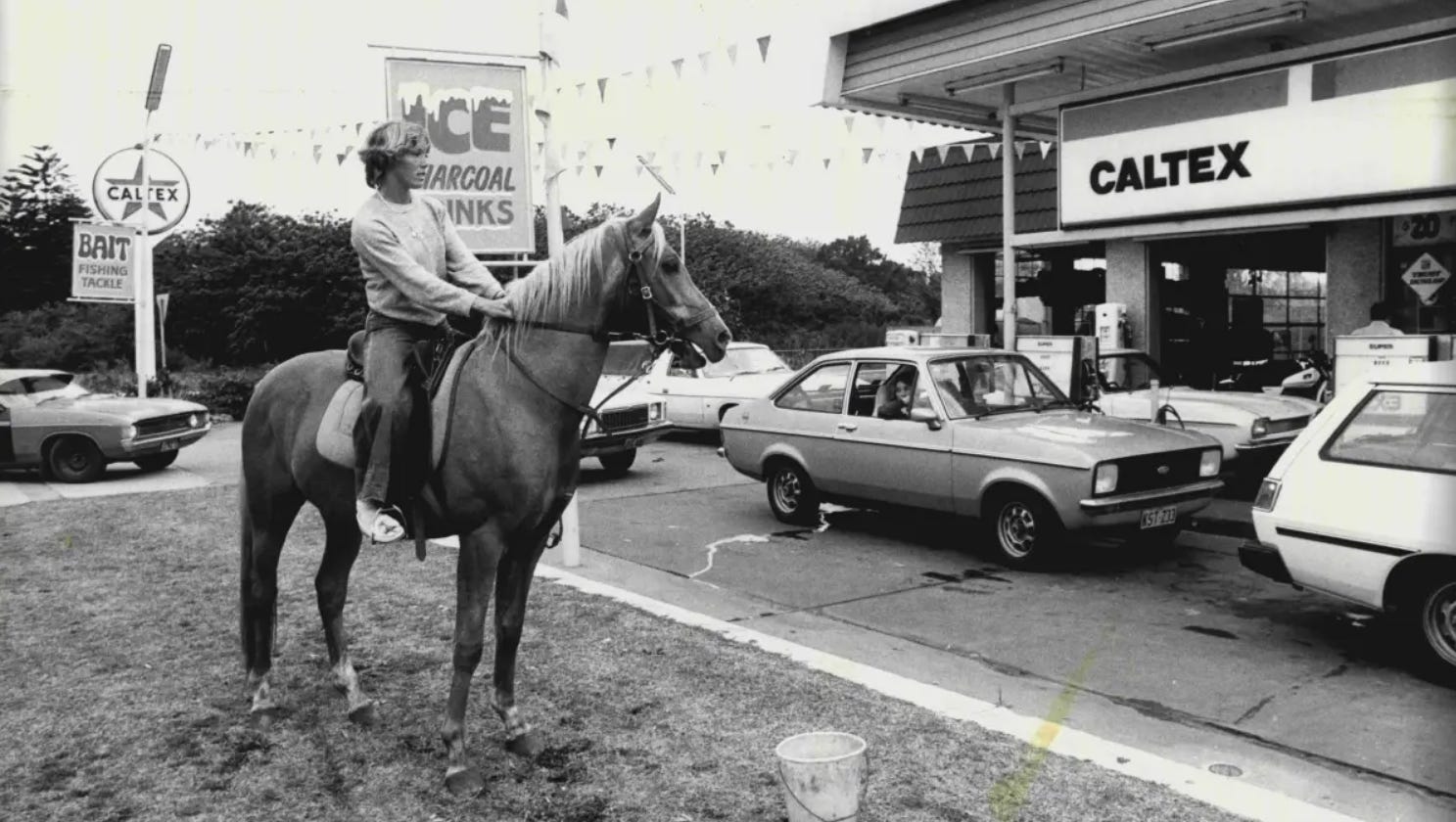
One particular inspiration for McCausland was the 1973 oil shock, when the Organization of Arab Petroleum Exporting Countries (OAPEC) declared an oil embargo in response to President Nixon’s request for Congress to make available $2.2 billion in emergency aid to Israel for the Yom Kippur War. In the United States, petrol prices skyrocketed from US$3 to US$12. Though the embargo only lasted for five months, the higher oil prices remained. In a 2006 op-ed for The Courier-Mail, McCausland wrote:
“A couple of oil strikes that hit many pumps revealed the ferocity with which Australians would defend their right to fill a tank. Long queues formed at the stations with petrol—and anyone who tried to sneak ahead in the queue met raw violence.”
A world where civilians were prepared to wage war for a quart of petrol wasn’t fanciful; it was very real9. That, coupled with Australia’s car culture and the seeming acceptance of car crash fatalities, often gruesome, seemed to click.
Miller, Kennedy and McCausland view gung-ho Australian car culture (certainly in terms of road deaths) as part of that: absurd and senseless. This attitude is present onscreen. Seconds into Mad Max the audience sees a yellow sign announcing fifty-seven fatalities on the road so far in the year.
What the screenwriters lacked in formal knowledge, they made up in creating a core concept that resonated. Audiences affected by the petrol shortage, especially automobile owners forced to stand in petrol queues, would understand; and then they’d care about Max. Lacking screenwriting experience also helped the trio— Miller, McCausland, and Kennedy— to avoid formulaic structures. Where the traditional film starts slow then loads the final thirty minutes with wall-to-wall action, Mad Max flips the structure. It begins with a high-octane action scene—a high-speed pursuit between law enforcement and a deranged motorbike gang member— and ends with Max cuffing the surviving gang member’s foot to an overturned petrol-leaking vehicle, and giving him an ultimatum: “Free yourself by sawing through your own leg or die in the explosion.”10 Possibly inspired by Star Wars— a film that Miller and McCausland admired— but with the structure flipped “from crescendo to decrescendo”, Mad Max was the opposite of a hero’s journey; instead, it is the story of a once-decent man who breaks bad.


1968’s Planet of the Apes might be considered the father of the modern dystopian future genre, itself born from Fritz Lang’s 1927 classic Metropolis. These certainly helped plough the ground from which Mad Max had planted its roots. Other direct influences from Australia included Peter Weir’s own debut The Cars That Ate Paris— about a small fictitious Australian country town called Paris with an economy reliant on a steady supply of wrecked vehicles— and a biker movie called Stone from one-time feature filmmaker Sandy Harbutt— which also starred Hugh Keays-Byrne, Roger Ward, Vincent Gil and David Bracks, all four of whom would appear in Mad Max.
Miller and McCausland watched these films and more as research; by the time they finished writing, they had a 214-page screenplay. It was a rather confusing read, not to mention disjointed, but it was a finished screenplay. It allowed them to proceed to the next vital step: finding the money.
How Mad Max Was Financed
It’s rare for a film’s precise financial details to be publicly available, but the most frequent number that is mentioned in discussions on Mad Max’s budget is $350,000. Even in the 1970s, it was a minuscule amount of money, especially for this kind of production.
Miller and Kennedy went about raising money the usual way: asking friends and family. The two also worked three months on the road, operating what was basically an emergency radio ambulance service. Kennedy drove, Dr. Miller treated the patient. It was intense— the pair worked multiple days with little sleep, and witnessed the gruesome spectacle of people who’d nearly killed themselves, and perhaps their friends, in motor accidents. Kennedy recalled one particular weekend that stuck in their minds:
“In mid-1975, in one weekend there were about twenty-five people killed on Victorian roads. You could see that people had come to accept the fact people could die on the road. And yet it didn’t seem as horrific to them as, say, someone falling out of a fifteen-storey window. So we thought there’s probably some sort of basis for a feature film in that.”
Although there were government grants, applying to the Australian Film Commission wasn’t in the cards— Mad Max had an “aggressively commercial” nature, and government agencies preferred to give grants to more ‘serious’ films about art or period pieces. Despite the hustle, the two still came up short of their targeted goal.
The two were discouraged. They knew that the solution had to be private investment, but they were filmmakers, not experts on corporate world and investing. Someone suggested that they get in touch with Noel Harman, a Melbourne stockbroker. He might be able to help them.
Miller and Kennedy turned up on Harman’s doorstep. “We heard you take care of disasters, so here we are,” said Kennedy.
Harman knew nothing about cinema, but the financial whiz did know a lot about investing and corporate structure, and agreed to help.
“Byron and George had been let down by a number of people, and even though they were inexperienced, I was impressed by their professionalism.”
In September 1976, Kennedy Miller Pty Ltd (later renamed as Mad Max Pty. Limited in 1977) was registered as a new company, replacing the earlier formed Kennedy Miller Entertainment. The new company structure would allow Miller and Kennedy to court and show investors that this was a serious business proposition— Kennedy maintained that the transparency of “company structure, accounts, and auditing” was part of his presentation.
Under Harman’s guidance, [Miller and Kennedy] developed a plan whereby approximately thirty investors would be asked to chip in about $10,000 each. In addition to what they already had, this would be enough to make up the budget. Harman compiled a document outlining a business case for investing in Mad Max, believing ‘there was a big gap in the market for something with heavy action’. He envisioned the film getting a dual release in Australian theatres and drive-ins. Factoring in average audience attendance and a modest advertising budget, Harman argued it was possible for the film to have a combined local box office of just over $1.1 million, providing a reasonable return on investment.
Details of the structure are not widely available, but what is known is that the sought twenty to thirty individual investors to help make up the financial shortfall:
Investment came in lots of $2500, and the biggest single contribution was $15,000 from Kamen, Kennedy’s childhood friend and Dragsters partner, who was by then a medical doctor Most contributions came in at around $10,000. Miller has described soliciting investment through friends and family, which makes the process sound rather ad hoc and charitable. But Kennedy has also described a solid investment prospectus, sufficient to make a persuasive financial case. The forty- page document identified the investment as high risk, and the specifics focused far more on the financial side—and on reassuring backers that their money would be put to use—than on the film itself, which was described over about one page as a simple road action movie. Kennedy’s friend Kamen circulated the offer around his Melbourne medical professional circles, as he believed Miller did in Sydney.
Harman knew that the investment was risky. Still, his involvement “proved to be the circuit-breaker the young filmmakers needed”. Miller and Kennedy’s short film, Violence in the Cinema: Part 1, also helped convince investors that the two were serious about their work even if they didn’t have a lot of experience. Harman’s efforts were so successful that they had to turn back taxpayer funds offered to them by the Victorian Film Commission. He says:
“I wanted as much as possible to do it without government assistance and that’s exactly what we did.”11
That Mad Max was entirely privately financed was an anomaly especially in the Australian film industry, which relied on generous taxpayer-funded assistance. But it also made sense in the grander scheme: independent financing gave the filmmakers complete autonomy over their unusual film, while also promoting the production’s business credentials as part of its long-term plan.
Among the syndicate of private investors was the Australian company Village Roadshow. The company had pledged $25,000; but most of all, it had committed to distributing the film. Miller and Kennedy’s partnership with Roadshow started inauspiciously— the pair had pitched an early version of the script to Graham Burke, an influential Australian cinema powerbroker at distributor Village Roadshow12. Though Burke wanted to make something that was a departure from “high-minded dramas” that Australian cinema was making at the time, Mad Max was definitely not it; it didn’t help that Miller and Kennedy’s pitch was long and confusing. Unimpressed, Burke told them:
“If you can’t sell this to me in an hour what hope have I got in thirty seconds on television?’
Burke recalls:
“I didn’t think [Mad Max] was commercial and I didn’t think it was very good. But while I wasn’t impressed with their project, I was definitely impressed with them as people. They were not like normal filmmakers that came to see me in those days… I gave it to them truthfully rather than saying something like ‘Leave it with me’. I just said I didn’t like the project.”
Burke vividly remembers Kennedy’s face turning a bright red. As they left his office, he assumed that he’d never see the two again. Six months later, they returned. Kennedy slammed a thirty-page treatment on Burke’s desk and said, “Can you sell that?”
He could. Burke did. The treatment helped him see their vision and he loved it— and would bat for it all the way to the end. In fact, rather than toning down the violence, he told them to make the film “a little tougher”. When Miller and Kennedy raised the money, that was when Village Roadshow chipped in as well13.
With the money locked in, Miller and Kennedy turned their attention to casting. Thinking that an American actor as Max would help generate interest, Miller scouted for potential candidates in Los Angeles in 1976, but abandoned the idea shortly. A famous name might help sell the film, but their salary would eat up the tiny budget and leave little for the stunts and action scenes. If this was going to be an Australian film, it made sense to go with an Australian cast.
But the auditions failed to inspire much confidence. For a brief moment, they thought they might have found a Max in Irish-born actor James Healey, who had appeared in the Australian police procedural drama Homicide, but he turned the role down. Australian casting agent, Mitch Mathews, suggested they meet some of the graduates from the National Institute of Dramatic Art (NIDA), a prestigious and picky Australian arts school that accepted less than thirty students annually. The 1977 alumni, in particular, included a young man named Steve Bisley, who lived with three other young men in a run-down four-bedroom house near Bondi Beach in Sydney. One of them was a handsome, fresh-faced aspiring actor with blue eyes named Mel Gibson.
Finding Mad Max, And Casting The Movie
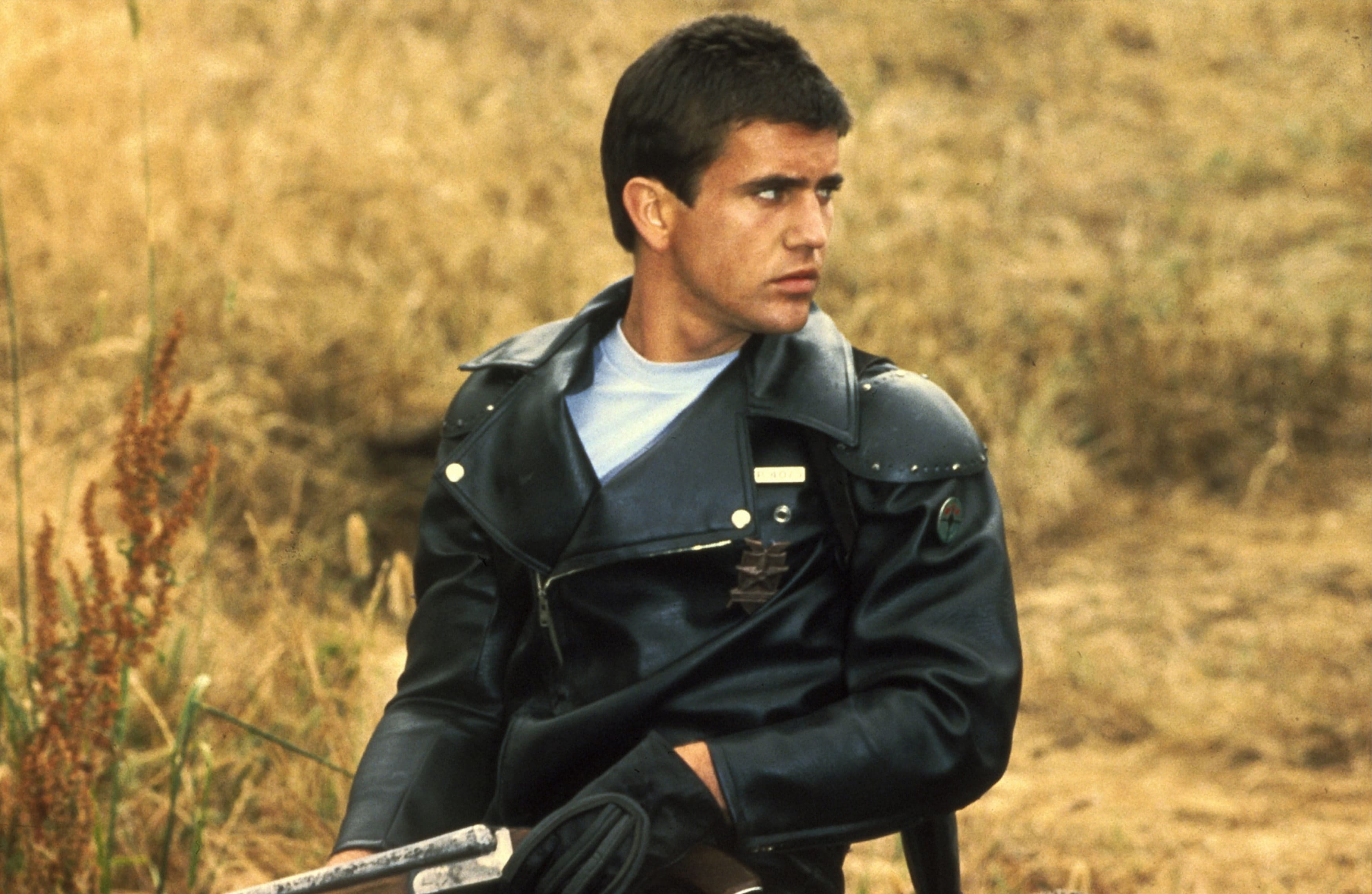
George Miller knew he’d found his Max Rockatansky when he looked at Gibson through the eyepiece of his camera. The shy twenty-one year had auditioned in September 1977, and there was little doubt that he was the one. Production coordinator Jenny Day recalls:
“I remember George calling me and saying, ‘Do you want to come and look at footage of some auditions? I think we’ve got a Max.’ I remember going over there and seeing the audition with Mel and two or three other male NIDA graduates. There was no doubt that Mel had it. Everybody felt that. George felt that. Mitch [Mathews] felt that. I felt that.”
Gibson’s housemate Bisley, meanwhile, nabbed the role of Rockatansky’s best friend Jim Goose; for the two aspiring actors, the roles were a coup. At the time, Gibson’s only other film credit had been a low-budget surfer drama called Summer City (1976), which marked his first onscreen kiss, with—of all people— Steve Bisley. Faith Martin, Gibson’s agent from 1976 to 1979, recounts:
“In Australia in those days there was not a big film market. People like George Miller were a totally new breed on the horizon. When I started as an agent, all there was were classy productions in television and theatre, and that was pretty much it.”
Martin knew that her client was destined for big things. “It was clear even back then that there was a lot more to Mel than his looks,” she says. “There always has been.”
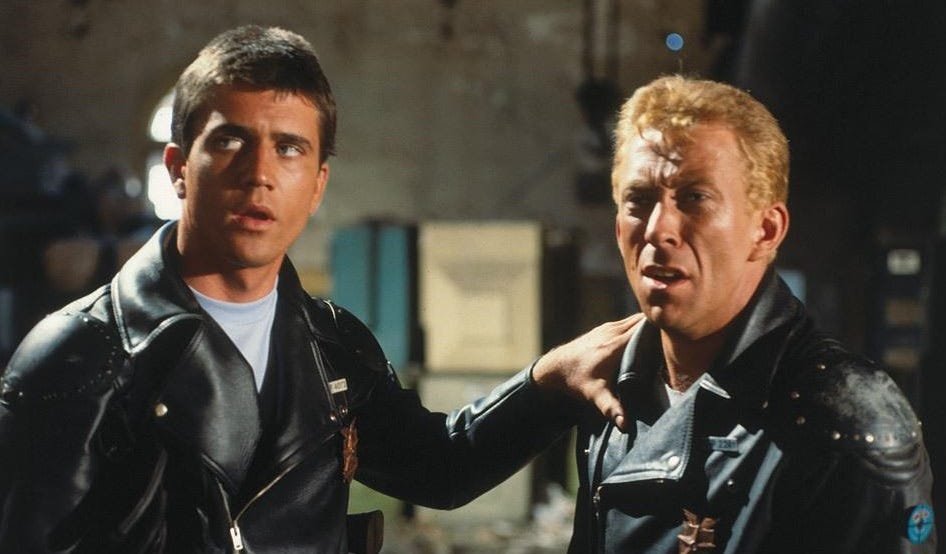
The film managed to add a little prestige by signing up Roger Ward to play Captain Fifi Macaffee, Max’s boss at the Main Force Patrol. The tall muscular actor cut an instantly recognizable figure, having appeared in several popular 1970s TV shows such as Homicide, Matlock Police, and Number 96; he also had roles in features such as (the aforementioned) Stone and The Man from Hong Kong. However, his weekly rate of one thousand dollars made Miller apprehensively until the director realized he could pay Ward by fitting all his scenes into one week.
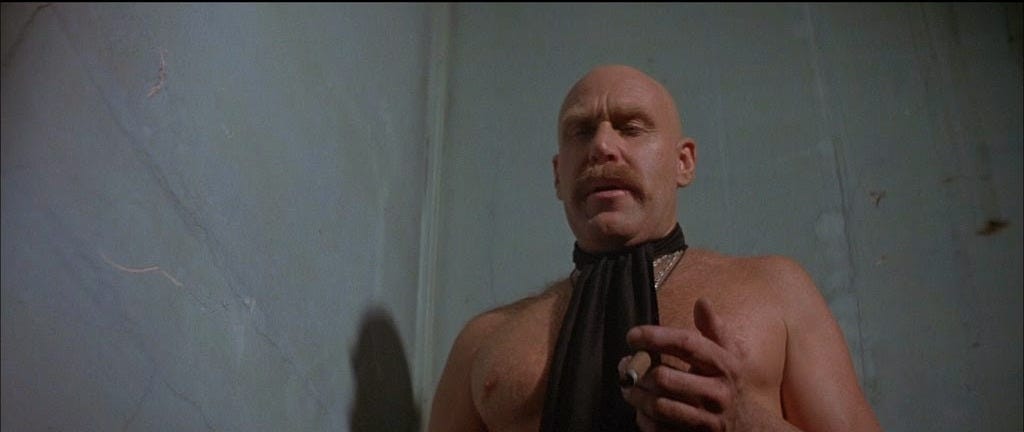
With casting, Miller used a curious technique to audition actors, one that he’d employ many times in his career: he’d request them to tell him a joke. Actor Tim Burns, who played Johnny the Boy, explains the reason behind this:
“George’s view of why you do a joke is because, in a theatrical sense, you have to understand structure, you have to understand drama, you have to understand climax, you have to understand timing and you have to be able to sort of change the reality. It was such an interesting way to audition for Mad Max. It tells you something about that film, in that it has a kind of satirical element.”
Every protagonist needs an equal and compelling antagonist; for the villainous Toecutter, Miller found it in the actor Hugh Keays-Byrne, a British-Australian giant whose physicality was at odds with his gentle personality14. Actors David Bracks, Vincent Gil, and Paul Johnstone rounded off the rest of Toecutter’s gang— “a bunch of fiends, felons and miscreants with an appetite for speed and no respect for the last remaining slivers of polite society.”
To prepare, Toecutter’s gang went method. The actors decided to embody their characters’ feral vagrant devil-may-care lifestyle by truly embracing the life, wearing the same costumes and avoiding showers at all costs. As if that wasn’t enough, Keays-Byrne requested Kennedy to ship the characters’ motorcycles so that they could drive down from Sydney to Melbourne. The group must’ve made for quite a spectacle on the 900-kilometer journey15, literally sleeping by the side of the road, without cover, very much in character. Along the way, they invented backstories to identify what compelled them to join Toecutter’s gang in the first place.
During those lemongrass- and whatever other kind of grass–infused brainstorming sessions, Keays-Byrne had devised a simple but profound interpretation of the Mad Max script. Instead of regarding these rough-as-guts marauders as villains, the cast of Toecutter’s gang would think of themselves as the heroes. The logic being that people who behave immorally in real life rarely view their own behaviour in such terms: humans tend to view their actions as coming from a fundamentally proper place.
Burns later credited Keays-Byrne as instrumental in shaping the script:
“Apart from George, Byron and Jimmy [James McCausland] the main writer of Mad Max, in a bizarre way, was Hugh. He created an element in the bike gang that made it a great deal more interesting than it would normally have been. The first part of the idea was that we were the good guys. Hugh believed if Toecutter was the leader, the leader should be the neediest, and that he must have suffered terribly to be that way. He viewed the film as being about people who put up fences and people trying to get around those fences.”16
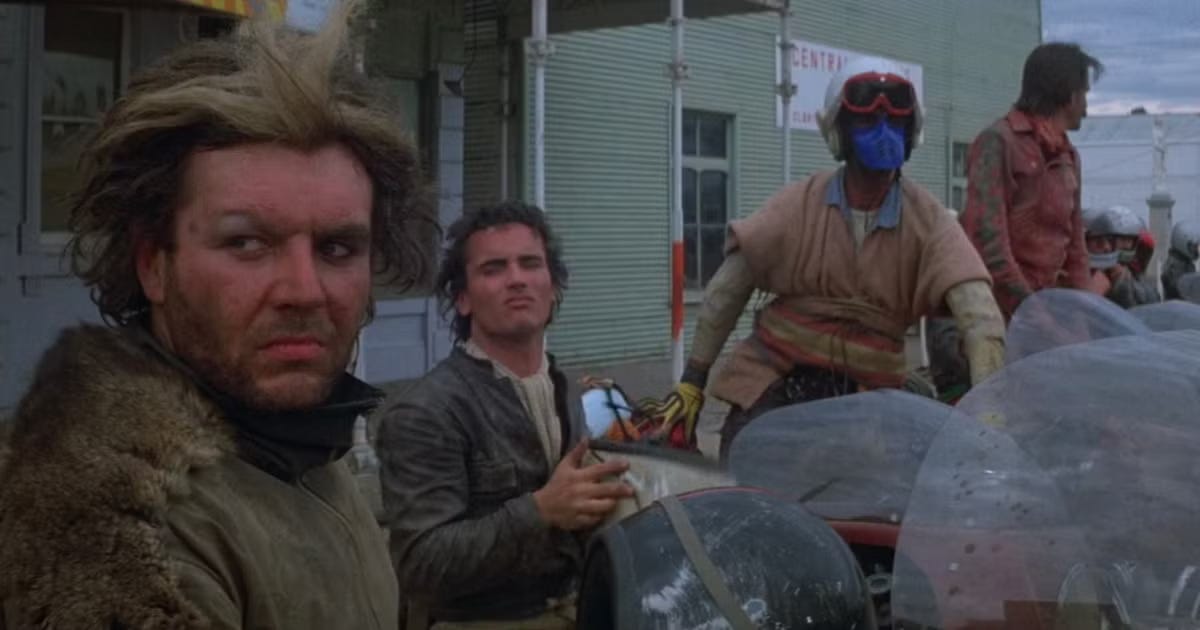
Miller had no input on the group’s decisions; he’d admit that he knew nothing about acting when he made Mad Max. But when the Toecutter gang arrived in Melbourne, Miller remembers feeling a surge of excitement: the enormity of what was starting to happen hit him. The mischief-making gang also found ways to freak out the playful but shy Gibson, as well as Bisley, and Ward, playing members of the Main Force Patrol.
Part of their method approach was to regard members of the Main Force Patrol with what could only be described as violent loathing. This continued day in and day out, irrespective of whether they were on set. For the actors on the fuzzy side of the law, it was an effective way to sustain the energy and tempo of their performances. At any point George Miller could roll the cameras and they would already be in character, ready for the scene.
For Gibson—nervous, anxiety-riddled, and self-conscious—Keays-Byrne and his gang’s antics were a nightmare. Not knowing the actors, their intentional method hostility made him feel unwelcome with a threat of violence lurking in their interactions. Bracks, who played gang member Mudguts, later recalled:
“[Mel Gibson] thought he was gonna somehow cop it. That we were going to give it to him as a real bike gang and beat him up… We always played it like that to him whenever we saw him.”
It had taken a long time to reach this point. Mad Max had money, it had a cast, a crew, and props. Schedules were drawn, and 24 October, 1977 was set as the first day of principal photography. It was a Monday. To keep things simple, they picked to shoot a scene without any dialogue, stunts, or effects— a shot that takes place near the end of the film where Johnny the Boy pulls over on a freeway overpass and pries open a yellow roadside emergency phone box. Easy.
It was a disaster. And not even three days into the first week, George Miller would be fired from his own movie.
Here ends Part 1. Read Part 2 here and Part 3 here.
Thanks for reading! If you liked this essay, you can sign up here for more issues. If you’d like to support Three Left Feet Media, share this newsletter with a fellow film lover you think would appreciate it.
Long live the movies!
D.L. Holmes
It was made for an estimated A$400,000. Adjusted for inflation, that’s approximately A$2.6 million— about US$ 1.88 million in today.
He spent his time teaching himself portrait painting and attending various lectures. When the American architect and inventor Buckminster ‘Bucky’ Fuller visited, Miller was profoundly affected by Fuller’s lecture on the ways different people thought with different sides of their brain.
Since the entry had officially been submitted by Chris, Miller had to talk his way into being allowed to participate in the workshop. If he hadn’t been successful, the course of action film history would have turned out differently.
Names, though, have power: Just as Lord Byron died at 36, Byron Kennedy would be killed when the helicopter he was piloting crashed one day. He was 33.
They shot one scene early morning at Melbourne’s General Cemetery, where photographer Russell O’Regan— who had two minor roles in it— snapped a photo with a blurry bit on the side showing an image that vaguely resembled the figure of a hooded person. O’Regan telephoned Miller to tell him about it who scoffed, but when he showed him the photo, Miller’s “attitude changed immediately”. The photo was featured a 2011 book called A Paranormal File: An Australian Investigator’s Casebook.
It also helped to save Eric’s life. One day, Miller and Kennedy found him slumped on the couch, not feeling well. After Miller inquired what was wrong, he diagnosed Eric with having appendicitis. “I could make the diagnosis more accurate,” Miller told him, “but I’d have to insert my finger into your behind.” All parties opposed to any fingers being inserted anywhere, Miller and Kennedy took Eric to the nearest hospital: the diagnosis was correct, and Eric was operated on within the hour. Andrea says, “Knowing Dad, he would have sat there and gone through the pain all night and not worried about it. We realised later, he could have been dead.”
Which sounds a lot like the kind of work that Lou Bloom does in Nightcrawler.
Just as Roger Corman targeted the teenage drive-in audience.
The ongoing war with Iran has triggered hikes in petrol prices in many parts around the world; I have lived through— and I’m living through— a time where the government had to implement a fuel quota in order to deal with petrol shortages that led people to standing in queues sometimes for days; quite a few people died in the process after standing for hours in the heat, waiting to reach the pumps.
Less than three decades later, another pair of Australian filmmakers, James Wan and Leigh Whannell, took this dilemma and spun it into 2004’s Saw.
Later, Kennedy would boast that the company had “probably more private finance tied up in this film than in any other in the history of the Australian film industry”.
Burke rose to become Village Roadshow’s CEO until retiring in 2019.
Founded in 1954, Village Roadshow grew into one of Australia’s major exhibition chains, Village Theatres, as well as a distribution arm, Roadshow Distributors since the 1970s. It also moved into film production around that time, teaming up with Melbourne filmmaker Tim Burstall in Hexagon Productions. This made Village Roadshow “the closest thing to a vertically integrated studio operation in Australia”. With its Australian distribution deal with US studio Warner Bros., made it a significant force in the industry. Sadly, Village Roadshow filed for Chapter 11 bankruptcy in March 2025, and its library— which included Mad Max: Fury Road, the Ocean’s series, and The Matrix quadrilogy— was bought by Alcon Entertainment for $417.5 million on 18 June 2025.
Nearly forty years later, Hugh Keays-Byrne played Immortan Joe, the villain in Mad Max: Fury Road.
The same trek that Miller made in 1971 to attend the University of Melbourne film workshop that led to Mad Max.
Clive Owen was similarly influential in the script for Children of Men; as was Leonardo DiCaprio with Inception, proving that good actors bring more than just their looks to a film: they offer much-needed valuable perspectives.