


Curating this list was like flipping through my school yearbook. Apart from one film, I watched the rest of these entries around the time they came out— unlike the past lists of my Film Shots Of The Decade series (see here for Film Shots of the 1960s, Film Shots of the 1970s, Film Shots of the 1980s, Film Shots of the 1990s, and Film Shots of the 2000s)… since I was, well, not alive when those movies came out.
Picking these shots, I felt a strange schism when I looked at them— I was thinking about how these images made me feel now, but I also remembered how I felt at the time I watched these films. The films and shots haven’t changed, but the guy selecting them most certainly has… while also still remaining the same in some ways. For better, let’s hope.
Despite the endless laments about the death of cinema, the shots and films on this list prove that the rumors have been greatly exaggerated. The 2010s gave us some wonderful films, and I suspect many of them will become classics in a few decades (if not already!). David Fincher delivered some career-best work, as did Richard Linklater and Wes Anderson. Greta Gerwig adapted a beloved book for a new generation and further established herself as a director to be taken seriously, and despite its 90s setting, Stephen Chbosky made his touchstone novel a film for millennial adolescents. It was a good decade for cinema.
As with the previous entries in this series, the shots I’ve selected aren’t meant to be a list of the definitive “best shots ever” from the “best films ever”. They are images from movies I liked that were made during this decade, that made me think about things.
As with an earlier list of shots arranged in alphabetical order, I’ve used two rules to select the films— and thus, the shots— from the decade:
One film from each year;
The same director could not be featured twice.
What films from the 2010s era do you like best? What shots do you love from them? If your favorite films and shots aren’t included, please share your answers in the comments!
(NOTE: There will be spoilers below, so proceed with caution!)
The Social Network — David Fincher, 2010
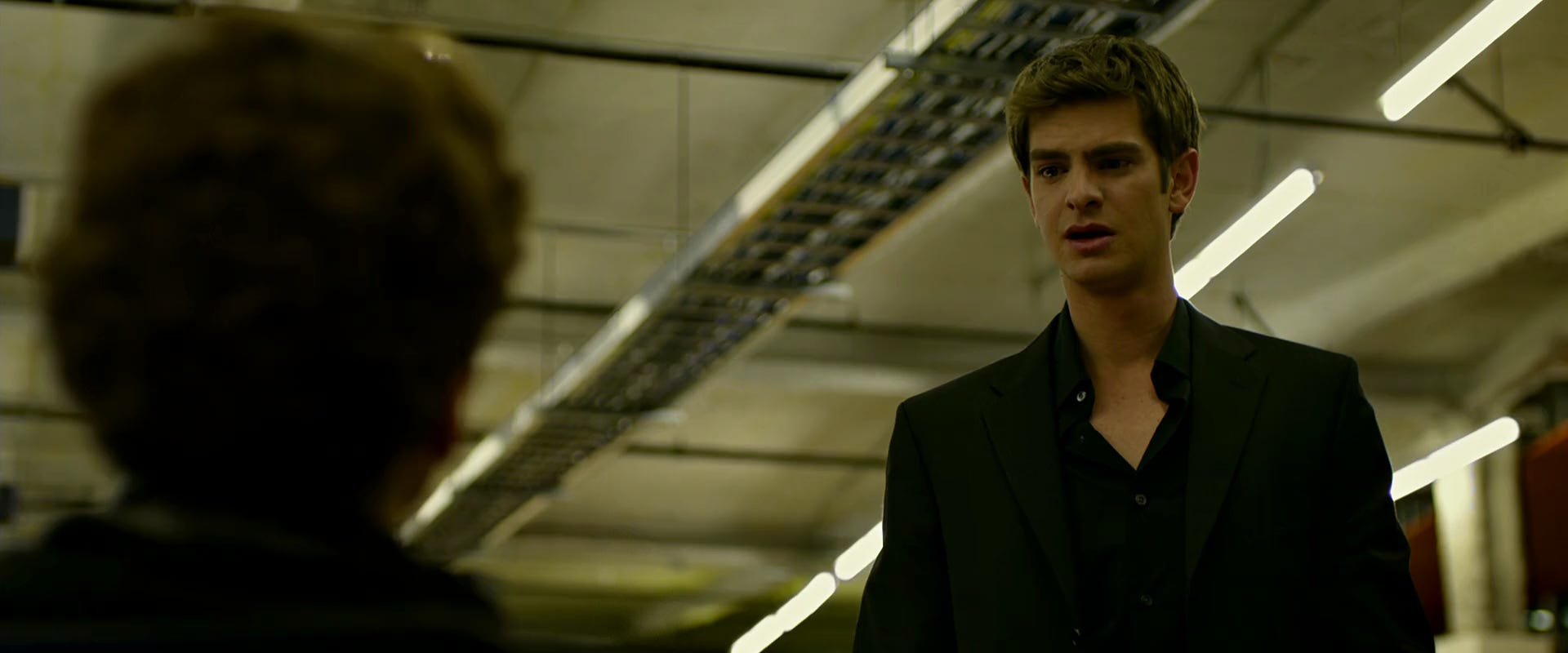
There are so many images to pick from The Social Network, but I’m going to go with this moment when Eduardo Saverin (Andrew Garfield) realizes that his best friend Mark Zuckerberg (Jesse Eisenberg) played him from the moment that he got into the Phoenix Club. Garfield is the real focus of this medium shot— honestly, what a great actor!— but what’s interesting is that Fincher and DP Jeff Cronenweth also include Eisenberg in the shot, instead of only focusing on Garfield. This visually highlights the relationship between the two characters, but Zuckerberg is blurred, as if to underscore the fallout happening in real time. I also like the way the fluorescent tubelights in the background run diagonally, which prevents the image from feeling flat.
A Separation — Asghar Farhadi, 2011
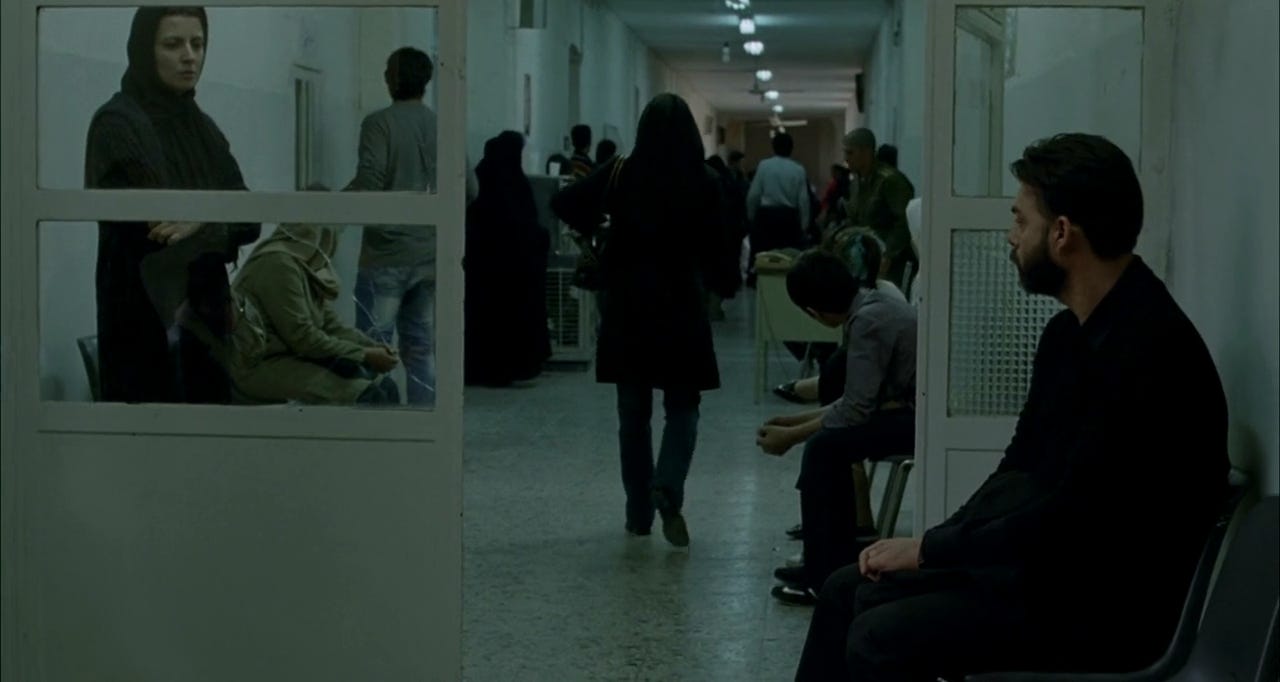
This shot comes towards the end of Farhadi’s wrenching tale about two families as well as the individuals. The composition here is a masterclass in simple yet subtle composition, placing Simin (Leila Hatami) and Nader (Peyman Moaadi) on opposite ends of the frame, then further dividing them using a door frame to visually underscore the tattered state of the couple’s relationship where they are no longer seeing each other at the same level. At a practical level, this framing creates layers and depth— which is further enhanced through the long corridor— which only makes the visual more arresting. Here’s an experiment: move Simin to right opposite Nader, and notice how the shot immediately feels less interesting. You don’t need millions to create powerful shots. You just need composition.
The Perks of Being a Wallflower — Stephen Chbosky, 2012
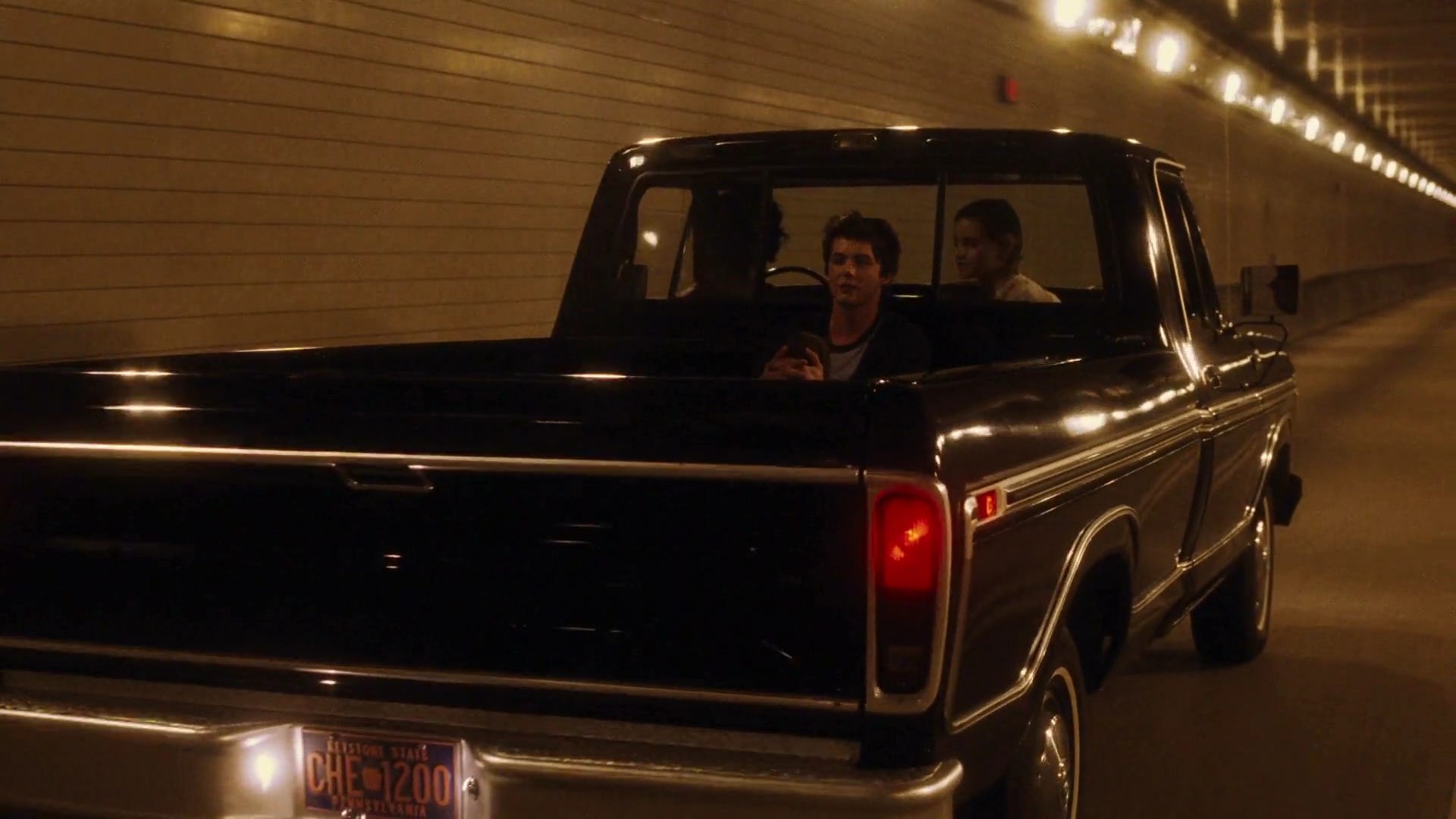
I read Chbosky’s novel when I was 16, the same age as the protagonist Charlie. Even though it was set in the 1990s, the emotions felt very vivid. Chbosky successfully preserved that feeling when he wrote and directed his own adaptation of the book, which is pretty rare. This shot is towards the film’s final moments, recreating the famous tunnel sequence in the book in which Charlie (a pitch-perfect Logan Lerman) finally begins to feel that he is getting better. He’s in the back of the truck, with two of his favorite people in the world in front. The lights in the tunnel, plus the movement of the vehicle, captures that fleeting heady rush of what it’s like to be young. I’m no longer 16 but this story still holds a place in my heart. I’ll close this with Charlie’s final words in the film:
“There are people who forget what it’s like to be 16 when they turn 17. I know these will all be stories someday. And our pictures will become old photographs. And we’ll all become somebody’s mom or dad. But right now these moments are not stories. This is happening. I am here. And I am looking at her. And she is so beautiful. I can see it. This one moment when you know you’re not a sad story. You are alive. You stand up and see the lights on the buildings, and everything that makes you wonder. And you’re listening to that song on that drive, with the people you love most in this world. And in this moment, I swear... we are infinite.“
Before Midnight — Richard Linklater, 2013
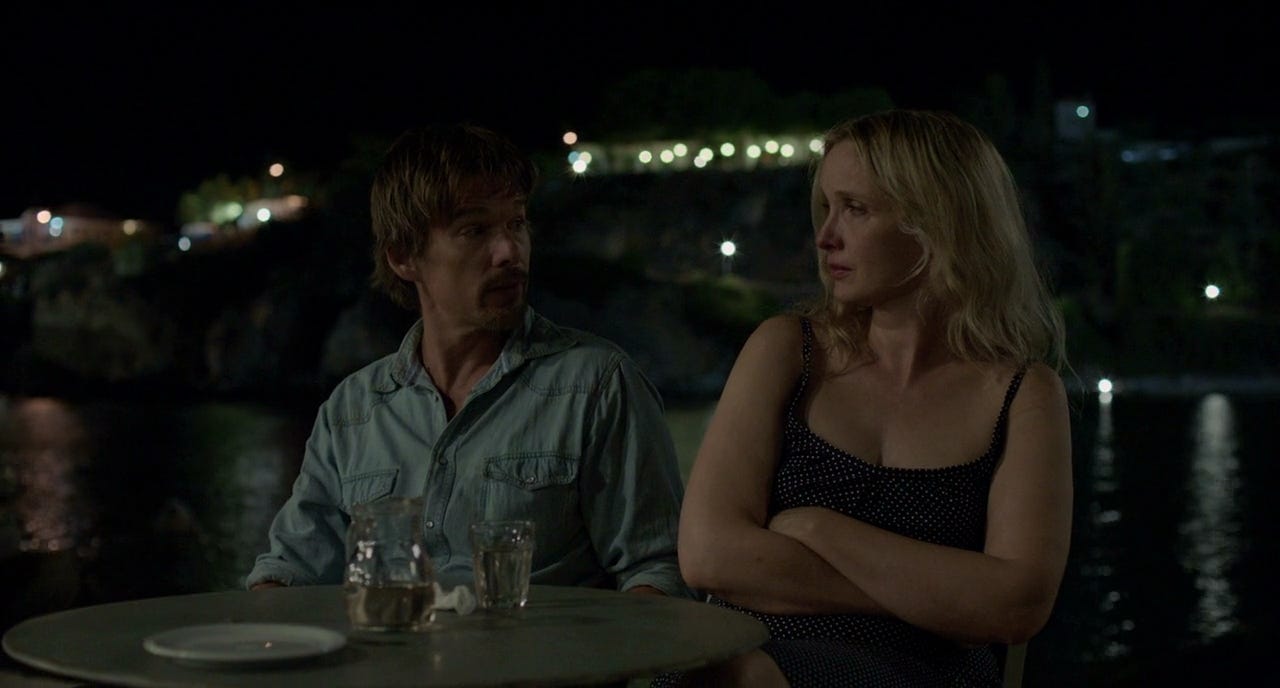
I think about this moment a lot. Actually, this entire film is food for thought. If the first two Before movies were fairy tale romances, then Before Midnight shows what really happens after “And they all lived happily ever after”— which is that even Jesse (Ethan Hawke) and Céline (Julie Delpy) have to really work hard at keeping the love and romance alive, which threatens to fall apart after a major argument. But this shot shows the moment in which Céline and Jesse actively try to repair the conflict, the two warily working their way back towards each other. Which, you know, is really really tough. But… I guess that’s the real romance, isn’t it?
The Grand Budapest Hotel — Wes Anderson, 2014
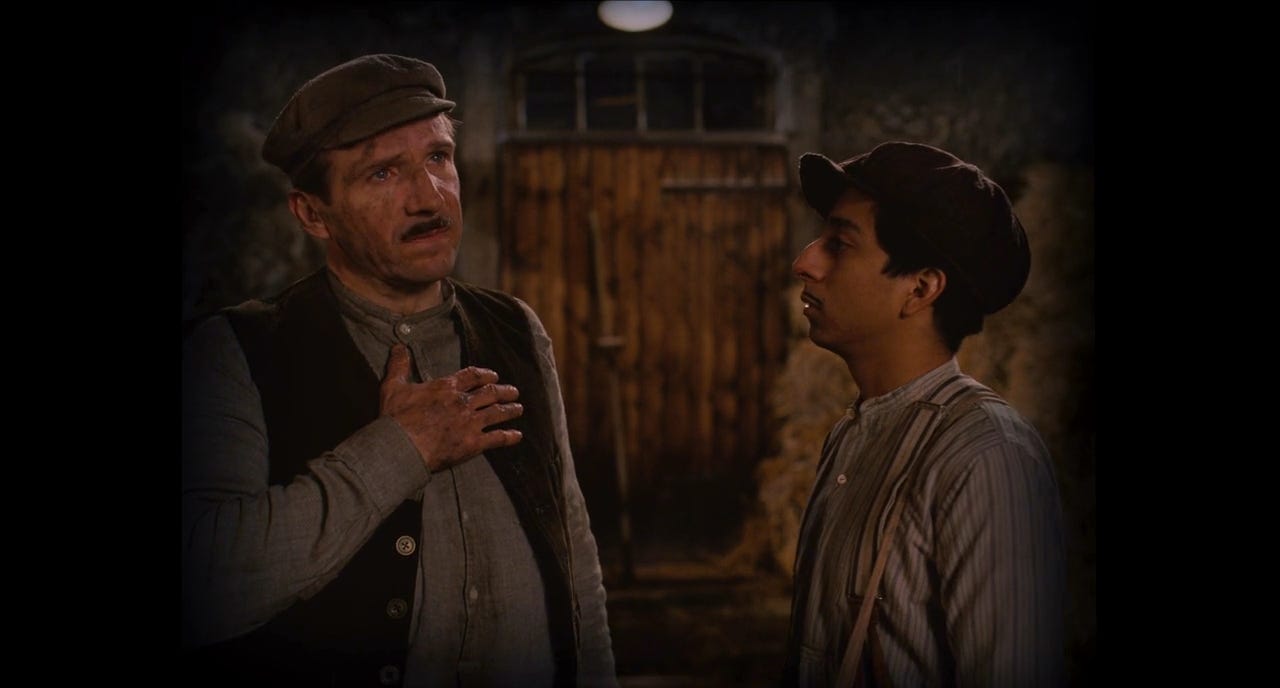
“I apologize on behalf of the hotel.”
Wes Anderson’s film is packed with funny one-liners but nothing captures the absurdity and pathos of Monsieur Gustave H. (Ralph Fiennes) quite like the concierge trying to take back his momentary xenophobic-laced outburst at his protégé Zero (Tony Revolori) by roping in the Grand Budapest Hotel into his apology.
Our Little Sister — Hirokazu Kore-eda, 2015
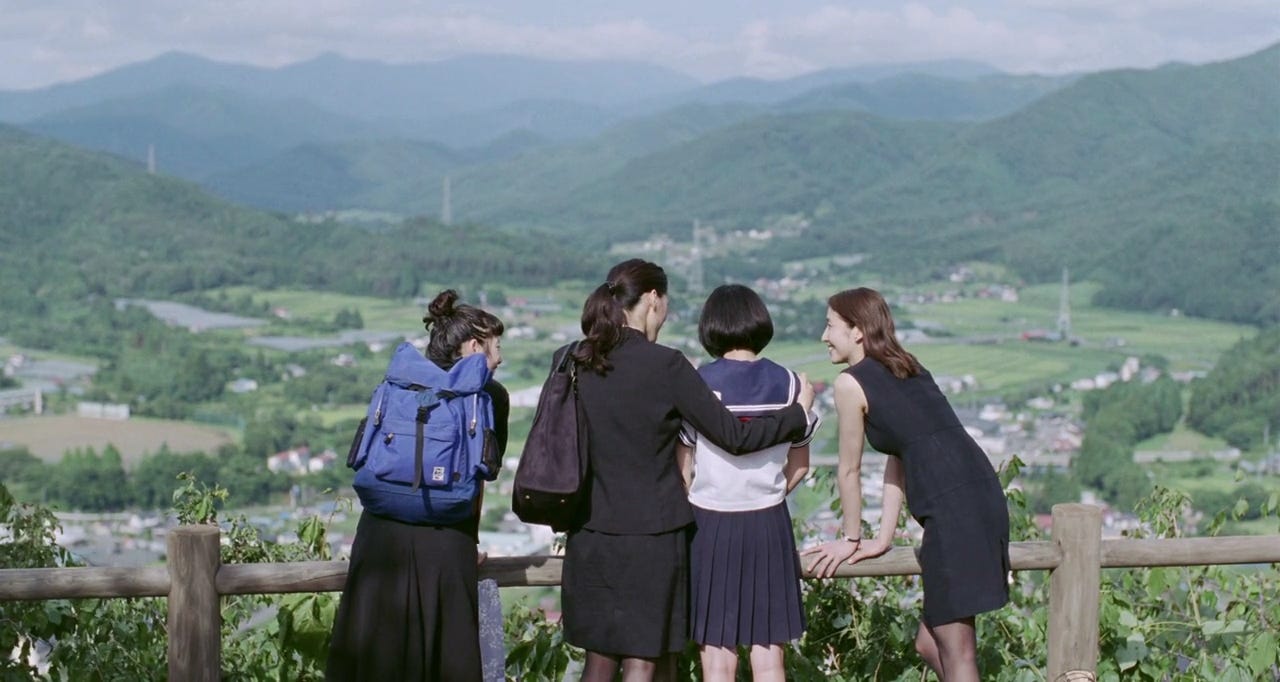
Hirokazu Kore-eda has a knack for composing shots in a manner that feels both realistic and formal at the same time. Here, he captures an almost postcard-like shot with the sisters in front of a panoramic view of the countryside. But it’s not cheap or picturesque for the sake of it— he frames the sisters in a manner that conveys volumes about their relations and feelings towards each other, especially in the way the adult women lean unitedly towards the younger and neglected Suzu (Suzu Hirose), whose existence they’ve only recently discovered, in a way that sets up the dynamic between the new sisters for the rest of the film.
The Handmaiden — Park Chan-wook, 2016
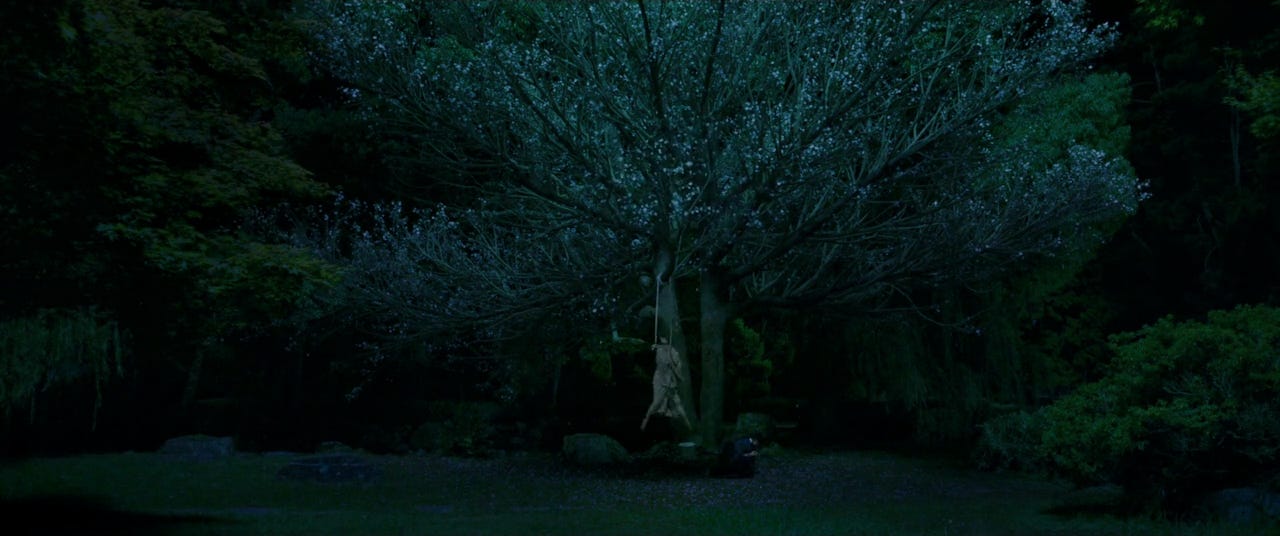
Only Park Chan-wook could find a way to end a scene in which motives are laid bare by staging it in a beautifully composed wide shot that results in the gag where Sook-hee (Kim Tae-ri) reacts to the discovery that, contrary to thinking that she was deceiving Lady Hideko (Kim Min-hee), her mistress was duping her the entire time. In a moment of outrage, Sook-hee accidentally drops Hideko, who had tried to hang herself, causing the latter to start choking as the noose tightens. Park Chan-wook is a master at juggling several emotions and framing his shots artistically, and this is just one such image.
Lean on Pete — Andrew Haig, 2017
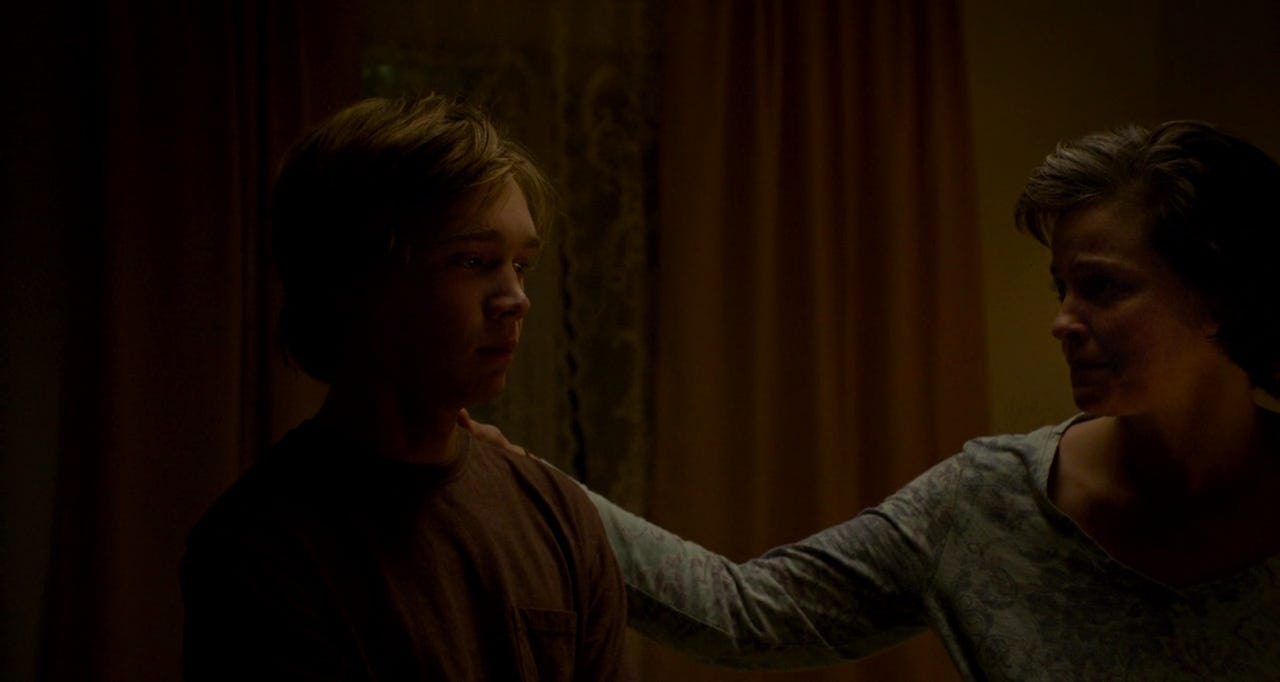
Charley (Charlie Plummer) has spent the entire movie on the run, losing first his father and then Pete, the horse he stole, in his search for his Aunt Margy (Allison Elliott). Having finally found both his aunt and a sanctuary, Charley’s emotions finally start to bubble as he confesses about all that happened to him and suffering nightmares about his father and Pete. Andrew Haig and DP Magnus Joenck frame it entirely in a medium shot, using shadows to keep Charley half-cloaked in darkness. The restraint heightens the emotions, delivered magnificently by Plummer.
Cold War — Paweł Pawlikowski, 2018
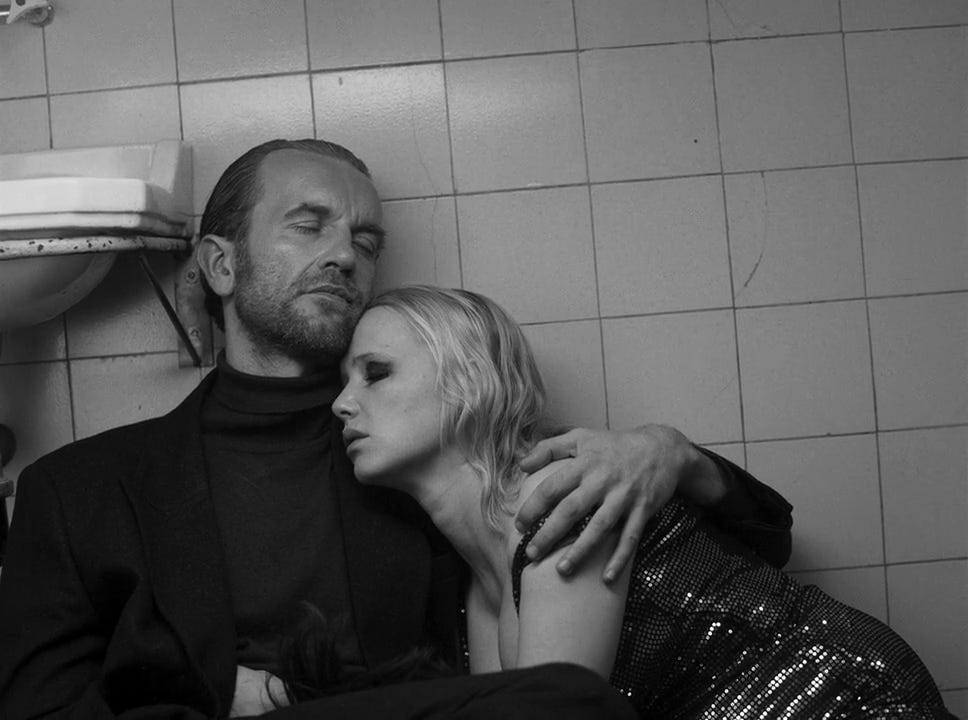
The tumultuous decades-long love affair between Zula (Joanna Kulig) and Wiktor (Tomasz Kot) finally reaches its peak when both are reunited. Zula— who married a man with contacts to free Wiktor from a work camp— is an alcoholic barely keeping it together and pleads for Wiktor to help her. Bathrooms aren’t exactly the most romantic places, yet the sight of the two clinging to each other against the tiled wall at a tilt, creates an impressionable and romantic, if sad, picture of an enduring love. The black-and-white also sells the impression— there is something undeniably romantic about black-and-white imagery.
Little Women — Greta Gerwig, 2019
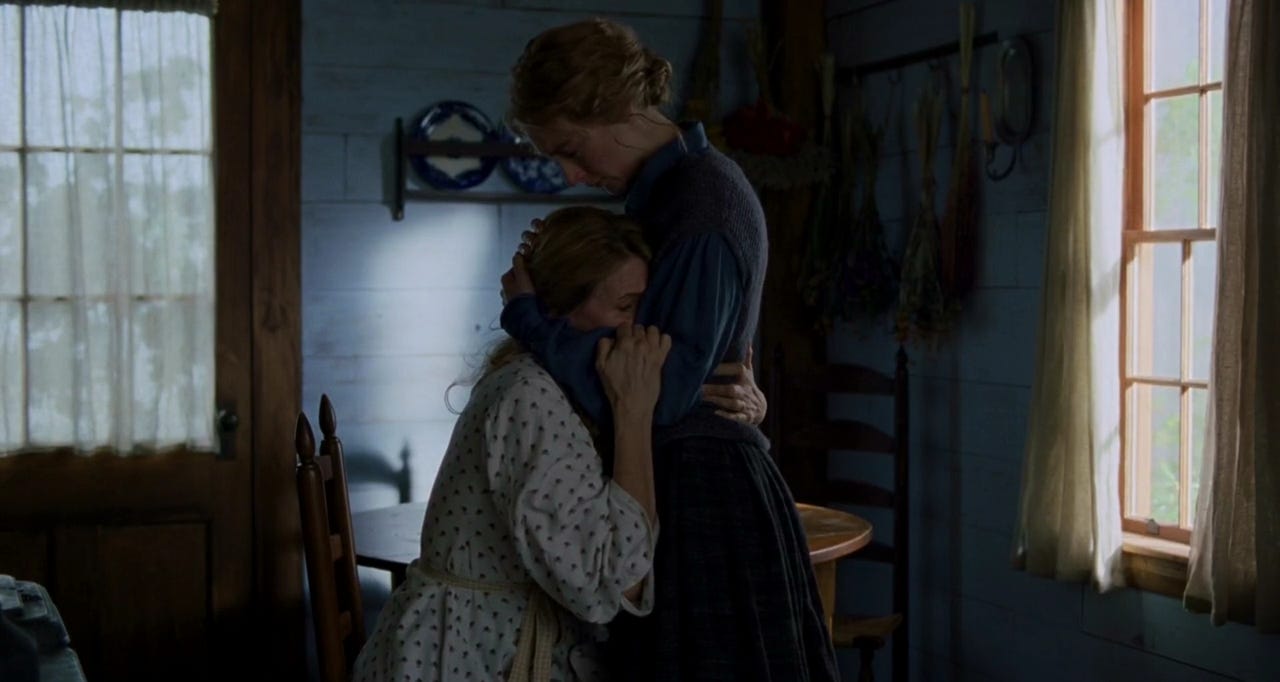
It might be because I’m older but I think about this shot a lot, the moment when Jo (Saoirse Ronan) wordlessly comforts her anguished and grieving mother Marmie (Laura Dern) over the death of Beth (Eliza Scanlen). Greta Gerwig and DP Yorick Le Saux frame the medium wide shot without overdoing it, lighting the scene through the windows and using a faded blue tint to convey the deep pain over the loss of the youngest March sister.
Thanks for reading! If you liked this, you can sign up here for more issues. If you’d like to support Three Left Feet Media, share this newsletter with a fellow film lover you think would appreciate it.
Long live the movies!
D.L. Holmes
Thanks for this list DL. I wish that I had been collecting favorite shots from my get go. It is another nice way to hang onto the memories. And thanks for including a couple of the movies I got to support in my Amazon years. I am so glad we got to be part of COLD WAR and THE HANDMAIDEN.